As an affiliate, we may earn a commission from qualifying purchases. We get commissions for purchases made through links on this website from Amazon and other third parties.
Rainwater harvesting can be divided into seven common types, based on where the water is collected, how it reaches storage, and how it is later used.
The seven types are:
- Rain barrels
- Dry-system harvesting
- Wet-system harvesting
- Direct-pumped systems
- Gravity-fed systems
- Underground cistern systems
- Surface runoff harvesting
There is no single universal list used everywhere. Some installers group these systems differently. The best type depends on your roof, available space, storage size, intended water use, and whether you need a pump.
1. Rain Barrel Systems
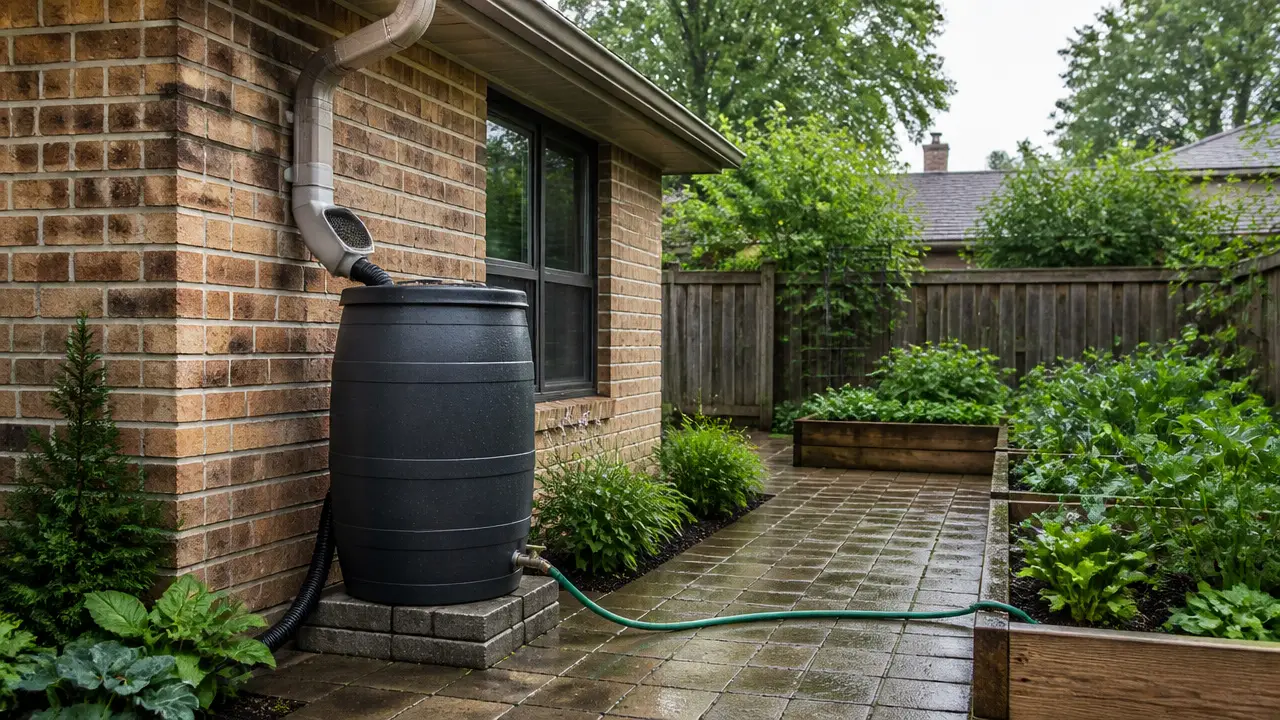
A rain barrel is one of the simplest forms of rainwater harvesting.
Water flows from a roof into a gutter and downspout. The downspout directs the water into a barrel or small tank.
A basic setup may include:
- Gutters and downspouts
- A screened inlet
- A rain barrel
- An overflow outlet
- A spigot or hose connection
Rain barrels are usually best for small outdoor uses such as watering plants.
They are easy to add to an existing home because they need little plumbing. However, their storage capacity is limited. A heavy rain can fill a small barrel quickly.
The overflow should be directed away from the foundation and toward a safe drainage area.
Rain barrel water should normally be considered non-potable, meaning it is not intended for drinking.
2. Dry-System Rainwater Harvesting
A dry system uses pipes that empty after each rainfall.
Roof gutters send water through downspouts into a pipe that slopes toward the storage tank. Once the rain stops, most of the pipe drains into the tank.
The pipe is called "dry" because standing water normally does not remain inside it.
This system works well when the storage tank is close to the building.
Advantages of a dry system
A dry system is usually:
- Simple to understand
- Relatively easy to inspect
- Less likely to hold stagnant water in collection pipes
- Suitable for above-ground tanks
The main limitation is layout. The pipes must maintain enough slope for water to reach the tank.
If the tank is far from the house or the pipe must travel underground before rising into the tank, a wet system may work better.
3. Wet-System Rainwater Harvesting
A wet system can connect several downspouts to one storage tank.
Downspouts feed into underground pipes. These pipes remain full of water between rain events.
During rainfall, incoming water pushes the water level upward until it enters the storage tank.
A wet system can be useful when:
- Several downspouts need to feed one tank
- The tank is away from the house
- Underground piping provides a cleaner-looking installation
- A simple sloped dry pipe is not practical
Because water remains in the underground pipes, the system needs careful installation.
Low spots can collect sediment. Leaks can be difficult to see. Pipes should also be arranged so they can be inspected, flushed, or drained when necessary.
Wet systems in freezing climates need extra planning because trapped water may freeze.
4. Direct-Pumped Rainwater Harvesting
A direct-pumped system uses a pump to move stored rainwater directly to the point of use.
For example, a tank may supply:
- Garden hoses
- Irrigation zones
- Outdoor taps
- Toilets, where local plumbing rules allow
- Other approved non-potable uses
The pump creates pressure instead of relying only on gravity.
Choosing a pump involves more than matching the pipe diameter. The system must also account for the needed flow rate and head height.
Flow rate is how much water the pump can move within a certain time.
Head height describes how much vertical lift and piping resistance the pump must overcome.
A pump should also be protected against running when the tank is empty. Running some pumps without water can damage them.
Direct-pumped systems are more complex than a basic rain barrel because they add electrical equipment, controls, pressure requirements, and additional maintenance.
5. Gravity-Fed Rainwater Harvesting
A gravity-fed system places stored water above the point where it will be used.
Gravity then pushes the water through the pipe.
For example, an elevated tank may feed a garden irrigation line below it.
Gravity systems have several advantages:
- No pump may be needed
- They can work without electricity
- There are fewer mechanical parts
- Maintenance can be simpler
However, gravity does not provide much pressure unless there is substantial height between the water surface and the outlet.
A tank raised only slightly above a garden may provide enough flow for some watering jobs but may not operate equipment that requires higher pressure.
Tank support is also important. Water is heavy. Large elevated tanks require a properly designed base or structure capable of handling the full load safely.
6. Underground Cistern Systems
An underground cistern stores harvested rainwater below ground.
Water usually enters the cistern from roof drainage pipes. A pump then moves it to irrigation or another approved use.
Underground storage can be helpful when:
- Yard space is limited
- A large visible tank is undesirable
- Large storage capacity is needed
- Above-ground tanks would interfere with normal use of the property
However, underground systems are usually more complicated to install.
They may require excavation, suitable tank design, access covers, overflow drainage, pumps, controls, and safe maintenance access.
Not every tank can be buried. An underground tank must be designed for soil pressure and site conditions.
Groundwater can also create upward forces on an empty or partly empty tank.
Large underground installations are often beyond a simple DIY project because excavation, structural conditions, utilities, drainage, and local requirements may all need professional attention.
7. Surface Runoff Harvesting
Rainwater does not have to come from a roof.
Surface runoff harvesting collects rainfall that flows across land, driveways, compacted surfaces, or other drainage areas.
The water may be directed into:
- Ponds
- Basins
- Swales
- Storage reservoirs
- Landscape infiltration areas
This method is often used for landscape watering, agriculture, erosion control, or groundwater recharge rather than household water supply.
Explore rainwater harvesting structures to compare the compromises that affect the upcoming system choice.
Surface runoff can carry more soil, organic matter, oil, animal waste, chemicals, and other contaminants than relatively controlled roof runoff.
Its intended use therefore matters greatly.
Water collected from a driveway, parking area, or landscaped ground should not be treated as equivalent to water collected from a suitable roof.
How the Seven Types Compare
| Type | How It Works | Common Use | Main Consideration |
|---|---|---|---|
| Rain barrel | Downspout fills small container | Garden watering | Limited capacity |
| Dry system | Sloped pipes drain into tank | Home and garden storage | Tank must suit pipe slope |
| Wet system | Underground pipes stay full | Multiple downspouts | Standing water in pipes |
| Direct-pumped | Pump sends tank water to use | Irrigation and approved reuse | Pump and pressure requirements |
| Gravity-fed | Elevated storage creates flow | Garden watering | Low available pressure |
| Underground cistern | Water stored below ground | Larger systems | Excavation and pump complexity |
| Surface runoff | Collects water flowing over land | Landscaping and agriculture | Higher contamination potential |
These categories can overlap.
For example, an underground cistern may use a wet collection system and a pump. An above-ground tank may use a dry collection system and gravity to supply a garden.
It is often more useful to think of a rainwater harvesting system as several connected parts rather than one fixed type.
What Every Rainwater Harvesting System Needs
Although the seven systems work differently, most roof-based setups follow the same basic path:
catchment surface → gutters → debris control → storage → overflow → water delivery
More advanced systems may add additional treatment stages.
Catchment surface
The roof or other surface determines where the water comes from.
Roof material, nearby trees, animals, air pollution, and accumulated debris can all affect water quality.
Gutters and downspouts
Gutters move rainfall toward the storage system.
They should be sized and maintained so water can flow freely without excessive overflow.
Screens and debris control
Screens can help keep leaves, insects, and larger debris out of the tank.
Some systems also use a first-flush diverter.
A first-flush device redirects some of the initial runoff from a rain event. That first runoff can contain dust and debris that accumulated on the roof.
A first-flush device can improve system cleanliness, but it does not make rainwater safe to drink.
Storage
Storage can range from a small rain barrel to a large cistern.
The right capacity depends on factors such as:
- Roof collection area
- Rainfall pattern
- Intended water use
- Available space
- Expected dry periods
A larger tank is not automatically better. The entire collection and overflow system must work with the storage capacity.
Overflow
Every closed tank needs somewhere for excess water to go once it is full.
Overflow should discharge safely without damaging foundations, causing erosion, or creating standing water.
Water delivery
Stored water may leave the tank through gravity or a pump.
The delivery method needs to match the required flow and pressure.
Which Type Is Best for a Home?
For simple garden watering, a rain barrel or small gravity-fed tank is often enough.
For larger above-ground storage next to a house, a dry system can be practical when the pipe can slope continuously toward the tank.
If several downspouts need to reach a tank farther away, a wet system may provide a cleaner layout.
If sprinklers or fixtures need meaningful pressure, a pumped system may be required.
An underground cistern makes more sense when larger storage is needed and keeping the tank out of sight is important enough to justify the added installation work.
The best choice starts with the intended use of the water. Decide where the water will go before choosing the tank, pump, filters, or pipe layout.
What About Rainwater for Drinking?
A storage system alone does not make harvested rainwater potable.
Potable means suitable for drinking.
Roof runoff can contain microorganisms, animal waste, dirt, metals, chemicals, and other contaminants. Water quality can also change during storage.
A drinking-water system requires a whole-system approach that may include suitable collection materials, debris control, appropriate treatment stages, protected storage, routine maintenance, and current laboratory testing.
Requirements can also vary by location.
For drinking or other high-risk household uses, follow current local health and plumbing requirements and involve qualified water-treatment professionals where appropriate.
Frequently Asked Questions
What is the simplest type of rainwater harvesting?
A rain barrel connected to a downspout is usually the simplest system. It works well for small amounts of garden water and requires much less plumbing than a large cistern system.
What is the difference between a wet and dry rainwater system?
A dry system is designed so the collection pipe drains after rainfall. A wet system has sections of pipe that remain full of water between rain events.
Can several downspouts feed one rainwater tank?
Yes. Several downspouts can feed one tank. Wet systems are commonly used when downspouts are spread around a building, although other plumbing layouts may also work.
Does a rainwater harvesting system need a pump?
Not always. A tank positioned above the point of use may provide gravity flow. A pump is normally needed when more pressure or vertical lift is required.
Can I bury any rainwater tank underground?
No. Only tanks designed for underground installation should be buried. Soil loads and groundwater forces can damage tanks that were designed only for above-ground use.
Is harvested rainwater safe to drink?
Not automatically. Roof runoff can contain biological and chemical contaminants. Drinking-water use requires suitable collection, treatment, maintenance, laboratory testing, and compliance with applicable local requirements.
What type of rainwater harvesting is best for irrigation?
Small gardens may work well with rain barrels or gravity-fed tanks. Larger irrigation systems may need more storage and a pump capable of providing the required flow and pressure.