As an affiliate, we may earn a commission from qualifying purchases. We get commissions for purchases made through links on this website from Amazon and other third parties.
An off-grid cabin does not need one perfect water source. In many cases, the most reliable setup uses a main water source, enough storage, and a backup source.
Good off-grid cabin water options include rainwater collection, a private well, a spring, hauled water, and sometimes surface water. The right choice depends on how often you use the cabin, local rainfall, groundwater, freezing weather, power availability, and whether the water will be used for drinking.
For a simple seasonal cabin, a rainwater tank or hauled-water cistern may be enough. A full-time cabin may benefit from a well, larger cistern, pump, and separate treatment system.
Off-Grid Cabin Water Options at a Glance
| Water source | Often works well for | Main limitation |
|---|---|---|
| Rainwater harvesting | Cabins with usable roof area and regular rain | Supply changes with rainfall |
| Private well | Full-time cabins with suitable groundwater | Drilling, pumping, testing, and power |
| Spring | Properties with a dependable spring | Flow and water quality can change |
| Hauled water | Seasonal cabins or difficult sites | Requires transport or delivery |
| Surface water | Sites near a legal, dependable lake or stream source | Usually needs substantial treatment |
| Snowmelt | Supplemental winter water | Takes fuel or electricity to melt |
For many cabins, combining two options works better than depending on one.
1. Collect Rainwater From the Cabin Roof
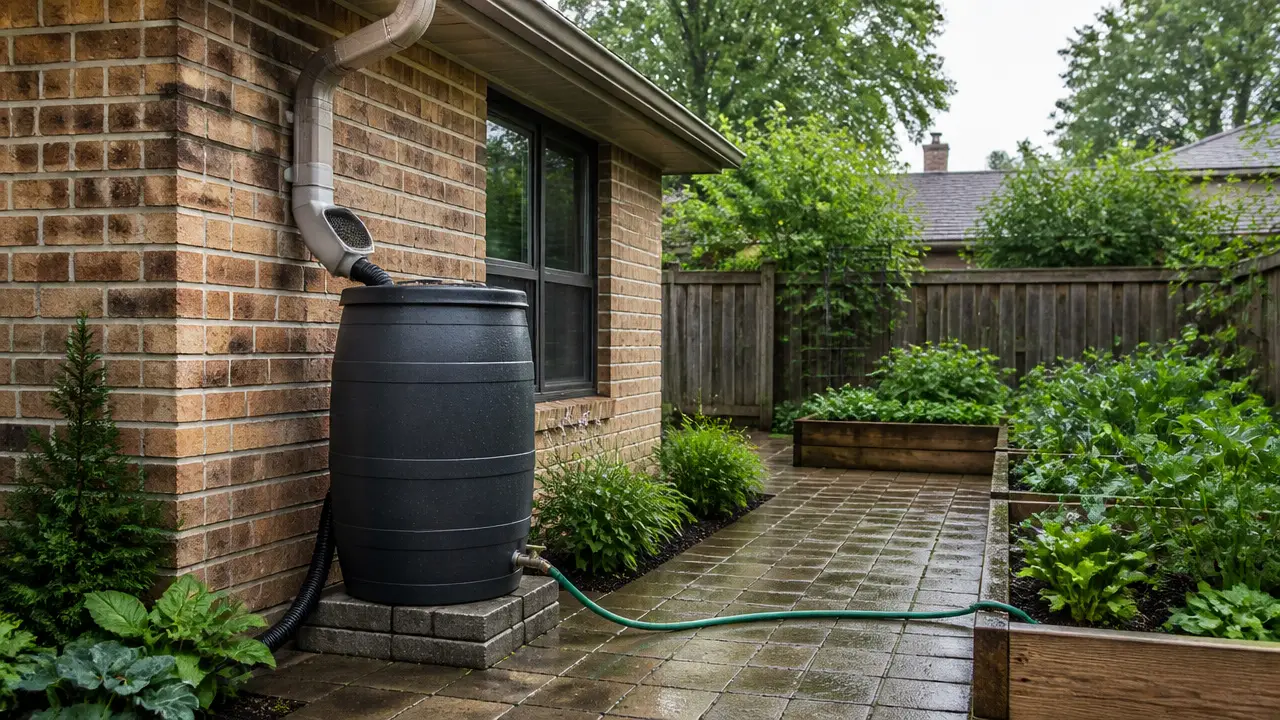
Rainwater harvesting is one of the simplest ways to provide water where there is no well or utility connection.
A basic system follows this path:
Roof → gutter → debris screen → first flush → storage tank → pump or gravity line → intended use
A first flush diverter sends the first portion of roof runoff away from the tank. That first runoff can carry dirt, bird droppings, dust, and other material that collected on the roof.
A first flush improves the water entering the tank, but it does not make rainwater safe to drink.
CDC notes that roof-collected rainwater can contain germs and chemicals picked up from the air, roofing materials, gutters, pipes, storage tanks, and animal waste. Water intended for drinking, cooking, or bathing should be tested and treated for its intended use.
How much rainwater can a cabin collect?
A useful starting formula is:
Gallons collected = roof area in square feet × rainfall in inches × 0.623
For example, a 600-square-foot collection area receiving 1 inch of rain has a theoretical yield of:
600 × 1 × 0.623 = about 374 gallons
Actual collection will be lower because some water is lost to first flush, splash, gutter overflow, leaks, evaporation, and incomplete roof drainage.
This formula tells you how much water the roof could collect during a storm. It does not tell you whether rainfall will arrive when you need it.
A practical rainwater system needs more than a tank
Think about:
- Gutters sized and positioned to capture runoff
- Leaf and debris screens
- A first flush diverter where appropriate
- A covered storage tank
- Screened vents and overflows
- An accessible way to clean the tank
- A pump or gravity outlet
- Freeze protection in cold climates
- Treatment matched to the intended water use
EPA commonly describes harvested rainwater as a source for irrigation and other non-potable uses. Non-potable means water that is not intended for drinking.
2. Drill a Private Well
A well can provide a much more consistent supply than rainwater if the property has suitable groundwater.
A cabin well normally requires:
- The well itself
- A pump
- Electrical or solar power for the pump
- Water piping
- A pressure tank or elevated storage tank
- Freeze protection
- Water testing
- Treatment when testing shows it is needed
A well can be especially useful at a full-time cabin where daily water demand is too high for practical rainwater storage.
However, drilling a well does not guarantee either enough water or good water quality. Well depth, recovery rate, geology, and water chemistry vary greatly from one property to another.
Private well water also needs regular testing. CDC recommends testing private well water at least once each year for total coliform bacteria, nitrates, total dissolved solids, and pH, along with contaminants of local concern. Total dissolved solids, or TDS, is a measure of dissolved minerals and other substances in the water; it does not by itself show whether water is safe.
Pay attention to septic placement
A cabin's water and wastewater systems cannot be planned separately.
A poorly located or failing septic system can contaminate groundwater and nearby wells. Required separation distances depend on local rules, soil, geology, and the type of system. EPA recommends following local setback requirements and keeping wells away from potential contamination sources.
Well siting, drilling, and septic design are normally jobs for qualified local professionals.
3. Use a Natural Spring
A dependable spring can be an excellent cabin water source, especially if it sits uphill from the building.
An uphill spring may allow some or all of the water system to operate using gravity. That can greatly reduce electrical demand.
Do not assume that clear spring water is safe drinking water.
Spring quality can change because of:
- Heavy rain
- Surface runoff
- Wildlife
- Livestock
- Septic systems
- Land disturbance
- Seasonal groundwater changes
Spring flow can also fall during dry parts of the year.
Before building around a spring, measure its flow during the driest season you can observe. A spring producing plenty of water in springtime may produce far less in late summer.
Water intended for drinking should be tested by an appropriate laboratory. Treatment should then be selected for the actual contaminants and risks found.
4. Store Hauled Water in a Cistern
Hauled water is easy to overlook, but it can be one of the simplest solutions for a small or seasonal cabin.
A truck, trailer tank, or water delivery service fills a larger storage tank at the cabin. The cabin then draws from that tank using gravity or a pump.
This approach avoids dependence on local rainfall and can eliminate the need to drill a well.
It works especially well when:
- The cabin is used only occasionally
- Vehicle access is good
- A reliable water source is reasonably close
- Well drilling is impractical
- Rainfall is too inconsistent
The main question becomes storage capacity.
If two people use 15 gallons each per day, total demand is:
2 × 15 = 30 gallons per day
A 300-gallon usable supply would provide roughly 10 days at that rate before allowing for reserve water and losses.
Measure your actual cabin use rather than relying only on generic household averages. Off-grid water use can vary widely depending on showers, toilets, laundry, gardening, and guests.
Protect stored water
A cistern should be closed against insects, rodents, debris, and runoff. Tank materials and plumbing should also be appropriate for the intended water use.
CDC recognizes cisterns and water storage tanks as common private water sources. Stored water intended for drinking still requires suitable source control, sanitation, testing, and treatment.
5. Use Lake, Pond, or Stream Water Carefully
Surface water may be available near a cabin, but availability does not automatically mean you have the right to withdraw it or that it is suitable for household use.
The technical overview “What Is the Best Water System for Off grid Living?” connects this choice to the way the complete rainwater system performs.
Surface water can contain:
- Bacteria
- Viruses
- Parasites
- Sediment
- Algae
- Animal waste
- Agricultural runoff
- Fuel or chemical contamination
Water quality can also change quickly after storms or seasonal runoff.
For these reasons, pumping directly from a lake or stream into a drinking-water faucet is not a good basic cabin setup.
A household system using surface water for drinking may need several treatment stages. Those stages could include sediment removal, finer filtration, treatment for specific chemicals, and disinfection. The correct system depends on laboratory results and local conditions.
A filter's micron rating describes the approximate size of particles it is designed to capture. A smaller micron number does not mean a filter removes every germ or chemical.
Surface water intended for drinking is a situation where professional system design and current laboratory testing can be well worth the effort.
Also check local water rights and withdrawal rules before using a stream, lake, pond, or spring.
6. Melt Snow as a Supplemental Source
Snow can provide emergency or supplemental water in a winter cabin, but it usually makes a poor primary water source.
Snow contains a lot of air. A large volume of loose snow produces a much smaller volume of liquid water.
Melting also consumes energy. If you have to burn fuel or use limited solar electricity every time you need water, the system becomes inefficient.
Snow can also contain dirt, animal waste, chemicals, and airborne contaminants. Treat melted snow according to its intended use rather than assuming fresh-looking snow is clean.
For most cabins, stored water protected from freezing is easier to manage than relying on daily snowmelt.
Ways to Move Water Without Grid Power
Getting water to the cabin is only half of the system. You also need a way to move it.
Gravity
Gravity is the simplest option when the water storage tank can safely sit above the point of use.
The vertical distance between the water level and the outlet creates pressure. This vertical distance is called head height.
More height generally means more available pressure.
A gravity system can work well for:
- Outdoor faucets
- Simple sinks
- Drip irrigation
- Filling containers
Do not place a large tank on a deck, roof, tower, or cabin floor unless the structure was designed for the load.
Water is heavy. One U.S. gallon weighs about 8.34 pounds. A 500-gallon tank can therefore contain more than 4,000 pounds of water before counting the tank and supporting structure.
Large elevated tanks need proper structural design.
12- or 24-Volt DC Pump
A DC water pump can run from a cabin battery system charged by solar panels.
Alongside a suitable water pump for off-grid living, compare pump controls matched to demand and connected plumbing.
This setup can provide household-style pressure without running an inverter whenever water is needed.
A typical system may include:
Tank → strainer → pump → pressure tank or accumulator → cabin plumbing
Check both pressure and flow rate when choosing a pump.
Flow rate is the amount of water delivered over time, usually stated in gallons per minute. A pump may produce enough pressure but still not provide enough flow for several fixtures operating at once.
AC Pump With Solar Power
A larger cabin may use a conventional AC well or pressure pump powered through the cabin's inverter system.
This can work well, but pump starting loads can be much higher than normal running power. The inverter, battery bank, wiring, and controls all need to be sized for the pump.
Electrical work around pumps and water should be installed safely and according to applicable requirements.
Hand Pump
A manual pump makes a useful backup where the well or storage arrangement allows one.
It can keep basic water available during:
- Battery failure
- Pump failure
- Inverter problems
- Long periods of poor solar charging
Not every well can accept a simple hand pump, especially deep wells, so check the required lift before choosing one.
Separate Drinking Water From Utility Water When Practical
One useful off-grid strategy is to avoid treating every gallon to drinking-water quality.
For example, a cabin might use:
- Tested and appropriately treated water for drinking and cooking
- Rainwater for garden irrigation
- Another suitable non-potable source for toilet flushing
Potable water means water suitable for drinking. Non-potable water is intended for uses where drinking-water quality is not required.
Keeping these systems separate can reduce treatment and power needs.
It also prevents untreated rainwater or other non-potable water from contaminating the drinking-water plumbing. CDC specifically recommends keeping rainwater separate from pipes carrying safe drinking water.
Any connection between potable and non-potable systems needs proper cross-connection and backflow protection according to local plumbing requirements.
The cost guide “How Much Does an Off grid Water System Cost?” clarifies a related design decision that can affect day-to-day operation.
Do Not Treat Drinking Water With One Device and Assume You Are Done
Off-grid drinking-water treatment should be planned as a complete system.
A typical process might involve several different jobs:
- Keep contamination out of the source as much as possible.
- Remove leaves, grit, and large sediment.
- Store the water in a protected tank.
- Remove finer particles where needed.
- Treat contaminants identified in the source water.
- Provide appropriate disinfection where microbial contamination is a concern.
- Test the finished water.
- Maintain every treatment stage on schedule.
A sediment filter, carbon filter, UV unit, reverse-osmosis system, test strip, or TDS meter performs a specific job. None should be treated as proof by itself that unknown source water is safe to drink.
CDC recommends testing well and rainwater so treatment can be chosen for the germs or chemicals actually present. Taste, smell, and appearance alone cannot establish water safety.
For a cabin drinking-water system, use current laboratory testing and local health guidance. Complex treatment systems are also a good place to involve a qualified water-treatment professional.
Plan Storage Around Dry Periods, Not Just Tank Size
A large tank does not create water.
For rainwater systems, compare:
- Roof collection area
- Typical rainfall pattern
- Time between useful storms
- Daily cabin demand
- Tank capacity
- Reserve water you want to maintain
A small tank may overflow repeatedly during wet weather but still run empty during a long dry spell.
For wells and springs, storage can serve a different purpose. A cistern lets a low-flow source collect water slowly while the cabin draws water faster for short periods.
For example, a spring that cannot directly keep up with a shower may still provide enough total water each day if it steadily fills a storage tank.
Reduce Water Demand Before Building a Bigger System
Reducing demand can make an off-grid water system much easier to build and maintain.
Possible changes include:
- Low-flow fixtures
- Shorter showers
- Fixing leaks quickly
- Using drip irrigation instead of open hoses
- Watering plants only when needed
- Separating drinking water from outdoor water
- Choosing sanitation systems that match local conditions and water availability
Measure how much water your cabin actually uses for several days if possible. That gives you a much better starting point for sizing storage than guessing.
Protect the System From Freezing
Cold-climate cabins need another layer of planning.
Exposed pipes, filters, pumps, valves, and tank fittings may freeze before the main tank does.
Common approaches include:
- Keeping plumbing inside conditioned space
- Burying suitable water lines below the local frost depth where appropriate
- Designing seasonal lines so they can drain
- Protecting pumps and filters from freezing
- Avoiding low spots that trap water
- Winterizing systems when the cabin is left unused
Do not assume pipe insulation alone will prevent freezing during a long cold period. Insulation slows heat loss but does not create heat.
Underground tanks can provide useful temperature protection, but excavation, groundwater conditions, tank design, access, and structural loads need to be considered before installation.
A Good Setup for Different Types of Cabins
Occasional weekend cabin
A simple system might use:
Hauled water or rainwater → storage tank → small DC pump → sink and outdoor faucet
Keep drinking water separate unless the complete stored-water system is designed, maintained, tested, and treated for potable use.
Seasonal cabin with regular rainfall
A larger rainwater system can work well:
Roof → screen → first flush → cistern → pump → non-potable plumbing
A separate tested drinking-water source can keep the rainwater system simpler.
Full-time off-grid cabin
A more dependable setup might use:
Well or dependable spring → storage tank → pressure pump → treatment → household plumbing
Rainwater can supplement the primary source for gardening or other suitable uses.
Remote cabin with unreliable groundwater
Consider:
Large cistern + rainwater collection + hauled-water connection
The hauled-water connection provides a backup when rainfall is insufficient.
Build the System Around Reliability
The best off-grid cabin water system is usually not the most complicated one. It is the system you can inspect, clean, repair, winterize, and refill.
Start by deciding what the water must do. Then choose the source.
For many cabins, a good plan is:
Primary source + protected storage + simple delivery system + backup supply
Rainwater can be excellent where rainfall and roof area are adequate. Wells work well where dependable groundwater is available. Springs can provide low-energy water on suitable land. Hauled water is often the simplest option for lightly used cabins.
If any of that water will be used for drinking, make water quality part of the original design rather than something added after the plumbing is finished.
Frequently Asked Questions
What is the simplest off-grid water system for a cabin?
For a lightly used cabin, one of the simplest systems is a ground-level storage tank filled with hauled water or collected rainwater, plus a small DC pump. Rainwater used for drinking requires additional source protection, treatment, testing, and maintenance.
How big should a cabin water tank be?
Size the tank from your daily water use, expected time between refills or rain events, available collection supply, and desired reserve. A 300-gallon tank lasts 10 days if the cabin uses 30 gallons per day, assuming all 300 gallons are usable.
Can I drink rainwater collected from my cabin roof?
Do not assume roof runoff is safe to drink. It can contain germs and chemicals from the roof, air, animals, gutters, and storage system. Drinking-water use calls for appropriate collection materials, prefiltration, treatment matched to the risks, regular maintenance, current laboratory testing, and compliance with local requirements.
Is a well better than rainwater for an off-grid cabin?
A well is often more dependable for a full-time cabin if suitable groundwater is available. Rainwater may be simpler for a seasonal cabin but depends on roof area, rainfall, and storage. Some cabins use a well for household water and rainwater for irrigation.
Can solar panels run a cabin water pump?
Yes. Small DC pumps can run directly from a suitable battery system, while larger AC pumps can run through an inverter. The power system must handle both normal pump demand and starting loads. Pump lift, pressure, flow, wire size, and battery capacity all matter.
Can I gravity-feed water to my cabin?
Yes, if the tank or source is high enough above the fixtures. More vertical head height creates more pressure. Large elevated tanks are extremely heavy, so the supporting structure must be designed for the full water load.
What is a good backup water source for an off-grid cabin?
Hauled water stored in a clean, protected cistern is a useful backup for rainwater, springs, and low-producing wells. A hand pump may also provide backup water where the well and installation allow it.