As an affiliate, we may earn a commission from qualifying purchases. We get commissions for purchases made through links on this website from Amazon and other third parties.
The best water system for off-grid living is usually a layered system with more than one water source, enough storage to cover dry periods, treatment matched to how the water will be used, and a pump system that can still operate when power is limited.
For many off-grid homes, that means a well or spring as the main source, rainwater collection as a second source, a large storage tank, sediment control, separate drinking-water treatment, and an efficient pressure pump. Where a well is not practical, a properly sized rainwater system can become the main supply, but the roof area, rainfall pattern, storage capacity, and intended water use all need to work together.
Treatment planning includes choosing an off grid water filter that matches the source water and intended use.
There is no single tank, pump, or filter that makes a complete off-grid water system.
What a Good Off-Grid Water System Needs
A dependable system has several parts:
- A reliable water source
- Collection and debris control
- Enough storage
- Water treatment matched to its use
- A pump or gravity-fed delivery system
- Freeze, overflow, and dry-run protection where needed
- A backup plan
Think of the system as a path:
source → collection → storage → treatment → pump → fixtures
Every part needs to work with the next one.
The Best Water Sources for Off-Grid Living
The strongest setup often uses two sources instead of depending completely on one.
Well Water
A productive well can make a good primary supply because it does not depend directly on each rainfall event.
However, a well still depends on:
- Available groundwater
- Well depth and recovery rate
- Pumping power
- Water quality
- Local well requirements
- Seasonal groundwater conditions
A deep-well pump can also be one of the larger electrical loads in an off-grid home. Pump depth, lift, pressure, and daily water use should therefore be considered when sizing a solar and battery system.
Well water should be tested rather than assumed safe because it looks clear.
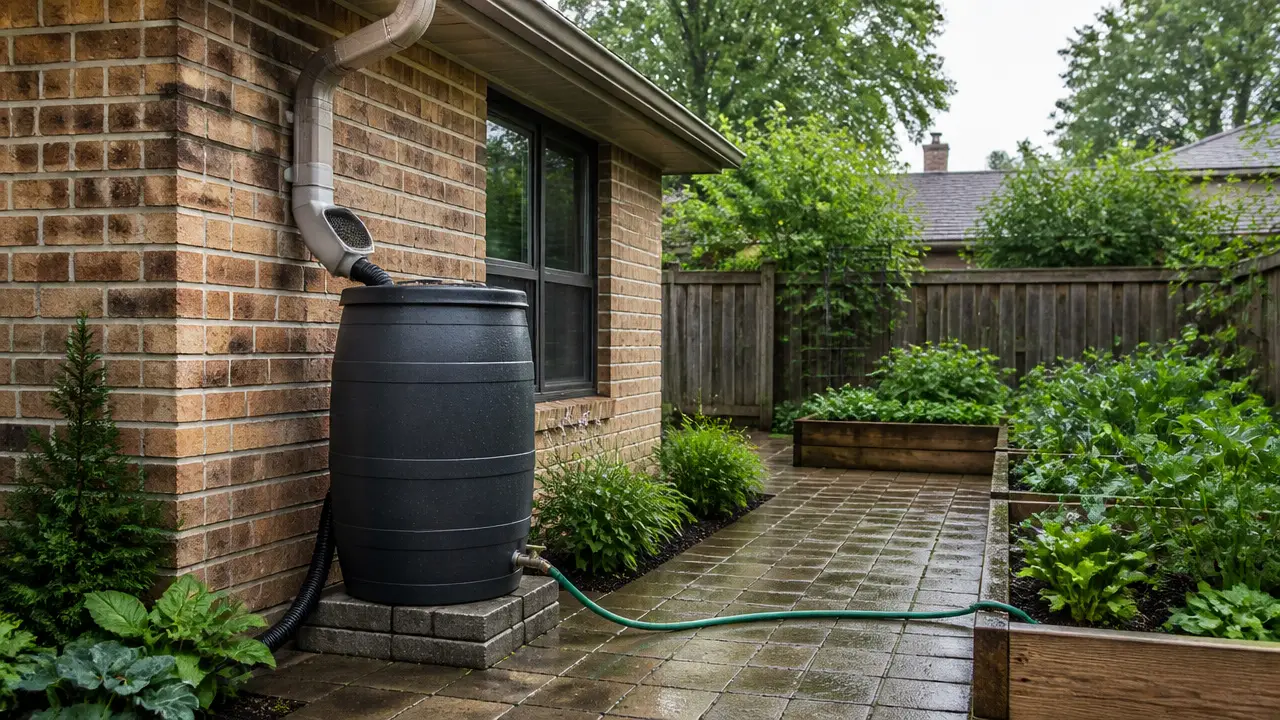
Rainwater Harvesting
Rainwater works especially well as a second source. In suitable locations, it may also provide most or all household water.
A basic rainwater path might be:
roof → gutter screen → first-flush device → storage tank → pump → treatment → house
A first-flush diverter sends away some of the first runoff from a storm. That early runoff can carry dust, droppings, leaves, and other material from the roof.
Rainwater quality depends on much more than the rain itself. Roof materials, gutters, piping, tanks, animals, airborne contaminants, maintenance, and treatment all matter.
The CDC notes that collected rainwater can contain both germs and chemicals and should not automatically be considered safe for drinking. Water used for drinking, cooking, or bathing should be tested and treated appropriately.
Springs and Surface Water
A developed spring can sometimes provide a low-energy water source, especially where enough elevation allows gravity flow.
Streams, ponds, and lakes are more difficult water sources. Their quality can change quickly because of animals, runoff, algae, storms, agriculture, and other contamination.
Surface water intended for drinking generally requires a much more carefully designed treatment system than water used only for irrigation.
Use More Than One Water Source When Possible
Redundancy is one of the biggest advantages an off-grid water system can have.
For example:
- Well + rainwater tank
- Spring + rainwater tank
- Rainwater + delivered-water connection
- Large cistern + smaller emergency reserve
A second source does not need to supply the whole house. It can simply reduce demand on the primary system.
You might use rainwater for:
- Garden irrigation
- Outdoor washing
- Toilet flushing where permitted
- Other non-potable uses
Non-potable means water that is not intended for drinking.
Separating high-quality drinking water from lower-quality utility water can reduce how much water needs extensive treatment.
Size Storage Before Choosing the Pump
For most off-grid properties, storage capacity matters more than having an unusually powerful pump.
A large tank lets the water source and household operate at different times.
For example, a slow well might fill a storage tank gradually during daylight hours. The house can then draw from the tank whenever water is needed.
The same principle applies to rainwater. A large storm may deliver thousands of gallons in a few hours, while the household uses that water slowly over several weeks.
Estimate Household Demand
Start with actual daily use when possible.
Include water used for:
- Drinking
- Cooking
- Showers
- Toilets
- Laundry
- Cleaning
- Animals
- Irrigation
Then estimate how many days you may need storage to cover.
For example, a household using 100 gallons per day would use:
100 gallons × 30 days = 3,000 gallons per month
That does not automatically mean a 3,000-gallon tank is enough. The correct storage capacity also depends on when the source can refill it.
Estimate Rainwater Collection Potential
For a roof measured in square feet:
Gallons collected = roof area × rainfall in inches × 0.623 × collection efficiency
The 0.623 factor converts one inch of rainfall over one square foot into gallons.
For example, before allowing for losses:
1,000 sq ft × 1 inch × 0.623 = about 623 gallons
Real collection will be lower because some water is lost through first flush, splash, evaporation, overflow, gutter losses, and other parts of the system.
Do not size an off-grid rainwater system from annual rainfall alone. A place can receive plenty of rain during the year and still have a long dry season.
Storage should be planned around the longest important gap between useful rainfall events, not simply the annual total.
Choose the Right Tank
For a permanent off-grid home, a larger cistern is usually more useful than several small rain barrels.
Common storage options include:
| Storage type | Best use |
|---|---|
| Rain barrel | Small gardens and limited outdoor use |
| IBC tote | Utility water and temporary systems when the container is suitable for the intended use |
| Poly tank | Common choice for larger above-ground systems |
| Underground cistern | Large storage where space, climate, and installation conditions make it practical |
| Concrete tank | Large permanent installations when designed and installed correctly |
Tank material must be suitable for the intended water use.
If water may eventually be used for drinking, all water-contact materials deserve extra attention. NSF notes that rainwater collection components can be evaluated for health effects, including components covered by NSF P151 and drinking-water-contact components covered by NSF/ANSI/CAN 61.
Protect the Tank
A good tank setup should also address:
- Insect entry
- Sunlight
- Overflow
- Sediment
- Accessible inspection and cleaning
- Secure lids
- Tank venting
- Freezing
- Stable foundations
A full water tank is extremely heavy. One US gallon of water weighs about 8.34 pounds. Large tanks therefore need a base and site capable of carrying the load.
Use a Pump That Matches the House
For most off-grid homes, an efficient pressure pump is better than simply buying the largest pump available.
The pump has to provide enough:
- Flow
- Pressure
- Lift
Flow rate is how much water the pump moves over time, usually measured in gallons per minute.
Head height describes how much vertical lift and pressure the pump must overcome. Greater elevation and higher required pressure increase the work the pump must do.
A Typical Tank-to-House Setup
A common arrangement is:
storage tank → shutoff valve → coarse protection → pump → pressure tank/control → treatment → house
The exact order can change depending on the pump and treatment design.
A pressure tank can reduce rapid pump cycling by storing a small amount of pressurized water.
Look for Dry-Run Protection
A pump can be damaged if it continues operating after the tank runs empty.
A well-designed off-grid system may use:
- Low-water tank switches
- Pump controllers
- Float switches
- Dry-run protection
- Low-voltage protection
The controls should be compatible with the particular pump and electrical system.
Gravity Feed Can Reduce Power Use
If the site allows it, gravity can reduce or eliminate pumping for some uses.
Water stored above the point of use creates pressure.
Roughly 2.31 feet of water elevation produces 1 psi of static pressure.
That means a tank only 10 feet above a faucet provides roughly 4.3 psi before pipe losses. That may be useful for drip irrigation or filling containers, but it is much lower than the pressure normally expected in a household plumbing system.
Do not place a large tank on an improvised tower just to gain pressure. Structural design becomes a serious safety issue as tank size and elevation increase.
Match Water Treatment to the Intended Use
The best treatment system is not one that treats every gallon as heavily as possible.
It is one that produces water suitable for its intended use.
Irrigation Water
Evaluate whether collected rainwater is drinkable to interpret the cleaning or replacement step justified by test evidence.
Garden water may need only:
- Leaf and debris screening
- Tank sediment control
- A filter sized to protect irrigation equipment
Drip emitters usually need finer filtration than an open garden hose.
Household Utility Water
Water used for toilets, laundry, or washing may need additional filtration depending on its source and plumbing system.
Local plumbing rules may require rainwater and drinking-water piping to remain separate or have specific cross-connection protection.
Drinking Water
Potable water means water suitable for drinking.
If rainwater, well water, spring water, or another private source will be used for drinking, treatment should be designed around the actual contaminants present.
A treatment train might include several stages, such as:
source protection → sediment removal → contaminant-specific treatment → disinfection
Possible equipment can include sediment filters, activated carbon, ultraviolet disinfection, membrane systems, or other treatment methods. The correct combination depends on water testing and system conditions.
A filter's micron rating describes the approximate size of particles it is designed to capture. A lower micron number generally means finer filtration. Micron size alone does not tell you whether water is safe to drink.
Likewise, a UV unit does not remove sediment, salts, metals, or most chemical contaminants. A carbon filter does not provide a complete drinking-water safety system either.
For rainwater used for drinking, cooking, or bathing, CDC guidance recommends regular testing for relevant germs and chemicals and treatment appropriate to the contaminants found. Local health authorities can help determine suitable testing.
Put Drinking Water Treatment Near the Point of Use When Appropriate
Treating every gallon to drinking-water quality can require more equipment, maintenance, and energy.
Some off-grid homes instead maintain:
- A general household water system
- A separate drinking-water treatment system
For example, the main tank might supply washing and other household uses while drinking and cooking water passes through additional treatment at the kitchen.
Whether this arrangement is appropriate depends on the water source, plumbing design, household use, and local requirements.
Never connect untreated rainwater or other non-potable water in a way that could flow backward into a potable water supply.
Plan the System Around Available Power
Water and power systems are closely connected off grid.
A pump that works well on utility electricity may be inconvenient when powered by a small solar system.
Consider:
- Pump running watts
- Starting surge
- Pump voltage
- Daily run time
- Well depth
- Tank elevation
- Required pressure
- Battery capacity
- Inverter capacity
One efficient approach is to move water when solar power is plentiful.
For example:
well → solar-powered pump → large storage tank → smaller pressure pump → house
The well pump can operate mainly during daylight hours. The storage tank then acts as a water reserve while the smaller pressure pump handles household demand.
Keep the System Simple Enough to Maintain
An off-grid system that depends on many treatment stages, controllers, specialty cartridges, and pumps can become difficult to maintain remotely.
Every component creates another maintenance requirement.
Typical tasks can include:
- Cleaning gutters and screens
- Servicing first-flush devices
- Inspecting tanks
- Removing accumulated sediment when necessary
- Changing filter cartridges
- Cleaning pump strainers
- Checking pressure tanks
- Testing float switches
- Inspecting overflow screens
- Testing water quality
- Servicing UV equipment
- Preparing exposed plumbing for freezing conditions
Choose equipment you can inspect and service without dismantling the entire system.
Use isolation valves and unions where appropriate so pumps, filters, and tanks can be serviced independently.
Design for Freezing Conditions
Cold climates change the system design considerably.
Exposed:
- Tanks
- Pumps
- Filters
- Pipes
- Valves
- Hoses
- First-flush devices
can all be damaged by freezing water.
Depending on the climate and system, protection may involve burying suitable piping below local frost depth, draining seasonal lines, locating equipment in protected spaces, or using properly designed freeze protection.
Do not assume insulation alone will prevent freezing during a long cold period.
Provide Safe Overflow
A storage tank eventually becomes full.
The overflow needs somewhere safe to go without:
- Undermining the tank foundation
- Flooding buildings
- Eroding soil
- Creating standing water
- Sending water toward a septic system
- Allowing insects or animals into the tank
An overflow pipe should generally be at least capable of handling the incoming flow expected from the collection system.
Keep Some Water in Reserve
A useful off-grid system has a reserve that is not normally consumed down to zero.
A reserve provides time to respond to:
- Pump failure
- Filter problems
- Power outages
- Unexpectedly dry weather
- Plumbing leaks
- Source interruptions
Low-level alarms or tank-level indicators can help prevent surprises.
A Practical Off-Grid Water System Layout
For many properties, a strong general design looks like this:
Primary supply
well or spring → storage cistern
Secondary supply
roof → gutter screening → first flush → cistern
Household delivery
cistern → pump protection → pressure pump → pressure control/tank → household distribution
Drinking-water path
appropriate prefiltration → contaminant-specific treatment → disinfection where required → drinking fixtures
Backup
reserve storage or another practical water source
The exact system should change according to the property.
A cabin used on weekends may need only a small tank and simple pump. A full-time household with showers, laundry, toilets, livestock, and irrigation may need thousands of gallons of storage and much more careful source planning.
What to Prioritize When Building the System
If starting from scratch, make decisions in this order:
- Determine how the water will be used.
- Identify reliable water sources.
- Estimate daily and seasonal demand.
- Calculate available rainwater or source production.
- Size storage for dry periods and source interruptions.
- Choose compatible tank connections and plumbing sizes.
- Choose a pump based on required flow, pressure, and lift.
- Test water and design treatment around its quality and intended use.
- Add controls, overflow, freeze protection, and backup capacity.
- Make every major component accessible for maintenance.
This order avoids a common mistake: buying pumps and filters before knowing how much water the property can actually collect and store.
So, What Is the Best Off-Grid Water System?
For most full-time off-grid homes, the best system is a large central storage tank supplied by the most reliable local water source, backed up by rainwater collection, with an efficient pressure pump and treatment matched to each intended use.
Where groundwater is dependable, a particularly practical arrangement is:
well + rainwater collection → large cistern → efficient pressure pump → household water system → separate verified treatment for drinking water
Where rainwater is the primary source, put more emphasis on roof catchment area, seasonal rainfall, large storage capacity, overflow management, contamination control, and backup water.
Spend less effort looking for one "best" pump or filter and more effort making sure the entire water path works as one system.
Frequently Asked Questions
Can you live off grid using only rainwater?
Yes, in some locations, but it depends on roof area, rainfall timing, household demand, storage capacity, and allowed uses. Annual rainfall alone is not enough to determine whether a rainwater-only system will work. Long dry periods are often the limiting factor.
How big should an off-grid water tank be?
There is no universal tank size. Estimate daily water use, expected time between reliable refills, available roof catchment or source production, and the reserve you want to maintain. Full-time homes generally need much more storage than weekend cabins.
Is rainwater safe to drink after filtering?
Not automatically. Filtration may remove certain particles or contaminants, but it does not prove that the water is potable. Drinking-water use should include suitable collection materials, source protection, appropriate treatment, regular maintenance, current water testing, and applicable local requirements.
Do I need a pressure tank for an off-grid water system?
Not always. Some pumps use electronic pressure controls or variable-speed systems. Conventional pressure pumps often use a pressure tank to reduce frequent cycling and provide smoother household pressure.
Can solar panels run a water pump?
Yes. Many water pumps can operate as part of a solar-powered system, but pump voltage, running power, starting surge, lift, flow requirement, inverter capacity, and battery capacity must be compatible. Pumping into storage during sunny periods can reduce battery demand.
Is a well better than rainwater for off-grid living?
Neither is always better. A productive well can provide a more continuous supply, while rainwater can reduce pumping and provide useful backup storage. Where practical, combining the two provides more flexibility than relying completely on either source.
Should drinking water and irrigation water use the same filters?
Usually not. Irrigation equipment mainly needs protection from debris and particles that could clog emitters. Drinking water requires treatment based on the source and identified health risks. Using the same treatment train for both can add unnecessary cost, energy use, and maintenance.