As an affiliate, we may earn a commission from qualifying purchases. We get commissions for purchases made through links on this website from Amazon and other third parties.
A good rain barrel cover should do four jobs: keep out leaves and animals, block mosquitoes, reduce sunlight, and still let rainwater enter safely. The best cover is usually a rigid, secure lid with a screened water inlet rather than loose fabric or an open piece of mesh.
The exact design depends on whether your barrel already has a removable lid, a sealed top, or a completely open top.
What a Rain Barrel Cover Needs to Do
A rain barrel should not be left open. An uncovered barrel can collect leaves, insects, animal droppings, and other debris. Sunlight can also encourage algae growth.
A useful cover should:
- Fit securely so wind cannot lift it off.
- Block most sunlight from reaching the water.
- Keep mosquitoes and other insects from reaching the water.
- Allow rainwater from the downspout to enter.
- Let excess water leave through a proper overflow.
- Be removable when the barrel needs cleaning.
The cover should also be strong enough that it does not sag into the water.
If children or pets can reach the barrel, use a securely attached rigid cover. Do not treat insect screen, cloth, or thin plastic sheeting as a safety lid.
Materials You May Need
The materials depend on your barrel, but a simple cover can usually be made with:
- A rigid barrel lid or weather-resistant plastic panel
- Fine insect-resistant screen
- Stainless steel or weather-resistant screws and washers
- A jigsaw, hole saw, or utility knife suitable for the lid material
- Drill and drill bits
- Exterior-grade sealant where appropriate
- Clamps or other hardware for securing a removable lid
Use materials that can tolerate outdoor exposure. Thin plywood can swell and rot unless it is well protected, so plastic or another weather-resistant material is often easier to maintain.
Avoid materials that can shed paint, rust, or break down into the stored water.
Method 1: Add a Screened Inlet to an Existing Lid
If your barrel already has a solid lid that fits correctly, modifying that lid is usually the simplest option.
1. Decide Where the Water Will Enter
Place the inlet under the downspout or rain barrel diverter outlet.
Before cutting anything, check that the inlet position will not interfere with:
- The overflow connection
- Any internal plumbing
- The barrel rim
- A pump or pickup pipe
- The lid's locking mechanism
The opening only needs to be large enough for the incoming water.
2. Mark and Cut the Inlet Opening
Mark the opening on the lid.
Use a cutting tool suited to the material. Support the lid while cutting so it does not crack or flex excessively.
Smooth any sharp edges afterward.
Wear suitable eye and hand protection while drilling or cutting plastic or metal.
3. Cover the Opening With Fine Screen
Place fine insect-resistant screen over the inlet.
The screen needs to prevent mosquitoes from passing through while still allowing water to drain freely. Attach it firmly around the entire opening so insects cannot enter around the edges.
A removable screen is useful because roof debris will eventually collect on it.
Do not use ordinary chicken wire or coarse hardware cloth as the only insect barrier. Their openings are much too large to keep mosquitoes out.
4. Secure the Screen
The screen can be held between two rigid pieces, fastened with screws and washers, or secured using a purpose-built screened fitting.
Whatever method you use, avoid leaving loose screen edges that can curl upward.
Check that water cannot simply flow around the screen and enter through an unscreened gap.
5. Reinstall and Secure the Lid
Place the lid back on the barrel and make sure it cannot easily be removed by wind, animals, or accidental contact.
Some barrels have threaded or locking lids. Others may need clamps or another suitable fastening method.
The lid should still be removable for periodic inspection and cleaning.
Method 2: Make a Cover for an Open-Top Barrel
An open-top barrel needs more than a piece of insect screen stretched across it.
Screen can keep out some debris and insects, but it does not block sunlight well and may not provide a safe barrier over the water.
1. Measure the Barrel
Measure the outside diameter or width of the barrel at the top.
Plan for the cover to overlap the rim enough that it cannot easily fall inside.
2. Cut a Rigid Cover
Cut a weather-resistant panel to fit the top.
Round barrels can use a circular cover. Square or rectangular containers need a matching shape.
Do not use a material so thin that it bends significantly under normal handling or rain.
3. Make the Rainwater Inlet
Cut an opening where the downspout will discharge.
Install fine insect screen over this opening using the same method as for a factory lid.
Keeping the screened area fairly small makes it easier to clean and reduces the amount of sunlight entering the barrel.
4. Provide a Way to Secure the Cover
A loose panel sitting on top of a barrel can move during storms.
Depending on the barrel design, the cover might be secured with:
- Barrel clamps
- Existing lid hardware
- Bolts positioned outside the water-storage area
- A fitted rim or retaining ring
Do not rely on a loose brick or other heavy object sitting on top. It can fall, damage the barrel, or create another hazard.
5. Check the Entire Rim
Inspect the finished cover for gaps.
Mosquitoes need only a small opening to reach standing water. Screen any necessary ventilation openings and correct gaps around pipes or hoses.
Do You Need a Screen if the Barrel Has a Lid?
Usually, yes, anywhere water or air can provide insect access.
A solid lid protects most of the barrel, but mosquitoes may still enter through:
- The downspout inlet
- Overflow pipes
- Vent holes
- Loose hose openings
- Gaps around the lid
The inlet screen also catches leaves, roof grit, insects, and other larger material before it reaches the barrel.
Planning around recommended rain barrel screens for leaves, insects, and debris control helps assess vessel capacity and fittings within the available space.
It is still better to keep leaves out upstream with clean gutters and suitable debris control rather than asking the small barrel screen to catch everything.
Do Not Forget the Overflow
A tight cover does not replace an overflow pipe.
When the barrel becomes full, incoming rainwater needs a controlled path away from the barrel and building foundation. The overflow should be large enough for the expected inflow and routed to a suitable drainage area.
Screen the overflow opening if insects could use it to reach the stored water.
Do not completely seal a rain barrel without accounting for both incoming and outgoing air and water. A rainwater storage system should not unintentionally become a pressurized container.
How to Keep the Cover From Clogging
The inlet screen is likely to be one of the first parts of the system to clog.
Leaves, roof grit, seeds, and other debris can cover the screen and make rainwater spill over the barrel instead of entering it.
Check the screen:
- After major storms
- During heavy leaf fall
- When water starts backing up around the inlet
- Whenever you clean the gutters
- When you inspect the barrel
Remove debris and rinse or brush the screen as needed.
If the screen clogs constantly, improve debris removal farther upstream rather than simply making the screen openings larger.
Should the Cover Block Sunlight?
Yes, as much as practical.
Sunlight reaching stored rainwater can encourage algae growth. An opaque barrel and opaque lid greatly reduce the amount of light reaching the water.
Clear plastic, transparent roofing sheets, and open mesh are poor choices when algae control is one of the goals.
Blocking light does not guarantee that algae will never appear. Organic material entering the barrel, water temperature, and maintenance also matter.
Connecting a Downspout Through the Cover
There are two common arrangements.
A downspout can discharge onto a screened opening in the lid, or a diverter can send water through a hose into a screened or sealed fitting.
Whichever approach you use, make sure the connection does not create an unscreened mosquito entry point.
A direct downspout connection also needs a plan for what happens when the barrel is full. Do not assume a small inlet or tightly fitted pipe will handle overflow automatically.
What About a First-Flush Diverter?
A first-flush diverter sends away some of the first runoff from a roof before later rain enters the storage tank.
The first runoff can carry accumulated dirt, pollen, animal waste, and other material from the roof.
A first-flush device can reduce some debris and contamination entering the barrel, but it does not replace the barrel lid, inlet screen, routine cleaning, or any treatment required for the intended water use.
Common Rain Barrel Cover Mistakes
Using Only Loose Screen
Screen alone can sag, tear, blow away, and let sunlight reach the water. Use it as an insect barrier within a secure cover rather than as the entire lid when possible.
Leaving Gaps Around the Downspout
An inlet may look covered while still leaving a gap around the pipe large enough for insects to enter.
Screen or close these gaps appropriately.
Making the Opening Too Large
A huge screened opening admits more sunlight and creates more surface area for debris to collect.
Make the opening only as large as the water-entry design requires.
Forgetting the Overflow
A sealed lid with no effective overflow can cause water to back up into the downspout or spill unpredictably around the barrel.
Making the Cover Hard to Remove
Rain barrels eventually need inspection and cleaning. A permanently bonded lid can make routine maintenance much harder.
Design the cover so it is secure during normal use but can still be removed intentionally.
Assuming a Covered Barrel Makes Rainwater Safe to Drink
A cover helps protect stored water, but it does not make roof runoff potable.
Potable means suitable for drinking. Roof-collected rainwater can contain microorganisms, metals, chemicals, and other contaminants that a simple lid or screen cannot remove.
For drinking-water use, the collection surface, prefiltration, treatment system, maintenance, current laboratory testing, and applicable local requirements all need to be considered together. Get qualified professional guidance where appropriate.
A Simple Cover Layout
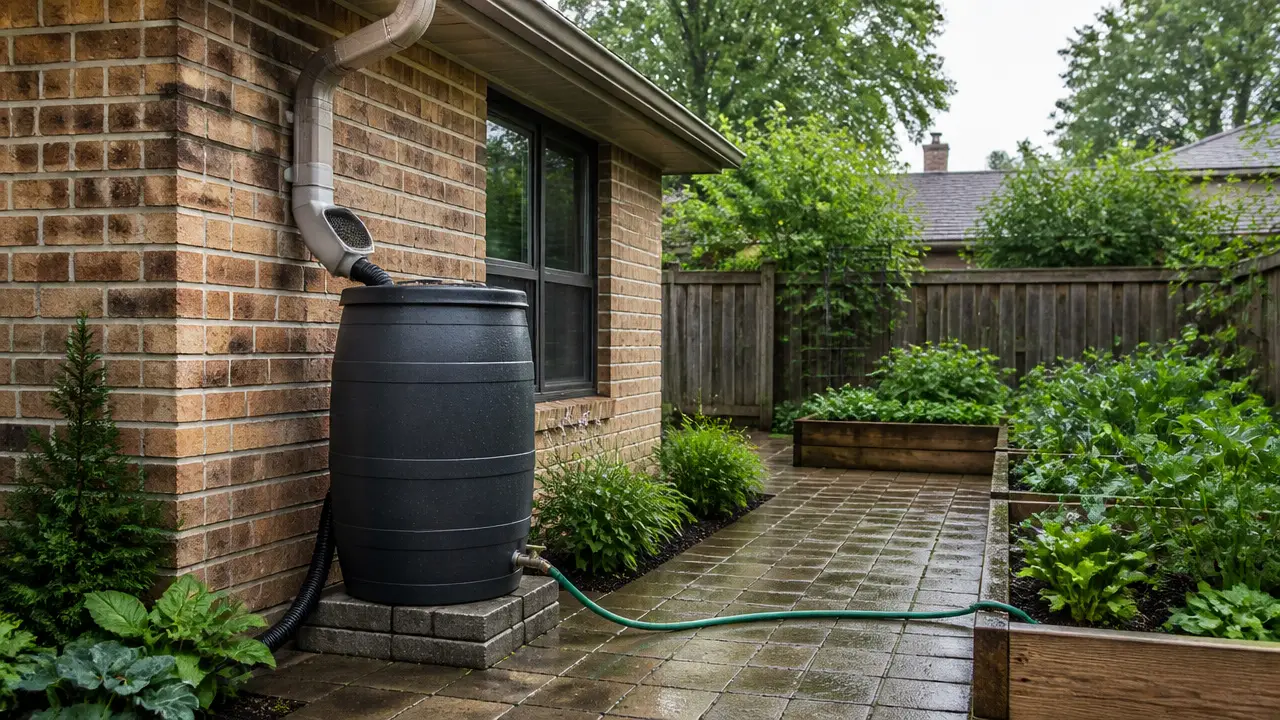
For a typical garden rain barrel, a practical arrangement is:
- An opaque, rigid lid covering the full barrel opening.
- A small screened inlet below the downspout.
- A screened overflow connection near the top of the barrel.
- Secure fittings around any hoses or pipes.
- A lid that can be removed for cleaning.
That setup works well for many non-potable uses such as watering ornamental plants, provided the barrel and surrounding system are appropriate for the intended use.
Frequently Asked Questions
Can I use window screen on a rain barrel?
Fine insect-resistant screen may work as an inlet barrier if it is durable enough for outdoor use and securely attached. It should not usually serve as the entire structural cover of an open barrel.
Can I use plywood as a rain barrel lid?
You can, but plywood is vulnerable to moisture, swelling, delamination, and decay. A weather-resistant plastic or properly designed original barrel lid usually requires less upkeep. If wood is used, keep coatings and deteriorating material from contaminating the stored water.
Should a rain barrel lid be airtight?
Not necessarily. A rain barrel needs to accept incoming water, release overflow, and allow the system to operate without unintended pressure. The important goal is to keep pests, debris, and excessive light out while managing water and air safely.
How do I keep mosquitoes out of a covered rain barrel?
Secure the lid and place fine insect-resistant screen over every opening mosquitoes could use, including the inlet, overflow, vents, and gaps around hoses or pipes. Inspect damaged or loose screening regularly.
Does a rain barrel need a lid if the downspout connects directly to it?
Yes. A direct pipe connection does not protect the rest of the barrel opening. The barrel still needs a secure cover, and openings around the pipe should be protected against insects and debris.
Why is water spilling off the top of my rain barrel screen?
The screen may be clogged, the inlet may be too small, or incoming flow may exceed what the opening can handle. Clean the screen and inspect the inlet and overflow arrangement rather than simply removing the insect barrier.
Will a rain barrel cover stop algae?
An opaque cover can greatly reduce the light algae need, especially when paired with an opaque barrel. It cannot guarantee that algae will never grow because nutrients, debris, temperature, and maintenance also affect growth.