As an affiliate, we may earn a commission from qualifying purchases. We get commissions for purchases made through links on this website from Amazon and other third parties.
Rainwater is not automatically unhealthy, but untreated collected rainwater should not be assumed safe to drink. The main health risk usually comes from what the water picks up before it reaches your tank: air pollution, roof debris, bird and animal droppings, roofing materials, dirty gutters, insects, and contamination inside the storage system.
For watering ornamental plants or other uses where you are unlikely to swallow the water, the risk is usually much lower. For drinking, cooking, brushing teeth, or other uses where water may be swallowed, rainwater needs much more careful collection, treatment, testing, and maintenance.
The CDC says rainwater can contain germs and chemicals even when it looks clean. It recommends regular testing when collected rainwater is used for drinking, cooking, or bathing.
Is Rainwater Itself Dirty?
Rain falling through the atmosphere is often relatively low in impurities compared with many surface-water sources. But it is not sterile.
Rain can pick up:
- Dust
- Smoke particles
- Air pollution
- Chemicals
- Pollen and other airborne material
The bigger change usually happens after the rain reaches a collection surface.
Roof-collected water may wash bird droppings, leaves, insects, dust, soot, and other debris into the gutter and storage tank. WHO notes that the quality of rainwater can deteriorate during collection, storage, and household use.
So there is an important difference between rain falling from the sky and rainwater sitting in a barrel or cistern.
The Main Health Risks From Collected Rainwater
Germs
Microbial contamination is one of the most important concerns when rainwater will be swallowed.
Animal droppings and dirty collection surfaces can introduce bacteria, parasites, and other microorganisms. WHO guidance notes that microbial contamination of collected rainwater is fairly common and that pathogens have been detected in rainwater systems.
You cannot reliably tell whether these organisms are present by looking at the water.
Clear water can still contain harmful germs.
Chemicals and Metals
Rainwater may also pick up chemicals from:
- Roofing
- Flashing
- Gutters
- Pipes
- Fittings
- Storage tanks
- Nearby smoke or industrial pollution
For example, lead or copper may enter water from some materials in the collection system. The CDC also warns that roofing, gutter, piping, and storage materials can introduce chemicals into collected rainwater.
This is one reason a system intended for drinking water needs suitable materials from the roof all the way to the tap.
Contamination After Dry Weather
The first runoff after a dry spell is often dirtier than water collected later in the storm.
During dry weather, roofs collect dust, leaves, animal droppings, pollen, and other debris. The first rain washes much of that material toward the downspout.
A first-flush diverter sends some of this early runoff away from the storage tank instead of collecting it.
A first-flush system can improve incoming water quality, but it does not make the remaining water automatically safe to drink. The CDC recommends first-flush diversion as one way to reduce contamination entering a rainwater system.
How Unhealthy Is Rainwater for Different Uses?
The answer depends heavily on what you are doing with it.
| Rainwater use | General health concern |
|---|---|
| Watering ornamental plants | Usually lower |
| Washing outdoor tools | Usually lower |
| Toilet flushing | Lower when properly separated from drinking-water plumbing |
| Irrigation where people may contact spray | More care is needed |
| Bathing | Higher because water may contact the mouth, eyes, or broken skin |
| Washing food | Higher |
| Brushing teeth | High enough to require drinking-water quality |
| Cooking | Requires drinking-water quality |
| Drinking | Requires the greatest level of control |
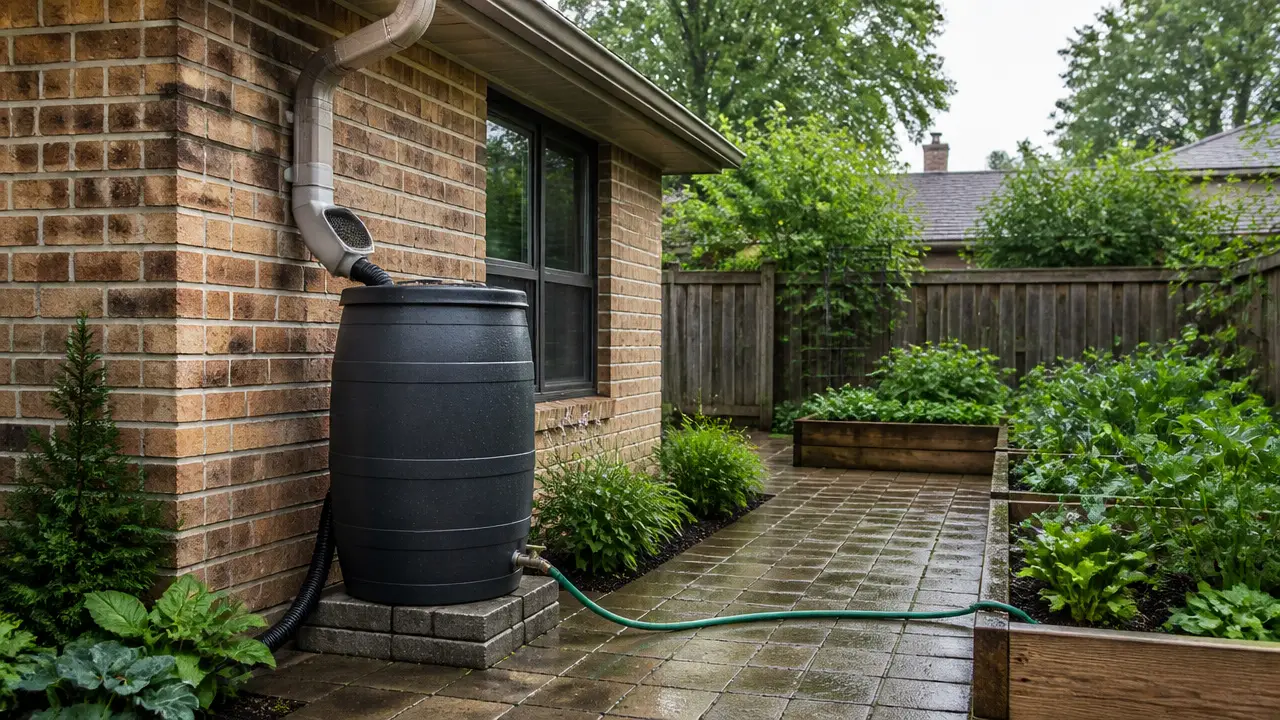
Non-potable means water that is not intended for drinking. A simple rain barrel used for non-potable garden watering does not normally need the same treatment system as rainwater intended for a kitchen faucet.
Potable means suitable for drinking.
That distinction should guide the entire system.
Can You Drink Rainwater Straight From a Rain Barrel?
You should not assume that you can.
A normal garden rain barrel may have:
- Roof runoff flowing directly into it
- No first-flush diversion
- Limited filtration
- An open or poorly screened inlet
- Sediment at the bottom
- Biofilm on the walls
- Insects or other contamination
- Materials that were never selected for drinking-water contact
Adding a basic screen or sediment filter does not solve all of these problems.
A sediment filter can remove particles. It does not necessarily remove bacteria, viruses, dissolved chemicals, or metals.
Likewise, UV treatment can be useful for controlling certain microorganisms when correctly designed and operated, but UV does not remove dissolved chemicals or sediment. Cloudy water can also interfere with effective UV treatment.
No single treatment device should be treated as proof that collected rainwater is safe to drink.
Does Boiling Make Rainwater Safe?
Boiling can control many disease-causing microorganisms, but it does not remove every type of contamination.
It does not reliably remove contaminants such as:
- Lead
- Copper
- Many dissolved chemicals
- Some pollutants
If toxic chemicals are present, heating the water does not turn it into safe drinking water. CDC emergency guidance specifically warns against using chemically contaminated water for drinking and notes that chemical contamination cannot simply be solved by normal germ-killing treatment.
That is why treatment should be chosen according to what is actually in the water.
Does a Water Filter Make Rainwater Safe?
Not necessarily.
"Water filter" covers many different devices.
One filter may catch leaves and sediment. Another may reduce certain chemicals. A different treatment stage may target microorganisms.
Important specifications include the micron rating, which describes the approximate size of particles a filter is designed to capture. But a small micron rating alone does not prove that the water is safe to drink.
A drinking-water rainwater system may require several stages selected for the specific water quality and risks involved.
Look closely at risks of drinking untreated rainwater to assess the most useful follow-up test for the identified concern.
Testing helps determine what those stages need to address.
The CDC recommends testing rainwater for harmful germs and chemicals and choosing treatment that targets the contaminants found.
Does Rainwater Have Too Few Minerals?
Rainwater usually contains much less dissolved mineral material than groundwater.
WHO notes that rainwater is generally low in dissolved minerals and may contain little calcium or magnesium compared with mineral-rich water sources. Most essential nutrients normally come from food, so low mineral content does not by itself mean that rainwater is poisonous or unhealthy.
Low mineral content can, however, affect taste and water chemistry.
Rainwater can also be mildly acidic and may interact with metals and other materials in a collection system. That makes compatible plumbing and storage materials especially important.
How to Reduce Health Risks in a Rainwater System
The best approach is to keep contamination out before trying to remove it later.
A well-planned system commonly includes measures such as:
- A suitable collection roof
- Clean gutters
- Leaf and debris screening
- A first-flush system where appropriate
- A covered storage tank
- Screened tank openings
- Protection against insects and animals
- Suitable pipes, fittings, and tank materials
- Periodic tank inspection and cleaning
- Treatment matched to the intended use
Tank openings should be protected from mosquitoes as well. WHO identifies rainwater tanks as possible mosquito breeding sites when systems are not properly protected.
Good system design reduces risk. It does not eliminate the need for testing when the water will be consumed.
When Should Rainwater Be Tested?
If you plan to drink collected rainwater, testing should be part of normal system management rather than something done only when the water looks strange.
The CDC advises testing private rainwater supplies at least annually for harmful germs and chemicals and also considering additional testing when there are changes in color, taste, or smell. Local health authorities may recommend different tests based on local conditions.
Testing may also be sensible after important changes such as:
- Installing a new roof
- Changing tank or plumbing materials
- Flooding or unusual contamination
- Major repairs
- Long periods without system use
- Suspected animal entry
- Nearby fire, chemical release, or heavy pollution event
A laboratory test is more useful than relying only on home strips or a handheld meter.
For example, a total dissolved solids, or TDS, meter estimates the amount of dissolved material in water based mainly on electrical conductivity. It cannot tell you whether bacteria, viruses, lead, pesticides, or other specific hazards are present.
What If You Want Rainwater as Your Main Drinking Supply?
Treat it as a complete drinking-water system, not simply a tank with a filter attached.
The whole path matters:
roof → gutters → first-flush or prefiltration → storage → treatment → plumbing → tap
A weak point anywhere along that path can affect the finished water.
WHO's current drinking-water guidance emphasizes managing risks through the entire supply system rather than depending on a single end treatment.
For a household drinking-water system, consider getting help from a qualified water-treatment professional or local health authority. Appropriate treatment depends on your collection materials, local conditions, test results, system design, and applicable drinking-water requirements.
Current laboratory testing should then be used to confirm that the system is producing water suitable for its intended use.
Rainwater Can Be Useful Without Being Drinking Water
You do not need to turn every rainwater system into a potable-water system.
For many homes, the simplest approach is to reserve rainwater for suitable non-potable uses. A rain barrel that waters flowers, for example, can remain far simpler than a system supplying household drinking water.
That separation also makes maintenance easier.
If rainwater and normal drinking-water plumbing are both present, the systems must be designed so untreated rainwater cannot flow backward into the potable supply. The CDC specifically warns against allowing collected rainwater to contaminate treated piped water.
Frequently Asked Questions
Is rainwater safe to drink directly from the sky?
Do not assume it is safe. Rain can collect particles and pollutants while falling through the atmosphere, and a container used to catch it can add contamination. Drinking water should be collected, treated, and tested using a system intended for that purpose.
Can drinking rainwater make you sick?
Yes. Contaminated collected rainwater can contain germs or chemicals capable of causing illness. The actual risk varies with location, collection methods, storage, treatment, maintenance, and how the water is used.
Is rainwater cleaner than tap water?
Not necessarily. Public drinking water is normally treated and monitored according to applicable drinking-water requirements. Household rainwater systems usually depend on the owner for collection, treatment, maintenance, and testing.
Is rain barrel water safe for vegetables?
Rain barrel water can contain microorganisms and chemicals from roof runoff. Because edible crops create more chances for human exposure than ornamental plants, use greater care. Avoid getting questionable water directly on edible portions that will be eaten, and follow local public-health or agricultural guidance for food-crop irrigation.
Can I make rainwater drinkable with a filter?
A filter alone should not be assumed to make rainwater drinkable. Different treatment stages address different contaminants. Drinking-water treatment should be based on the hazards in the system and supported by appropriate laboratory testing.
Does a first-flush diverter make rainwater safe?
No. A first-flush diverter can reduce some of the debris and contamination washed from the roof at the beginning of a storm. It is a pretreatment step, not proof of drinking-water safety.
How often should drinking rainwater be tested?
CDC guidance advises testing private rainwater supplies at least annually for harmful germs and chemicals. Testing may need to be more frequent depending on local requirements, system conditions, changes to the equipment, or contamination events.
Is clear rainwater safe?
Clear appearance does not prove safety. Many harmful microorganisms and dissolved chemicals cannot be seen, smelled, or tasted. Water intended for drinking should be assessed through appropriate testing rather than appearance alone.