As an affiliate, we may earn a commission from qualifying purchases. We get commissions for purchases made through links on this website from Amazon and other third parties.
Yes. Rainwater can contain germs, even when it looks clear. The risk usually increases after rain touches a roof, gutters, pipes, or a storage tank.
Bird and animal droppings, insects, leaves, dirt, and other material can add microorganisms to collected rainwater. Germs can also enter from the air or grow in poorly maintained storage systems. The CDC advises that rainwater should not be assumed safe to drink without appropriate testing and treatment.
What Kinds of Germs Can Be in Rainwater?
The main groups of microorganisms that may matter are:
- Bacteria
- Viruses
- Protozoa, which are tiny organisms that can include waterborne parasites
Researchers have also found fecal indicator bacteria in roof runoff. These bacteria do not always mean a specific disease-causing germ is present. Instead, they can warn that animal or other fecal contamination may have reached the water.
EPA research treats bacteria, viruses, and protozoa as important pathogen groups when evaluating the health risks of roof-collected rainwater.
The important point is that you cannot tell whether rainwater contains harmful germs just by looking at it.
Clear water is not necessarily safe water.
How Do Germs Get Into Collected Rainwater?
Some contamination can happen before a raindrop ever reaches your roof. Rain can pick up particles and microorganisms from the air.
For most home rainwater systems, however, the collection surfaces are an important source of contamination.
Roofs
A roof may collect:
- Bird droppings
- Squirrel or rodent droppings
- Insects
- Leaves
- Pollen
- Dust
- Dirt
- Decomposing plant material
The next rain can wash some of this material into your gutters and storage tank.
The CDC notes that this problem can be especially noticeable when rain follows several dry days. Material has had more time to build up on the roof between storms.
Gutters and downspouts
Dirty gutters can hold leaves, mud, animal waste, and standing water.
That material can wash directly into a rain barrel or cistern when a storm begins.
Screens and regular gutter cleaning help keep larger debris out, but a screen does not remove microscopic germs.
Storage tanks
Contamination can continue after the water reaches storage.
Problems are more likely when a tank:
- Has an uncovered opening
- Allows insects or animals inside
- Receives dirty overflow water
- Collects large amounts of sediment
- Is rarely inspected or cleaned
- Has plumbing that lets contaminated water flow backward
Even a good tank does not make contaminated water safe simply because the water has been stored for a long time.
Is the First Rain Dirtier?
Often, yes.
The beginning of a storm can wash accumulated dirt, droppings, dust, and other material from a roof. This is why many rainwater systems use a first-flush diverter.
A first-flush diverter sends the first portion of roof runoff away from the storage tank. Cleaner runoff later in the storm is then allowed into storage.
The CDC recommends considering first-flush diversion as one way to improve collected rainwater quality.
A first-flush diverter can reduce contamination entering the tank, but it does not disinfect the water. It should be treated as one protection step, not as proof that the remaining water is safe to drink.
Does a Rain Barrel Have Germs?
It can.
A typical rain barrel connected to a house downspout receives untreated roof runoff. Unless the system has been specifically designed and maintained for higher-quality water, it should normally be treated as a non-potable water supply.
Non-potable means water that is not intended for drinking.
Common uses may include watering ornamental plants or other jobs where swallowing the water is unlikely, subject to local rules.
Keep the barrel covered and screen openings so mosquitoes and larger debris cannot enter. The CDC recommends screening rainwater collection openings or regularly emptying rain barrels as part of mosquito control.
Can Germs Grow in Stored Rainwater?
Some microorganisms can survive in stored water, and microbial conditions can change while the water sits.
Warm temperatures, sediment, organic material, and poorly maintained tanks can make storage conditions less favorable from a water-quality standpoint.
This is one reason good rainwater systems try to keep debris out before it reaches the tank.
A basic collection path might include:
roof → clean gutter → debris screen → first-flush diversion → covered storage
Each stage helps reduce contamination or maintenance problems. None of them, by itself, establishes that the water is safe for drinking.
Does Filtering Rainwater Remove the Germs?
It depends on the filter and the microorganism.
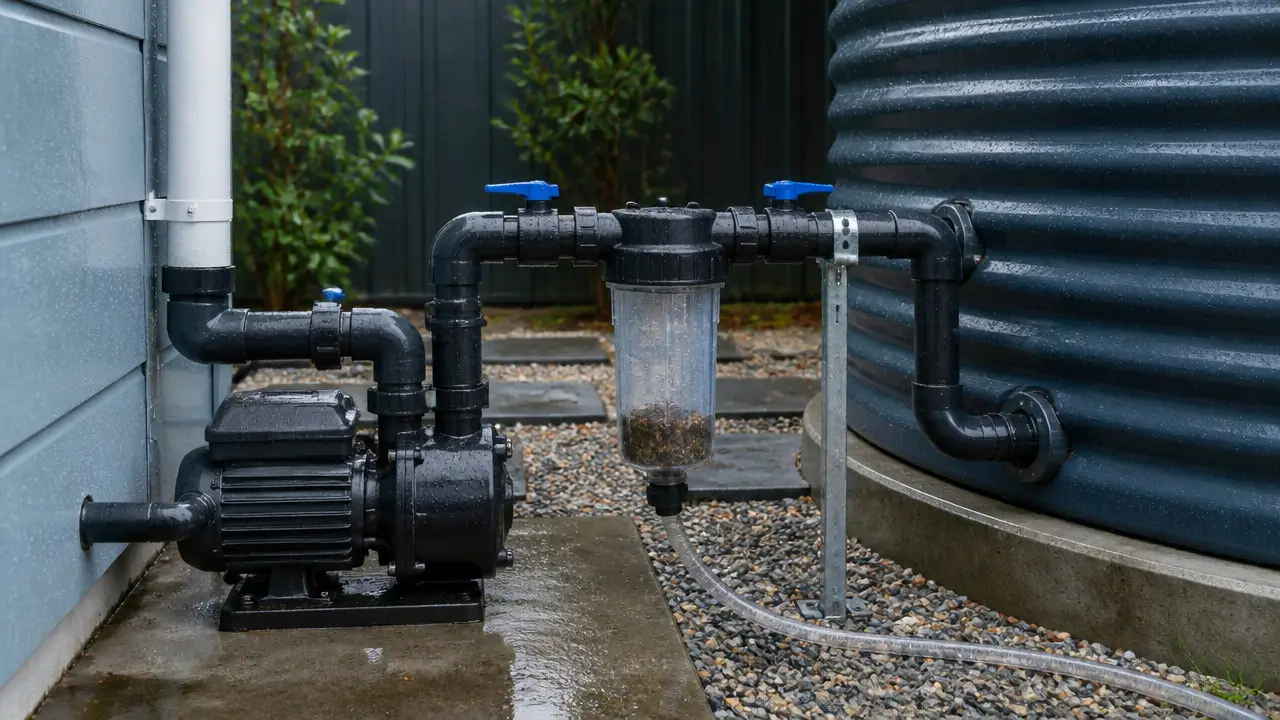
A simple sediment filter mainly removes particles. It should not automatically be treated as a germ-removal device.
Micron rating describes the approximate size of particles a filter is designed to capture. Different bacteria, protozoa, and viruses have different sizes, and filter construction matters as much as the number printed on the filter.
Other treatment methods may include properly designed disinfection systems. But treatment has to match the contaminants actually present.
The CDC advises testing rainwater and choosing treatment based on the germs or chemicals that need to be removed.
A single cartridge filter, UV unit, purifier, chemical treatment, or other device should not be assumed to make roof runoff potable.
Is Rainwater Safe to Drink?
Untreated collected rainwater should not be assumed safe to drink.
Potable means suitable for drinking.
The CDC recommends using treated public water or bottled water instead of rainwater for drinking when possible. It also advises regularly testing rainwater for germs and chemicals when the water is used for drinking, cooking, or bathing.
If a household plans to use rainwater as drinking water, think about the entire system rather than buying one filter.
That system can involve:
- A suitable collection surface
- Clean gutters
- Debris exclusion
- First-flush diversion
- A sanitary, covered tank
- Appropriate prefiltration
- Treatment designed for the water quality
- Protection against recontamination
- Current laboratory water testing
- Regular inspection and maintenance
- Compliance with local health and plumbing requirements
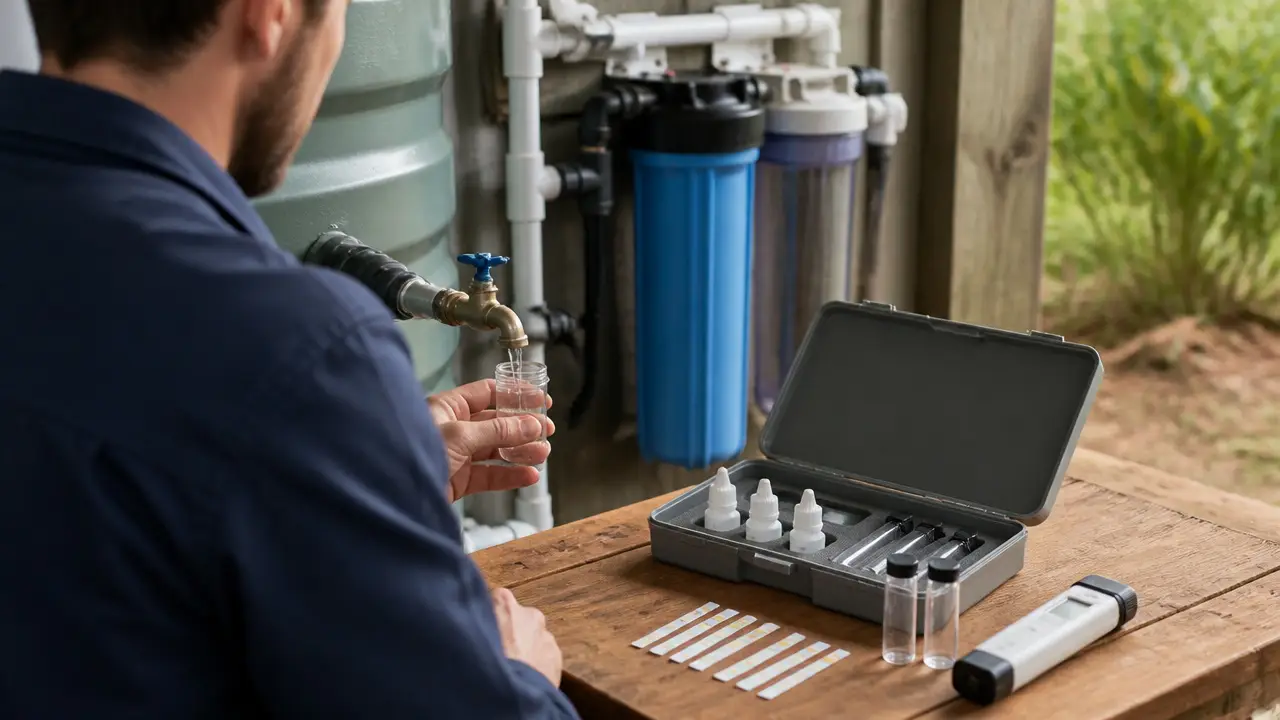
CDC guidance also recommends that rainwater used as drinking water be tested at least annually for harmful germs and chemicals. Local health departments can help determine which tests are appropriate for a particular system and area.
Planning around illness risks from contaminated rainwater helps interpret whether credible results justify media or cartridge replacement.
People using a household rainwater supply for drinking should consider working with a qualified water-treatment professional and an accredited laboratory rather than relying only on home test strips or appearance.
Does Boiling Solve the Problem?
Boiling can kill many disease-causing microorganisms, but germs are only one possible rainwater problem.
Roof runoff may also contain chemical contaminants picked up from:
- Roofing materials
- Flashing
- Gutters
- Pipes
- Air pollution
- Storage materials
The CDC specifically notes that chemicals such as lead, copper, and asbestos may enter rainwater from collection-system materials.
Boiling does not remove every chemical contaminant. In some cases, evaporating water can actually leave nonvolatile contaminants more concentrated.
That is why drinking-water safety requires consideration of both microbial and chemical water quality.
What About Rainwater for the Garden?
The acceptable water quality depends heavily on how you use the water.
Using rainwater on ornamental landscaping generally involves less direct exposure than drinking it. Using it where water may contact food that will be eaten raw raises different concerns.
If roof runoff is being used around edible plants, consider:
- What is on the roof and in the gutters
- Whether animals frequently visit the roof
- Whether water is sprayed directly onto edible leaves or fruit
- Whether irrigation can be directed toward the soil instead
- Local guidance for harvested rainwater use
The CDC recommends limiting uses that could lead to swallowing untreated rainwater and, when possible, using safer water for plants intended to be eaten.
How to Reduce Germs Entering a Rainwater System
You cannot make outdoor rainwater collection completely sterile. You can, however, reduce obvious sources of contamination.
Keep the catchment clean
Remove leaves, nests, and accumulated debris from accessible gutters and collection areas.
Do not take unnecessary risks on a roof. Use a qualified professional when cleaning requires unsafe roof access.
Install debris screens
Screens help keep leaves, insects, and larger material out of gutters and tanks.
They do not remove microscopic organisms.
Consider first-flush diversion
A first-flush diverter keeps some of the dirtiest initial roof runoff from entering storage.
The correct amount to divert depends partly on the roof area and system design.
Seal the storage tank
Use a tank designed to keep out animals, insects, debris, and unwanted surface water.
Screen vents and overflow openings where appropriate.
Prevent cross-connections
Do not allow untreated rainwater to flow backward into household drinking-water plumbing.
The CDC specifically warns that rainwater can contaminate previously treated water if the two systems are improperly connected.
Plumbing connections between rainwater and potable systems may be regulated. A qualified plumber should handle installations where cross-connection or backflow protection is required.
Inspect the system regularly
Check screens, gutters, first-flush components, tank lids, overflows, pumps, and treatment equipment.
Replace and service filters according to their intended use. Dirty treatment equipment can create its own water-quality problems.
Watch for Changes After Flooding or Major Contamination
A rainwater tank that has been flooded or contaminated by storm debris deserves special attention.
Floodwater can introduce sewage, chemicals, and large amounts of organic material into a cistern. CDC guidance says that cisterns affected by floodwater or heavy contamination may need cleaning and disinfection before they are used again.
Do not assume that adding extra chlorine or passing badly contaminated water through a household filter will solve the problem.
Water contaminated with fuel or toxic chemicals should not be treated as normal rainwater. Follow local health authority guidance about draining, cleaning, testing, and returning the system to service.
The Bottom Line
Yes, there can be germs in rainwater.
The rain itself may carry microorganisms, and additional contamination can enter when water crosses a roof, gutters, downspouts, pipes, and storage tanks.
For a garden rain barrel, good screens, first-flush control, covered storage, and routine cleaning can reduce contamination and maintenance problems.
For drinking water, the standard needs to be much higher. Roof-collected rainwater should not be assumed potable because it looks clear, passes through one filter, or has no smell. Safe drinking-water use requires a properly designed collection and treatment system, current laboratory testing, ongoing maintenance, and attention to local health and plumbing requirements.
Frequently Asked Questions
Can fresh rain contain bacteria?
Yes. Rain can pick up microorganisms and particles from the air. More contamination may be added when the water touches a roof, gutter, downspout, or storage tank.
Is rainwater from a roof safe to drink?
It should not be assumed safe to drink untreated. Roof runoff can contain germs as well as chemicals. Drinking-water systems require appropriate collection, treatment, laboratory testing, and maintenance.
Does a first-flush diverter remove germs?
A first-flush diverter can reduce some contamination by sending the first, often dirtier roof runoff away from the tank. It does not disinfect the remaining water or guarantee that it is safe to drink.
Can a water filter remove germs from rainwater?
Some treatment systems are designed to remove certain microorganisms, but a basic sediment filter is mainly intended for particles. Treatment must be selected for the contaminants present, and one filter alone does not establish that rainwater is potable.
Can I tell if rainwater has germs by looking at it?
No. Water can look, smell, and taste normal while still containing harmful microorganisms or chemicals. Testing is needed when water quality matters for the intended use.
How often should drinking rainwater be tested?
CDC guidance recommends testing rainwater used for drinking at least once each year for harmful germs and chemicals. Additional testing may be appropriate after contamination, system changes, or other water-quality concerns. Your local health department can help determine suitable tests.
Are germs a concern in rainwater used for plants?
The risk depends on how the water is used. Watering ornamental plants generally creates less exposure than spraying untreated roof runoff onto food that will be eaten raw. Consider the collection surface, application method, and local health guidance.