As an affiliate, we may earn a commission from qualifying purchases. We get commissions for purchases made through links on this website from Amazon and other third parties.
Rainwater can look clear and still contain germs, dirt, animal waste, metals, and other contaminants. Collected rainwater should not be assumed to be sanitary or safe to drink just because it came from the sky or looks clean.
How sanitary it is depends on the whole collection system. Water that falls through clean air and goes straight into a clean container may start with little contamination. Roof-collected rainwater has more chances to pick up contaminants from the roof, gutters, pipes, tank, and handling.
For garden watering and many other non-potable uses, a well-maintained rainwater system can often provide useful water. Non-potable means water that is not intended for drinking. Drinking, cooking, brushing teeth, and other uses where water may be swallowed require much stricter water-quality controls.
Current CDC guidance says rainwater is not necessarily safe to drink without removing harmful germs and chemicals. The CDC recommends regular testing when rainwater is used for drinking, cooking, or bathing.
Why Rainwater Is Not Automatically Sanitary
Rain itself is only one part of a rainwater harvesting system. Contamination can enter before the rain reaches the roof and at almost every point afterward.
Contaminants in the air
Rain can collect particles while falling through the atmosphere. What it picks up varies with location and conditions.
Possible contaminants include:
- Dust
- Smoke
- Pollen
- Fine airborne particles
- Chemicals from local pollution
This means even rain collected without a roof should not automatically be considered drinking water.
Contamination from the roof
A roof is usually the largest source of contamination in a household rainwater system.
Between storms, roofs can collect:
- Bird and animal droppings
- Leaves
- Dust
- Insects
- Pollen
- Plant material
- Soot and other airborne debris
When rain begins, much of this material is washed toward the gutters.
The first runoff after a dry period can therefore contain more contamination than water collected later in the storm. The CDC notes that bird droppings, roof debris, and contaminants from roofing materials can enter collected rainwater.
Gutters and downspouts
Dirty gutters can add another layer of contamination.
Standing leaves and organic matter can break down inside a gutter. Birds, rodents, insects, and other animals may also enter uncovered sections.
Keeping gutters clean does not make the water sterile, but it reduces the amount of unwanted material entering the storage system.
Pipes and storage materials
Water can also pick up chemicals from the surfaces it touches.
Depending on the materials and their condition, this may include metals or other substances from:
- Roofing
- Flashing
- Gutters
- Pipes
- Fittings
- Tank materials
The suitability of collection materials matters much more when the water will be used for drinking.
The storage tank
Water quality can continue to change after rain enters a barrel or cistern.
Problems become more likely when a tank allows:
- Sunlight inside
- Insects to enter
- Animals to enter
- Debris to accumulate
- Surface runoff to flow in
- Dirty tools or hoses to contact the water
Sediment also collects over time. This can include fine roof dirt, organic material, and particles that passed through screens.
A tank therefore needs to be treated as part of the water-quality system, not just as a container.
How Sanitary Is Roof-Collected Rainwater?
There is no single sanitation rating for roof-collected rainwater.
Two houses receiving the same storm can collect water of very different quality. One may have a clean roof, screened gutters, a first-flush system, and a protected cistern. The other may have animal droppings on the roof and an open barrel.
The intended use also changes what "sanitary enough" means.
| Intended use | Main concern |
|---|---|
| Watering ornamental plants | Debris, odors, mosquitoes, system clogging |
| Landscape irrigation | Sediment, pathogens, irrigation equipment clogging |
| Watering food plants | Contact with edible portions and contamination risk |
| Outdoor cleaning | Skin contact, splashing, accidental swallowing |
| Toilet flushing | Plumbing separation and system cleanliness |
| Bathing | Germs and possible accidental ingestion |
| Drinking and cooking | Microbial and chemical safety |
Water that is acceptable for watering shrubs is not automatically acceptable for washing dishes or drinking.
Does a First-Flush Diverter Make Rainwater Sanitary?
A first-flush diverter can improve collected water quality, but it does not make the water sanitary by itself.
First flush means the first portion of roof runoff during a rain event. This early runoff can carry a higher amount of dust, droppings, pollen, and other material that accumulated on the roof.
Sanitary appearance does not eliminate the health risks from untreated rainwater collected from a roof and storage system.
A first-flush diverter sends some of this initial runoff away from the storage tank.
The CDC recommends considering a first-flush device as one way to improve collected rainwater quality. The amount diverted depends partly on the size of the roof catchment.
It should be considered a contamination-reduction step, not a drinking-water treatment system.
Screens and Pre-Filtration Help Too
Screens can keep large material out of the tank.
Depending on the system, these may include:
- Gutter guards
- Downspout screens
- Leaf filters
- Tank inlet screens
- Mosquito-resistant screens
These devices mainly remove larger debris and animals or insects. They do not reliably remove bacteria, viruses, dissolved chemicals, or very small particles.
A screen that makes water look clearer therefore does not prove that the water is microbiologically safe.
Storage Design Has a Major Effect on Water Quality
A good rainwater tank should limit new contamination after collection.
Useful features include a secure cover, screened openings, controlled overflow, and protection from sunlight and surface runoff.
Opaque storage is useful because sunlight can encourage biological growth inside a tank.
The tank should also be positioned and maintained so insects, animals, soil, and dirty floodwater cannot easily enter it.
The World Health Organization's current sanitary guidance for rainwater systems treats safe management as an ongoing process involving the collection area, storage system, maintenance, monitoring, and corrective action rather than relying on one treatment step.
Is Rainwater Sanitary Enough for Garden Use?
Rainwater is commonly used for irrigation, but the type of garden matters.
Using collected rainwater on trees, lawns, and ornamental plants generally involves less direct human exposure than using it on vegetables that will be eaten raw.
When watering edible plants, reduce direct contact between questionable water and the edible part of the plant when practical. Drip or soil-level watering can also reduce splashing compared with spraying water across leaves and produce.
The CDC recommends considering treated public water or another suitable drinking-water source for plants you plan to eat when minimizing health risk is the priority.
Local agricultural or public-health guidance may provide additional recommendations for food gardens.
What About Rain Barrels?
A basic rain barrel usually stores untreated roof runoff. It should therefore normally be considered a source of non-potable water unless a properly designed system establishes otherwise.
Review contamination risks in fresh rainwater to compare the downstream effects of the current design choice.
A barrel can become less sanitary when:
- The lid is open
- The inlet is unscreened
- Mosquitoes can enter
- Leaves collect inside
- The barrel receives dirty roof runoff
- Sediment is never removed
- Animals can reach the opening
- Water sits for long periods without system maintenance
Keep the barrel closed and screened, inspect it regularly, and clean it when sediment or contamination requires it.
Do not assume that clear water from the barrel's spigot is clean simply because heavier sediment has settled to the bottom.
Can Stored Rainwater Grow Bacteria?
Yes.
A storage tank is not a sterile environment. Microorganisms can enter with roof runoff and may persist in the water or sediment.
Organic material such as leaves, pollen, and animal waste can also enter the system and affect water quality.
Temperature, sunlight, storage time, tank cleanliness, and incoming contamination can all affect what happens inside the tank.
This is another reason that appearance, smell, and taste cannot determine whether water is safe to drink.
Can Rainwater Be Made Potable?
Potentially, but potable rainwater requires much more than putting a filter on a rain barrel.
Potable means suitable for drinking.
A drinking-water rainwater system should be treated as a complete water-supply system. Important parts may include:
- A suitable collection surface and compatible materials
- Roof and gutter maintenance
- Debris exclusion and prefiltration
- First-flush management where appropriate
- Protected storage
- Treatment selected for the actual microbial and chemical hazards
- Properly maintained plumbing and treatment equipment
- Current laboratory testing
- Ongoing inspection and maintenance
- Compliance with applicable local health and plumbing requirements
WHO guidance emphasizes managing drinking-water safety from the collection area through storage and the point where the water is used.
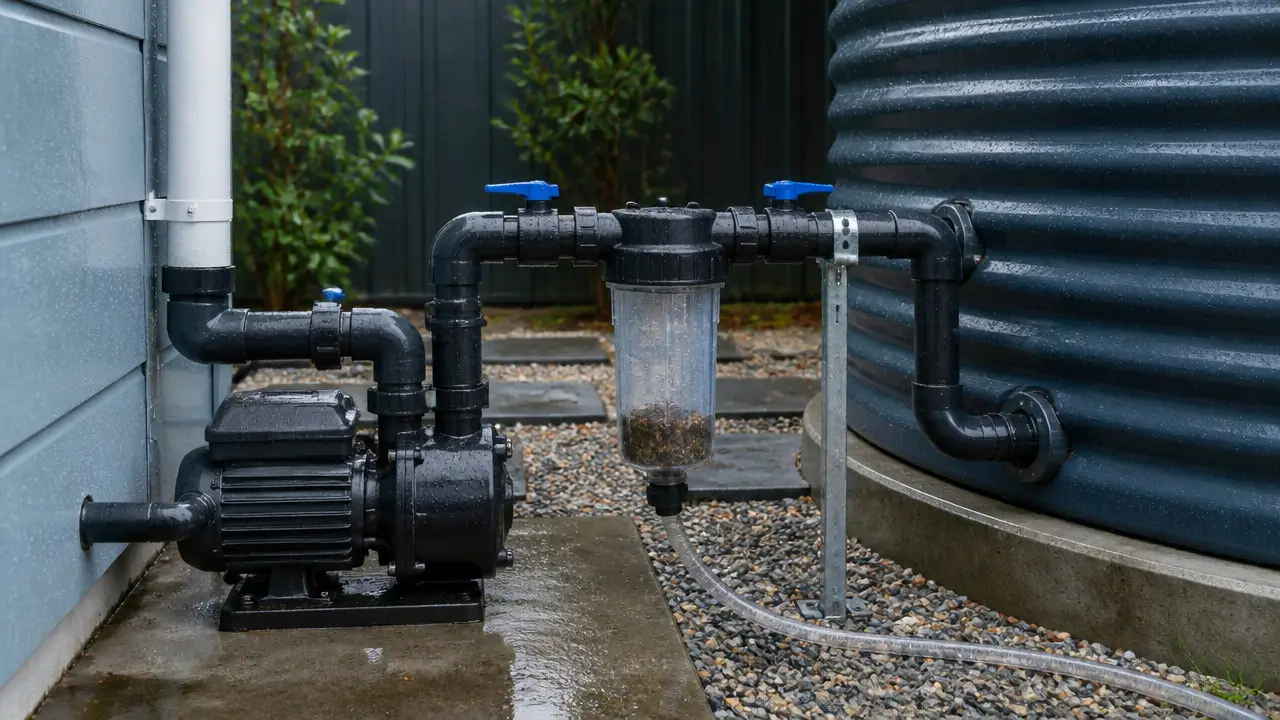
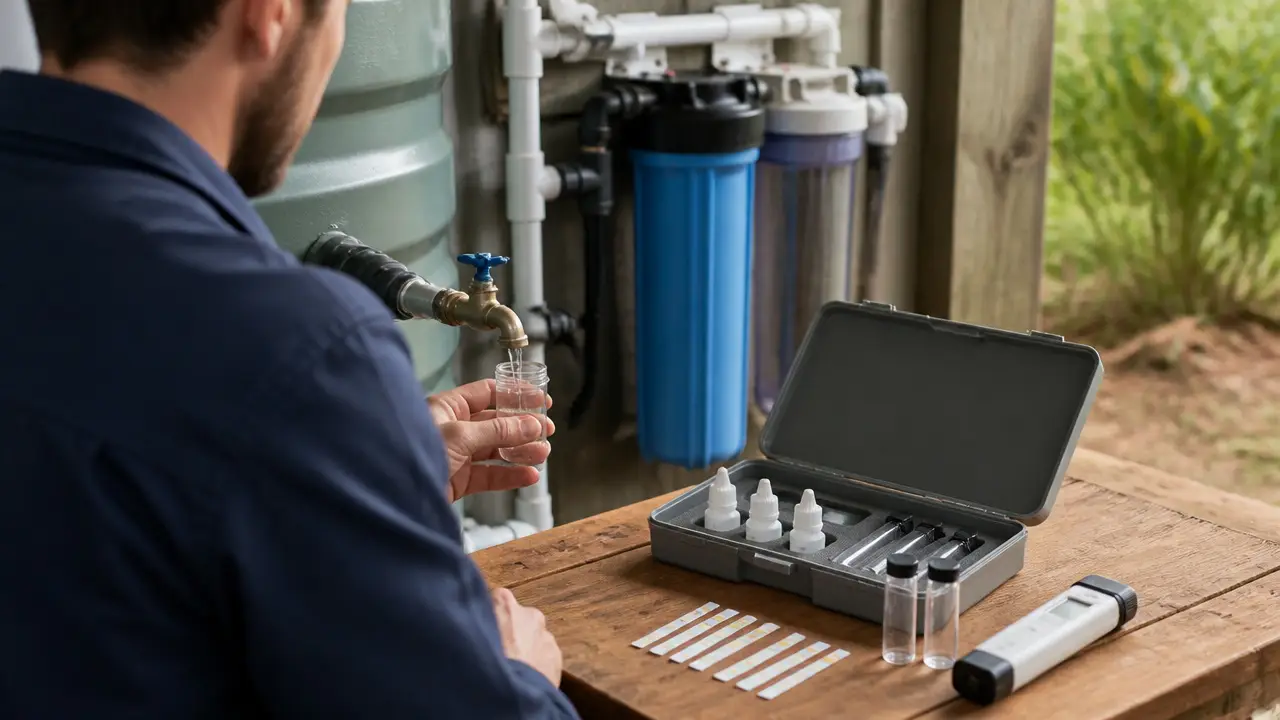
A sediment filter, activated carbon cartridge, UV unit, water purifier, test strip, or handheld meter can each have a useful job. None should be assumed to provide a complete assessment of drinking-water safety by itself.
Filtering Does Not Always Mean Disinfecting
It helps to separate several different water-treatment jobs.
A sediment filter mainly removes suspended particles. A filter's micron rating describes the approximate size of particles it is designed to capture.
Activated carbon can reduce certain tastes, odors, and chemicals when properly selected and maintained.
Disinfection methods are intended to control microorganisms.
Other treatment may be required for specific dissolved chemicals.
These stages are not interchangeable. A filter that makes cloudy water clear may do little or nothing about some microorganisms or dissolved contaminants.
Treatment should be based on what is actually present in the water and how the water will be used.
Testing Matters for Higher-Risk Uses
You cannot reliably judge drinking-water safety by looking at the water.
Clear water can still contain microorganisms or chemicals.
If rainwater will be used for drinking, cooking, or bathing, the CDC recommends regular testing for appropriate germs and chemicals and suggests contacting the local health department for advice about what to test.
Testing needs depend on factors such as:
- Local environmental conditions
- Roof and plumbing materials
- Nearby pollution sources
- Intended water use
- Treatment equipment
- Changes to the collection system
- Previous test results
For drinking-water decisions, use an appropriate qualified laboratory rather than depending only on home test strips or inexpensive handheld meters.
Keep Rainwater Separate From Drinking-Water Plumbing
One sanitation problem can occur even when nobody drinks directly from the rain tank.
If untreated rainwater can flow backward into household drinking-water pipes, it can contaminate previously treated water.
Rainwater plumbing therefore needs proper separation and any required backflow protection.
The CDC specifically advises keeping rainwater from entering pipes that carry safe drinking water.
Requirements vary by location, so plumbing connected to a rainwater system should follow current local rules.
How to Keep a Rainwater System Cleaner
You cannot keep an outdoor rainwater system sterile, but you can reduce contamination.
Focus on the whole path the water follows:
- Keep the collection roof reasonably clean.
- Remove leaves and buildup from gutters and downspouts.
- Keep animals from entering the collection system where practical.
- Screen tank openings.
- Use first-flush control where appropriate.
- Keep tanks securely covered.
- Prevent sunlight from entering opaque storage tanks.
- Keep surface runoff and floodwater out of the tank.
- Inspect overflow and vent screens.
- Remove excessive sediment when needed.
- Maintain filters and treatment equipment on schedule.
- Prevent cross-connections with potable plumbing.
- Test water when the intended use requires it.
No single item on this list guarantees safe water. Their value comes from reducing contamination at several points instead of depending on one device at the end.
The Bottom Line
Rainwater can be relatively clean when it first falls, but collected rainwater is not automatically sanitary.
Roof runoff may contain germs from animal waste, airborne contaminants, roof debris, metals, and other substances. More contamination can enter through gutters, pipes, storage tanks, and handling.
For many non-potable uses, good collection design and regular maintenance can make rainwater useful without treating it as drinking water.
For drinking and other higher-exposure uses, take a more conservative approach. Use suitable collection materials, protect the tank, apply treatment designed for identified hazards, maintain the whole system, obtain current laboratory testing, and follow local health and plumbing requirements. Current CDC and WHO guidance supports this whole-system approach rather than assuming that clear rainwater or a single filter is enough.
Frequently Asked Questions
Is rainwater clean before it hits the roof?
Rain can pick up dust, smoke, pollen, chemicals, and other airborne particles before reaching the roof. It may start with fewer contaminants than roof runoff, but it should not automatically be considered safe to drink.
Is water from a rain barrel sanitary?
Rain-barrel water is usually untreated roof runoff and should normally be treated as non-potable water. Its quality depends on the roof, gutters, barrel design, screens, maintenance, storage conditions, and intended use.
Does boiling rainwater make it safe to drink?
Boiling can control many disease-causing microorganisms when done correctly, but it does not remove every possible chemical contaminant. Some chemicals can remain after boiling. Drinking-water safety therefore requires attention to both microbial and chemical hazards.
Does a first-flush diverter make rainwater safe to drink?
No. A first-flush diverter can reduce some of the dirt and contamination washed from a roof at the start of a storm, but it is only one part of a rainwater-quality system.
Can I tell whether rainwater is safe by looking at it?
No. Water can look clear and have no noticeable smell while still containing microorganisms or dissolved chemicals. Laboratory testing is important when rainwater is being considered for drinking or other higher-risk uses.
Is filtered rainwater potable?
Not necessarily. Different filters remove different contaminants. A sediment or carbon filter does not by itself establish that rainwater is potable. Drinking-water systems need treatment matched to the hazards, proper maintenance, testing, and compliance with applicable local requirements.
Can I use rainwater for showering?
Rainwater used for bathing can still expose a person to contaminants through accidental swallowing or other contact. The CDC recommends regular testing for germs and chemicals when collected rainwater is used for bathing. A system intended for household bathing should be designed and maintained for that use.