As an affiliate, we may earn a commission from qualifying purchases. We get commissions for purchases made through links on this website from Amazon and other third parties.
Rainwater can look very clean, especially when it falls far from cities and industry. But rainwater is not the cleanest water on Earth, and untreated rainwater should not be assumed safe to drink.
Rain begins with relatively little dissolved mineral content because evaporation leaves most salts and minerals behind. But water does not stay pure as it moves through the atmosphere. Rain can collect dust, smoke, microorganisms, and other particles before it reaches the ground. If you collect it from a roof, it can pick up even more contamination from roofing materials, gutters, bird droppings, leaves, insects, and storage tanks.
Why Rainwater Seems So Clean
Rain is part of the natural water cycle.
Water evaporates from oceans, lakes, soil, and plants. Most dissolved salts, minerals, and many other substances stay behind during evaporation. Water vapor then cools and forms droplets that eventually fall as rain.
Because of this process, fresh rain can contain fewer dissolved minerals than many groundwater sources.
That does not make it pure.
As droplets form and fall through the atmosphere, they can collect:
- Dust and fine particles
- Smoke
- Pollen
- Airborne chemicals
- Microorganisms
- Pollution from vehicles and industry
- Sea salt near coastal areas
The amount and type of contamination vary with location, weather, season, and local air quality. CDC notes that rainwater can pick up dust, smoke, and other particles in the air even before it reaches a collection surface.
Is Rainwater Pure Before It Hits the Roof?
Not completely.
You may hear that rainwater is "distilled by nature." There is some truth behind the comparison because evaporation separates water from many substances dissolved in its original source.
But natural rain is not the same as water produced and protected inside a controlled distillation system.
Atmospheric water droplets form around tiny particles called condensation nuclei. They then travel through open air. By the time the drops reach your roof, they may already contain particles and dissolved substances from the atmosphere.
So even rain caught directly from the sky should not automatically be treated as sterile or safe drinking water.
Roof-Collected Rainwater Is Different From Falling Rain
For a rainwater harvesting system, the condition of the roof and collection system often matters more than how clean the rain was in the air.
Once rain lands on a roof, it starts washing off whatever has collected there.
That can include:
- Bird and animal droppings
- Dust
- Leaves and plant debris
- Insects
- Pollen
- Roofing particles
- Metals from flashing, gutters, or fittings
- Chemicals from some roofing materials
WHO guidance identifies roofs, debris, birds, small animals, and collection-system conditions as important contamination risks in harvested rainwater.
The problem can be greater after a long dry spell. During that time, dirt and droppings have more time to build up on the roof.
The practical answer in “Is Rainwater Dirty Straight from the Sky?” shows why intended use matters when choosing treatment.
The first rain then washes much of that material toward the tank.
What Does a First Flush Diverter Do?
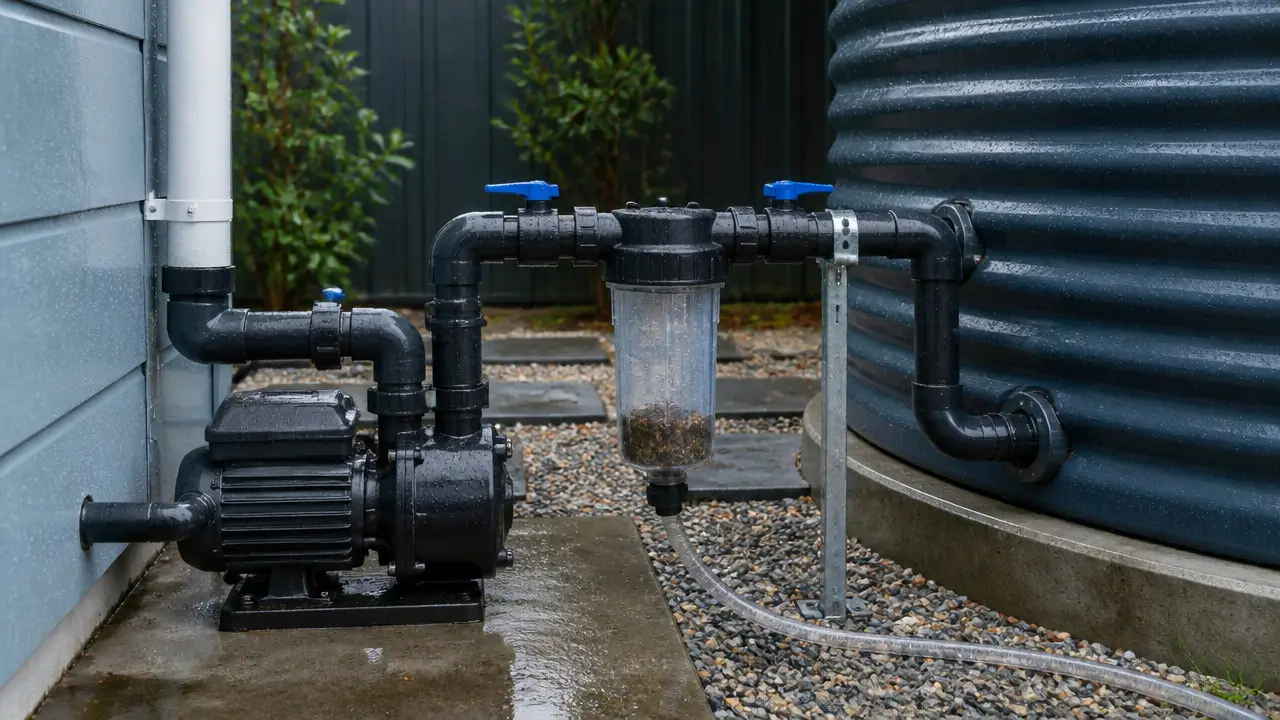
A first flush diverter sends the first portion of roof runoff away from your storage tank.
That early runoff generally carries a larger amount of the dust, dirt, droppings, and other material that accumulated on the roof between storms.
A diverter can improve the quality of collected water. CDC specifically recommends considering one as part of a rainwater collection system.
However, a first flush diverter does not make rainwater drinking water.
Contamination can still enter during the rest of the storm, and water can become contaminated inside the tank.
Think of first flush diversion as one useful prefiltration step, not a complete treatment system.
What Water Is Cleaner Than Rainwater?
There is no single type of water that is always the "cleanest." It depends on what you mean by clean.
Distilled water
Properly produced distilled water can contain very low levels of dissolved minerals and many other contaminants because the water is evaporated and condensed under controlled conditions.
It can still become contaminated after treatment if it is stored or handled poorly.
Purified laboratory water
Special laboratory systems can produce water with extremely low levels of dissolved ions, particles, and other substances.
This level of purity is designed for specific technical uses. It is not necessary for normal drinking water.
Treated public drinking water
Municipal drinking water may contain more dissolved minerals than rainwater, but that does not mean it is less safe.
Public water treatment normally uses several stages chosen for the source water. These can include settling, filtration, and disinfection. Public systems are also monitored against drinking-water standards.
For drinking, safety matters more than having the lowest possible mineral content.
Is Low TDS the Same as Clean Water?
No.
Account for the need to treat collected rainwater to understand a maintenance response tied to verified water-quality trends.
Total dissolved solids, or TDS, is a rough measure of dissolved substances in water. Rainwater often has a relatively low TDS because evaporation leaves many minerals behind.
The use-case discussion in “Is Rainwater 100% Clean?” shows why intended use matters when choosing treatment.
A low TDS reading does not prove that water is safe.
A TDS meter cannot tell you whether the water contains harmful bacteria, viruses, parasites, or specific chemicals at unsafe levels.
Water can therefore have a very low TDS reading and still be unsuitable for drinking.
This is one reason a simple handheld meter cannot provide a complete safety assessment of harvested rainwater.
Is Rainwater Cleaner Than Tap Water?
Not necessarily.
Untreated rainwater may contain fewer dissolved minerals than some tap water, but tap water from a properly operated public system has an important advantage: it has been treated and monitored as drinking water.
Rainwater collected at home is a private water source. The homeowner is responsible for protecting the catchment, maintaining the system, providing suitable treatment, and arranging testing.
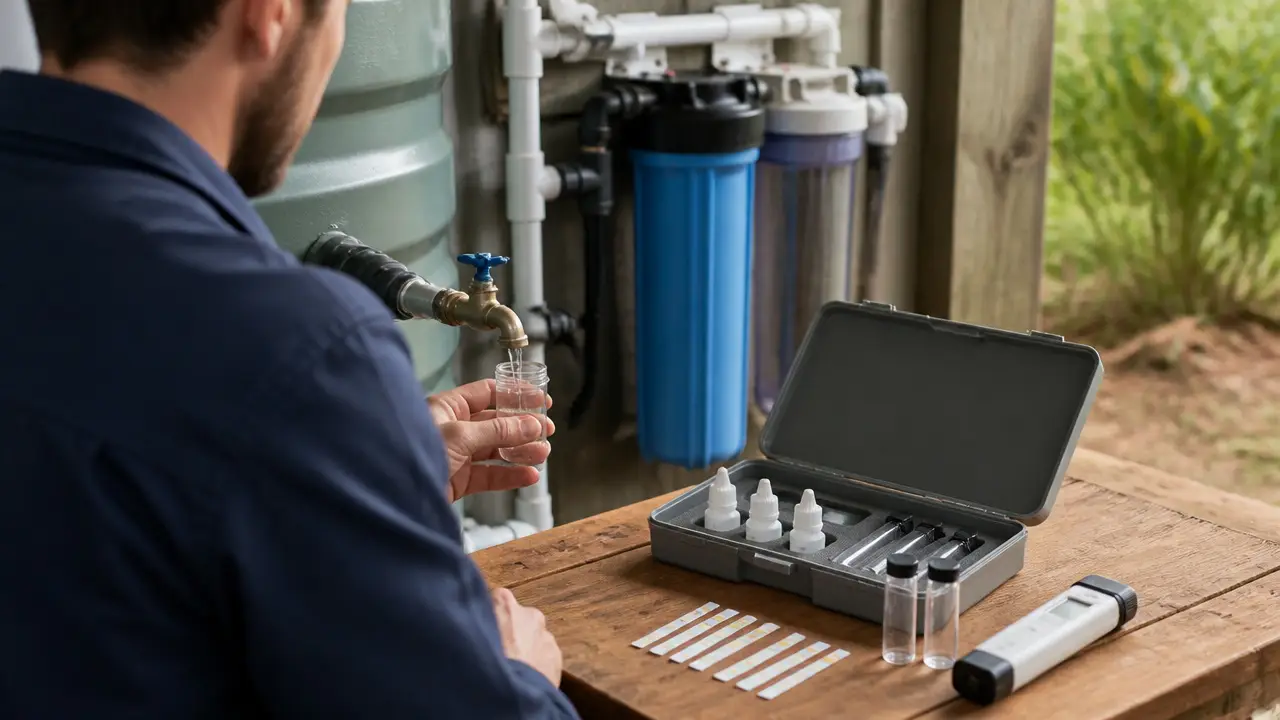
CDC recommends regular testing for harmful germs and chemicals when collected rainwater is used for drinking, cooking, or bathing.
So "softer" or "lower in minerals" should not be confused with "safer."
Can You Drink Rainwater?
Do not assume untreated roof-collected rainwater is safe to drink.
CDC states that rainwater is not necessarily safe to drink without first addressing germs and chemicals that may be present.
A potable rainwater system — potable means suitable for drinking — needs to be considered as a whole system rather than as a tank with one filter attached.
That may involve:
- A suitable catchment surface
- Clean gutters and downpipes
- Leaf and debris screens
- First flush management
- A protected storage tank
- Appropriate sediment removal
- Treatment selected for the actual contaminants present
- Regular maintenance
- Current laboratory testing
- Compliance with applicable local health and plumbing requirements
The treatment needed depends on the water quality. One filter does not remove every type of contaminant. CDC notes that different treatment technologies remove different germs and chemicals.
WHO's current drinking-water guidance also takes a source-to-consumer approach rather than treating water safety as a single-filter problem.
Rainwater Can Still Be Very Useful
Rainwater does not have to be drinking quality to be valuable.
A simple rain barrel or larger tank may provide useful non-potable water. Non-potable means water that is not intended for drinking.
The comparison “How Unhealthy Is Rain Water?” connects the measurement to a practical water-safety decision.
Depending on local rules and how the system is designed, collected rainwater may be useful for tasks such as landscape irrigation or other outdoor uses.
The level of treatment should match the intended use. Water going to ornamental plants usually does not need the same water-quality controls as water entering a kitchen faucet.
That distinction can keep a rainwater system simpler while avoiding unnecessary health risks.
The Bottom Line
Rainwater is not the cleanest water on Earth.
Fresh rain often starts with relatively low levels of dissolved minerals, but it can collect pollutants and microorganisms while moving through the atmosphere. Roof collection adds another set of possible contaminants from the catchment surface, gutters, fittings, and storage tank.
For garden and other suitable non-potable uses, rainwater can be an excellent resource when the collection system is kept clean and maintained.
For drinking, do not judge safety by how clear the water looks, how fresh it tastes, or how low its TDS reading is. Drinking-water use should involve suitable collection, treatment matched to the actual hazards, regular maintenance, current laboratory testing, and applicable local requirements.
Frequently Asked Questions
Is rainwater naturally distilled water?
Rain goes through evaporation and condensation, which leaves many dissolved minerals behind. However, natural rain is not the same as controlled distilled water. Rain droplets can pick up particles, microorganisms, and chemicals from the atmosphere.
Is rainwater clean before it touches the ground?
It can be relatively low in minerals, but it is not necessarily contaminant-free. Rain can collect dust, smoke, pollen, microorganisms, salts, and other substances while traveling through the atmosphere.
Is rainwater cleaner than bottled water?
There is no reliable rule saying rainwater is cleaner than bottled water. Their composition and safety depend on their source, treatment, handling, and storage. Untreated collected rainwater should not be assumed safe to drink.
Does a low TDS reading mean rainwater is clean?
No. A TDS meter measures dissolved substances but does not provide a complete test for harmful microorganisms or specific chemical contaminants. Low TDS does not prove that water is potable.
Does a first flush diverter make rainwater safe to drink?
No. A first flush diverter sends away some of the initial roof runoff that may carry higher amounts of dirt and contamination. It can improve incoming water quality, but it is only one part of a rainwater system and is not a complete drinking-water treatment method.
Can clear rainwater still contain germs?
Yes. Water can look, smell, and taste normal while still containing microorganisms or chemicals that are not visible. Appearance alone cannot establish drinking-water safety.
Should collected rainwater be tested before drinking?
Yes. If rainwater will be used for drinking, cooking, or other uses where it may be swallowed, regular laboratory testing for relevant germs and chemicals is important. The appropriate tests depend on the collection system, materials, location, and local health guidance.