As an affiliate, we may earn a commission from qualifying purchases. We get commissions for purchases made through links on this website from Amazon and other third parties.
Rainwater is not automatically safe to drink. Even when it looks clear and has no bad smell, it can contain germs, chemicals, or metals that you cannot see or taste. The risk becomes greater when rainwater runs across a roof, through gutters, and into a storage tank.
The CDC recommends using properly treated public water or bottled water for drinking when possible. If collected rainwater will be used for drinking, cooking, or similar uses, it should be collected through a suitable system, treated for the contaminants that may be present, tested regularly, and maintained as a drinking-water system.
Why Rainwater Can Be Unsafe to Drink
Rain does not arrive at your storage tank in a sealed, clean system. It travels through the air and usually across several surfaces before you collect it.
Along the way, it can pick up contamination from:
- Dust and smoke in the air
- Bird and animal droppings
- Leaves, pollen, and insects
- Roofing materials
- Gutters and downspouts
- Metal fittings and pipes
- Dirt inside the storage tank
- Animals or insects entering the tank
The CDC notes that rainwater can contain harmful germs and chemicals even when the water looks clean.
This does not mean every container of rainwater will make someone sick. It means you cannot assume it is safe enough to drink simply because it came from rain.
The Roof Is a Major Source of Contamination
For most home rainwater harvesting systems, the water lands on a roof before entering the tank.
A roof is a collection surface, but it is not normally a sanitary surface.
Between storms, the roof may collect:
- Bird droppings
- Insect remains
- Dust
- Leaves
- Pollen
- Soot
- Animal debris
- Airborne particles
When the next storm begins, the first water running down the roof can wash much of this material toward the gutters.
This is why a first-flush diverter is often used in rainwater systems. A first-flush diverter sends the first portion of roof runoff away from the storage tank instead of collecting it.
It can improve incoming water quality, but it does not make the remaining water safe to drink by itself. The amount that should be diverted depends partly on the roof area and collection conditions.
Germs Are One of the Main Concerns
Animal waste and dirty collection surfaces can introduce microorganisms into stored rainwater.
Depending on the source and conditions, contaminated water may contain bacteria, viruses, or parasites capable of causing illness. Waterborne contaminants can include organisms such as E. coli, Giardia, Cryptosporidium, Salmonella, and others.
The risk can change from one storm to another.
For example, a tank may receive fairly clean-looking water during one rainy period. After several dry weeks, the same roof may have accumulated far more dust and animal waste. The next storm can wash that material into the collection system.
Storage conditions matter too. Sediment can build up in a tank, screens can fail, and poorly protected openings can allow insects or animals inside.
Chemicals and Metals Can Also Get Into Rainwater
Microbes are only part of the problem.
Collected rainwater can also pick up chemicals from the air or from the surfaces and materials it contacts.
The CDC lists roofing, gutters, pipes, and storage materials as possible sources of substances such as lead, copper, and other contaminants.
The exact risk depends on the building and collection system.
For example, a roof or gutter system that is acceptable for directing stormwater away from a house is not necessarily suitable as part of a drinking-water collection system.
This distinction matters because killing germs does not remove every chemical.
Boiling Rainwater Does Not Solve Every Problem
Boiling can be useful for controlling many disease-causing microorganisms in an emergency, but it should not be treated as a complete rainwater purification method.
Boiling does not remove many chemical contaminants. The CDC specifically warns that boiling contaminated water does not remove harmful chemicals.
This means water could be microbiologically safer after correct boiling but still be unsuitable to drink because of chemical contamination.
If fuel, toxic chemicals, or another serious chemical contaminant has entered the water, ordinary boiling or household disinfection should not be assumed to make it safe.
A Basic Filter Does Not Automatically Make Rainwater Drinkable
Filters have different jobs.
A coarse screen may stop leaves.
A sediment filter may remove small suspended particles.
A finer filter may remove even smaller particles.
Some treatment systems are designed for certain microorganisms or chemicals.
But no filter should be assumed to remove everything.
A filter's micron rating describes the approximate size of particles it is designed to capture. It does not tell you that the filter removes every disease-causing organism or chemical.
The CDC recommends first identifying the contaminants of concern and then choosing treatment designed to remove those specific contaminants.
Filters also require maintenance. A neglected cartridge or treatment unit can become less effective, restrict water flow, or provide conditions where microorganisms can grow.
Clear Water Is Not Proof That It Is Safe
One of the difficult things about drinking-water safety is that dangerous contamination is often invisible.
Water may:
- Look clear
- Have no noticeable smell
- Taste normal
and still contain contaminants.
The CDC notes that harmful germs and chemicals often do not change the appearance, taste, or smell of water.
Explore drinking safety of fresh rainwater to compare filter stages selected for the household exposure route.
For this reason, appearance is useful for noticing some obvious problems, but it cannot establish that collected rainwater is potable.
Potable simply means suitable and safe for drinking.
What Does a Drinking-Water Rainwater System Require?
Using rainwater for drinking is different from filling a barrel for garden watering.
A properly planned potable system usually needs several layers of protection rather than one filter added to the tank outlet.
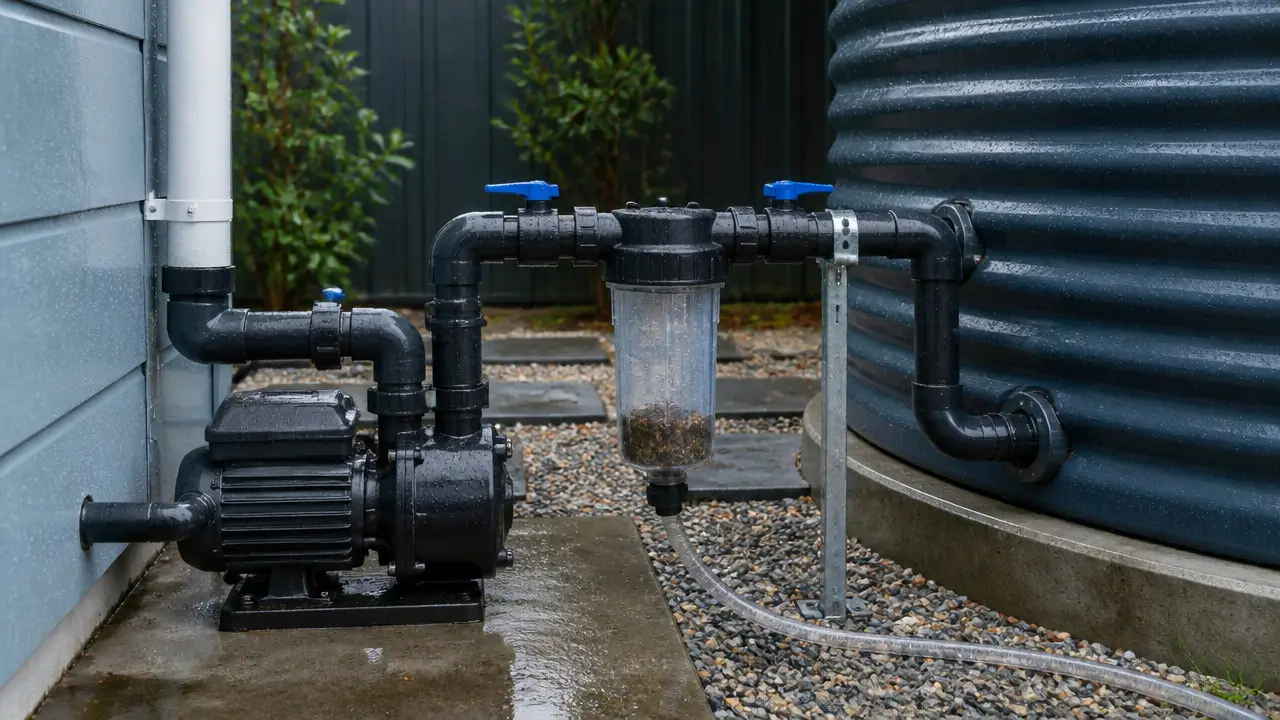
Those protections may include suitable collection surfaces and materials, screens to keep larger debris and animals out, first-flush management, protected storage, sediment control, treatment chosen for the actual water-quality risks, regular cleaning, and appropriate water testing.
The correct treatment arrangement depends on the water itself. There is no universal filter sequence that can safely be recommended for every roof and every location.
If rainwater is intended for regular drinking, cooking, or brushing teeth, work with your local health department, a qualified water-treatment professional, or another appropriate local authority to determine what testing and treatment are required.
Testing Is an Important Part of the System
Testing tells you much more than judging the water by sight or smell.
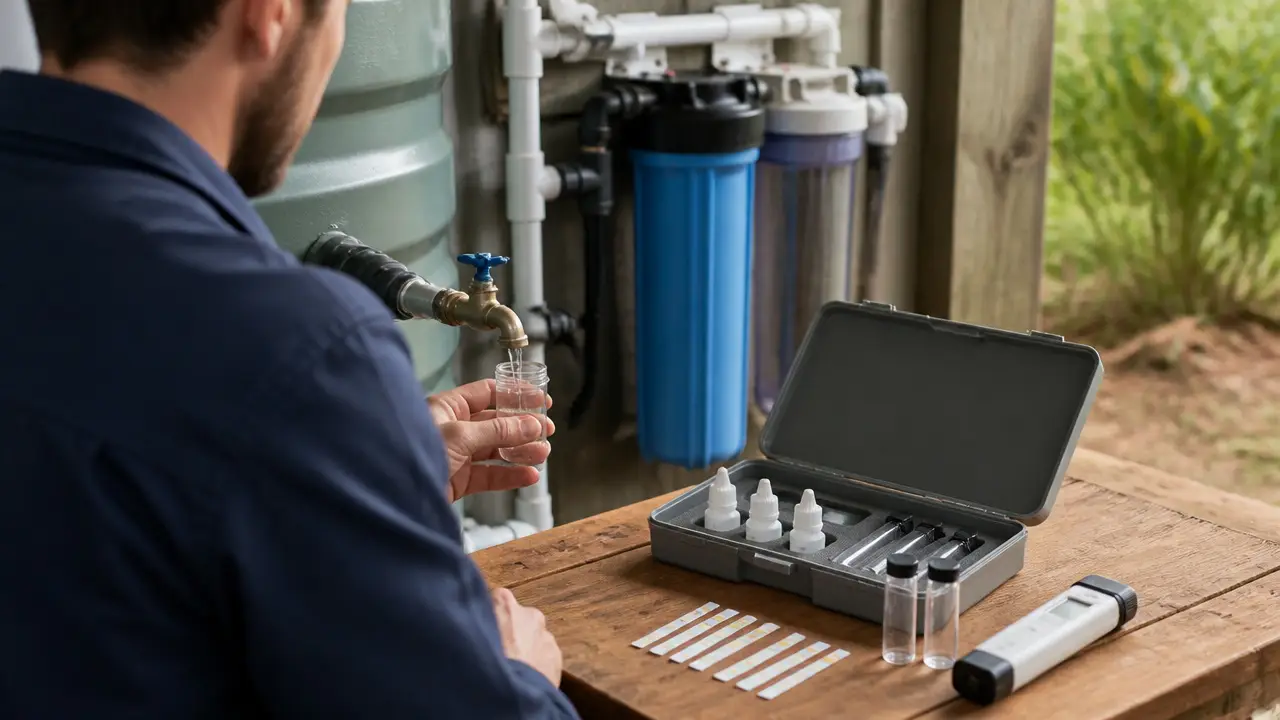
The CDC recommends regularly testing rainwater used for drinking and advises people relying on rainwater collection systems to test for harmful germs and chemicals at least annually. Local health authorities can advise which contaminants are appropriate to test in your area and how to find a qualified laboratory.
One test does not guarantee the water will remain safe forever.
Water quality can change because of:
- A new roofing material
- Repairs to gutters or pipes
- Animal activity
- Long dry periods
- Tank contamination
- Flooding
- Treatment equipment failure
- Poor maintenance
Testing therefore works alongside treatment and maintenance rather than replacing them.
What About Rain Caught Directly From the Sky?
Catching rain before it touches a roof removes one major source of contamination, but it still does not guarantee drinking-water quality.
Rain can pick up dust, smoke, and other particles while moving through the atmosphere.
The collection container itself can also contaminate the water.
Directly collected rain may therefore be cleaner in some circumstances than roof runoff, but "never touched a roof" is not the same as "verified safe to drink."
Rainwater Can Still Be Useful Without Drinking It
The fact that untreated rainwater should not automatically be used for drinking does not make rainwater harvesting pointless.
Water quality should match the intended use.
A simple rain barrel used for ornamental plants has very different treatment needs from a cistern connected to household drinking-water fixtures.
Common non-potable uses can include certain types of landscape irrigation and outdoor cleaning, depending on the system and local requirements.
Non-potable means the water is not intended or approved for drinking.
The treatment question includes whether filtered rainwater is safe to drink after accounting for microbes and dissolved contaminants.
Keeping drinking water and non-potable rainwater systems clearly separated is especially important. The CDC warns that untreated rainwater should not be allowed to flow backward into plumbing that carries treated drinking water.
When Drinking Rainwater Can Be Considered
Rainwater can be used as a drinking-water source in properly designed systems. The important point is that the rain itself should not be assumed to be potable.
A drinking-water rainwater system needs to be treated as a complete water-supply system.
That means considering:
- Where the water is collected.
- What materials it contacts.
- How debris and the first roof runoff are managed.
- How the water is stored.
- Which germs or chemicals may be present.
- What treatment is appropriate for those contaminants.
- How the treatment equipment will be maintained.
- How the finished water will be tested.
- What local health, plumbing, and rainwater-use requirements apply.
A single purifier, UV unit, cartridge filter, test strip, or water-quality meter cannot by itself answer all of those questions.
For most homeowners who already have access to a regulated public drinking-water supply, keeping simple harvested rainwater for suitable non-potable uses is much easier than converting it into a dependable drinking-water supply.
Frequently Asked Questions
Can you drink rainwater straight from the sky?
It is not advisable to assume that rainwater is safe to drink simply because it has not touched a roof. Rain can collect airborne dust, smoke, and other contaminants, and the collection container can add contamination. Drinking water should be assessed and treated according to its actual risks.
Does boiling make collected rainwater safe to drink?
Boiling can control many microorganisms when done correctly, but it does not remove many chemical contaminants. If chemicals or metals are present, boiling alone cannot establish that the water is safe.
Can a household water filter make rainwater drinkable?
Not necessarily. Filters are designed for particular types and sizes of contaminants. The water should first be assessed so treatment can be matched to the germs and chemicals that may be present.
What is a first-flush diverter?
A first-flush diverter sends the first runoff from a roof away from the storage tank. This first water often carries a high amount of dust, droppings, and debris that accumulated on the roof between storms. A first flush can improve water quality, but it does not make rainwater potable on its own.
How often should drinking rainwater be tested?
The CDC advises people using a private rainwater system for drinking to test the water for harmful germs and chemicals at least once a year. Additional testing may be appropriate after system changes, contamination events, or according to local health guidance.
Is rainwater safer if it looks and smells clean?
No. Some harmful germs and chemicals do not noticeably change the color, taste, or smell of water. Laboratory testing is needed when rainwater is being evaluated for drinking use.
Is rainwater safe for garden watering?
Rainwater is commonly used for irrigation, but the appropriate use depends on water quality and what is being watered. Water used on edible crops can require more care than water used on ornamental plants. Avoid assuming that water unsuitable for drinking has no restrictions for every other use.