As an affiliate, we may earn a commission from qualifying purchases. We get commissions for purchases made through links on this website from Amazon and other third parties.
Filtering rainwater is generally not illegal in the United States. The filter itself is usually not the legal issue. Rules are more likely to apply to collecting the rainwater, how you use it, and how the rainwater system connects to household plumbing or a public water supply.
There is no single federal rainwater-harvesting rule that applies to every home. States and local governments may set their own requirements. The U.S. Department of Energy notes that individual states regulate rainwater collection and use, and some projects may require state or local permits.
Rules and guidance can change. The information below is current as of August 31, 2026. Always check your state, county, city, health department, and plumbing authority before installing a system for indoor or drinking-water use.
Filtering Rainwater Is Different From Collecting It
It helps to separate three parts of a rainwater system:
- Collection gets rain from a roof or another surface into storage.
- Filtration and treatment remove selected debris, germs, or chemicals.
- Use and plumbing send the water to a garden, toilet, washing machine, faucet, or other outlet.
A local rule might allow all three, allow them with conditions, or restrict certain uses.
For example, installing a sediment filter between a rain barrel and a garden hose is very different from connecting a treated rainwater system to the plumbing that supplies your kitchen sink.
The U.S. Environmental Protection Agency notes that states have different water-reuse regulations and guidelines depending on both the source of the water and its intended use.
When Filtering Rainwater Is Usually Simple
A basic filter used for outdoor rainwater normally presents fewer regulatory issues than a system supplying a house.
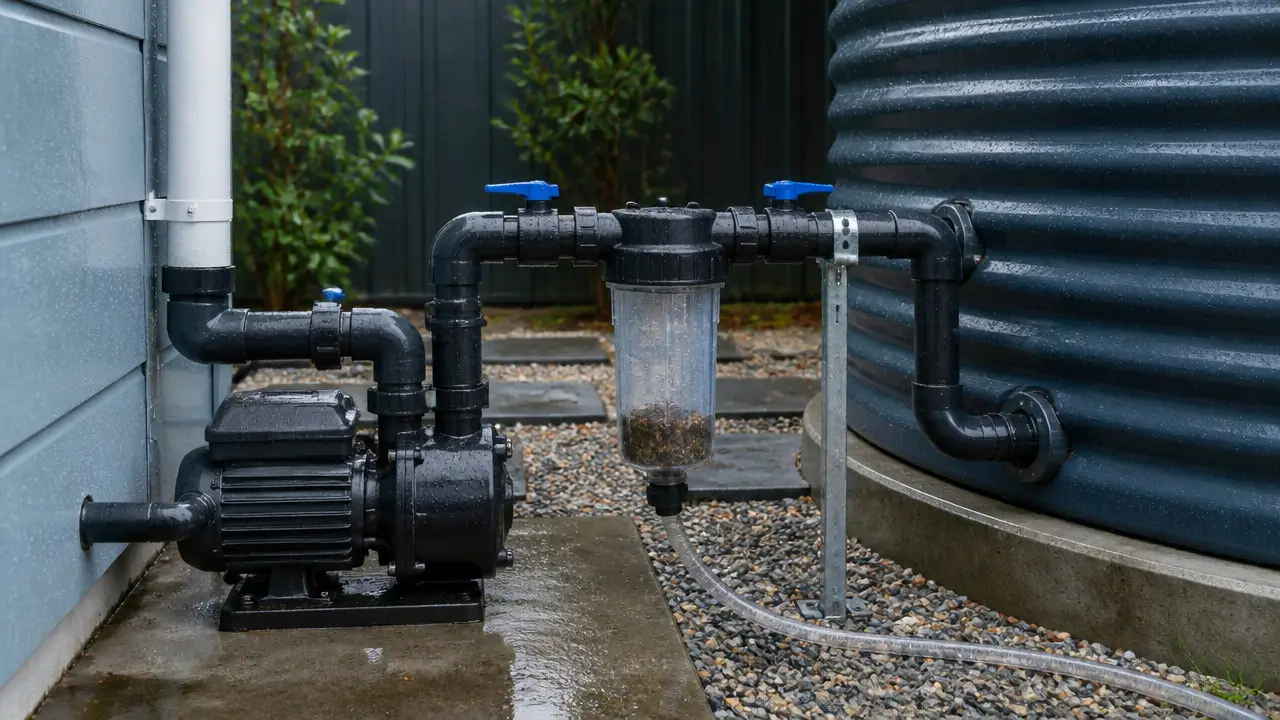
A typical garden setup might be:
Roof → gutter screen → rain barrel → sediment filter → garden hose
The filter might simply stop leaves, grit, insects, or other particles from reaching a hose or drip-irrigation line.
This type of water is non-potable, meaning it is not intended for drinking.
Even here, local rules can still affect:
- Whether rainwater may be collected.
- Which collection surfaces are allowed.
- Where a tank can be placed.
- Mosquito control.
- Overflow and drainage.
- Tank size or construction.
- Connections to irrigation plumbing.
Do not assume that adding a filter changes what the water may legally be used for.
Indoor Rainwater Systems Can Have More Rules
The legal requirements often become more important when filtered rainwater enters a building.
Possible indoor uses include:
- Toilet flushing.
- Laundry.
- Cleaning.
- Other approved non-potable uses.
- Drinking-water fixtures where local rules permit properly treated rainwater.
Building and plumbing rules may require separate rainwater pipes, identification of non-potable lines, approved equipment, inspections, permits, or other safeguards.
One of the biggest concerns is cross-connection.
A cross-connection is a plumbing connection that could allow untreated or non-potable water to enter drinking-water pipes. Rainwater generally needs to remain safely separated from the public drinking-water supply.
The CDC specifically recommends keeping rainwater from entering pipes carrying treated drinking water because rainwater could introduce germs or chemicals into that supply.
Depending on the installation, local plumbing rules may require an air gap, backflow protection, or another approved method of separation.
This is one point where a simple DIY rain-barrel project can become professional plumbing work.
Filtering Rainwater Does Not Automatically Make It Legal to Drink
A filter and safe drinking water are not the same thing.
Roof runoff may contain:
- Bird or animal waste.
- Bacteria and other germs.
- Dust and soil.
- Smoke particles.
- Chemicals from roofing or gutters.
- Metals such as lead or copper.
- Other contaminants picked up from the air or collection system.
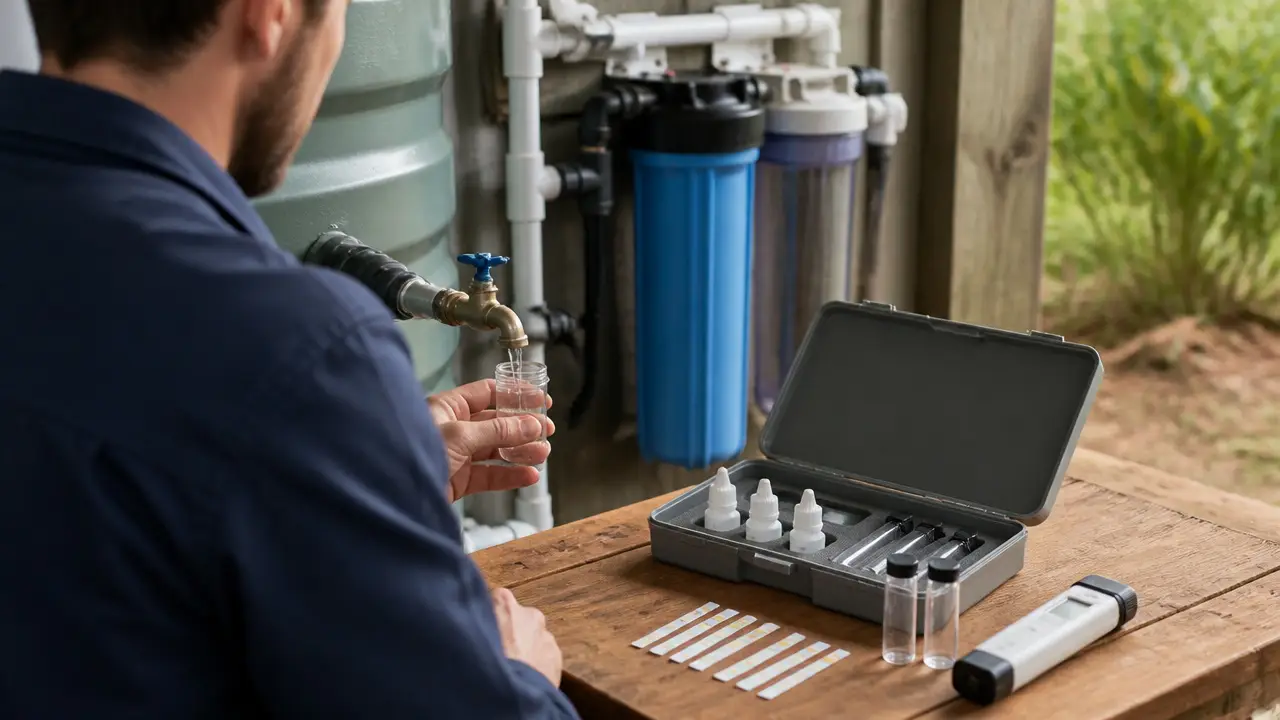
The CDC states that rainwater is not necessarily safe to drink and recommends regular testing for germs and chemicals when rainwater is used for drinking, cooking, or bathing.
Different treatment devices also do different jobs.
For example, a sediment filter may remove visible particles while doing little or nothing about dissolved chemicals or microscopic pathogens. A carbon filter, membrane, ultraviolet system, or disinfectant has different capabilities and limitations.
The CDC recommends testing the water and choosing treatment that addresses the particular germs or chemicals of concern. It also notes that more than one treatment method may be needed.
So this setup:
Rain tank → cartridge filter → drinking faucet
should not be assumed to produce potable water.
Potable means suitable for drinking. A potable rainwater system should be treated as a whole system involving suitable collection surfaces, debris control, appropriate treatment and disinfection, current laboratory testing, maintenance, and compliance with local requirements.
A First-Flush Diverter Is Not a Drinking-Water Guarantee
Many rainwater systems include a first-flush diverter.
This device sends the first portion of runoff from a storm away from the storage tank. That early runoff can carry dirt, animal waste, and other material that built up on the roof between storms.
The CDC recommends considering first-flush diversion as one way to improve collected rainwater quality.
However, first flush is only a prefiltration step.
It does not prove that the remaining water is free of harmful germs or chemicals, and it does not replace treatment or testing where potable water is intended.
Your Intended Use Matters Most
Before deciding what filter you need, decide what the water will supply.
Garden watering
Planning around legally collecting rainwater in the US helps understand local conditions governing use of the stored water.
A screen or sediment filter may mainly be needed to keep debris out of hoses and irrigation equipment.
If you use drip irrigation, filtration can also help prevent small emitters from clogging.
Toilet flushing or laundry
Indoor non-potable use usually requires more planning. Plumbing separation, local permits, treatment requirements, labeling, and backflow protection may apply.
Check the adopted plumbing rules in your area before connecting rainwater to household piping.
Drinking and cooking
This requires the highest level of care.
Do not judge rainwater safety by clarity, taste, or smell. The CDC notes that harmful germs and chemicals may be present without changing how water looks, tastes, or smells.
For drinking-water use, work with your local health authority and, where appropriate, a qualified water-treatment or plumbing professional. Use current laboratory testing to identify relevant contaminants and confirm whether the treatment system is doing what is required.
Public-Water Connections Need Special Attention
A rainwater system that is completely separate from municipal water is different from one that shares plumbing with the public supply.
Texas provides a useful example.
The Texas Water Development Board states that a potable rainwater harvesting system connected to a public water supply must have safeguards to prevent harvested rainwater from contaminating the public supply. Texas also places specific requirements on certain installers and connections.
That does not mean Texas rules apply elsewhere. It shows why checking your own jurisdiction matters.
Your state may have different requirements, and cities or counties can sometimes add plumbing, building, health, or permitting rules.
How to Check Whether Your Rainwater Filter Setup Is Legal
Start with the intended use rather than the type of filter.
For a small outdoor system, check your state and local rainwater-harvesting rules. For indoor systems, also check the plumbing and building requirements.
Useful authorities include:
- Your state water-resources or environmental agency.
- Your city or county building department.
- Your plumbing authority.
- Your local health department for drinking-water questions.
- Your public water utility when the rainwater system could connect to municipal plumbing.
The U.S. Department of Energy maintains a Rainwater Harvesting Tool with state-by-state regulatory information. It also warns that local or state permits may be required.
The EPA also maintains state water-reuse resources and its REUSExplorer database. EPA cautions that its summaries are not legally binding, so the current state rules should still be checked directly.
When speaking with a local authority, be specific. Explain whether you plan to use the rainwater for irrigation, toilet flushing, laundry, drinking, or another purpose. Also mention whether it will be completely separate from municipal water.
The Filter May Not Be the Part That Needs Approval
If a rainwater project runs into legal requirements, the problem is rarely simply that you installed a filter.
Requirements are more likely to involve:
- The right to collect rainwater.
- Tank installation.
- Indoor plumbing.
- Backflow prevention.
- Public-water connections.
- Potable versus non-potable use.
- Building or plumbing permits.
- Water-quality requirements.
- Installation or inspection requirements.
A small filter on a rain barrel used for landscape irrigation may therefore be quite different legally from a multi-stage filtration system feeding a home's plumbing.
Do Not Size Treatment by Guesswork
If filtration is being added for drinking-water use, avoid choosing equipment only because it has a very small micron rating.
A micron rating describes the approximate size of particles a filter is designed to catch. It does not tell you that the filter removes every possible contaminant.
Likewise, adding UV treatment does not automatically solve chemical contamination, and adding a carbon filter does not automatically establish microbiological safety.
The CDC advises matching treatment to contaminants identified in the water and maintaining treatment equipment properly. Filters themselves can also support germ growth when they are not maintained as required.
For potable rainwater, the treatment plan should be based on the source, collection system, intended use, water testing, and applicable requirements rather than on one filter specification.
Frequently Asked Questions
Is it illegal to put a filter on a rain barrel?
Generally, no. Installing a debris or sediment filter on a rain barrel is not normally the legal concern. State or local rules may still govern rainwater collection, tank installation, drainage, and how the water may be used.
Can I legally filter rainwater and drink it?
That depends on your state and local requirements. Filtering alone also does not establish that rainwater is safe to drink. Potable use may require specific collection, treatment, disinfection, plumbing, testing, permitting, or inspection measures. Check with your local health and building authorities.
Does filtering rainwater make it potable?
No. A filter removes only the contaminants it is designed to address. Roof runoff can contain both germs and chemicals. Potable rainwater requires a whole-system approach that includes appropriate treatment, current water testing, maintenance, and compliance with applicable requirements.
Do I need a permit for a rainwater filtration system?
A small outdoor filter may not require one, but requirements vary. Indoor plumbing, large tanks, structural work, potable systems, or connections to public water can trigger permits or inspections. Check your city, county, and state requirements before installation.
Can filtered rainwater be connected to my home's plumbing?
It may be allowed, but plumbing and backflow requirements can apply. Rainwater must not be able to contaminate a public drinking-water supply. Have the proposed connection checked against your local plumbing rules before making it.
Is filtered rainwater legal for garden irrigation?
Rainwater irrigation is allowed in many places, but collection and use rules vary by state and locality. A filter can help protect hoses and drip emitters from debris, but it does not change any restrictions that apply to collecting or using the water.
Who should I contact about local rainwater rules?
Start with your state water or environmental agency and your city or county building department. For indoor or drinking-water systems, also contact the local plumbing authority, health department, and public water utility when applicable.