As an affiliate, we may earn a commission from qualifying purchases. We get commissions for purchases made through links on this website from Amazon and other third parties.
Rainwater can contain more than just water. It may carry dust, smoke particles, germs, metals, chemicals, and organic debris. If you collect rainwater from a roof, the water can also pick up contaminants from roofing materials, gutters, bird droppings, insects, pipes, and the storage tank.
Clear-looking rainwater is not necessarily clean enough to drink. The CDC advises that collected rainwater may contain germs and chemicals and should be tested and treated appropriately when it is used for drinking, cooking, or bathing.
Where Rainwater Contaminants Come From
Contamination can happen at several points between the cloud and your faucet.
Rain can pick up pollutants while falling through the air. It can then wash dirt and other material from a roof or other collection surface. More contaminants can enter through gutters, pipes, tanks, pumps, and plumbing.
For a typical rainwater harvesting system, the path looks like this:
Air → roof → gutters → downspout → tank → pump or outlet
Each part of that path can affect water quality.
Common Contaminants in Rainwater
| Contaminant type | Common sources |
|---|---|
| Dust and sediment | Air, roof surfaces, gutters |
| Bacteria and other germs | Bird and animal droppings, insects, dirty tanks |
| Leaves and organic matter | Trees, gutters, roof debris |
| Lead | Flashing, paint, roofing materials, plumbing |
| Copper | Copper gutters, flashing, pipes |
| Zinc | Galvanized roofing and metal parts |
| Smoke and soot | Wildfires, fireplaces, vehicles, industry |
| Pollen | Trees and plants |
| Chemicals | Air pollution, roofing materials, coatings, nearby activities |
| Insects and larvae | Open or poorly screened tanks |
| Algae | Light entering stored water |
Which contaminants matter most depends on your location, collection surface, equipment, storage conditions, and intended use.
Germs From Birds and Other Animals
Microbial contamination is one of the main concerns with roof-collected rainwater.
Birds, rodents, squirrels, and other animals may leave droppings on a roof. Rain can wash this material directly into the gutter and storage tank.
The water can then contain bacteria and other microorganisms associated with fecal contamination.
You cannot tell whether these germs are present simply by looking at the water. Water may appear clear and have no smell while still containing microorganisms that are not safe to swallow.
Studies of roof-harvested rainwater have commonly found microbial indicators such as total coliform bacteria, showing why appearance alone is not a useful safety test.
Why the first rain can be dirtier
Contamination often builds up on a roof during dry weather.
When rain finally arrives, the first runoff may carry:
- Dust
- Bird droppings
- Pollen
- Leaves
- Insect remains
- Soot
- Roofing particles
A first-flush diverter sends some of this early roof runoff away from the storage tank. It can reduce the contaminant load entering the system, but it does not make the remaining water automatically safe to drink. The CDC recommends first-flush diversion as one way to improve collected rainwater quality.
Dust, Dirt, and Sediment
Rainwater can contain very small particles picked up from the atmosphere and collection surface.
Larger debris may include leaves, twigs, seeds, moss, and pieces of roofing material. Smaller particles can remain suspended in the water or settle on the bottom of a tank.
Over time, this material may form a layer of sediment.
Sediment matters because it can:
- Make water cloudy
- Clog irrigation emitters
- Wear pumps
- Block filters
- Provide material where microorganisms can grow
- Make tank cleaning harder
Leaf screens, gutter guards, first-flush systems, inlet screens, and sediment filters can each remove different sizes of material. One device usually does not handle every type of contamination.
Metals in Collected Rainwater
Rainwater itself contains relatively few dissolved minerals compared with many groundwater sources. However, that also means it can pick up metals from materials it contacts.
Possible metals include lead, copper, zinc, iron, and others.
Their source may be the roof rather than the rain.
Lead
Lead is a particular concern because it may come from:
- Old paint
- Lead flashing
- Some older roofing materials
- Solder
- Plumbing components
Lead cannot be detected reliably by taste, smell, or appearance.
Research on household rainwater systems has found elevated lead in some collected samples, while first-flush diversion reduced the chance of higher lead levels in that study.
If a roof or collection system contains materials that may contain lead, do not assume a basic sediment filter solves the problem.
Copper
Copper may enter rainwater from copper:
- Roof sections
- Flashing
- Gutters
- Downspouts
- Plumbing
A particle filter will not necessarily remove dissolved copper.
Zinc
Galvanized steel contains a zinc coating. Rainwater flowing over galvanized roofing, gutters, tanks, or fittings may therefore pick up zinc.
The amount depends on the materials, their condition, water chemistry, and other factors.
Chemicals From Roofing Materials
A roof is a collection surface, so its materials matter.
Possible sources of chemicals include:
- Roofing coatings
- Sealants
- Paint
- Asphalt-based materials
- Preservatives
- Adhesives
- Recently treated surfaces
A roof that works well for keeping a house dry is not automatically suitable for collecting water intended for drinking.
Older roofs can present different concerns from newer roofs. Repairs can also introduce new materials. For example, replacing flashing, applying a coating, or using a new sealant may change what contacts the runoff.
If rainwater will be used for drinking or cooking, the collection materials should be evaluated as part of the whole system rather than assuming treatment can correct any roof material problem afterward.
Air Pollution, Smoke, and Soot
Rain can collect particles while passing through the atmosphere.
Possible sources include:
- Vehicle exhaust
- Industrial emissions
- Construction dust
- Wood smoke
- Wildfire smoke
- Agricultural activity
Conditions can change from one storm to another.
A home near a busy road, industrial site, agricultural operation, or major fire may face different contamination concerns from a home in another location.
This is one reason there is no single list of contaminants that every rainwater system should be tested for.
Pollen and Plant Material
Pollen is common in rainwater harvesting systems, especially during certain seasons.
It can collect on roofs and wash into tanks during storms.
Consider contamination risks in fresh rainwater to assess installation details that support reliable daily use.
Pollen itself is often more of a maintenance issue than a major water hazard, but large amounts of organic material can affect water quality. It can contribute to:
- Cloudiness
- Tank sediment
- Filter clogging
- Odors
- Microbial growth
Keeping gutters and roof valleys clear can reduce the amount entering the tank.
Insects and Mosquitoes
Poorly screened rain barrels and tanks can allow insects to enter.
Mosquitoes are especially important because standing water can provide a breeding place.
All tank openings should be protected appropriately. This includes the inlet, overflow, vents, and any other openings that could allow insects inside.
Screens also help stop larger debris and animals from entering the storage system.
Algae in Stored Rainwater
Algae usually becomes a storage problem rather than something that arrives with the rain.
It needs light to grow. A translucent barrel or tank that receives sunlight can therefore develop algae more easily than an opaque tank that blocks light.
Algae can cause:
- Green water
- Slime
- Odors
- Clogged filters
- Extra tank cleaning
Blocking sunlight and keeping organic debris out of the tank can greatly reduce the conditions that support algae growth.
Does Acid Rain Count as Contamination?
Rainwater is naturally somewhat acidic because it absorbs carbon dioxide from the atmosphere.
Air pollution can make rain more acidic in some locations.
The important point for a rainwater harvesting system is that low-mineral rainwater may interact with the materials it contacts. Water chemistry can affect how readily certain metals are released from roofing, fittings, tanks, or plumbing.
A pH reading can tell you whether the water is acidic or alkaline, but it cannot tell you whether harmful germs, lead, pesticides, or other contaminants are present.
Can Rainwater Have a Low TDS Reading and Still Be Contaminated?
Yes.
Total dissolved solids, or TDS, is a measure related to the amount of dissolved material in water.
Rainwater often has a relatively low TDS level because it has not traveled through mineral-rich soil and rock like groundwater.
But a low reading does not prove the water is safe.
A TDS meter does not identify individual contaminants. It cannot provide a complete test for:
- Harmful bacteria
- Viruses
- Parasites
- Lead
- Individual pesticides
- Many other chemicals
TDS is useful for understanding one characteristic of water. It is not a drinking-water safety test.
Does a Filter Remove All Rainwater Contaminants?
No.
Different treatment stages handle different problems.
A coarse screen may remove leaves but allow fine sediment, microbes, and dissolved chemicals through. A fine sediment filter can catch small particles but is not automatically a reliable treatment for dissolved metals or microorganisms.
The correct treatment depends on what is actually in the water and how you intend to use it.
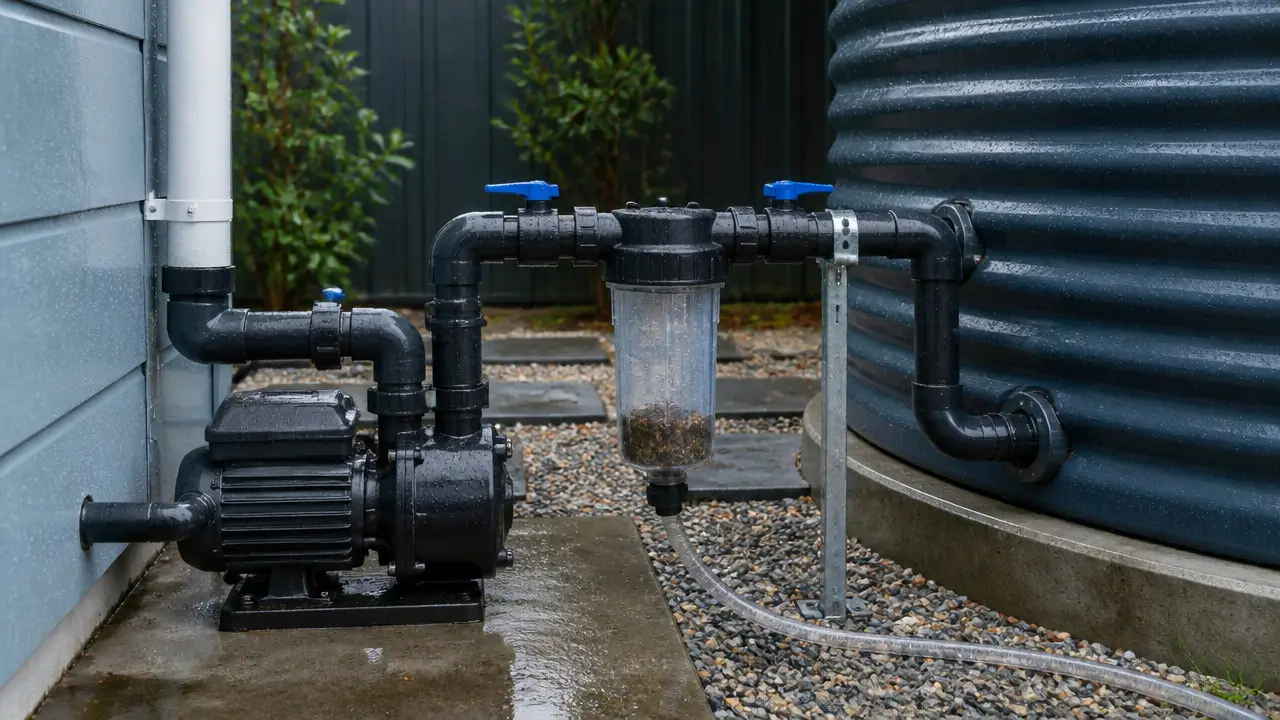
For example, a system might use several stages:
- Roof and gutter maintenance to reduce contamination at the source.
- Screens to keep out leaves, animals, and insects.
- A first-flush diverter to discard some early roof runoff.
- Storage designed to limit light and outside contamination.
- Sediment filtration where needed.
- Additional treatment selected for specific water-quality concerns.
For drinking-water use, treatment should be planned as a complete system. One filter, UV unit, chemical treatment, or purifier should not be assumed to make unknown rainwater safe.
How Clean Does Rainwater Need to Be?
That depends on what you are doing with it.
Water used for ornamental plants does not normally require the same water quality as water that will be swallowed.
Non-potable water means water that is not intended to be used as drinking water. Rainwater is commonly collected for non-potable jobs such as landscape irrigation where local rules allow it.
Potable water means water that is suitable for drinking.
Using collected rainwater for drinking, cooking, brushing teeth, bathing, or other household purposes where people may swallow the water requires much more careful management.
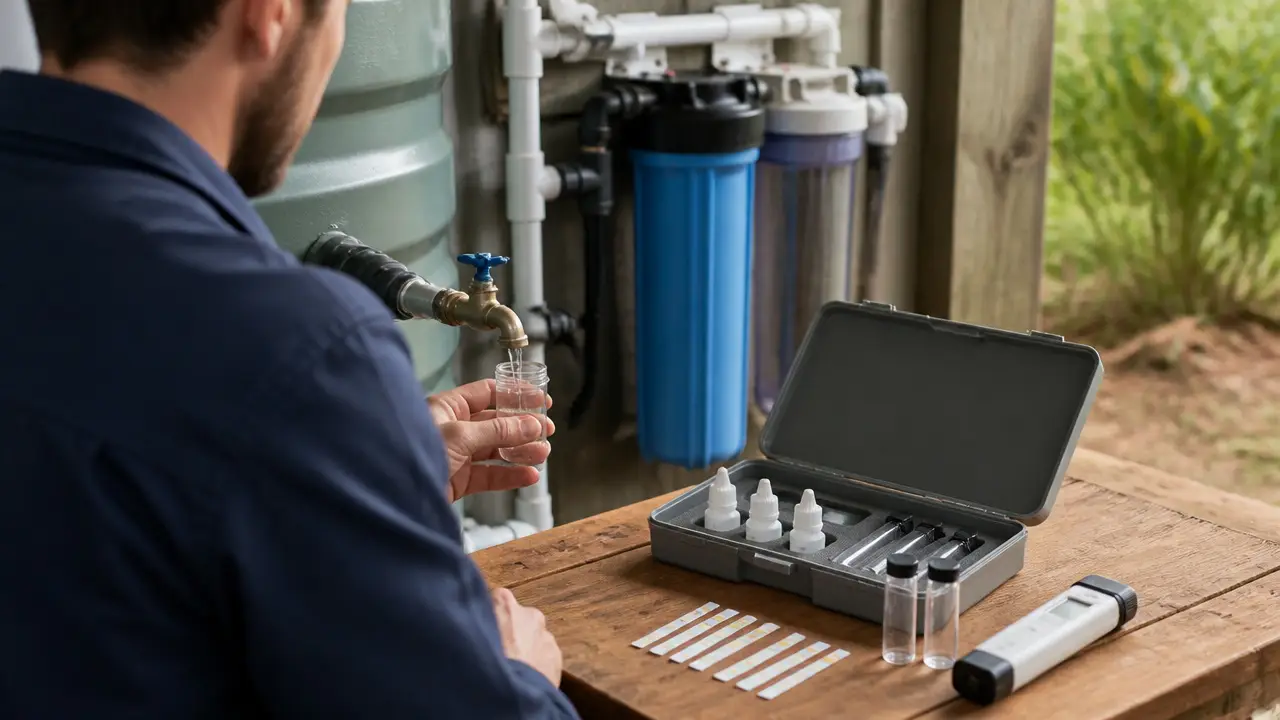
The CDC recommends regular testing for germs and chemicals when collected rainwater is used for drinking, cooking, or bathing. It also recommends choosing treatment that addresses the contaminants found in the water.
Local health or environmental authorities can help determine which tests are appropriate for your area and intended use.
How to Reduce Contamination in a Rainwater System
The easiest contaminant to manage is often the one you keep out of the tank.
Useful steps include:
- Keep the roof and gutters reasonably clean.
- Do not collect from unsuitable or questionable roof surfaces.
- Keep branches away from the collection area where practical.
- Use gutter and inlet screens.
- Consider a properly sized first-flush diverter.
- Keep tanks closed and protected from animals and insects.
- Block sunlight from entering storage tanks.
- Keep the overflow screened.
- Remove accumulated tank sediment when needed.
- Maintain filters according to their operating requirements.
- Prevent rainwater plumbing from contaminating a treated drinking-water system.
- Test water based on its intended use.
Cleaning and prefiltration can improve water quality, but neither is proof that stored rainwater is safe to drink.
Frequently Asked Questions
Is rainwater clean before it hits a roof?
Not necessarily. Falling rain can pick up dust, smoke, soot, pollen, and other airborne material. Roof collection can add another layer of contamination from animals, debris, roofing materials, gutters, and plumbing.
Can rainwater contain bacteria?
Yes. Roof-collected rainwater can contain bacteria and other germs, especially when animal droppings or dirty collection surfaces are washed into the system. Clear water should not be assumed to be free of microbes.
What is the biggest source of contamination in a rain barrel?
There is no single source in every system. Common problems include roof debris, animal droppings, dirty gutters, insects, sediment, and contamination entering through poorly protected tank openings.
Does boiling rainwater remove every contaminant?
No. Boiling can address certain microbial hazards when done correctly, but it does not remove many chemical contaminants or dissolved metals. It should not be treated as a complete solution for unknown roof-collected water.
Does a first-flush diverter make rainwater safe to drink?
No. A first-flush diverter can reduce some dirt, germs, and chemicals washed from the roof at the beginning of a storm. It is only one part of water-quality management and does not establish that the remaining water is potable.
Is rainwater safe for vegetable gardens?
Suitability depends on the collection surface, possible contaminants, irrigation method, crop, and local guidance. Water collected from surfaces that may contribute lead, other metals, or harmful chemicals deserves particular caution around edible plants.
How can I find out what contaminants are in my rainwater?
Laboratory testing is the most useful approach when water quality matters. The tests should be chosen for your collection materials, local conditions, and intended water use. For drinking or household uses, ask your local health authority or a qualified water professional which microbial and chemical tests are appropriate.