As an affiliate, we may earn a commission from qualifying purchases. We get commissions for purchases made through links on this website from Amazon and other third parties.
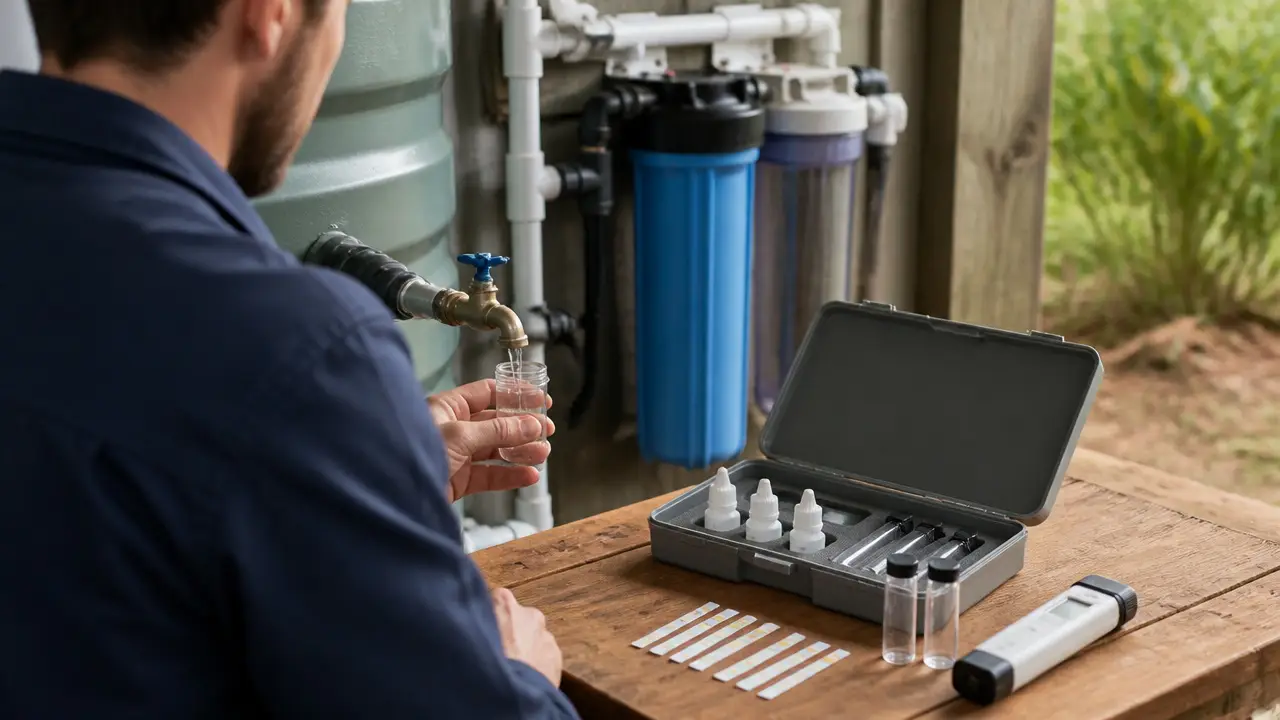
Home water testing kits can be accurate for some specific water-quality checks, but they should not be treated as a complete safety test. A good kit may give a useful reading for things such as pH, hardness, chlorine, nitrate, or another listed parameter. Accuracy depends on the test method, its detection range, how the sample is collected, and how carefully the instructions are followed.
For drinking water, private wells, or collected rainwater used for drinking, cooking, or bathing, a home kit is best treated as a screening tool. The U.S. EPA recommends using a state-certified drinking-water laboratory when you need reliable results for health-related contaminants.
What Does “Accurate” Mean for a Water Test?
A water test can give a number and still fail to answer the question you really care about.
For example, a strip might correctly show that your water has a pH near 7. That does not tell you whether the water contains bacteria, lead, pesticides, or other contaminants.
A useful water test needs to do three things:
- Test for the contaminant or water property you actually need to know about.
- Detect it at a useful concentration range.
- Give reasonably repeatable results when used correctly.
This is why there is no simple answer such as “home test kits are accurate” or “home test kits are inaccurate.” Each test has to be judged by what it measures and what decision you plan to make from the result.
What Home Water Test Kits Can Do Well
Some simple water properties are easier to check at home than others.
pH
pH tells you how acidic or alkaline the water is.
Test strips and electronic meters can provide useful pH readings when they are in good condition and used correctly. Electronic meters may require regular calibration to stay accurate.
For a rainwater system, pH can help you spot changes in water chemistry. It does not tell you whether the water is safe to drink.
Hardness
Hardness is mainly related to dissolved calcium and magnesium.
Home hardness tests can be useful when you are checking for scaling, sizing a water softener, or trying to understand why mineral deposits are forming.
Rainwater is often relatively low in hardness before it contacts roofing, plumbing, storage materials, or other surfaces. A hardness test still does not measure overall water safety.
Chlorine
Chlorine test strips or color tests can be useful for checking disinfectant levels when the test is designed for the type of chlorine you want to measure.
Timing matters. Chlorine can change after the sample is collected, so following the test instructions is important.
Nitrate and Nitrite
Some home kits include nitrate and nitrite tests.
They may be useful for screening, but a health-related result should not be confirmed by a color strip alone. CDC recommends that private well owners use a state-certified laboratory for water testing and test wells at least yearly for nitrates along with several other basic indicators.
Total Dissolved Solids
Total dissolved solids, or TDS, is a broad measure of dissolved material in water.
Many handheld TDS meters estimate dissolved ion levels from the water's electrical conductivity. They are useful for comparing water before and after certain treatment stages or noticing a large change over time.
A TDS reading does not identify what is dissolved in the water.
Two water samples could have similar TDS readings while containing very different substances. A TDS meter cannot tell you whether the water contains lead, arsenic, bacteria, pesticides, or many other contaminants.
Where Home Testing Becomes Less Reliable
Home tests become more difficult when the contaminant is present at a very low concentration, when sample handling is important, or when the testing method needs specialized equipment.
This often matters for health-related contaminants.
Examples can include:
- Lead
- Arsenic
- Certain pesticides and herbicides
- Volatile organic compounds
- Some bacteria and other microorganisms
- Radionuclides
- Many industrial chemicals
A kit may claim to test for one of these substances, but that does not automatically mean it provides the same level of information as a certified laboratory analysis.
Certified drinking-water laboratories use approved methods, quality-control procedures, proficiency testing, and other controls intended to produce reliable analytical results.
Test Strips vs. Electronic Meters vs. Laboratory Tests
The right testing method depends on what you are trying to learn.
| Testing method | Good for | Main limitation |
|---|---|---|
| Test strips | Quick screening for certain listed parameters | Color matching and limited measurement ranges can reduce precision |
| Color-drop tests | pH, hardness, chlorine, and similar checks | Requires careful measuring and timing |
| Electronic meters | pH, conductivity, TDS, and other supported measurements | Sensors may require cleaning and calibration |
| Mail-in test kit | Collecting a sample that is analyzed elsewhere | Reliability depends on the laboratory, test method, and correct sampling |
| State-certified laboratory | Health-related drinking-water testing | Requires proper sample collection and may take longer than an instant home test |
A “mail-in home test kit” is different from a test strip you read yourself. With a mail-in kit, you collect the sample at home, but the actual analysis may be performed by a laboratory.
For drinking-water decisions, check whether that laboratory is certified for the specific contaminants being tested. EPA provides information for finding state-certified drinking-water laboratories.
Independent Testing Standards Can Help
Do not judge a test only by the number of contaminants printed on the package.
Independent verification can provide more useful information about how a testing device performs.
For example, NSF Protocol P524 covers certain drinking-water testing devices, sensors, and test kits that provide readings without requiring laboratory equipment. Under the protocol, device results are compared with laboratory reference methods at different points in the device's operating range. The program is designed to verify manufacturers' accuracy and precision claims.
Certification still applies only to the parameters and performance claims covered by that certification. It does not mean one device can prove that water is safe from every possible contaminant.
Why Sampling Can Matter as Much as the Test
Even a good test can give a poor result if the sample is collected incorrectly.
Common problems include using a dirty container, touching the inside of a sample bottle, testing after the allowed holding time, or taking the sample from the wrong part of the system.
Where you take the sample also matters.
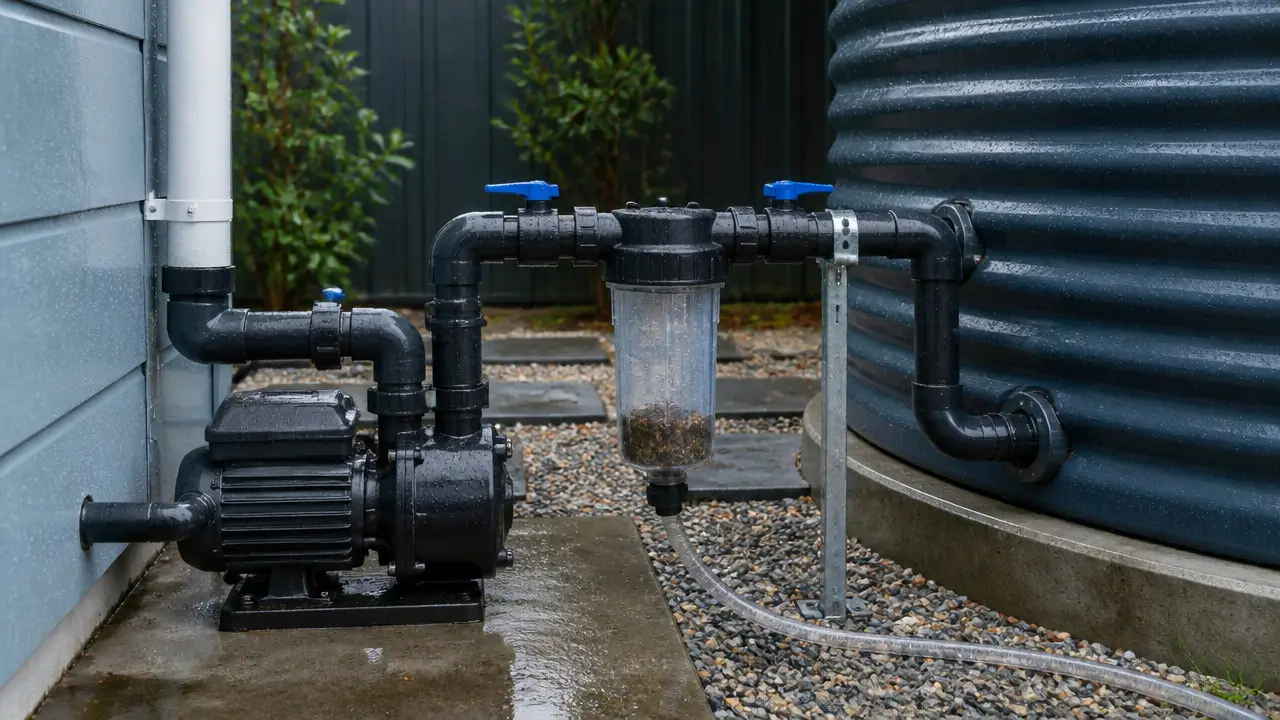
Imagine a rainwater system with this path:
Roof → gutter → first-flush diverter → tank → pump → filters → faucet
Water collected directly from the tank may have different results from water collected after the treatment system.
If you want to know whether treatment is working, you may need samples before and after treatment. If you want to know what reaches the drinking-water faucet, the sample usually needs to represent that point of use.
For laboratory testing, follow the laboratory's collection instructions exactly. Some tests require special bottles, preservatives, flushing procedures, temperatures, or delivery times.
How Accurate Are Water Test Kits for Rainwater?
Home test kits can help monitor a rainwater harvesting system, but they cannot provide a complete picture of rainwater safety.
Roof runoff can pick up contaminants from:
- Bird and animal droppings
- Dust and soil
- Roofing materials
- Gutters and flashing
- Smoke and airborne particles
- Storage tanks
- Pumps and plumbing
- Organic debris
Examine a reliable home water-testing kit to assess service needs that influence lifecycle performance.
CDC notes that even rainwater that looks clean may contain germs or chemicals. A first-flush diverter can help by sending the first portion of roof runoff away from the storage tank, but it does not guarantee safe water.
A home pH or TDS test may be useful for monitoring changes in a rainwater system. It cannot establish that stored rainwater is drinkable.
Rainwater for garden use
If you are using collected rainwater for ordinary landscape irrigation, you may mainly care about practical issues such as pH, sediment, algae growth, clogging, or unusual changes in water quality.
The testing needed will depend on the plants, irrigation equipment, roof materials, and possible contamination sources.
Rainwater for household use
Testing becomes more important when rainwater is used where people could swallow or frequently contact it.
CDC recommends regularly testing collected rainwater for germs and chemicals when it is used for drinking, cooking, or bathing.
For these uses, testing needs to be part of the whole water system. Collection surfaces, first-flush control, storage, filtration, disinfection, maintenance, and laboratory testing all matter.
A single home test kit cannot confirm that roof runoff is potable.
Potable simply means suitable for drinking.
How to Get Better Results From a Home Water Test
You can reduce testing errors with a few simple habits.
Check what the test actually measures
Do not assume a large kit tests every important contaminant.
Read the individual test list and measurement ranges. A test for hardness does not tell you about bacteria. A TDS meter does not identify chemicals.
Check expiration dates
Test strips and chemical reagents can change during storage.
Do not use a kit past its stated expiration date. Store it according to the manufacturer's directions.
Follow the timing exactly
Color tests often need to be read after a specific amount of time.
Reading too early or too late can change the apparent result.
Use good lighting for color tests
Comparing very similar colors can be difficult.
Use the lighting recommended by the manufacturer and avoid judging a strip under strongly colored light.
Keep samples and testing tools clean
Residue from soap, cleaners, fertilizers, chlorine, or previous samples can affect a test.
Use the container and sampling method specified by the test instructions.
Repeat unexpected results
If a home test produces a surprising result, repeat the test with a fresh sample when appropriate.
If the result affects whether the water will be used for drinking or another health-related purpose, confirm it through a suitable certified laboratory rather than relying on repeated home strips.
When Should You Skip the Home Kit and Use a Laboratory?
Use a certified drinking-water laboratory when you need a result that will guide an important health decision.
That includes situations such as:
- You use a private well as drinking water.
- You use collected rainwater for drinking, cooking, or bathing.
- You suspect lead, arsenic, pesticides, industrial chemicals, or other health-related contamination.
- Flooding or another contamination event affected the water source.
- Your water suddenly changes in taste, smell, or appearance.
- A home test indicates a possible health concern.
- You need to verify whether a treatment system is reducing a specific contaminant.
- A health or environmental department recommends testing for a local contaminant.
CDC recommends that private well owners test at least yearly for total coliform bacteria, nitrate, TDS, and pH, along with other contaminants that may be important locally. CDC specifically recommends using a state-certified laboratory.
Public-water users can also arrange independent testing when they have a specific concern. For routine information about public tap water, the utility's annual water-quality report is another useful starting point.
The Bottom Line
Home water testing kits can be accurate enough for specific screening and system-monitoring jobs. They are especially useful for simple measurements such as pH, hardness, chlorine, conductivity, or TDS when the kit is suitable for the job and used correctly.
They should not be treated as proof that water is safe to drink.
When the result involves bacteria, toxic chemicals, private drinking water, or collected rainwater intended for drinking or household use, use a state-certified drinking-water laboratory and test for contaminants appropriate to your water source and location.
Testing is also only one part of water safety. A good result from one test does not replace proper collection, storage, treatment, cleaning, maintenance, and periodic retesting.
Frequently Asked Questions
Can a home water test kit tell me whether my water is safe to drink?
Not by itself. Most kits test only a limited group of water properties or contaminants. Water can pass those tests and still contain something the kit does not measure. Use a certified laboratory when you need to assess drinking-water safety.
Are water test strips accurate?
They can provide useful screening results for parameters they are designed to measure. Their precision can be affected by storage, expiration, timing, lighting, the test's measurement range, and how the user interprets the colors.
Are digital water testers more accurate than strips?
Not automatically. A good electronic meter can provide a more precise reading for parameters such as pH or conductivity, but it must be suitable for the measurement and may require cleaning and calibration. It also measures only the parameters its sensors are designed to detect.
Does a low TDS reading mean water is safe to drink?
No. Total dissolved solids measures or estimates the amount of dissolved material in water. It does not identify individual contaminants and does not test for bacteria or many harmful chemicals.
Can I test rainwater with a home water testing kit?
Yes, home tests can be useful for monitoring certain properties of collected rainwater. They cannot confirm that roof runoff is safe to drink. Rainwater used for drinking, cooking, or bathing should be regularly tested for appropriate germs and chemicals, with guidance from local health authorities when needed.
Should I test water before or after my filter?
It depends on your goal. Testing before and after treatment can help show whether a treatment stage is changing the parameter you are measuring. If you want to know the quality of water you actually use, testing at the final point of use may also be important.
How often should private well water be tested?
CDC recommends testing private well water at least once every year for total coliform bacteria, nitrate, total dissolved solids, and pH, along with other locally important contaminants. Additional testing may be needed after flooding, repairs, water-quality changes, or other possible contamination events.