As an affiliate, we may earn a commission from qualifying purchases. We get commissions for purchases made through links on this website from Amazon and other third parties.
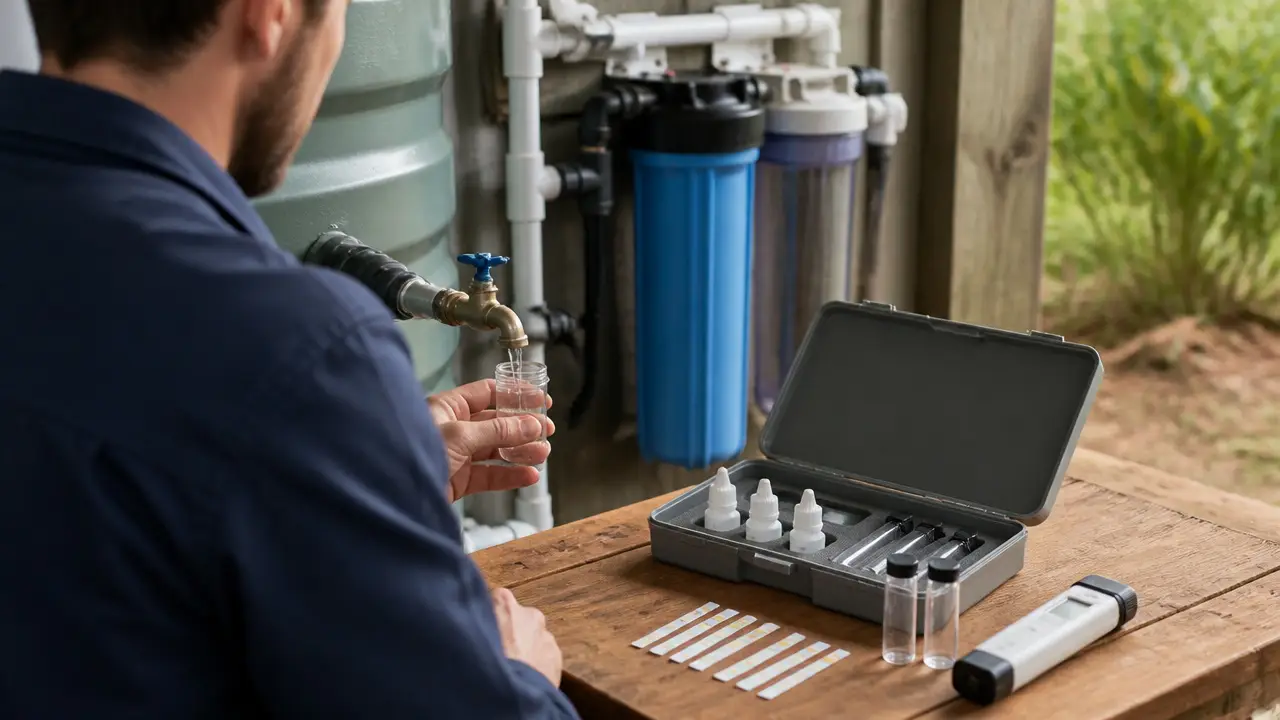
The best home drinking water test kit is usually a sample kit from a certified drinking water laboratory, especially when you need to know whether water is safe to drink. Simple test strips and color-change kits can be useful for routine screening, but they should not be treated as a complete safety test.
For private wells and rainwater systems, testing should cover the contaminants that are realistic for that water source. The CDC recommends that private well owners test at least yearly for total coliform bacteria, nitrate, pH, and total dissolved solids, with additional testing based on local risks.
The right choice depends more on what you need to detect than on how many tests come in the box.
What to Look for in a Home Drinking Water Test Kit
A useful test kit should measure contaminants that matter for your water source.
A kit that advertises dozens of measurements is not automatically better. Some measurements may have little value for your situation, while an important contaminant may require a separate laboratory test.
Look at five things before choosing a test.
1. Tests That Match Your Water Source
Start with where your water comes from.
For public tap water, first review your utility's annual water quality report. It provides information about contaminants measured in the public system.
However, conditions can change after water enters your home's plumbing. Lead, for example, can come from service lines, fittings, solder, or fixtures. EPA recommends laboratory testing when you need to determine whether lead is present in your drinking water.
For a private well, common starting tests include:
- Total coliform bacteria
- Nitrate
- pH
- Total dissolved solids
- Locally important contaminants
Depending on your property and local geology, additional testing may include arsenic, lead, pesticides, volatile organic compounds, mercury, radium, or specific germs.
For collected rainwater, testing needs can be different again. Roof runoff can pick up dirt, animal waste, roofing materials, airborne contaminants, and contaminants inside storage or plumbing. CDC advises testing rainwater used as a water source at least yearly for harmful germs and chemicals.
A general-purpose strip kit cannot establish that collected rainwater is potable, meaning safe for drinking.
2. Clear Detection Ranges
Check what the test actually measures.
A package may say it "tests for lead," for example, but that does not tell you how accurately it measures low concentrations or whether the result is suitable for a drinking-water decision.
Look for instructions that clearly state:
- What substance is measured
- The units used
- The testing range
- How results are read
- How long the test takes
- How the sample must be collected
A simple positive-or-negative result may be enough for preliminary screening. For deciding whether water needs treatment or whether a health-related limit has been exceeded, a laboratory result is much more useful because it provides a measured concentration.
The Best Choice for Health-Related Testing
If your main question is "Is this water safe to drink?", choose a testing kit supplied by a state-certified drinking water laboratory rather than relying only on test strips.
EPA encourages people who want independent drinking-water testing to use state-certified laboratories. Certified laboratories use approved methods and quality-control procedures for drinking-water analysis.
The laboratory usually provides suitable sample bottles along with specific collection instructions. You collect the water as directed and return the samples for analysis.
This approach is especially important when testing for:
- Lead
- Arsenic
- Nitrate
- Bacteria
- Volatile organic compounds
- Pesticides
- Other contaminants with health concerns
Sampling instructions matter. A lead sample, for example, may need to be collected under specific conditions. A bacteria sample must be handled carefully so contamination from your hands or container does not affect the result.
Do not transfer water into a random household bottle unless the laboratory specifically tells you to do so.
When Test Strips Are Useful
Home test strips can still be handy.
They work best for quick checks and system maintenance, rather than proving that water is safe.
Depending on the strip, you may be able to screen for things such as:
- pH
- Hardness
- Chlorine
- Alkalinity
- Iron
- Nitrate or nitrite
These measurements can help diagnose treatment or plumbing problems.
For example, chlorine strips may help someone monitor a system where chlorine concentration is relevant. A hardness test can help determine whether mineral buildup may be a problem.
But strips have limits. Matching a small color pad to a printed chart can produce a broad range rather than a precise measurement. Lighting, timing, storage conditions, and user interpretation can also affect results.
If a strip shows an unexpected result involving a health concern, confirm it with an appropriate laboratory test.
Do Not Choose a Kit Just Because It Tests More Things
Large "all-in-one" kits can look attractive because they list many contaminants.
That number can be misleading.
A kit testing 20 or 30 characteristics with broad color ranges may provide less useful information than a targeted laboratory panel covering five contaminants that actually matter for your home.
Choose testing based on likely risks.
| Situation | Useful starting point |
|---|---|
| Public water with no known problem | Review utility water quality report |
| Concern about lead from household plumbing | Certified laboratory lead test |
| Private well | Annual bacteria, nitrate, pH, TDS, plus local risks |
| Roof-collected rainwater intended for drinking | Water-source-specific laboratory testing as part of a complete treatment and safety plan |
| Water tastes unusually metallic | Targeted testing based on plumbing and source |
| Water suddenly changes color or smell | Investigate the cause and arrange appropriate testing |
| Checking hardness or treatment operation | Home screening kit may be sufficient |
What a TDS Meter Can and Cannot Tell You
Many home water kits include a TDS meter.
TDS means total dissolved solids. It estimates how much dissolved material, such as minerals and salts, is present in water.
TDS can be useful for comparing water before and after certain treatment processes or watching for changes over time.
But a TDS reading does not tell you exactly what those dissolved substances are.
Water with a low TDS reading could still contain a harmful contaminant. Water with higher TDS may simply contain harmless minerals.
CDC treats TDS as a useful water-quality indicator for private wells, not as a complete test of drinking-water safety.
Do not use a TDS meter alone to decide whether rainwater, well water, or another untreated source is safe to drink.
Testing Municipal Tap Water
If your home receives water from a public utility, begin with its annual water quality report.
Explore a reliable home water-testing kit to verify the main trade-offs before the next design decision.
That report can help you avoid paying to retest contaminants that are already closely monitored at the public system level.
Home testing becomes more useful when the concern may involve your particular building.
Examples include:
- Older plumbing
- Possible lead service lines
- Corroding fixtures
- Unusual taste or color
- Changes after plumbing work
- A specific contamination notice
Lead deserves special attention because it cannot reliably be detected by looking at, smelling, or tasting the water. EPA recommends testing as the way to determine whether lead is present in a home's drinking water.
Testing Private Well Water
Private wells require more direct responsibility from the homeowner because they are not monitored in the same way as public drinking-water systems.
CDC recommends testing private well water at least once each year for:
- Total coliform bacteria
- Nitrate
- Total dissolved solids
- pH
Additional contaminants should be selected according to local conditions.
Testing may also be appropriate after flooding, repairs to the well, nearby land disturbance, changes in taste or appearance, or a known local groundwater problem.
Your local health or environmental department can help identify contaminants that are common in your area.
Testing Rainwater Intended for Drinking
Rainwater needs a more cautious approach.
Clean-looking water in a cistern or storage tank is not necessarily safe to drink. Harmful germs and chemicals do not always change the taste, smell, or appearance of water.
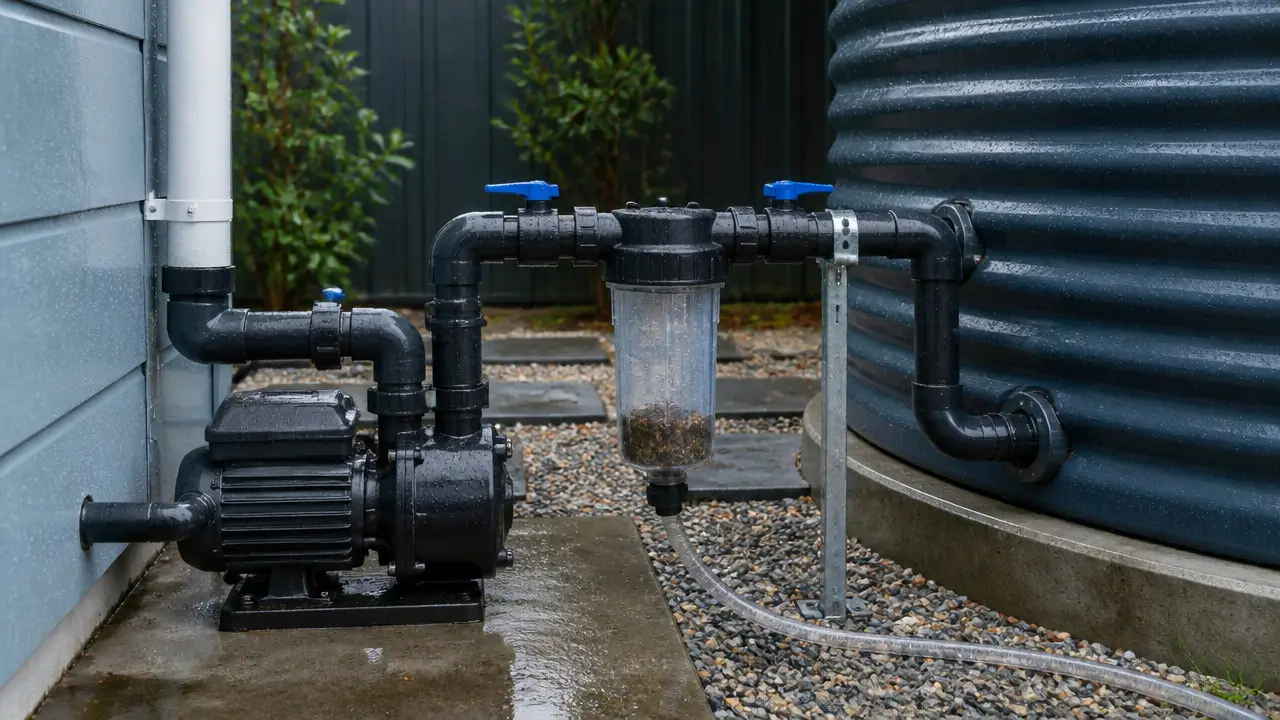
A drinking-water rainwater system needs to be considered as a whole system, including:
- Collection surface
- Gutters and downspouts
- Debris screening
- First-flush control where appropriate
- Storage tank
- Tank cleaning
- Plumbing
- Filtration
- Disinfection or other treatment
- Water testing
- Ongoing maintenance
A first flush is a method of diverting some of the first roof runoff from a rain event so that part of the accumulated dirt and debris does not enter storage.
Even with good prefiltration and treatment, a home strip kit does not prove that stored rainwater is potable.
For rainwater intended for drinking or cooking, use suitable laboratory testing and follow current health guidance and applicable local requirements. CDC recommends at least annual testing of well or rainwater sources and advises contacting the local health department about appropriate testing.
When to Test More Than Once a Year
Annual testing is a useful minimum for many private water sources, but some events justify additional testing.
Consider arranging another test when:
- Floodwater reaches or approaches the water source
- The water suddenly changes color, taste, or smell
- Plumbing or well equipment has been repaired
- There is a contamination problem nearby
- A treatment system stops working properly
- Laboratory results unexpectedly change
- Local health officials recommend additional testing
For wells, CDC specifically recommends additional testing after several of these types of changes or events.
For a rainwater system, it can also make sense to test after major system changes or a suspected contamination event.
How to Get the Most Useful Test Result
Good testing starts before the sample reaches the test strip or laboratory.
Follow the collection instructions exactly.
The sampling point matters. If you want to know what you are actually drinking, the sample may need to come from the drinking-water tap. If you are troubleshooting a treatment system, you may need separate samples before and after treatment.
Avoid assuming that one sample represents every part of the system.
A useful approach is:
- Identify the water source.
- Decide what question you need the test to answer.
- Check for contaminants known to occur locally.
- Select targeted tests.
- Follow the sampling instructions exactly.
- Compare results with appropriate drinking-water guidance.
- Confirm concerning screening results with a certified laboratory.
Testing should also come before choosing treatment whenever possible. CDC recommends identifying the harmful germs or chemicals present so you can choose treatment designed for those contaminants.
So, Which Type of Kit Is Best?
For simple monitoring, a good home kit with clearly marked ranges can be useful for things such as pH, hardness, chlorine, and other basic water characteristics.
For a meaningful drinking-water safety check, the better choice is a targeted sample kit from a certified drinking-water laboratory.
That is particularly important for private wells, rainwater intended for drinking, suspected lead problems, or any situation where the result will determine whether your household continues drinking the water.
The best test is not the one that measures the most things. It is the one that measures the right contaminants with a method accurate enough for the decision you need to make.
Frequently Asked Questions
Can a home water test kit tell me if my water is safe to drink?
Not completely. Home kits can screen for selected water characteristics and contaminants, but no basic strip kit provides a complete drinking-water safety assessment. For health-related decisions, targeted testing through a certified drinking-water laboratory is the safer choice.
What should I test private well water for?
CDC recommends testing at least yearly for total coliform bacteria, nitrate, total dissolved solids, and pH. Other tests should be chosen based on local geology, nearby activities, and guidance from your local health or environmental department.
Are home water test strips accurate?
They can be useful for screening when used correctly, especially for measurements such as pH, hardness, or chlorine. Their precision varies, however, and a concerning result involving drinking-water safety should be confirmed with an appropriate laboratory test.
Does a low TDS reading mean water is safe?
No. TDS measures the amount of dissolved material in water but does not identify every substance present. Harmful contaminants can be present even when the TDS number is low.
What is the best way to test drinking water for lead?
Use a certified drinking-water laboratory and follow its sampling instructions. EPA recommends laboratory testing because dissolved lead cannot reliably be identified by the water's appearance, taste, or smell.
How often should rainwater be tested if it is used for drinking?
CDC advises testing rainwater used as a water source at least once each year for harmful germs and chemicals. Additional testing may be appropriate after contamination concerns or system changes. Testing is only one part of making decisions about potable rainwater use.
Should I test my water before buying a filter?
Yes. Testing helps identify the problem you actually need to treat. Different filters remove different substances, so choosing treatment without knowing the contaminant can result in a filter that does not address the problem.