As an affiliate, we may earn a commission from qualifying purchases. We get commissions for purchases made through links on this website from Amazon and other third parties.
A good home water testing kit is one that tests for the problems that matter for your water source and intended use. For basic screening, look for a kit that checks several common water conditions, such as pH, hardness, alkalinity, chlorine, nitrate, nitrite, iron, and copper. But do not rely on a home kit alone to decide whether water is safe to drink.
For drinking water, private wells, or collected rainwater that may be used for drinking, laboratory testing is the safer choice for important health concerns such as bacteria, lead, and other contaminants.
What Should a Good Home Water Testing Kit Test?
There is no single home kit that gives a complete picture of water quality. Different tests look for different things.
A useful general-purpose kit may include tests for:
- pH
- Total hardness
- Alkalinity
- Free chlorine
- Nitrate
- Nitrite
- Iron
- Copper
Some kits also include tests for lead, bacteria, fluoride, pesticides, or other contaminants. These added tests may be useful for screening, but their presence does not mean the kit can prove that water is safe to drink.
Choose tests based on where the water comes from and what you plan to do with it.
What Makes One Home Test Kit Better Than Another?
A good kit should be easy to use and specific about what it can measure.
Clear measurement ranges
The instructions should tell you the range each test can measure.
For example, a pH strip should show a defined pH range rather than simply saying that the water is "good" or "bad."
This matters because water-quality results need context. A number is much more useful than a vague pass-or-fail label.
Individual instructions for each test
Different tests may need different:
- Sample amounts
- Waiting times
- Water temperatures
- Mixing methods
Follow those directions closely. Reading a strip too early or too late can change the result.
Easy-to-read color charts
Many home kits use test strips that change color. Look for a chart with clear steps between values.
Keep in mind that lighting, faded strips, and differences in how people see colors can affect the reading.
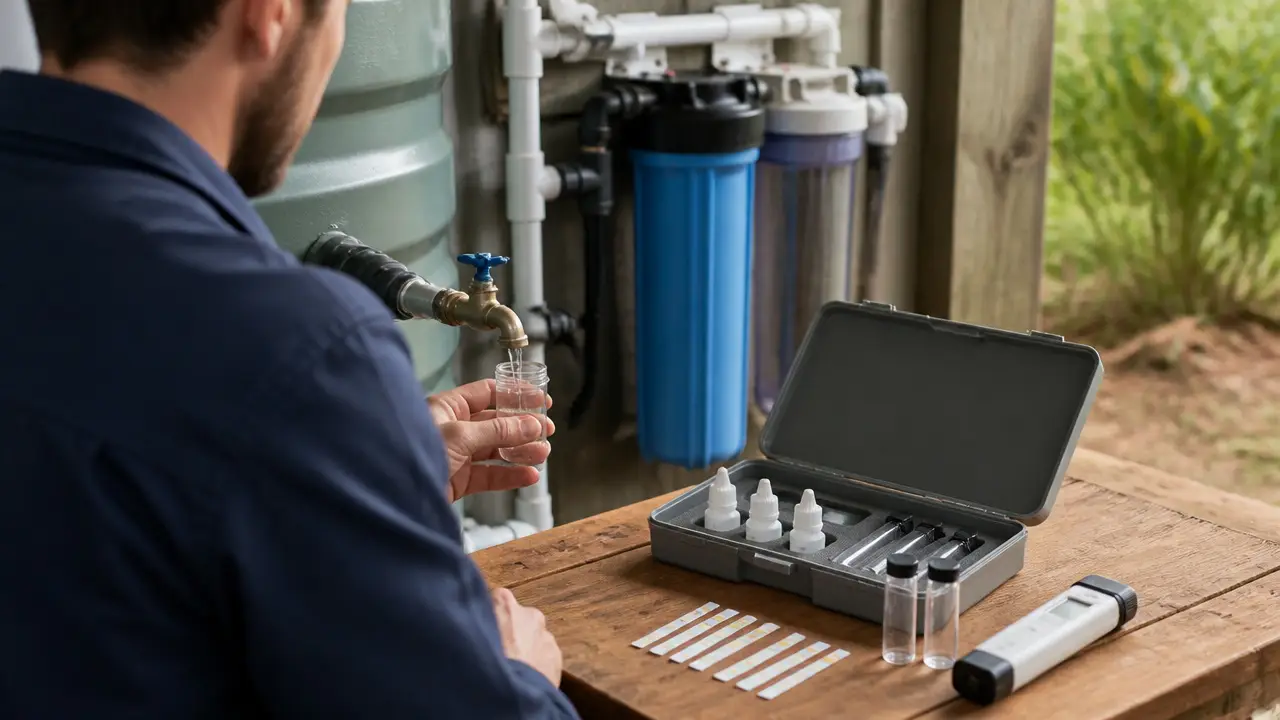
Useful screening starts with choosing a home water quality test kit that covers the contaminants relevant to the source.
Sealed and properly stored test materials
Test strips and chemical reagents can lose accuracy after exposure to moisture, heat, or age.
Check the expiration date. Keep the kit closed and store it according to its instructions.
Tests that match your actual water source
A kit with dozens of tests is not automatically better.
A homeowner checking chlorinated city water has different needs from someone testing a private well, rain barrel, or cistern.
Home Testing for Tap Water
If your home receives water from a public water system, start with your water supplier's current water-quality report when one is available. That tells you about the water supplied through the public system.
Home testing can still be useful because water can change after it enters your property.
For example, plumbing materials can affect lead or copper levels.
Lead is especially important because you cannot reliably identify it by the water's appearance, smell, or taste. EPA recommends sending drinking-water samples to a certified laboratory when testing for lead.
A simple home kit can still help you track things such as chlorine, hardness, or pH. Just treat those results as screening information rather than a complete drinking-water safety test.
Home Testing for Private Well Water
Private wells need more careful testing because the homeowner is generally responsible for monitoring the water.
EPA and CDC recommend testing private well water at least once each year for:
- Total coliform bacteria
- Nitrate
- Total dissolved solids
- pH
Additional testing may be needed depending on local geology, nearby land use, flooding, changes in taste or smell, well repairs, and other conditions. Both agencies recommend using an appropriate certified laboratory for drinking-water testing.
A home kit can be useful between laboratory tests. For example, you might use it to notice a change in pH, hardness, nitrate screening results, or iron.
It should not replace the regular laboratory testing recommended for a drinking-water well.
What About a Kit for Rainwater?
For a rain barrel used only for garden watering, a simple kit may be enough for the questions you are trying to answer.
Depending on your plants and irrigation equipment, useful measurements may include:
- pH
- Total dissolved solids
- Hardness
- Alkalinity
Total dissolved solids, or TDS, is an estimate of dissolved minerals and other dissolved material in water. A TDS meter can tell you whether the dissolved-solids level has changed. It cannot tell you exactly what those dissolved substances are.
Evaluate comparing home-test results with laboratory analysis to verify assembly details that affect everyday performance.
For example, two samples can have the same TDS reading while containing very different materials.
Roof runoff can also pick up material from roofing, gutters, leaves, bird droppings, insects, dust, and other surfaces. A basic strip kit cannot rule out all of those possible contaminants.
If collected rainwater is being considered for drinking, do not use a home strip kit or TDS meter as proof that it is potable.
Potable means suitable for drinking.
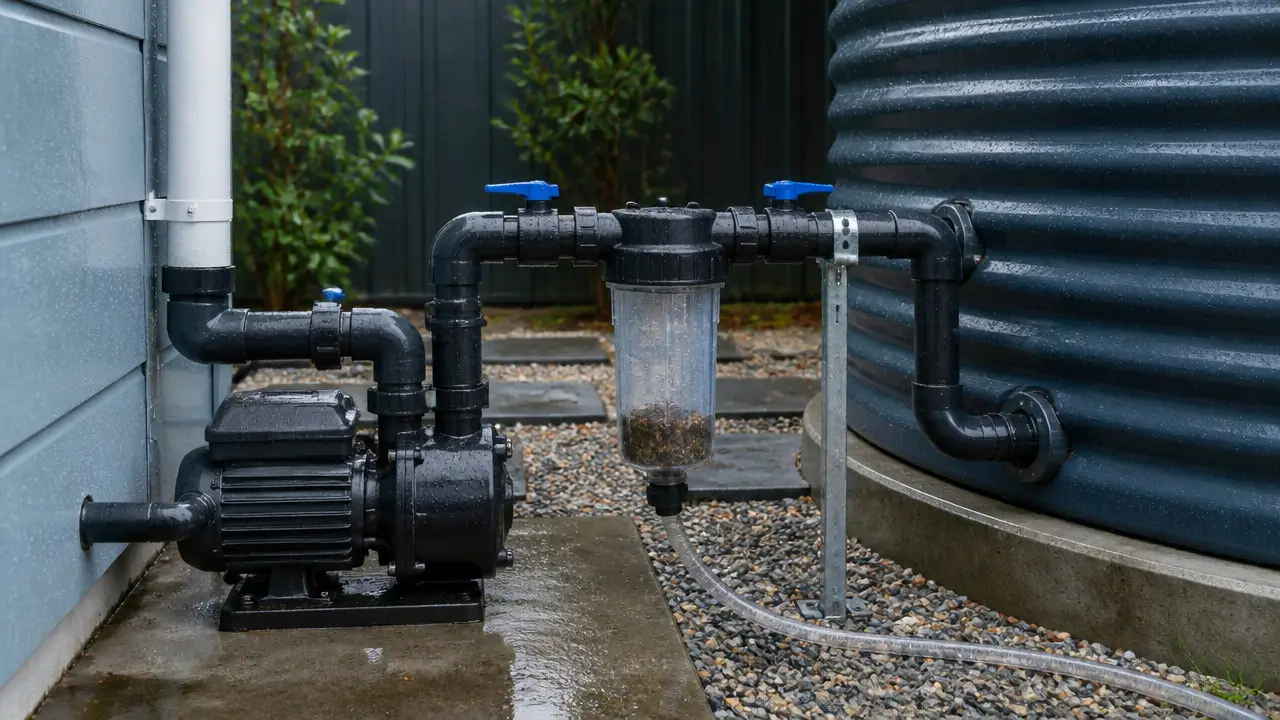
Drinking-water use needs to be treated as a complete system. Collection surfaces, debris removal, first-flush management, storage conditions, treatment, current laboratory testing, maintenance, and local requirements can all matter.
A first-flush diverter sends away some of the first roof runoff from a rain event, when more debris may be washing off the collection surface. It can reduce part of the contaminant load, but it does not make rainwater automatically safe to drink.
Can a Home Kit Test for Bacteria?
Some consumer kits include bacteria tests. These commonly look for a color change after the sample sits for a specified period.
They can be useful as screening tools, but bacterial testing is one area where sample collection, storage, temperature, timing, and test method matter greatly.
If the result affects whether you will drink the water, use an appropriate certified laboratory rather than relying only on an at-home bacteria test.
CDC recommends state-certified laboratory testing for private drinking-water wells.
Can You Trust a Home Lead Test?
Do not make an important drinking-water decision based only on a simple home lead screening test.
EPA states that testing is the only way to know whether lead is present in drinking water and recommends sending samples to a certified laboratory. Your state or local drinking-water authority can help locate an appropriate laboratory.
Correct sampling is important too. The laboratory may give you specific instructions about which faucet to use and how long the water should sit before sampling.
Follow those instructions rather than collecting the sample your own way.
What About TDS Meters?
A TDS meter can be a useful addition to a home testing kit, but it has a limited job.
It measures water's electrical conductivity and uses that information to estimate total dissolved solids.
It can help you:
- Compare water before and after some treatment stages
- Watch for changes over time
- Compare different water sources
- Check whether mineral levels are changing
It cannot tell you whether the dissolved material is harmless minerals, unwanted salts, or something else.
A low TDS reading does not prove that water is safe. Bacteria and some harmful contaminants can be present even when TDS is low.
When Should You Skip the Home Kit and Use a Laboratory?
Use an appropriate certified drinking-water laboratory when the answer affects health or when you need to identify a specific contaminant accurately.
Laboratory testing is especially important when:
- You want to know whether water is suitable for drinking.
- You are testing a private drinking-water well.
- You suspect lead.
- You need reliable bacteria testing.
- Flooding or other contamination may have reached a water source.
- Water suddenly changes in taste, smell, or appearance.
- You are selecting treatment for a known contaminant.
- A previous test found a possible health concern.
- A local health agency recommends testing for a contaminant common in your area.
Certified laboratories use approved methods and must meet testing and quality-control requirements. EPA maintains information for finding state drinking-water laboratory certification programs.
A Practical Home Testing Setup
For routine household screening, you do not necessarily need one large all-in-one kit.
A practical setup can consist of three parts:
- A multi-parameter strip or liquid kit for pH, hardness, alkalinity, chlorine, nitrate, nitrite, iron, and similar basic measurements that matter to your water.
- A TDS meter if tracking dissolved-solids changes would help with your water source or treatment system.
- Laboratory testing when health decisions are involved, especially for drinking water, bacteria, lead, and other contaminants that require dependable identification.
This approach keeps simple monitoring simple without asking a home kit to do a laboratory's job.
Frequently Asked Questions
Are home water testing kits accurate?
They can be useful for basic screening when they are fresh, properly stored, and used exactly as directed. Their accuracy varies by test and by what you are measuring. They should not be treated as a complete drinking-water safety assessment.
What is the most important thing to test in water?
There is no single most important test for every water source. The right tests depend on whether you have municipal water, a private well, rainwater, or another source and whether the water will be used for drinking, irrigation, washing, or another purpose.
Can a water test kit tell me if my water is safe to drink?
A basic home test kit cannot establish that water is safe to drink. Drinking-water safety can involve bacteria, metals, chemicals, and other contaminants that simple strips or meters may not detect.
Is a TDS meter enough for testing drinking water?
No. A TDS meter only estimates the amount of dissolved material in water. It does not identify individual contaminants and does not test for bacteria. A low TDS number does not prove that water is safe.
How often should private well water be tested?
EPA and CDC recommend testing private well water at least annually for total coliform bacteria, nitrate, total dissolved solids, and pH. Other tests may be appropriate based on local conditions or changes to the well or water.
Should I test rain barrel water?
Testing can be useful when a water-quality measurement affects how you plan to use the rainwater. For garden irrigation, pH or dissolved-solids measurements may sometimes be useful. If the water is being considered for drinking, simple home testing is not enough.
Do I need laboratory testing for lead?
For drinking-water lead testing, EPA recommends using a certified laboratory and following its sampling instructions. Lead cannot reliably be detected by looking at, tasting, or smelling the water.