As an affiliate, we may earn a commission from qualifying purchases. We get commissions for purchases made through links on this website from Amazon and other third parties.
The most accurate way to test water is a certified drinking-water laboratory, not a home water test kit. A lab can use approved methods, calibrated instruments, quality-control checks, and proper sample handling to measure specific contaminants. EPA requires certified laboratories testing regulated drinking water to use approved analytical methods and meet certification requirements.
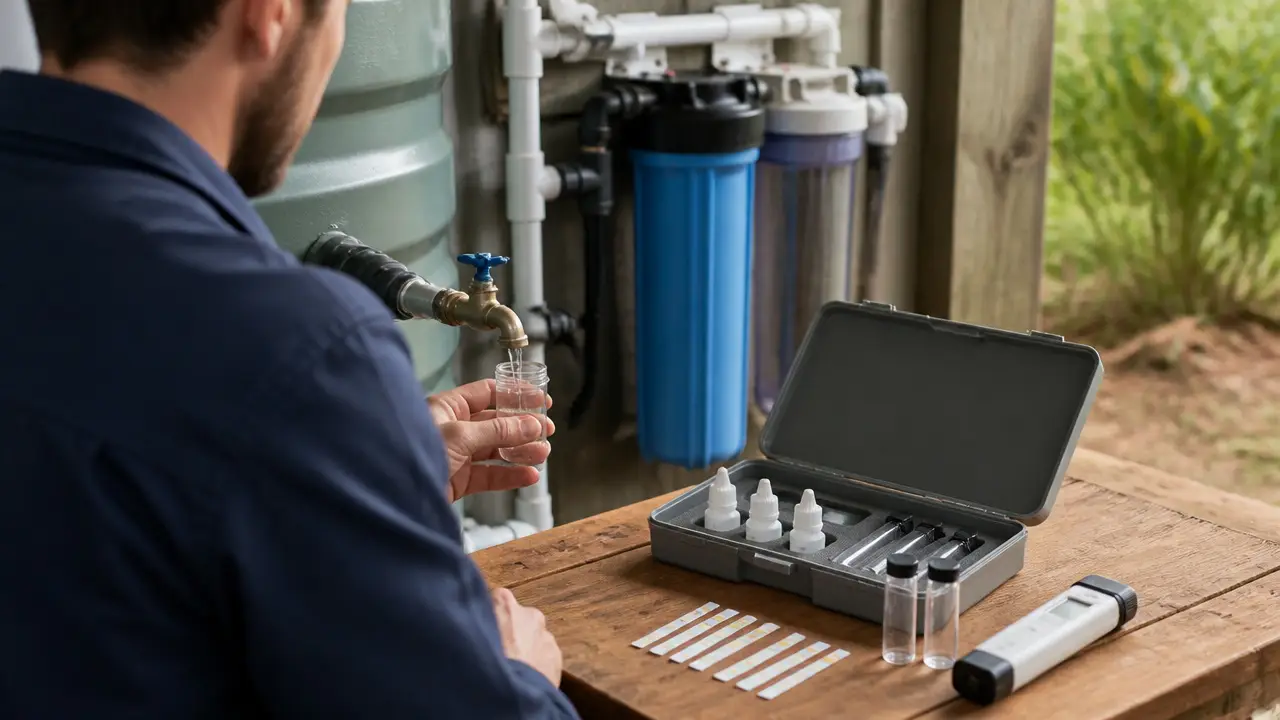
Home test kits can still be useful. They are best for quick screening, routine system checks, or measuring simple water properties such as pH. But no single home kit can accurately tell you everything that may be in rainwater, well water, or stored water.
What Makes a Water Test Accurate?
Accuracy means how close a test result is to the actual amount of something in the water.
Precision is different. Precision means getting nearly the same result when you repeat the test.
A kit can give very similar readings each time and still be wrong. Errors can come from:
- Poor calibration
- Old or improperly stored reagents
- Contaminated sample containers
- Testing outside the kit's measurement range
- Reading a color strip too early or too late
- Water color or other substances interfering with the test
- Incorrect sample collection or storage
EPA-approved laboratory methods include instructions for collecting, preserving, storing, measuring, and reporting samples. They also include quality-control requirements.
That is one reason laboratory results usually provide more confidence than an all-in-one home test kit.
Which Type of Water Test Is Most Accurate?
There is no single test type that is best for every water-quality question.
| Test method | Best use | Main limitation |
|---|---|---|
| Certified laboratory | Drinking-water decisions and specific contaminants | Requires proper sampling and laboratory analysis |
| Digital colorimeter or photometer | Measuring certain chemicals with matching reagents | Only measures substances supported by that method |
| Calibrated electronic meter | pH, conductivity, temperature, and similar properties | Does not identify most contaminants |
| Drop-count titration | Hardness, alkalinity, and some other targeted tests | Results depend on technique and test resolution |
| Test strips | Fast screening | Broad color ranges and visual interpretation can reduce accuracy |
| Presence/absence bacteria test | Screening for a specific microbial indicator | Does not provide a complete microbial safety assessment |
Certified Laboratory Testing
For water that may be used for drinking, cooking, or other uses where health is a concern, laboratory testing is the strongest choice.
EPA-certified drinking-water laboratories must use approved methods for the contaminants covered by their certification. They also undergo proficiency testing and periodic evaluation.
EPA recommends that people who want independent drinking-water testing contact a state-certified drinking-water laboratory.
A laboratory is especially important when testing for contaminants such as:
- Lead and other metals
- Nitrate and nitrite
- Microbial contamination
- Organic chemicals
- Certain pesticides
- Other contaminants of health concern
Different contaminants require different analytical methods. A test simply labeled as a "complete water test" does not necessarily cover every possible problem.
Digital Colorimeters and Photometers
A colorimeter or photometer measures how much light passes through or is absorbed by a treated water sample.
You usually add a reagent that reacts with one substance in the water. The instrument then measures the resulting color.
These devices can remove some of the guesswork involved in comparing a test strip with a printed color chart. However, their accuracy still depends on:
- The test method
- Reagent condition
- Calibration
- Measurement range
- Sample cleanliness
- Interfering substances
A digital number on a screen does not automatically make a test laboratory-grade.
Electronic pH and Conductivity Meters
Electronic meters can be very useful for monitoring a rainwater system.
For example, a calibrated pH meter generally gives a more detailed reading than a simple pH strip. USGS water-quality procedures emphasize proper calibration, maintenance, and measurement technique when pH meters are used.
Conductivity meters measure how well water conducts electricity. Many handheld meters convert conductivity into an estimate of total dissolved solids, or TDS.
TDS is an estimate of the total amount of dissolved material in water. It does not tell you what those dissolved substances are.
A low TDS reading does not prove water is safe. Water can contain harmful germs or certain chemicals without producing a useful warning on a TDS meter.
Drop-Count Test Kits
Drop-count tests use liquid reagents rather than strips.
You normally add drops until the water changes color. The number of drops is then used to calculate the result.
These tests can be practical for measurements such as hardness and alkalinity. They are often easier to interpret than strips because the endpoint is based on a color change rather than matching several shades on a chart.
They are still sensitive to technique. Drop size, lighting, mixing, reagent condition, and deciding exactly when the color has changed can all affect the result.
Water Test Strips
Test strips are convenient, but they should normally be treated as screening tools rather than the final word on water safety.
The strip contains chemicals that change color when exposed to certain substances. You compare those colors with a chart.
This approach has several weaknesses:
- Adjacent colors can be difficult to distinguish.
- Readings usually fall into broad ranges.
- Lighting can change how colors appear.
- Timing matters.
- Some water conditions can interfere with the reaction.
An evaluation by the San Francisco Public Utilities Commission found that home kits sometimes agreed reasonably well with laboratory results, but performance varied by the parameter being tested. The agency recommends treating home-kit results as an initial step and confirming concerning results through appropriate laboratory analysis.
A published evaluation of commercially available home drinking-water kits also found that performance varied by contaminant, water type, and user.
The Most Accurate Choice Depends on What You Need to Know
Start with the question you are trying to answer.
For Routine Rainwater System Checks
Simple field tests can be useful when you are watching how the system behaves rather than deciding whether the water is safe to drink.
Depending on the system, you might monitor:
- pH
- Conductivity
- TDS as a general system indicator
- Turbidity or visual clarity
- Certain treatment-related parameters
These readings can help you notice changes.
For example, an unusual change between the tank and the outlet may tell you that something in the system needs inspection.
It does not identify every possible contaminant.
For Garden Irrigation
The testing needed for irrigation depends on the plants, soil, and water source.
A calibrated pH or conductivity meter may provide useful information when you are troubleshooting plant or soil problems.
You usually do not need a broad drinking-water test merely because rainwater is being used on ornamental landscaping. Water used on edible crops or in ways that could expose people to untreated water may call for more careful evaluation.
For Household Rainwater
Testing becomes more important as human exposure increases.
Water used only to flush toilets does not have the same quality requirements as water used for bathing, cooking, or drinking.
CDC notes that roof-collected rainwater can contain germs and chemicals from the air, roofing materials, gutters, pipes, storage materials, dirt, and animal waste.
A clean-looking tank is therefore not proof that its water is free of harmful contaminants.
For Drinking Rainwater
Do not rely on a home strip kit, TDS meter, pH meter, or single bacteria test to decide that rainwater is potable.
Potable means suitable for drinking.
With a reliable home water-testing kit, you can understand assembly details that affect everyday performance.
CDC recommends regularly testing rainwater for germs and chemicals when it is used for drinking, cooking, or bathing and advises getting guidance from the local health department about what should be tested.
For drinking-water use, testing should be part of a complete system that also considers:
- The roof and collection surfaces
- Gutters and debris control
- First-flush management
- Tank cleanliness
- Plumbing materials
- Filtration
- Treatment for relevant germs and chemicals
- Treatment maintenance
- Current laboratory results
- Applicable local requirements
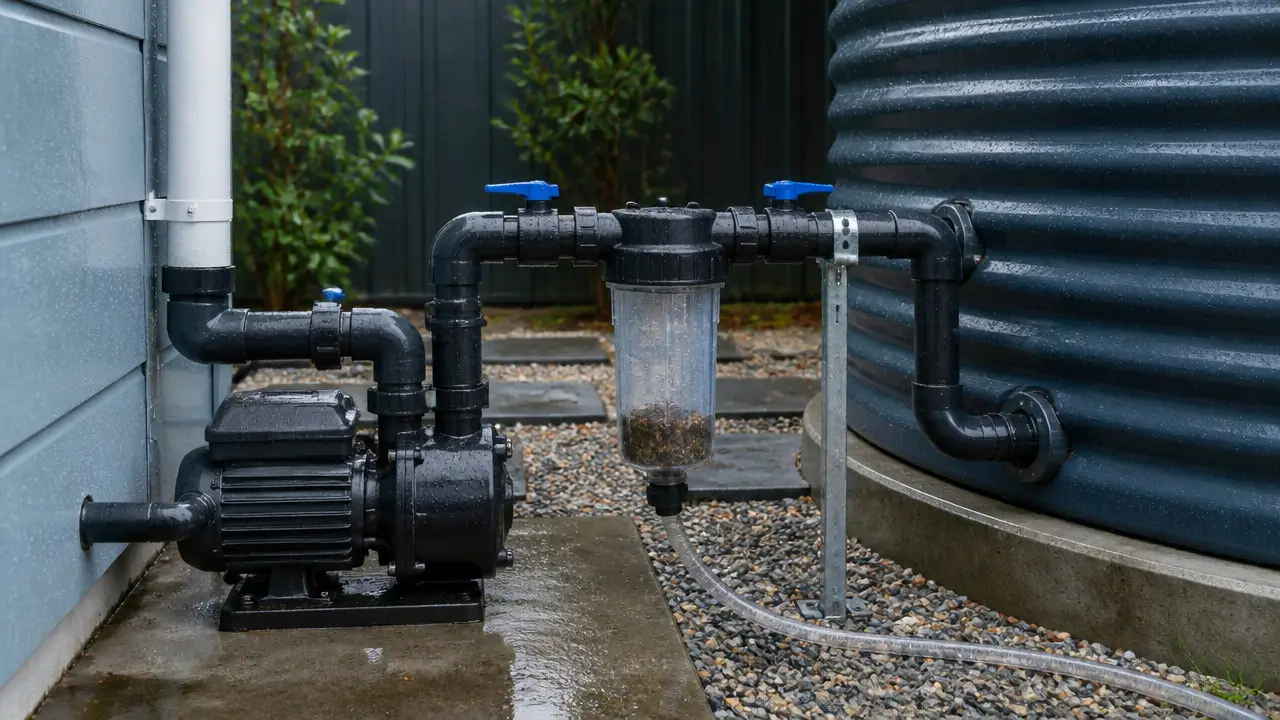
A first flush device sends away the first portion of runoff from a storm. That first runoff can carry a larger amount of material collected on the roof. It may improve incoming water quality, but it does not make the remaining rainwater automatically safe to drink.
Do More Test Parameters Mean a Better Kit?
Not necessarily.
A kit advertising many test parameters may look more complete than a kit measuring only one or two. But the number of tests tells you very little about their accuracy.
A better question is whether the method can measure the specific substance you care about at a useful range and with acceptable accuracy.
Consider:
- What the test actually measures
- Its measurement range
- How small a change it can distinguish
- Whether calibration is possible
- Whether reagents have an expiration date
- Whether another substance can interfere with the result
- Whether results are numerical or only broad ranges
- Whether the method has been independently evaluated
- Whether laboratory confirmation is recommended
Twenty rough screening results are not automatically more useful than one well-performed test for the contaminant that matters.
How to Get Better Results From a Home Water Test
Even a good test method can give poor results if the sample is handled incorrectly.
Follow the Timing Exactly
Many strip and reagent tests must be read after a specific amount of time.
Reading too early or too late can change the apparent result.
Keep Test Materials Clean
Do not touch test areas on strips or the inside of clean sample containers.
Residue from soap, fertilizer, metal, dirty hands, or another water sample can affect the reading.
Check Expiration Dates
Chemical reagents can change during storage.
Do not assume an old test kit is accurate just because the strips or bottles still look normal.
Calibrate Meters
If an electronic meter requires calibration, use the correct calibration standards and follow its instructions.
Calibration is especially important for pH and conductivity measurements.
Test a Representative Sample
Think about what part of the system you are trying to evaluate.
Water entering a rain tank may be different from water leaving the tank after storage and treatment. A sample taken from an unused pipe section may also be different from the water normally delivered to a fixture.
For laboratory testing, follow the laboratory's sampling instructions rather than making up your own collection method. Some tests require special bottles, preservation, or limited holding times.
Repeat Unexpected Results
If a home test gives a surprising result, repeat it carefully with fresh materials.
If the result could affect drinking-water safety or treatment decisions, confirm it through an appropriate certified laboratory instead of relying on repeated home strips.
A Water Test Only Answers the Question It Was Designed to Test
This is the biggest limitation of home water testing.
Suppose a kit tests for 10 substances and every result falls within the kit's normal-looking range.
That only gives information about those 10 tests.
It says nothing about contaminants the kit does not measure.
The same rule applies to electronic meters.
A pH meter tells you pH. A conductivity or TDS meter tells you about dissolved ions in a general way. A turbidity meter tells you about suspended material. None of them provides a complete drinking-water safety assessment.
Even bacteria testing has limits. One microbial indicator test does not identify every possible microorganism.
This is why there is no universal "most accurate water test kit."
What Should You Choose?
For simple monitoring, choose a test designed specifically for the parameter you need rather than buying the kit with the longest list of tests.
A calibrated electronic meter can be useful for parameters such as pH and conductivity. Reagent-based methods can work well for certain targeted chemicals. Test strips are practical when a rough screening result is enough.
For any result that will determine whether rainwater, well water, or stored water is suitable for drinking, use an appropriate certified drinking-water laboratory. Home tests can help you spot a possible problem, but they should not be used alone to declare water safe.
Frequently Asked Questions
Are digital water testers more accurate than test strips?
They can be for the specific property they are designed to measure. For example, a properly calibrated electronic pH meter can give a more detailed reading than a pH strip. However, digital meters still require calibration and maintenance, and most measure only a small number of water properties.
Are water test strips accurate enough for drinking water?
Test strips can be useful for screening, but they should not be the only basis for deciding that water is safe to drink. Their results can be affected by color interpretation, timing, measurement range, and water chemistry. Use laboratory testing for drinking-water decisions.
Does a TDS meter tell me if rainwater is safe to drink?
No. A TDS meter estimates total dissolved solids from the water's electrical conductivity. It does not identify individual contaminants or detect all germs and chemicals. A low TDS reading does not prove water is potable.
Can I use a home bacteria test on rainwater?
A home bacteria test may provide useful screening information for the specific indicator it measures. It cannot establish that the water is free of all harmful microorganisms. Drinking-water decisions should use appropriate laboratory testing and a complete treatment and maintenance plan.
Should I test rainwater before or after filtration?
The sampling point depends on what you want to learn. Testing raw tank water can help characterize the source, while testing treated outlet water helps evaluate the water actually being used. For a treatment system, testing both locations can sometimes provide useful information. Follow laboratory sampling instructions when laboratory results are needed.
How often should rainwater used for drinking be tested?
CDC recommends regularly testing rainwater used for drinking, cooking, or bathing for germs and chemicals and getting local health-department advice about what to test. Testing may also be appropriate after system changes, contamination events, or unexpected changes in water quality.
What is the most accurate water test overall?
For drinking-water safety, an appropriate certified laboratory using approved analytical methods provides the highest level of confidence. No single home test kit measures every possible contaminant or provides a complete assessment of water safety.