As an affiliate, we may earn a commission from qualifying purchases. We get commissions for purchases made through links on this website from Amazon and other third parties.
The most accurate way to test water is to send a properly collected sample to a certified drinking-water laboratory and have it tested for the specific contaminants that matter for your water source and intended use.
A home meter, test strip, or single test kit can be useful for checking one narrow part of water quality. But none can tell you that water is generally “safe.” Water can contain bacteria, metals, nitrate, chemicals, and other contaminants that require very different test methods.
For drinking-water decisions, laboratory testing is the better standard. EPA-certified or state-certified laboratories use approved analytical methods, quality-control procedures, proficiency testing, and other controls intended to produce reliable results.
What Makes a Water Test Accurate?
Accuracy depends on more than the device or laboratory doing the analysis. Four things have to be right:
- You must test for the right contaminants.
- The sample must represent the water you actually use.
- The sample must be collected and handled correctly.
- The test method must be suitable for the contaminant being measured.
A very accurate nitrate test, for example, tells you nothing about bacteria or lead.
That is why there is no single test that accurately answers, “Is my water good?”
A useful test starts with a more specific question, such as:
- Does this rainwater contain harmful bacteria?
- Is there lead at this drinking-water faucet?
- Does my well have elevated nitrate?
- What is the pH?
- Is my irrigation water high in dissolved minerals?
- Is my treatment system reducing the contaminant it was installed to address?
The test method should follow the question.
Certified Laboratory Testing Is the Best Choice for Drinking Water
For water that will be used for drinking, cooking, brushing teeth, or other uses where people may swallow it, use a certified drinking-water laboratory when possible.
In the United States, EPA recommends contacting a state-certified laboratory for independent drinking-water testing. Certified laboratories use appropriate analytical methods and must meet certification requirements for the contaminants they are approved to analyze.
This does not mean every laboratory tests for every contaminant. Ask whether the laboratory is certified for the particular tests you need.
Why laboratory testing is more reliable
A laboratory can measure contaminants that simple home equipment cannot identify.
Depending on the requested analysis, laboratory testing can look for things such as:
- coliform bacteria and other microorganisms
- nitrate
- lead and other metals
- arsenic
- certain pesticides
- volatile organic compounds
- other chemicals of local concern
EPA-approved drinking-water methods also specify important parts of the process, including sample collection, preservation, storage, measurement, quality control, and reporting.
That controlled process is a major reason laboratory results are more useful for health-related decisions.
The Most Accurate Test Is Not Necessarily the Biggest Test Panel
Testing for hundreds of substances without considering your water source is not always the best approach.
Start by identifying where the water comes from.
Public tap water
If you receive water from a public system, start with the utility's water-quality information. A household test may still make sense when you are concerned about something that can enter water through your home's plumbing, such as lead.
Lead is a good example of why sampling location matters. Water leaving the utility may be different from water coming from your kitchen faucet because plumbing materials inside or near the home can affect the sample.
EPA notes that testing is the only sure way to determine whether lead is present in drinking water at harmful quantities and recommends certified laboratory analysis.
Private well water
Private wells need their own testing program because they generally are not monitored like public water systems.
CDC recommends that private well owners test at least yearly for:
- total coliform bacteria
- nitrate
- pH
- total dissolved solids
Other tests should be selected according to local geology, nearby activities, changes around the well, and advice from the local health or environmental department.
Total dissolved solids, or TDS, is a measure related to the amount of dissolved material in water. It can be a useful water-quality indicator, but a TDS result does not identify individual contaminants or determine whether water is safe to drink.
Collected rainwater
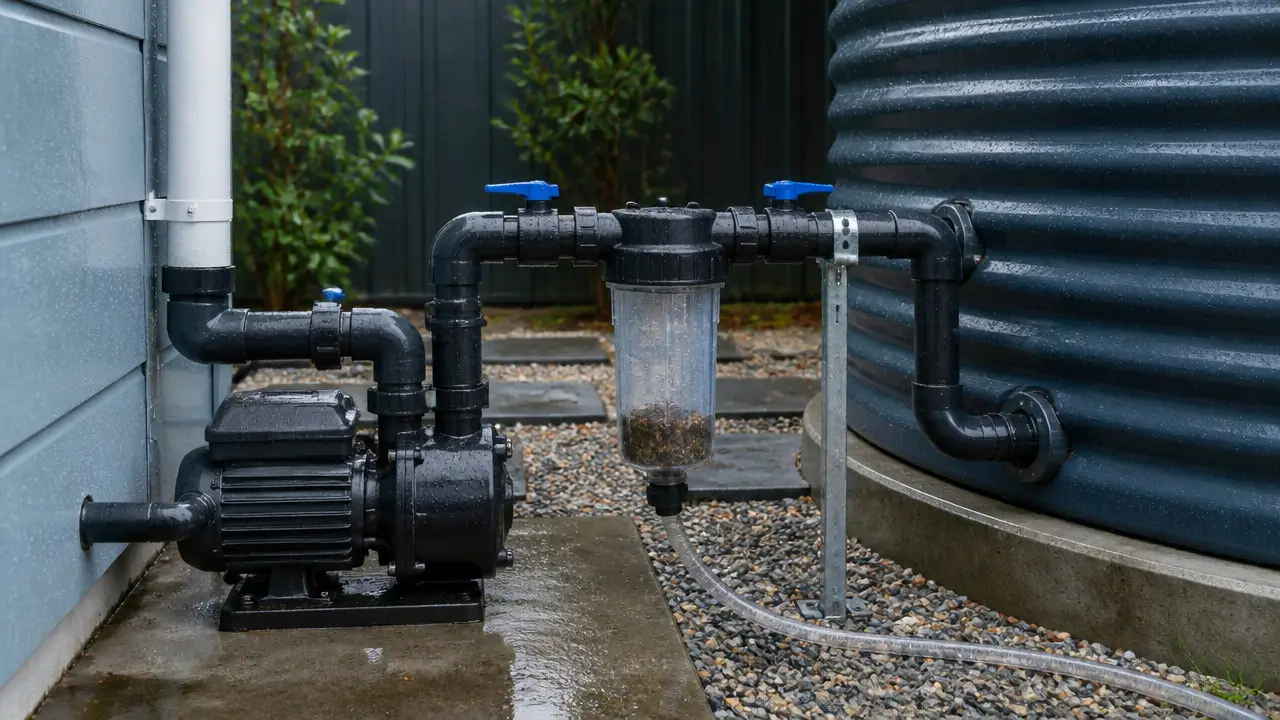
Rainwater needs a different approach because contamination can enter at several points:
roof → gutters → downspout → tank → pump → treatment → faucet
Rain can pick up material from the air. Roof runoff can then pick up dust, bird droppings, microorganisms, metals, roofing materials, and other contaminants before reaching the storage tank.
CDC states that collected rainwater is not necessarily safe to drink and recommends regular testing for germs and chemicals when rainwater is used for drinking, cooking, or bathing.
For a rainwater system intended to supply drinking water, testing should be part of a larger water-safety plan that includes suitable collection surfaces, debris control, prefiltration, appropriate treatment, maintenance, laboratory testing, and applicable local requirements.
Testing the water does not replace those parts of the system.
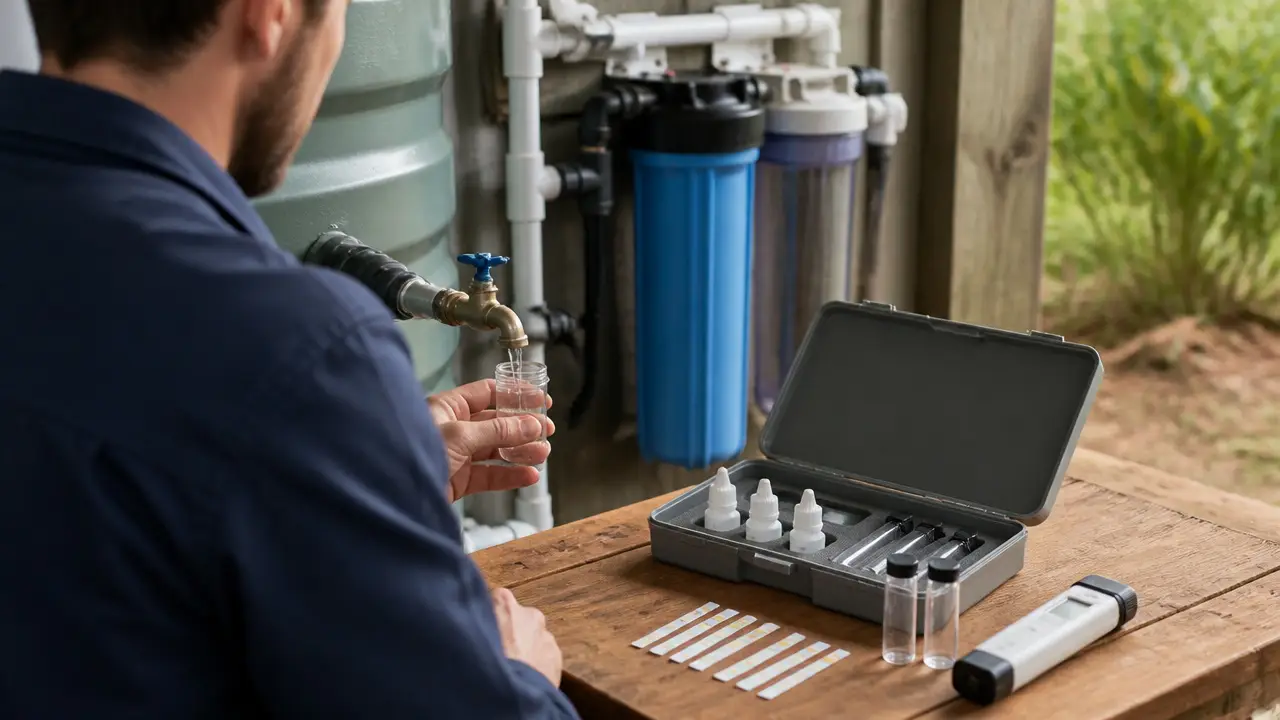
How Accurate Are Home Water Test Kits?
Home tests range from useful instruments to very rough screening tools.
| Testing method | Good for | Main limitation |
|---|---|---|
| Certified laboratory | Health-related and detailed water analysis | Must select the correct tests and collect samples correctly |
| pH meter | Measuring pH | Measures only pH and requires proper calibration |
| TDS meter | Tracking dissolved-ion changes | Cannot identify contaminants |
| Conductivity meter | Comparing ionic content | Does not determine drinking-water safety |
| Test strips | Quick screening for specific parameters | Often less precise and dependent on timing and color interpretation |
| Home bacteria kit | Basic screening in some situations | Does not replace appropriate certified testing for important health decisions |
| Taste, smell, appearance | Spotting obvious changes | Many harmful contaminants have no noticeable taste, smell, or color |
Home equipment can still be very useful when used for the job it was designed to do.
When a TDS Meter Is Useful
A TDS meter is one of the most commonly misunderstood water-testing tools.
Most handheld TDS meters measure the water's electrical conductivity and convert that measurement into an estimated TDS value.
That can make them useful for:
- comparing water before and after some treatment stages
- watching for a change over time
- checking mineral-heavy irrigation water
- troubleshooting certain reverse-osmosis systems
- comparing different water sources
But a low TDS reading does not prove that water is safe.
A TDS meter does not tell you whether the water contains:
- harmful bacteria
- viruses
- lead at a specific concentration
- pesticides
- many organic chemicals
- other contaminants that may be important for drinking water
Two samples can have similar TDS readings and contain very different substances.
When Test Strips Make Sense
Test strips are convenient when you need a fast estimate rather than a high-confidence laboratory measurement.
They may be suitable for routine checks of certain parameters when the required precision is modest.
Accuracy can be affected by:
- strip age
- storage conditions
- water temperature
- dipping time
- waiting time before reading
- lighting
- differences between similar colors
- substances that interfere with the test
They work best as screening tools.
If a strip produces an unexpected result that could affect health or treatment decisions, confirm it using an appropriate laboratory method.
Sample Collection Can Matter as Much as the Test
Even an excellent laboratory cannot completely correct a poorly collected sample.
Different contaminants require different sampling procedures.
A bacteria sample, lead sample, and volatile-organic-chemical sample may require different bottles, collection methods, preservation, and delivery times.
Contact the laboratory before collecting water
This is one of the most important steps.
Ask the laboratory what you plan to test and obtain its sampling instructions and containers.
Do not assume a clean household jar is suitable.
Depending on the analysis, the laboratory may provide:
- sterile containers
- bottles containing preservatives
- instructions about faucet preparation
- instructions about whether water should sit before sampling
- temperature requirements
- shipping instructions
- a deadline for getting the sample to the laboratory
EPA guidance emphasizes following the analytical method's requirements for collecting, preserving, storing, and analyzing samples.
Follow the laboratory's instructions rather than using one generic sampling procedure for every contaminant.
Where Should You Take the Sample?
Sample location should match what you are trying to learn.
For example, suppose you have this rainwater system:
roof → tank → sediment filter → carbon filter → UV treatment → kitchen faucet
Testing the tank tells you something different from testing the kitchen faucet.
A tank sample can help evaluate stored-water quality.
A faucet sample can help evaluate the water reaching the user after treatment.
In some troubleshooting situations, samples from more than one point can help show where a problem enters the system. Have the laboratory or a qualified water professional help design the sampling plan when drinking-water safety is involved.
The same idea applies to wells.
A sample taken directly from a well system can answer a different question from one collected after a softener, filter, storage tank, or other treatment equipment.
Do Not Use Taste, Smell, or Appearance as a Safety Test
Reviewing options for home water-quality testing helps compare safety controls aligned with potable or non-potable use.
Clear water is not necessarily safe water.
Many microorganisms and chemicals cannot be detected by looking at, tasting, or smelling the water. CDC specifically warns that taste, smell, and appearance are not reliable indicators of drinking-water safety.
At the same time, unpleasant-looking or smelly water is not automatically dangerous.
For example, some mineral or sulfur-related conditions can create noticeable staining, taste, or odor without telling you whether a health-related contaminant is present.
A change is a reason to investigate, not a diagnosis.
How to Get the Most Reliable Water Test
For an important water-quality decision, use this process.
1. Decide how the water will be used
Water for a flower garden does not require the same assessment as water that will be swallowed.
Possible uses include:
- landscape irrigation
- vegetable gardening
- toilet flushing
- washing
- bathing
- cooking
- drinking
The greater the chance of swallowing the water, the more important a proper health-focused testing and treatment plan becomes.
2. Identify the water source
Determine whether you are testing:
- public tap water
- a private well
- collected rainwater
- stored water
- another untreated source
Each has different likely problems.
3. Identify possible contaminants
For private wells and rainwater, contact your local health or environmental department for advice about contaminants that matter in your area.
Nearby land use, geology, plumbing, roof materials, storage conditions, flooding, and other factors can change what should be tested.
CDC recommends getting local guidance rather than relying on the same chemical list everywhere.
4. Find a certified laboratory
For drinking-water analysis in the U.S., use your state's drinking-water laboratory certification program or contact the local health department.
EPA maintains current information for finding state-certified drinking-water laboratories. As of August 2026, EPA continues to recommend state-certified laboratories for people seeking independent residential drinking-water testing.
5. Get the laboratory's sampling kit
Tell the laboratory exactly which analyses you need before collecting the sample.
Use its bottles and instructions.
6. Collect the sample exactly as instructed
Small changes in sampling can affect some results significantly.
Do not automatically:
- rinse laboratory bottles
- remove preservatives
- disinfect the faucet
- flush the line
- let water sit
- refrigerate the sample
Any of those actions may be right for one test and wrong for another.
Follow the instructions for your specific analysis.
7. Submit the sample within the required time
Some measurements are more sensitive to storage and delay than others.
Use the laboratory's instructions for delivery, cooling, packaging, and timing.
8. Interpret each result separately
A water report normally gives concentrations or results for the substances actually tested.
A satisfactory result for one contaminant does not establish that every possible contaminant is absent.
If an important health-related contaminant is detected or exceeds the applicable guideline or standard, contact the laboratory, your health department, or a qualified water-treatment professional before choosing treatment.
Should You Test Before or After Water Treatment?
Often, both locations can be useful.
Testing untreated water tells you what the treatment system has to deal with.
Testing treated water tells you what is reaching the user.
For example, if a rainwater system has sediment filtration, activated carbon, and UV treatment, measuring only the untreated tank water does not tell you the quality at the faucet.
Likewise, testing only the treated water may not tell you whether incoming water quality has changed enough to overwhelm or shorten the life of the treatment equipment.
Do not assume a filter or UV unit is working simply because water looks clear.
Treatment performance should be checked against the contaminants the treatment was selected to address, using suitable test methods and the maintenance requirements for that system.
How Often Should Water Be Tested?
There is no single schedule for every water source and contaminant.
For private wells, CDC recommends testing at least once each year for total coliform bacteria, nitrate, TDS, and pH, with additional testing based on local risks and circumstances.
Testing may also be appropriate after events such as:
- flooding
- repairs to a well or water system
- changes in taste, color, or smell
- suspected contamination
- significant changes around the water source
For rainwater used for drinking, cooking, or bathing, CDC recommends regular testing for germs and chemicals.
The right schedule also depends on the collection system, treatment process, local conditions, and applicable health guidance.
What About Water Used Only for Irrigation?
Laboratory drinking-water testing may be unnecessary for a simple rain barrel watering ornamental plants.
Instead, the main questions may involve:
- sediment that can clog irrigation parts
- dissolved minerals
- pH
- salt sensitivity of plants
- contaminants associated with a particular roof or site
Water used on edible crops deserves more care because people may have greater contact with the water or food it touches.
The testing plan should match the actual exposure rather than treating every irrigation system like a drinking-water system.
The Bottom Line
For the highest confidence in water-quality results, use a certified laboratory, test for specific contaminants, and follow the laboratory's sampling instructions exactly.
Home meters and test strips can be useful for routine measurements and troubleshooting. A calibrated pH meter can measure pH well. A TDS meter can track dissolved-ion changes. A strip can provide quick screening.
But none of these tools provides a complete assessment of drinking-water safety.
For well water or collected rainwater that people will drink, testing should be one part of the whole system. Suitable collection, treatment, maintenance, correct sampling, laboratory analysis, and local health guidance all matter.
Frequently Asked Questions
Can I test my water accurately at home?
You can accurately measure some individual properties at home with suitable equipment, such as pH or conductivity. Home testing is less suitable for establishing overall drinking-water safety. Use a certified laboratory when results will guide health-related decisions.
Does a TDS meter tell me if water is safe to drink?
No. A TDS meter estimates the amount of dissolved ionic material in water. It does not identify those substances and does not test for many important germs or chemicals.
Are water test strips accurate?
They can provide useful screening results for the parameters they are designed to measure. Their accuracy can be affected by storage, timing, temperature, interfering substances, and color interpretation. Important or unexpected results should be confirmed using an appropriate laboratory test.
What is the best test for rainwater?
There is no single best rainwater test. Testing should reflect how the rainwater will be used and the contamination risks of the collection system. If rainwater will be drunk, cooked with, or used for bathing, CDC recommends regular testing for germs and chemicals and consulting local health authorities about what to test.
Can clear, odorless water still be contaminated?
Yes. Harmful microorganisms and chemicals may be present without changing the water's appearance, taste, or smell. Sensory checks cannot replace testing.
Should I test water before installing a filter?
Yes, especially when you are trying to solve a specific water-quality problem. Testing helps identify what needs to be removed so you can select treatment designed for those contaminants. Do not assume one filter type treats every water-quality problem.
Where can I get drinking water tested?
In the United States, EPA recommends contacting a state-certified drinking-water laboratory. Your state or local health department can also help identify suitable laboratories and suggest contaminants to test based on local conditions.