As an affiliate, we may earn a commission from qualifying purchases. We get commissions for purchases made through links on this website from Amazon and other third parties.
You can check water for obvious problems without a water tester, but you cannot prove that water is safe to drink by looking at it, smelling it, or letting it settle. Harmful germs and chemicals may be present even when water looks clear and has no odor. The CDC specifically warns that taste, smell, and appearance are not reliable signs of water safety.
For collected rainwater, simple checks are still useful. They can help you spot dirt, algae, damaged collection parts, animal contamination, or other problems that should be fixed before the water is used.
What You Can Check Without a Water Tester
A no-tool water check is best treated as an inspection, not a true water-quality test. You are looking for warning signs that tell you the water or the collection system needs attention.
You can check:
- Clarity
- Color
- Floating debris
- Settled sediment
- Unusual odors
- Slime or algae
- Insects or larvae
- Problems with the roof, gutters, tank, or pipes
These checks are especially useful for rainwater used for irrigation, outdoor cleaning, or other non-potable uses. Non-potable means the water is not intended for drinking.
If the water will be used for drinking, cooking, brushing teeth, or another use where it may be swallowed, visual inspection alone is not enough.
Start With the Water Source
Before looking at the water itself, think about where it came from.
Water quality problems often begin before the water reaches the storage tank.
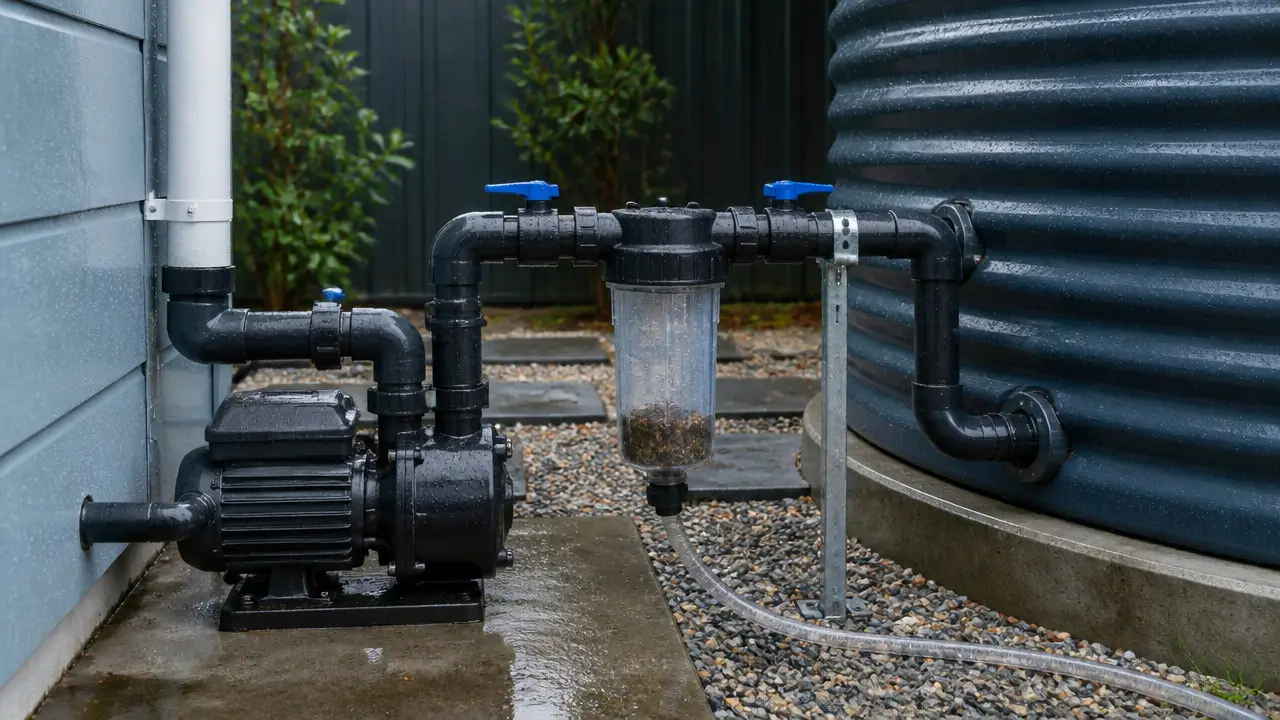
For a rainwater harvesting system, inspect the path from the roof to the tank:
- Roof
- Gutters
- Downspouts
- Screens
- First-flush system, if installed
- Pipes
- Storage tank
- Outlet and distribution lines
Rainwater can pick up dust and smoke from the air. Once it reaches a roof, it can also collect bird droppings, leaves, dirt, roofing material residues, and other contaminants. CDC notes that chemicals can also enter collected rainwater from roofing, gutters, pipes, and storage materials.
A problem anywhere along this path can affect the water.
Check the Water in a Clear Container
Pour some water into a clean, clear glass or jar.
Use good lighting and look through the water from several angles.
Look for cloudiness
Clear water should allow you to see through it easily.
Cloudiness can come from:
- Fine dirt
- Clay
- Organic material
- Air bubbles
- Disturbed tank sediment
- Other suspended particles
Cloudiness does not tell you exactly what is in the water. Clear water also does not mean the water is free of germs or chemicals.
If rainwater suddenly becomes much cloudier than usual, inspect the roof, gutters, tank, and filters before continuing normal use.
Look for unusual color
Watch for yellow, brown, green, orange, or other unexpected colors.
Color may come from leaves, rust, algae, sediment, roofing materials, plumbing, or other sources.
For example, water that becomes brown after the bottom of a tank is disturbed may simply contain accumulated sediment. That still means the system may need cleaning or maintenance.
Do not assume the cause from color alone.
Look for floating material
Small pieces of leaves, insects, pollen, roofing debris, or other material may be visible.
A small amount of debris does not automatically mean the entire tank is unusable. However, repeated debris usually points to a collection problem.
Check inlet screens and gutter guards. Also make sure tank openings are properly covered.
Let the Water Stand to Check for Sediment
Set the clear container on a stable surface and leave it undisturbed for a while.
Fine material may slowly collect on the bottom.
This simple settling check can show that suspended solids are present. It cannot tell you whether those solids contain harmful germs, metals, chemicals, or other contaminants.
If you repeatedly find sediment in rainwater, look upstream for the cause.
Possible sources include:
- Dirty gutters
- Roof debris
- Poor screening
- A missing or poorly maintained first-flush device
- Sediment accumulated inside the tank
- A tank outlet positioned where it pulls settled material into the line
A first-flush diverter sends the first portion of roof runoff away from the storage tank. This first runoff can carry more dirt and contamination from the roof. CDC recommends considering a first-flush device as one way to improve collected rainwater quality.
Check for Unusual Odors
You may notice an odor when water is poured into a clean container.
Possible smells include:
- Musty
- Earthy
- Rotten
- Sewage-like
- Metallic
- Chemical
- Stagnant
An unusual odor is a reason to investigate the source and system.
Do not use smell as a safety test, though. Some harmful contaminants have no noticeable odor. Other substances can make water smell unpleasant without creating the same level of health risk.
CDC advises against relying on smell, taste, or appearance to determine whether water is safe.
Do not taste unknown water as a way to test it.
Look for Slime, Algae, or Biofilm
Inspect accessible tank openings, screens, pipes, faucets, and other surfaces without entering a tank or cistern.
Green growth may indicate algae.
A slippery or slimy coating may be biofilm. Biofilm is a layer in which microorganisms can grow on wet surfaces.
CDC notes that microorganisms can grow within slime that develops inside water systems.
Growth in a rainwater system can be encouraged by conditions such as:
- Sunlight entering the tank
- Water sitting for long periods
- Organic material in the water
- Poor maintenance
- Contaminated plumbing or fittings
An opaque tank that blocks light can help limit algae growth, but it does not make the stored water automatically safe.
Inspect for Animals and Insects
Animal access is an important warning sign in a rainwater system.
Check for:
- Bird or rodent droppings near collection surfaces
- Open tank lids
- Damaged screens
- Insects inside the tank
- Mosquito larvae
- Nesting material
- Dead animals
CDC recommends screening rainwater-system openings to help keep insects and debris out.
If an animal has entered the storage tank or there is obvious fecal contamination, do not rely on visual inspection to decide whether the water is suitable for drinking.
The tank may require cleaning, disinfection, water testing, or other corrective work depending on how the water will be used.
Inspect the Roof and Gutters
For harvested rainwater, the water sample tells only part of the story.
Walk around the property and inspect the collection surfaces from a safe location. Do not climb onto a roof unless you can do so safely and have the proper equipment.
Guidance on practical steps for identifying if the water is contaminated helps verify maintenance priorities supported by meaningful test results.
Look for:
- Heavy leaf buildup
- Bird droppings
- Animal nests
- Roofing debris
- Peeling or damaged materials
- Standing water in gutters
- Clogged downspouts
- Dirty screens
- Overflow around the collection system
Pay extra attention after a long dry period. Debris can build up between storms and then wash into the tank when rain returns.
Check the Storage Tank
Inspect the outside of the tank and any safely accessible openings.
Look for:
- Cracks
- Leaks
- Loose lids
- Missing screens
- Light entering the tank
- Heavy sediment
- Algae
- Unusual growth
- Overflow problems
- Damaged fittings
Do not enter a cistern or large water tank. Confined spaces can contain dangerous air conditions and require specialized safety procedures.
If a tank needs internal work that cannot be done safely from outside, use a qualified service provider.
Check What Comes Out of the Faucet
Problems can also develop after the storage tank.
Compare water taken directly from an accessible tank outlet with water farther downstream, when your system allows this comparison safely.
If water looks normal near the tank but becomes discolored at a faucet, the problem may involve:
- Pipes
- Hoses
- Filters
- Pumps
- Pressure tanks
- Fittings
- Biofilm in the distribution system
Check for visible corrosion, dirty filter housings, old tubing, or materials that were not intended for the water's planned use.
What You Cannot Test With Your Senses
This is the main limit of testing water without a tester.
You cannot reliably see, smell, or taste many important contaminants.
These can include some:
- Disease-causing bacteria
- Viruses
- Parasites
- Nitrates
- Metals
- Pesticides
- Industrial chemicals
Rainwater that appears perfectly clear can still contain germs or chemicals. CDC states that collected rainwater is not necessarily safe to drink and recommends regular testing when it is used for drinking, cooking, or bathing.
That means a glass of clear, odor-free rainwater should not be treated as proof of potable water.
Potable means suitable for drinking.
When You Need Actual Water Testing
Laboratory testing becomes important when the answer affects someone's health.
For a rainwater system, consider proper testing when water will be used for:
- Drinking
- Cooking
- Brushing teeth
- Other uses where it may be swallowed
Testing is also sensible after a significant change in the system, contamination event, or unexplained change in water quality.
CDC recommends testing rainwater used for drinking for harmful germs and chemicals at least annually, with additional testing appropriate when conditions change.
Which contaminants should be tested depends on the water source, collection materials, location, and intended use. Your local health authority can help identify relevant tests.
For drinking-water analysis in the United States, EPA recommends using a state-certified drinking water laboratory.
Follow the laboratory's sample instructions carefully. Some tests, especially bacterial tests, require sterile containers and specific handling procedures.
What About Home Test Strips?
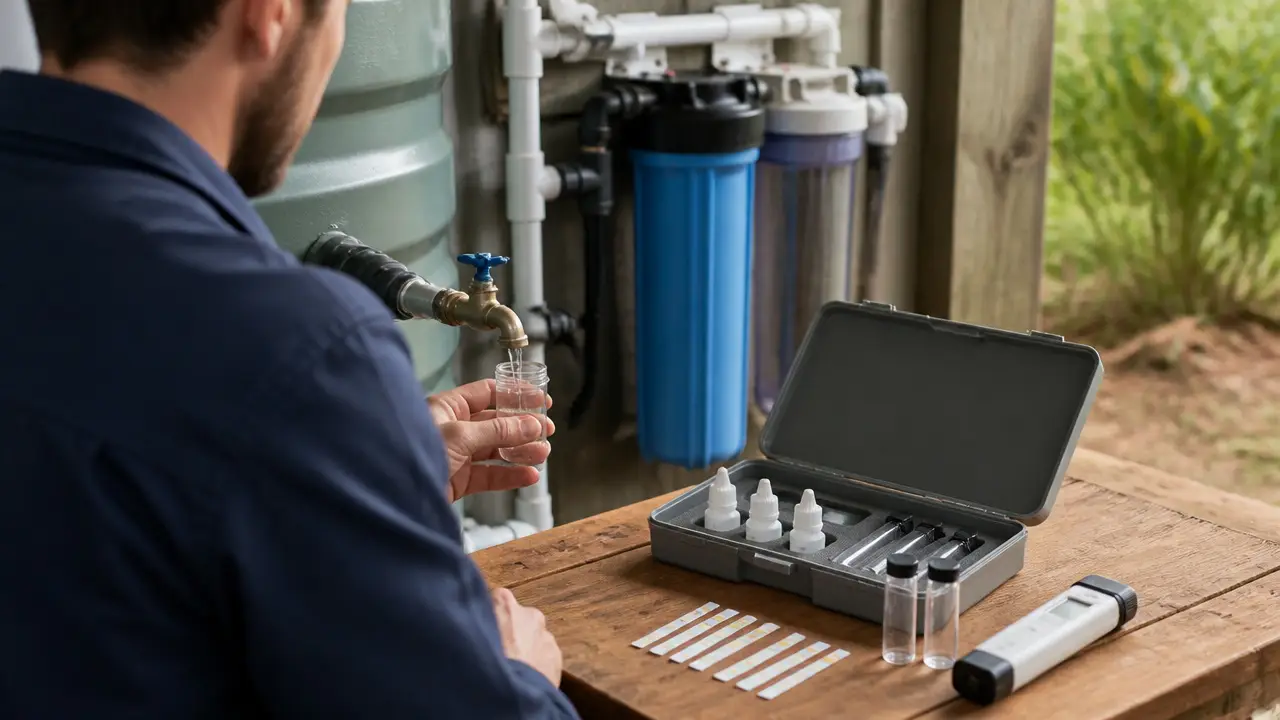
Home test strips and electronic meters can provide useful information when used for the parameter they are designed to measure.
For example, a meter might measure pH or total dissolved solids. Total dissolved solids, often shortened to TDS, is a measure of dissolved substances in water.
Visual checks cannot replace testing whether water is safe to drink when contamination is possible.
But a normal TDS reading does not mean water is free of harmful bacteria, viruses, pesticides, or other contaminants.
Likewise, one bacteria test does not provide a complete chemical analysis.
Water quality is made up of many different factors. No single reading gives a complete safety answer.
What to Do If the Water Fails a Visual Check
If collected water is cloudy, discolored, smelly, full of debris, or associated with obvious contamination, first find the source of the problem.
Depending on the cause, that may mean:
- Stopping the affected use of the water.
- Cleaning gutters and screens.
- Repairing damaged covers or fittings.
- Servicing the first-flush system.
- Cleaning the tank when appropriate.
- Replacing overdue filters.
- Correcting plumbing or storage problems.
- Testing the water before returning it to drinking-water use.
Do not simply add another filter and assume the problem has been solved.
Different treatment methods handle different contaminants. CDC recommends identifying the harmful germs or chemicals present and choosing treatment suited to those contaminants.
The Best No-Tester Approach
Without testing equipment, the most useful approach is to inspect both the water and the entire water system.
Look for changes in clarity, color, odor, sediment, growth, debris, animal access, and equipment condition.
Those observations can catch problems early and help you maintain a rainwater system.
They cannot confirm drinking-water safety.
If the water may be swallowed, treat visual and smell checks as maintenance tools rather than a replacement for appropriate laboratory testing.
Frequently Asked Questions
Can you tell if water is safe to drink just by looking at it?
No. Clear water can still contain harmful germs or chemicals. Appearance is useful for spotting obvious problems, but it cannot confirm that water is safe to drink.
Can I smell water to check whether it is contaminated?
An unusual smell can alert you to a problem, but odor cannot reliably determine safety. Some contaminants have no noticeable smell, while harmless substances can sometimes cause unpleasant odors.
Should I taste water to see if it is good?
No. Do not use taste as a test for unknown water. Harmful contaminants may have no noticeable taste.
Does boiling water mean I do not need to test it?
No. Boiling is a water-treatment method aimed at germs. It does not remove many chemical contaminants. CDC notes that methods used to kill germs do not necessarily remove chemicals.
Can clear rainwater still contain bacteria?
Yes. Collected rainwater can contain germs even when it looks clear. Roof debris, animal droppings, storage conditions, and other parts of the collection system can introduce contamination.
Is settled sediment proof that the water is unsafe?
Not by itself. Sediment shows that particles are present, but it does not identify those particles or determine their health risk. It is still a sign that you should inspect and maintain the collection system.
How often should drinking rainwater be tested?
CDC recommends testing water from rainwater collection systems at least once each year for harmful germs and chemicals and considering additional testing when the water changes in color, taste, or smell. Local health authorities can advise which specific tests are appropriate.