As an affiliate, we may earn a commission from qualifying purchases. We get commissions for purchases made through links on this website from Amazon and other third parties.
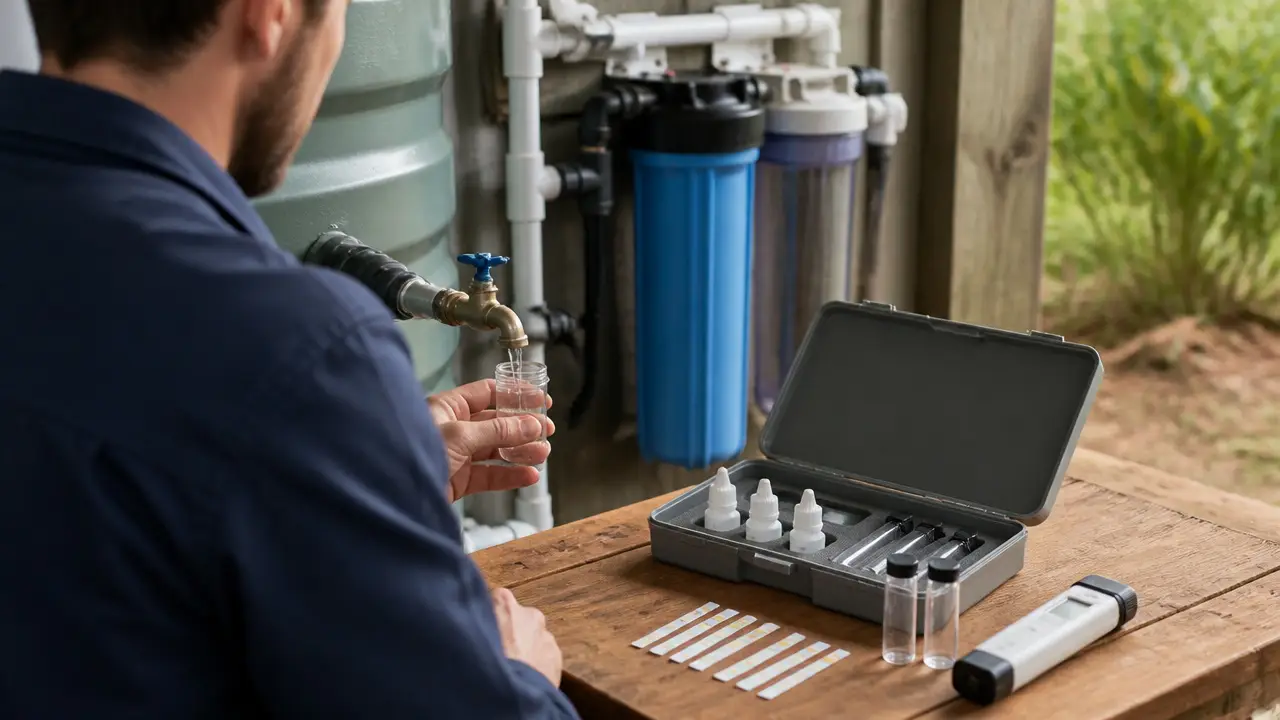
Yes. You can test several parts of water quality at home with test strips, meters, and simple test kits. They can help you spot changes in pH, hardness, chlorine, total dissolved solids, nitrate, and some other basic water conditions.
But an at-home test cannot tell you that water is definitely safe to drink. Harmful bacteria, lead, arsenic, pesticides, and other contaminants may require testing by a certified drinking-water laboratory. EPA recommends certified laboratory testing when you need reliable results for drinking-water safety.
This difference is especially important with private wells and collected rainwater. Water can look, smell, and taste normal while still containing harmful germs or chemicals.
What You Can Test at Home
Different home tests measure different things. There is no single meter or test strip that checks everything in the water.
| Home test | What it can help measure | What it cannot prove |
|---|---|---|
| pH meter or strips | How acidic or alkaline the water is | Whether the water is safe to drink |
| TDS meter | Amount of dissolved material in the water | Which substances are dissolved |
| Hardness strips | Calcium and magnesium hardness | Germs or harmful chemicals |
| Chlorine strips | Free or total chlorine, depending on the strip | Complete disinfection or drinking-water safety |
| Nitrate/nitrite strips | A rough screening result | A dependable drinking-water result |
| Iron or copper strips | Approximate amounts of certain metals | Full metal contamination |
| Bacteria test kit | Possible bacterial contamination, depending on the test | Complete microbiological safety |
These tools are most useful for screening and troubleshooting.
For example, a TDS meter can show that the amount of dissolved material has changed. It cannot tell you whether that material is harmless minerals, salt, nitrate, lead, or something else.
What a TDS Meter Actually Tells You
TDS means total dissolved solids. It is an estimate of the dissolved minerals, salts, and other charged substances in water.
A TDS meter usually measures electrical conductivity and converts that reading into an estimated TDS value.
This can be useful when:
- Comparing water before and after reverse osmosis treatment
- Watching for changes in a well
- Comparing different water sources
- Checking whether water chemistry has changed over time
But a low TDS reading does not mean the water is safe.
Water could have low TDS and still contain bacteria or a harmful chemical. A TDS meter also cannot identify individual contaminants.
Think of it as a system-monitoring tool rather than a drinking-water safety test.
What a pH Test Can Tell You
A pH test measures how acidic or alkaline water is.
It can be useful when you are checking:
- Corrosion problems
- Water treatment equipment
- Well water
- Rainwater
- Irrigation water
- Changes in stored water
Very acidic or alkaline water may affect plumbing, fittings, pumps, treatment equipment, or the way certain metals enter the water.
But pH alone says very little about whether water is safe to drink.
Clear water with a normal-looking pH reading can still contain harmful contaminants.
Can You Test Water for Bacteria at Home?
Home bacteria kits are available. Some are designed to indicate whether certain types of bacteria may be present after the sample has been held for a set period.
They can be useful as warning tools.
They should not be treated as a complete drinking-water safety check.
Laboratory testing is a better choice when bacterial contamination could affect someone's health. EPA recommends annual testing of private wells for total coliform bacteria, along with nitrate, TDS, and pH.
A lab can also use controlled sampling and testing methods that are difficult to duplicate with a basic home kit.
Which Contaminants Should Usually Be Tested by a Lab?
Use a certified drinking-water laboratory when you need dependable results for contaminants such as:
- Coliform bacteria
- E. coli
- Lead
- Arsenic
- Nitrate and nitrite when drinking-water safety is the concern
- Pesticides
- Volatile organic compounds
- Other metals or chemicals associated with your area or water source
The right tests depend on where the water comes from and what may have contaminated it.
For example, EPA notes that agricultural areas can create reasons to test well water for nitrate, pesticides, and bacteria. Nearby fuel tanks or gas stations can create different concerns. Plumbing can also introduce lead or copper.
Lead is a good example of why appearance is not enough. You cannot reliably see, smell, or taste dissolved lead in drinking water. EPA recommends laboratory testing when lead is a concern.
How to Test Rainwater at Home
Home tests can be useful for keeping an eye on a rainwater system, but the type of testing should match how you use the water.
If the water is only being used for something such as ornamental garden irrigation, you may mainly be interested in conditions that affect plants, emitters, pumps, or storage.
Water intended for drinking requires a much higher level of testing.
CDC warns that collected rainwater can contain both germs and chemicals. Contamination can come from the air, roof, gutters, bird droppings, piping, and storage materials.
A useful rainwater monitoring plan might include simple home checks for:
- pH
- TDS or conductivity
- Visible sediment
- Changes in color or odor
- Treatment-system operation
Those checks do not replace testing for contaminants that could affect health.
If rainwater is used for drinking, cooking, or bathing, CDC recommends regularly testing it for germs and chemicals and getting local health-department advice about which contaminants should be included.
Test the Water You Actually Use
Where you take the sample matters.
Suppose your system has:
roof → gutter → tank → filters → UV treatment → kitchen faucet
Testing only the tank does not tell you exactly what is coming from the kitchen faucet.
For a drinking-water system, the treated water at the point where you actually drink it is important.
Sometimes testing both locations is useful:
- Tank sample: Shows the condition of untreated stored water.
- Final faucet sample: Shows the water after the treatment system.
The comparison can also help identify whether treatment is working as expected.
A first flush diverter can help keep some of the first, dirtier roof runoff from entering the tank. It does not replace water treatment or testing. CDC notes that the first runoff from a roof can carry dirt, germs, and chemicals into the collection system.
How Often Should You Test?
The answer depends on the water source and its use.
Planning around interpreting consumer water-kit results cautiously helps understand practical alternatives for the next planning step.
For private wells, EPA recommends annual testing for total coliform bacteria, nitrate, TDS, and pH. Additional contaminants may need testing based on local conditions.
CDC also recommends testing well water or rainwater used as a drinking-water source at least annually for harmful germs and chemicals.
Testing may also make sense after:
- Flooding
- Major storms or contamination events
- Repairs to a well or water system
- Changes to treatment equipment
- Changes in water color, taste, or odor
- Unexplained changes in home meter readings
- Suspected chemical contamination
EPA specifically recommends additional well testing after significant changes near the well, repairs, known groundwater problems, or noticeable water-quality changes.
Home Testing Before and After a Filter
One of the best uses for home water tests is checking trends before and after treatment.
For example, you might measure TDS on both sides of a reverse osmosis system or hardness before and after a softener.
Keep the conditions similar each time. Use the same sampling location and the same type of meter.
A sudden change can tell you that something deserves attention.
It still does not prove that the treatment system is removing every health-related contaminant.
Different treatment systems remove different things. CDC recommends first identifying the contaminants of concern and then choosing treatment designed for those contaminants.
How to Get an Accurate Laboratory Test
Contact the laboratory before collecting the sample.
Different tests can require special bottles, preservatives, collection methods, temperatures, and delivery times.
Follow the laboratory's directions rather than collecting water in a jar from your kitchen.
The lab may tell you:
- Which faucet or location to sample
- Whether to remove a faucet aerator
- Whether the water should sit unused first
- How long to run the water
- Which sample bottle to use
- Whether the sample must stay cold
- How quickly it must reach the lab
Do not rinse a laboratory sample bottle unless the lab specifically tells you to. Some bottles contain materials needed for the test.
EPA recommends using state-certified laboratories for drinking-water testing. Your state drinking-water program or local health department can help you locate one.
What If You Have City Water?
Start by checking the information from your water utility.
Public water systems are routinely tested under drinking-water requirements, and utilities provide water-quality information to customers.
A home test can still be useful if you suspect a problem inside your house.
Your home's plumbing can change water quality after the water leaves the public system. Lead, for example, can come from service lines, pipes, solder, fixtures, or other plumbing materials.
If you are concerned about a specific contaminant, test for that contaminant rather than relying on a general multi-parameter strip.
Do Not Judge Water Safety by Appearance
Clear water is not necessarily clean water.
Smell is not a reliable safety test either.
Some harmless substances can make water smell or taste unpleasant. Other harmful contaminants may have no noticeable taste, smell, or color at all.
The same rule applies to rainwater.
Water from a clean-looking tank may still contain microorganisms or chemicals picked up from the roof and collection system.
A Practical Home Water-Testing Approach
For basic system monitoring, an inexpensive pH test, TDS meter, and tests suited to your particular water problem can be useful.
Then match more serious testing to the water's intended use.
For irrigation or other non-potable uses, testing should focus on the conditions that matter for the plants, equipment, and intended use. Non-potable means water that is not intended for drinking.
For drinking water, do not try to build a safety decision around one meter, test strip, filter, UV unit, or home bacteria kit.
Use appropriate laboratory testing to identify the actual contaminants. Then choose treatment designed for those contaminants and maintain the complete system. With collected rainwater, that also means paying attention to the collection surface, debris control, storage, prefiltration, treatment, and ongoing maintenance.
Frequently Asked Questions
Can I test my drinking water myself?
You can screen several water conditions at home, including pH, TDS, hardness, and chlorine. Home kits may also screen for some specific contaminants. They cannot provide a complete assessment of drinking-water safety. Use a certified drinking-water laboratory when health-related contamination is a concern.
Does a TDS meter tell you if water is safe?
No. A TDS meter estimates the amount of dissolved material in water. It does not identify those substances and does not detect many important biological or chemical hazards.
Can water test strips detect bacteria?
Most standard multi-parameter strips do not test bacteria. Separate home bacteria kits exist, but they should be treated as screening tools rather than proof that drinking water is safe.
Can I test rainwater with a home water test kit?
Yes, home tests can help monitor properties such as pH and TDS. However, rainwater can also contain germs and chemicals from the roof and collection system. Rainwater used for drinking needs appropriate laboratory testing as part of a complete water-safety plan.
How can I test for lead in my water?
A certified drinking-water laboratory is the better choice. Lead dissolved in water cannot reliably be detected by looking, tasting, or smelling the water. EPA recommends testing when lead is a concern.
How often should well water be tested?
EPA recommends testing a private well annually for total coliform bacteria, nitrate, TDS, and pH, with additional testing based on local risks and changes in the well or surrounding area.
Does good-looking water mean it is safe to drink?
No. Harmful germs and chemicals may be present without changing the water's color, smell, or taste.