As an affiliate, we may earn a commission from qualifying purchases. We get commissions for purchases made through links on this website from Amazon and other third parties.
For most homeowners and small water systems, Badger Meter is the strongest all-around water meter company because it offers several meter types and sizes for residential, commercial, and industrial use. Its lineup includes both mechanical and ultrasonic meters, so it is easier to match the meter to the job instead of forcing one technology into every system.
That does not make Badger Meter the best choice for every rainwater system. Kamstrup is especially strong for smart ultrasonic metering, while Neptune Technology Group is a strong choice for utility-style smart metering and remote monitoring.
For a rain barrel, IBC tote, cistern, irrigation line, or cabin system, the better question is often not “Which company is best?” It is which meter will work correctly with your pipe size, flow, pressure, water quality, and monitoring needs.
Best Water Meter Companies by Use
| Company | Strongest Fit | Main Reason to Consider It |
|---|---|---|
| Badger Meter | Best all-around | Wide choice of meter technologies and sizes |
| Kamstrup | Smart ultrasonic systems | Focus on solid-state ultrasonic metering and monitoring |
| Neptune Technology Group | Utility and remote-reading systems | Strong smart-meter and utility communication options |
| Sensus | Utility and commercial systems | Established range of smart and conventional metering options |
These companies mainly serve professional, commercial, and utility markets. A homeowner measuring rainwater use may not need all the communication and billing features built into a utility-grade meter.
Why Badger Meter Is the Best All-Around Choice
Badger Meter has one of the broadest meter ranges among the major water-meter companies. Its current catalog includes residential ultrasonic meters along with mechanical, commercial, and industrial meters.
That range matters because water systems are different.
A garden line may have fairly low flow. A whole-house reuse system can have much larger changes in flow. A pumped cistern may operate at much higher pressure than a gravity-fed rain barrel.
Being able to choose the correct meter technology is usually more important than choosing the most advanced meter.
Badger Meter also offers meters designed around established water-meter standards. The American Water Works Association, or AWWA, maintains separate standards for displacement, turbine, compound, multijet, ultrasonic, and other meter types.
That is useful because there is no single meter design that is best for every application.
When Kamstrup May Be Better
Kamstrup is worth considering when ultrasonic measurement and smart monitoring are the main priorities.
Ultrasonic meters measure water without the same type of internal moving measuring parts found in many mechanical meters. Kamstrup's water-meter range focuses on solid-state ultrasonic technology. Its systems can also support functions such as remote reading and leak-related monitoring.
This can make Kamstrup attractive for:
- Buildings with remote meter reading
- Large rainwater reuse systems
- Properties where water-use data matters
- Systems where very low flow needs to be tracked
- Installations where reducing mechanical wear is important
However, a smart meter can add complexity. Communication systems, batteries, software compatibility, and replacement support all matter.
For a simple rainwater irrigation line, those features may provide little benefit.
When Neptune May Be Better
Neptune Technology Group is another strong choice for professional and utility-style systems.
Its MACH 10 line uses ultrasonic measurement without moving measuring parts. Current residential models can also provide temperature information, while some versions support pressure monitoring.
These features make more sense where someone needs to monitor a pressurized distribution system rather than simply count how many gallons leave a rainwater tank.
Neptune is particularly relevant when a meter is part of a larger remote-reading or utility management system.
For a basic DIY rainwater setup, it may be more meter than you need.
What About Sensus?
Sensus has a long history in water metering and offers residential, commercial, and utility meters, including solid-state smart meters such as the iPERL line.
One point is important when comparing suppliers in 2026. Sensus operations outside North America changed ownership in May 2026 and now operate as Sensus International, while Sensus North America remains part of Xylem. Support and product availability can therefore depend on your region.
That does not make the meters unsuitable. It simply makes local parts, communication compatibility, and support worth checking before choosing one.
The Best Meter for a Rainwater System May Be Simpler
A utility-grade smart water meter is not automatically the best choice for harvested rainwater.
If you only want to know how much water is going to a garden, greenhouse, toilet system, or another non-potable use, a simpler totalizing flow meter may do the job.
A totalizing meter keeps a running count of the volume that passes through it, such as gallons or cubic meters.
Before choosing one, check several things.
Pipe Size
The meter connections need to match your plumbing or be adapted correctly.
Do not choose a meter only because its threaded opening matches the nominal pipe size. Also check the manufacturer's allowed flow range.
An oversized meter may not measure very low flows well. An undersized meter can restrict flow and add unnecessary pressure loss.
Minimum and Maximum Flow
Every meter has a usable flow range.
A drip irrigation system may move very little water. A pump supplying several sprinklers can move much more.
The meter needs to measure the normal operating range rather than only the system's maximum possible flow.
Water Pressure
Check the meter's pressure rating before installing it on a pumped system.
Gravity-fed rain barrels often operate at much lower pressure than municipal plumbing. Some meters designed for pressurized water systems may therefore be a poor match.
Water Cleanliness
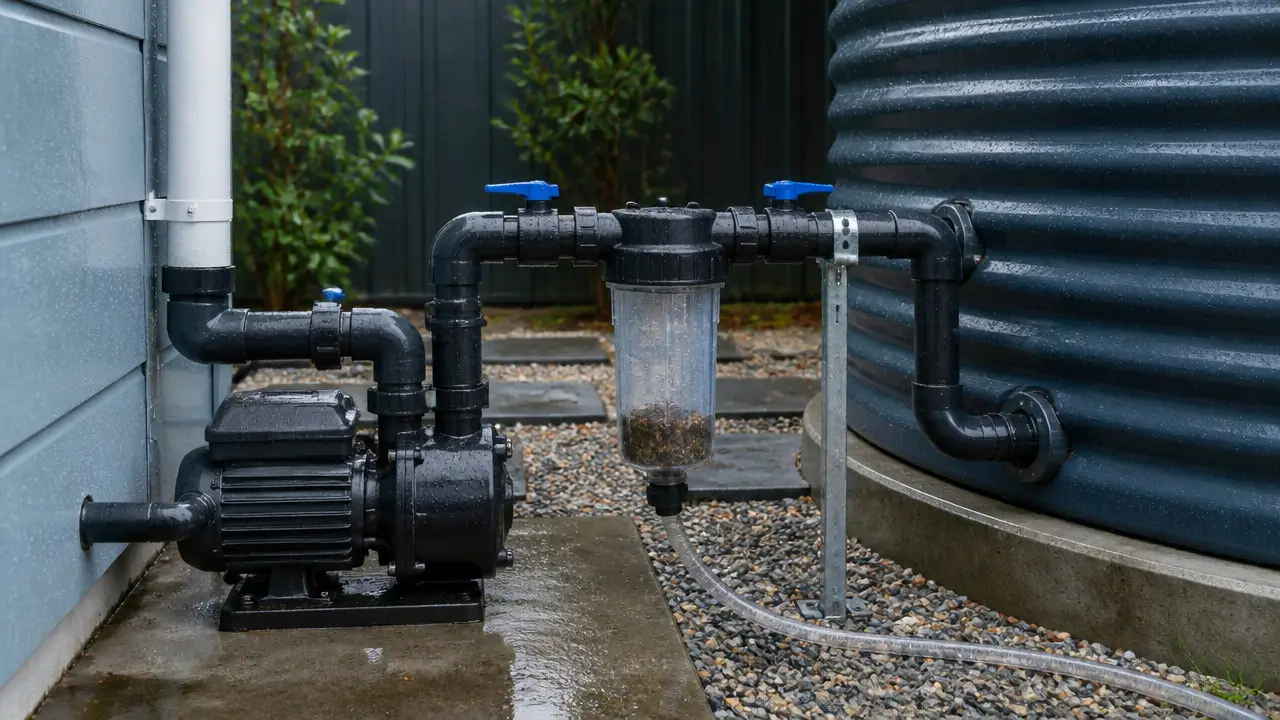
Rainwater can carry fine roof grit, organic material, sediment, and other debris.
Mechanical meters contain moving measuring parts that may be more sensitive to contamination than some solid-state designs. Prefiltration can help protect downstream equipment, but filtration needs depend on the meter and the intended water use.
A filter used to protect a meter should not be confused with treatment that makes rainwater safe to drink.
Installation Position
Do not assume every meter works equally well in any direction.
Check whether the manufacturer allows horizontal, vertical, or other mounting positions. Also check requirements for pipe alignment, straight pipe sections, and keeping the measuring section full of water.
Reviewing a suitable home water flow meter helps understand practical alternatives for the next planning step.
Air passing through a rainwater line can interfere with some types of measurement.
Remote Reading
Decide whether you actually need it.
A basic mechanical register may be enough if you can easily see the meter.
Remote reading becomes more useful when the meter is:
- Underground
- Inside a meter box
- Far from the house
- Connected to an automated irrigation system
- Part of a larger building-management system
Make sure the meter's output works with the controller, reader, or monitoring system you plan to use.
Mechanical vs. Ultrasonic Water Meters
Neither technology is automatically better.
Mechanical Meters
Mechanical meters use moving parts to measure water.
They can be a practical choice for straightforward systems when the water is reasonably clean and the expected flow falls within the meter's range.
They may also be easier to understand in simple installations.
Moving parts can wear or become affected by debris over time, so cleaning and water quality matter.
Ultrasonic Meters
Ultrasonic meters measure flow using sound rather than a traditional moving measuring element.
Major manufacturers including Badger Meter, Kamstrup, and Neptune offer ultrasonic water meters.
Their lack of moving measuring parts can be useful where low-flow measurement and long-term monitoring matter.
They may also include electronic displays, batteries, alarms, communication systems, or data logging.
That extra capability comes with extra compatibility questions.
Do You Need a Certified Water Meter?
It depends on what the measurement will be used for.
A meter used only to tell you roughly how much rainwater your garden consumes has very different requirements from a meter used for billing tenants or measuring regulated drinking-water service.
AWWA currently maintains separate standards for several cold-water meter technologies, including displacement, turbine, multijet, ultrasonic, and electromagnetic meters.
For billing, regulated plumbing, or potable-water service, check the standards and approvals required by the utility or local authority before buying or installing a meter.
Potable means water intended to be safe for drinking.
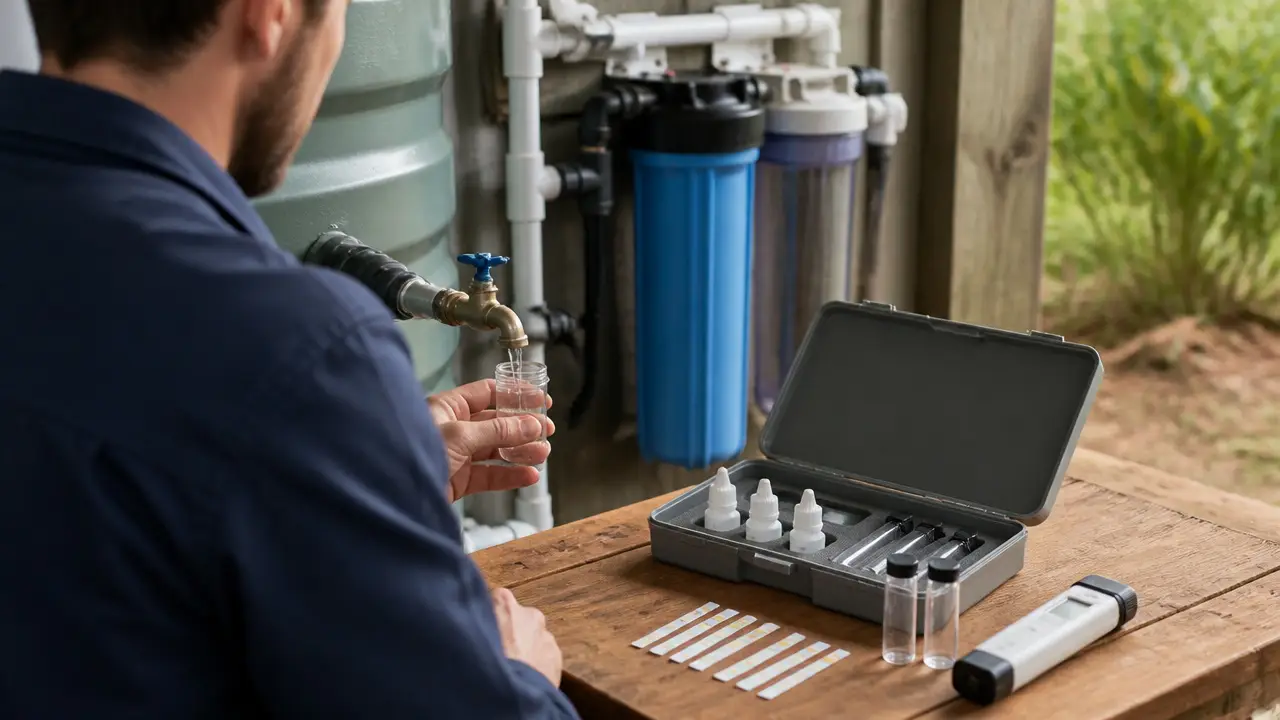
A meter being suitable for potable-water contact does not make harvested rainwater potable. Drinking-water use requires a suitable collection system, treatment plan, maintenance, current laboratory testing, and compliance with applicable local requirements.
Which Company Should You Choose?
For a general-purpose recommendation:
Choose Badger Meter when you want the broadest range of established water-meter options.
Choose Kamstrup when smart ultrasonic measurement is the priority.
Choose Neptune when the meter will be part of a professional remote-reading or utility-style system.
Consider Sensus when its meter and communication system match your local utility or building infrastructure.
For most private rainwater systems, however, start with the system rather than the logo on the meter.
Write down:
- Pipe size
- Lowest normal flow
- Highest normal flow
- Available water pressure
- Whether the line can contain sediment or air
- Whether you need a simple total or live flow readings
- Whether you need electronic or remote output
Then choose a meter that matches those conditions.
That approach is much more reliable than picking the company with the longest feature list.
Frequently Asked Questions
Which water meter company is best overall?
Badger Meter is a strong all-around choice because it offers a broad range of mechanical, ultrasonic, residential, commercial, and industrial metering options. The best company still depends on the application.
What is the best water meter for a rainwater tank?
There is no single best meter. Choose one that matches the outlet pipe, expected flow, available pressure, water cleanliness, and installation position. Simple rainwater systems often do not need utility-grade smart metering.
Are ultrasonic water meters better than mechanical meters?
Not always. Ultrasonic meters have no traditional moving measuring parts and can provide useful electronic monitoring. Mechanical meters can be simpler and suitable for many basic systems. System conditions should decide which is better.
Can a water meter work on a gravity-fed rain barrel?
Some can, but check the meter's minimum operating conditions and flow range. Gravity-fed barrels can have very low pressure, especially when the water level drops. A meter designed mainly for pressurized plumbing may not perform as expected.
Can sediment damage a water meter?
Sediment can interfere with some meters, especially designs containing small moving parts or narrow passages. Good collection screening and suitable prefiltration can reduce the amount of debris reaching the meter.
Should the water meter go before or after the pump?
It depends on the meter's requirements and what you want to measure. A meter on the pump discharge measures water delivered by the pressurized system. The meter must be rated for the pump's pressure and flow. Follow the manufacturer's installation requirements.
Does a water meter tell me whether rainwater is safe to drink?
No. A water meter measures water use or flow. It does not test for bacteria, chemicals, metals, or other contaminants and cannot determine whether harvested rainwater is potable.