As an affiliate, we may earn a commission from qualifying purchases. We get commissions for purchases made through links on this website from Amazon and other third parties.
For most permanent irrigation systems, the best flow meter is an inline meter sized to the actual flow range of the system, not simply the pipe diameter. A full-bore electromagnetic flow meter is often the strongest choice for pressurized sprinkler or drip systems because it has no moving parts and causes very little pressure loss. However, it needs power and water that meets the meter's minimum electrical conductivity requirement.
For smaller home irrigation systems, filtered rainwater lines, and simple garden setups, a turbine or paddle-wheel meter can be a practical choice. The key is making sure the meter can accurately measure your lowest expected flow without restricting your highest flow.
What an Irrigation Flow Meter Does
A flow meter measures water moving through a pipe.
It may show:
- Flow rate, such as gallons per minute (GPM) or liters per minute (L/min)
- Total volume, such as gallons or liters used over time
- Both flow rate and total volume
Flow rate tells you how quickly water is moving. Total volume tells you how much water has passed through the system.
These numbers can help you check irrigation zones, find leaks, spot clogged filters, confirm pump performance, and track water use. The EPA also recommends dedicated irrigation metering as a way to better track outdoor water use and identify unusual changes.
Best Overall Type: Inline Electromagnetic Flow Meter
For a permanent pressurized irrigation system, an electromagnetic flow meter, often called a magmeter, is usually the best all-around type when the water and installation meet its requirements.
A magmeter creates a magnetic field around the flowing water and uses that field to calculate flow.
Its biggest advantage is that there is normally nothing spinning inside the water stream.
That means:
- No turbine or propeller bearings to wear out
- Less chance of weeds or small debris stopping the measuring element
- Very little added pressure loss
- Good performance across a useful range of flow rates
- Easier long-term maintenance in many irrigation systems
Utah State University Extension describes spool-type magnetic meters as one of the more accurate choices used for agricultural irrigation and notes their lack of moving parts.
When a Magnetic Meter Makes Sense
A magmeter is especially useful for:
- Permanent sprinkler systems
- Large drip irrigation systems
- Pump-fed irrigation
- Well-water irrigation
- Cistern-fed systems with adequate pressure
- Systems connected to irrigation controllers or monitoring equipment
Many models provide pulse, analog, or digital outputs that can be connected to controllers. That can let a controller compare expected flow with actual flow and flag a broken pipe, stuck valve, or unusually high-flow zone.
When a Magnetic Meter May Not Be the Best Choice
A magnetic meter needs electrical power. It also requires water with enough electrical conductivity for the sensing system to work correctly.
Municipal and groundwater commonly contain dissolved minerals, but collected rainwater can have much lower mineral content. Do not assume a magmeter will work correctly on a rainwater system. Check the meter manufacturer's minimum conductivity requirement against the water you will actually use.
Proper grounding may also be required.
Turbine and Propeller Meters Are Good for Simpler Systems
Mechanical flow meters use water movement to turn a turbine, paddle, or propeller.
They can be a good choice when you want a simple meter without the added electronics of a magnetic system.
They work well for applications such as:
- Garden irrigation
- Small sprinkler systems
- Drip irrigation manifolds
- Filtered rainwater irrigation
- Pump discharge monitoring
- Individual irrigation zones
Mechanical meters are common in irrigation because they are relatively simple and can provide useful measurements when correctly sized and installed.
Their main weakness is the moving measuring element.
Sediment, leaves, algae, small stones, and other debris can interfere with it. Bearings and other moving parts can also wear.
The U.S. Bureau of Reclamation notes that propeller meter accuracy can change as mechanical parts wear, especially toward the low end of the meter's operating range.
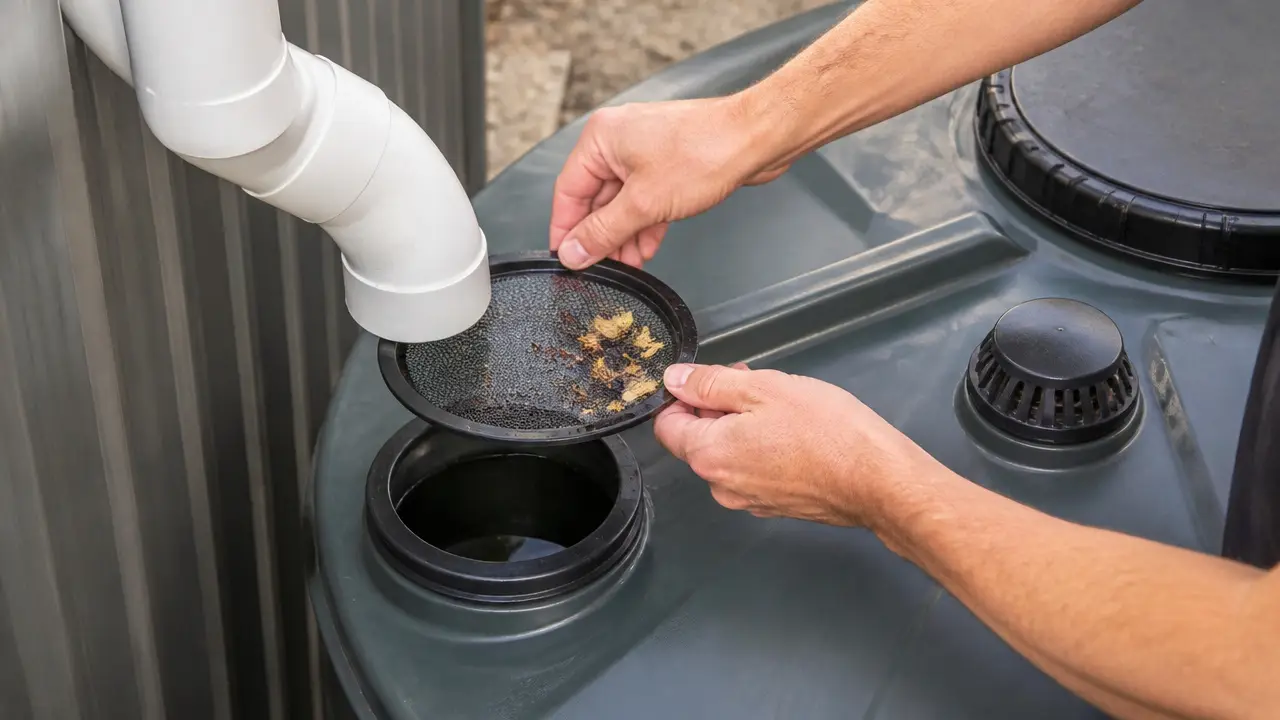
If you use stored rainwater, place suitable debris screening and filtration upstream when required by the meter.
What About Clamp-On Ultrasonic Flow Meters?
Ultrasonic meters use sound waves to estimate flow.
Some versions clamp onto the outside of the pipe. This makes them useful when you do not want to cut into an existing irrigation main.
They can be useful for:
- Checking an existing system
- Troubleshooting pump output
- Measuring large pipes
- Temporary irrigation audits
- Comparing flow between zones
- Installations where cutting the pipe would be difficult
They are not automatically the best option for every homeowner.
Accuracy depends on the meter, pipe material, pipe condition, installation, flow profile, and other factors. Some ultrasonic meters also have trouble measuring very low flow.
For a small permanent garden system, an inline meter is usually simpler.
Choose the Meter by Flow Range First
One of the most common mistakes is buying a flow meter just because its connection matches the irrigation pipe.
Pipe size matters, but measuring range matters more.
Every meter has a minimum and maximum flow that it can measure properly.
Suppose your irrigation main is 1 inch, but your zones operate between 2 and 12 GPM.
You need a meter that performs well across roughly that operating range. A 1-inch meter designed mainly for much higher flow may barely register the smallest drip zone.
The Bureau of Reclamation recommends selecting propeller meters so normal operation falls well within their intended discharge range rather than near the limits.
Check Three Flow Numbers
Before choosing a meter, estimate:
- Your lowest-flow irrigation zone
- Your normal operating flow
- Your highest possible flow
Then compare those numbers with the meter's published measuring range.
Do not rely only on nominal pipe size.
Low Flow Matters for Drip Irrigation
Drip irrigation can be harder to meter than conventional sprinklers because individual zones may use relatively little water.
For example, a small raised-bed system may have dozens of emitters but still use only a few gallons per minute.
A meter that starts reading at 5 GPM would be of little use if your normal drip zone runs at 2 GPM.
Look carefully at the meter's:
- Minimum measurable flow
- Recommended measuring range
- Starting flow, when given
- Accuracy at low flow
This is especially important if you want to use flow readings to find broken drip lines or missing emitters.
Watch Pressure Loss
Every restriction in an irrigation system can reduce available pressure.
This matters with:
- Gravity-fed rain barrels
- IBC totes
- Low-pressure drip systems
- Long garden lines
- Small pumps
A full-bore meter has an internal passage close to the pipe diameter and usually creates less restriction than a meter with a narrow internal opening.
Magnetic meters generally create very little meter-related head loss because they do not need a propeller or major restriction in the water path.
For a gravity-fed rain barrel, even a small pressure loss can matter. Check the meter's pressure-loss information before installing it.
The Meter Must See a Full Pipe
Many irrigation flow meters are intended for pipes that remain completely full of water.
If air passes through the meter or the pipe runs partly empty, measurements may become unreliable.
Oklahoma State University Extension specifically notes that propeller meters need a full pipe for accurate readings.
This can become a problem with:
- Gravity-fed tanks
- Pipes draining between irrigation cycles
- Poorly placed meters near discharge points
- Suction lines
- Systems that regularly pull air
Mount the meter in a location where the pipe stays full whenever measurements are being taken.
Follow the manufacturer's allowed mounting directions as well.
Straight Pipe Before and After the Meter Matters
Water does not always travel evenly through a pipe.
Elbows, tees, valves, pumps, and reducers can create swirling or uneven flow. A flow meter installed immediately after one of these fittings may give the wrong reading.
Many mechanical irrigation meters need a section of straight pipe before the meter. Traditional propeller-meter installations may require roughly 5 to 10 pipe diameters of unobstructed pipe upstream, although the exact requirement depends on the meter.
For example, five pipe diameters on a 2-inch pipe means about 10 inches of straight pipe.
Some magnetic meters can work with shorter straight runs, but there is no safe universal number.
Study a suitable home water flow meter to assess the compromises that affect the upcoming system choice.
Always follow the installation requirements for the specific meter.
Make Sure the Connections Fit
Check more than the labeled pipe size.
Confirm:
- Nominal pipe size
- Thread type
- Male or female connection
- Flanged, threaded, glued, or compression connection
- Pipe material
- Maximum operating pressure
- Water temperature range
- Outdoor exposure rating
A meter marked "1 inch" does not guarantee that it can screw directly into every 1-inch irrigation system.
PVC threads, hose threads, pipe threads, compression fittings, and irrigation tubing connections are different.
Adapters may be needed.
Avoid building a long chain of reducers and adapters simply to make the meter fit. That can create extra leak points and disturb the flow entering the meter.
Choose a Meter That Measures Total Volume Too
A live GPM display is useful for troubleshooting, but a totalizer is often even more useful.
A totalizer keeps track of all the water that passes through the meter.
For example, you might find that a garden zone normally uses about the same amount of water each cycle. If the total suddenly becomes much higher, something may be leaking.
If it becomes much lower, possible causes include:
- A clogged filter
- A partly closed valve
- A weak pump
- Clogged emitters
- A blocked irrigation line
Flow monitoring is useful because unexpected changes can point to leaks or equipment problems.
Digital Output Can Be Worth Having
If your irrigation controller supports flow monitoring, choose a compatible meter output.
Common outputs include pulse signals and other electronic signals.
A pulse-output meter may send a set number of electrical pulses for each unit of water passing through it. The controller converts those pulses into flow or total water use.
Compatibility matters.
Check:
- What signal the controller accepts
- The meter's pulse rate
- Wiring requirements
- Maximum wire distance
- Power requirements
- Whether calibration settings can be adjusted
Do not assume that any flow sensor will work with any irrigation controller.
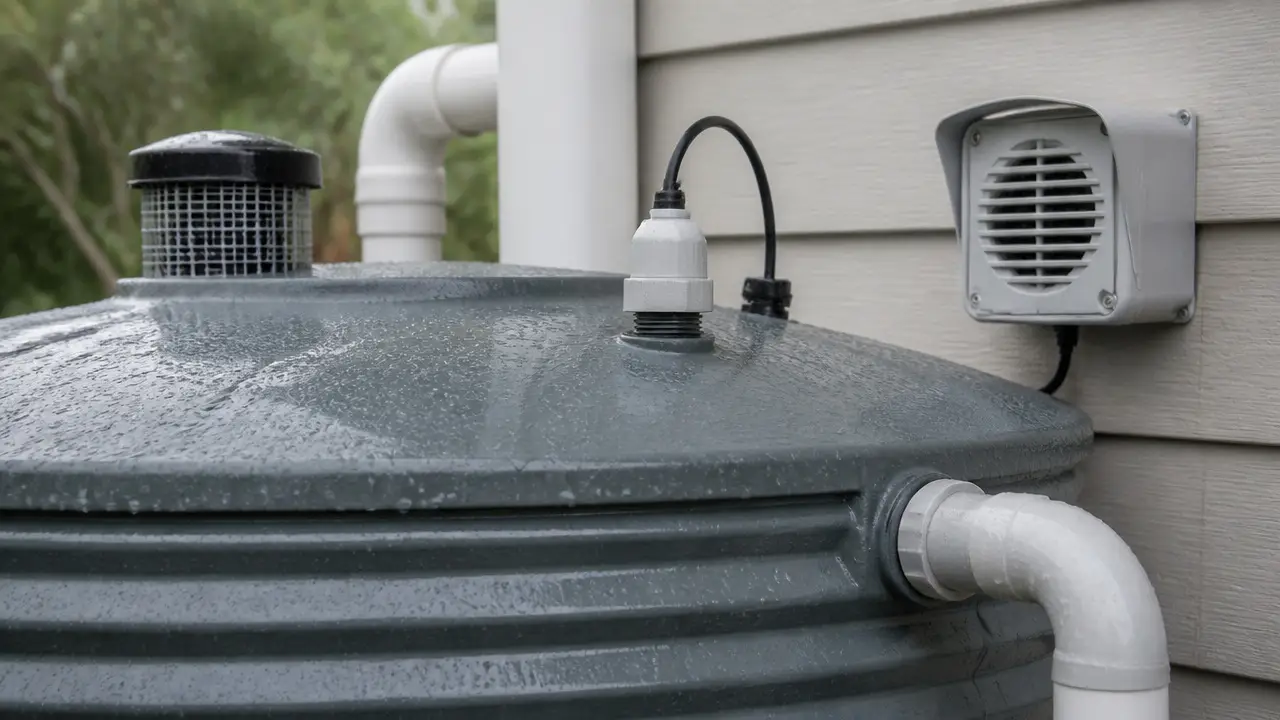
Best Flow Meter for Rainwater Irrigation
Rainwater systems need a little more thought.
Stored rainwater may contain fine sediment, bits of organic matter, or algae if collection and storage are poorly managed. These contaminants can interfere with small mechanical meters.
For a filtered, pump-fed rainwater system, either a properly selected mechanical meter or compatible magnetic meter may work.
For a gravity-fed rain barrel, focus on:
- Very low minimum flow
- Low pressure loss
- Correct pipe size
- No requirement for high pressure
- Easy cleaning
- Outdoor suitability
A large commercial irrigation meter can be a poor match for a small rain barrel even if adapters allow you to connect it.
If considering a magnetic meter for collected rainwater, confirm that the water meets the meter's conductivity requirements.
Where to Install an Irrigation Flow Meter
For whole-system monitoring, the meter normally goes on the main irrigation supply line where it can measure all downstream zones.
A simple layout might be:
Water source → pump → filter → flow meter → irrigation valves → irrigation zones
The correct order can change based on the pump, filter, meter, and manufacturer requirements.
A filter is often useful before a mechanical meter because it reduces the chance of debris reaching its moving parts.
For a large system, you might also use separate meters for major irrigation branches.
That can make it easier to identify which part of the property has unusual water use.
Do Not Oversize the Meter
An oversized flow meter may seem safer because it cannot restrict high flow. But it can make low-flow readings poor.
This is especially common when a large irrigation main feeds several small zones one at a time.
If your pipe is much larger than the actual flow requires, selecting a good meter becomes more difficult.
Measure or estimate the real operating flow before buying the meter.
A Simple Way to Check Your Meter
For small systems, you can make a rough comparison using a container of known volume and a timer.
For example, direct measurement of how long it takes to fill a known container can be used to check small irrigation flows. Oklahoma State University Extension recommends repeating this kind of test several times for a more reliable result.
This method is practical for a hose or small irrigation outlet.
It is not a replacement for professional calibration where accurate water accounting is required.
Maintenance Still Matters
Even a good flow meter needs periodic attention.
Check for:
- Sediment
- Algae
- Damaged wiring
- Corrosion
- Leaking fittings
- Unusual readings
- Frozen components
- Debris around mechanical measuring parts
Mechanical meters may need more cleaning because the water directly contacts moving components.
Electronic meters eliminate some mechanical wear, but they still need correct installation and occasional inspection.
If the meter is used for billing, regulatory reporting, water rights, or another purpose where measurement accuracy has legal importance, follow the required calibration and installation rules for your area rather than relying on a garden-level setup.
Which Irrigation Flow Meter Should You Choose?
For most pressurized permanent systems, start by looking at a full-bore inline electromagnetic meter that covers both your lowest and highest operating flow. It is a strong choice when the water meets the meter's conductivity requirement and electrical power is available.
For a smaller residential system, a properly sized turbine or paddle-wheel meter with a totalizer is often simpler.
For an existing pipe that you do not want to cut, a clamp-on ultrasonic meter can be useful, especially for testing or larger installations.
For a low-pressure rain barrel or small drip system, prioritize low-flow sensitivity and low pressure loss over advanced features.
The best meter is therefore not simply the most accurate model on paper. It is the one that can measure your real irrigation flow, fits your pipe and water source, creates acceptable pressure loss, and can be installed according to its required pipe layout.
Frequently Asked Questions
What size flow meter do I need for irrigation?
Match the meter to both your pipe and your actual flow range. The meter should accurately measure your smallest irrigation zone while still handling your maximum possible flow. Do not choose a meter based on pipe diameter alone.
Where should a flow meter be installed in an irrigation system?
For whole-system monitoring, it is normally installed on the main irrigation supply before the individual zone valves. The pipe should stay full of water, and the meter needs any required straight pipe before and after it.
Can I put a flow meter on a drip irrigation system?
Yes. Choose a meter designed to measure the low flow rates common in drip systems. Check the minimum measurable flow carefully before buying.
Can a flow meter detect an irrigation leak?
A flow meter can help identify unusual water use. For example, water flowing when all irrigation valves should be closed can indicate a leak or valve problem. Automatic controllers can also compare normal and abnormal zone flow when they support compatible flow sensors.
Will a flow meter reduce irrigation pressure?
Some meters cause more pressure loss than others. Full-bore magnetic meters generally add little restriction, while some small mechanical meters can reduce pressure more noticeably. Pressure loss is especially important in gravity-fed and low-pressure systems.
Can I use a flow meter with rainwater?
Yes, but the meter must suit the water and operating conditions. Mechanical meters may need good upstream filtration to prevent debris from fouling moving parts. Magnetic meters require water that meets their minimum conductivity specification.
Is a digital flow meter better than a mechanical one?
Not always. Digital features are helpful when you want alerts, controller integration, or recorded water use. A simple mechanical meter may be enough if you only need to check flow and total irrigation volume.