As an affiliate, we may earn a commission from qualifying purchases. We get commissions for purchases made through links on this website from Amazon and other third parties.
What Is the Best Home Water Flow Meter?
The best home water flow meter is one that matches where you want to measure water, how much flow you expect, and what you want the reading to tell you.
For most homeowners, there is no single best meter for every job. A meter for a whole-house water line has different needs than one used on a rain barrel, garden hose, irrigation line, pump, or cistern.
For a permanent home water line, look for a properly sized inline meter that can measure both flow rate and total water used. For a rainwater or irrigation system, a simpler inline or hose-connected meter may be enough.
The meter must also fit the pipe size, pressure range, water quality, and expected flow. Installing the wrong size can give poor readings or restrict water movement.
What a Home Water Flow Meter Measures
A water flow meter measures water moving through a pipe or hose.
It may show one or both of these values:
- Flow rate: How fast water is moving right now, such as gallons per minute.
- Total volume: How much water has passed through the meter over time.
Flow rate is useful when checking pumps, irrigation lines, filters, and fixtures.
Total volume is useful when tracking household use, rainwater use, irrigation demand, or how much water has been moved from a tank.
Some electronic meters can also record water use over time or send information to a phone or home monitoring system.
The Best Meter Depends on the Job
Whole-House Water Monitoring
For a main household water line, a permanent meter designed for pressurized plumbing is usually the best choice.
It should be able to handle:
- The pipe diameter
- Normal household water pressure
- The highest expected flow
- The lowest flow you want to detect
- The water temperature
- Continuous installation
A whole-house meter can help you understand normal water use. Some monitoring systems can also identify unusual continuous flow that may point to a leak.
However, a flow meter is not a substitute for proper plumbing inspection. A changing reading can tell you that water is moving, but it may not tell you exactly where a problem is.
Rainwater Harvesting Systems
For rainwater systems, the best meter depends on where you install it.
A meter on the outlet of a cistern can show how much stored water you are using. A meter after a pump can help track both flow rate and total use.
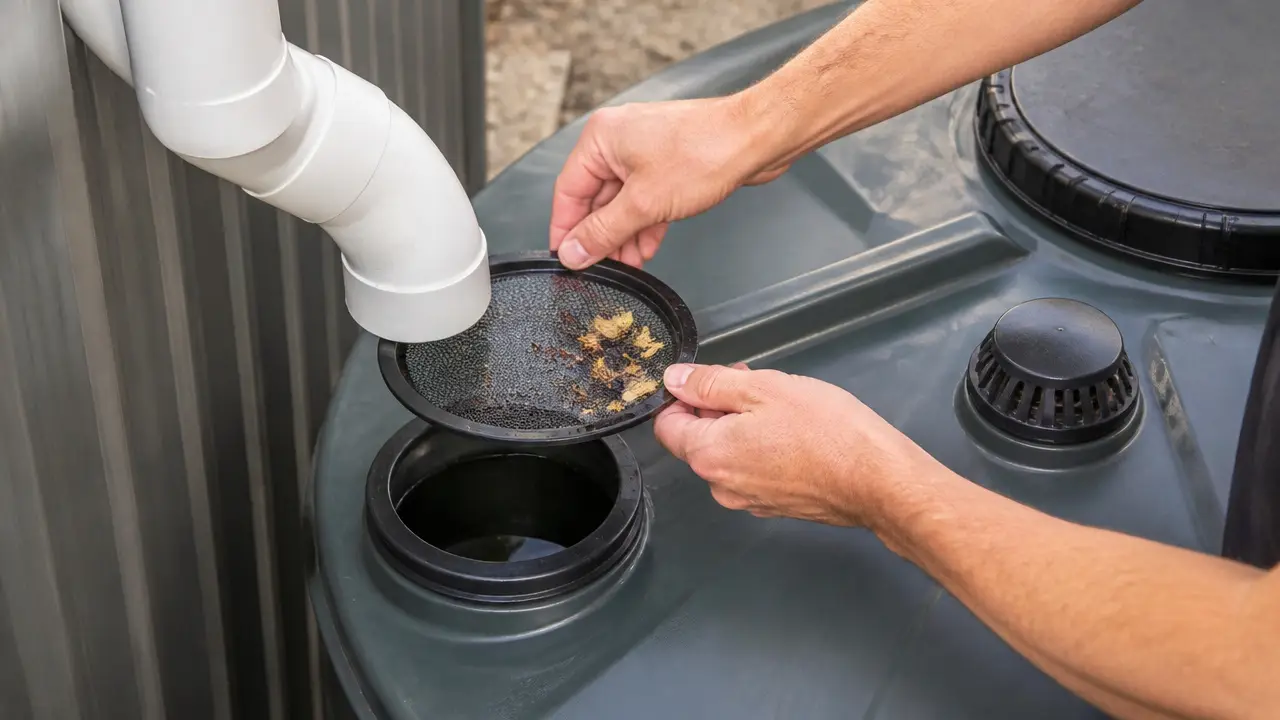
Check the meter's requirements carefully because collected rainwater may contain small particles even after basic screening. Some meters need relatively clean water to operate correctly.
A meter should not replace filters or other debris-control parts required by the system.
If you are measuring water entering a tank from a roof, remember that gravity-fed inlet pipes can behave very differently from pressurized pipes. Many meters are designed for full, pressurized pipes and may not read accurately in a partly filled downpipe.
Garden and Irrigation Systems
A simple hose or inline irrigation flow meter can work well when you mainly want to know how much water is going to a garden.
These meters can help you:
- Compare irrigation zones
- Estimate water delivered to beds
- Check whether flow has dropped
- Measure water transferred from a tank
- Track seasonal irrigation use
Make sure the meter can handle the expected outdoor conditions and pressure.
If you use a gravity-fed rain barrel, check the meter's minimum flow requirement. Some meters do not measure accurately when water moves very slowly.
Pumps and Pressure Systems
A flow meter can also help you understand how a pump is performing.
Here, flow rate matters more than total volume.
For example, a pump may be rated to move a certain amount of water under ideal conditions. Actual flow depends on the pipe, fittings, elevation, filter resistance, and pressure required by the system.
The vertical distance a pump must raise water is called head height. More head usually reduces the amount of water the pump can deliver.
A correctly placed flow meter can show what the pump is actually producing in your installed system.
Common Types of Home Water Flow Meters
Several meter designs are used in residential water systems.
Mechanical Meters
Mechanical meters use moving internal parts to measure water.
They are common because they are simple and can work without electricity.
Advantages include:
- No batteries for basic models
- Easy-to-read total use
- Suitable for many permanent installations
- Long-established technology
Their moving parts can be affected by dirt, scale, or debris. This matters in untreated rainwater systems.
Turbine and Paddle-Wheel Meters
These meters use the movement of water to spin an internal component.
They are often used where both flow rate and total volume are useful.
They can work well in irrigation and water-transfer systems, but debris can interfere with the moving parts.
A screen or suitable upstream filtration may be needed, depending on the meter and water source.
Ultrasonic Flow Meters
Ultrasonic meters measure water movement using sound waves.
Some designs attach outside the pipe, while others are installed in the plumbing.
Clamp-on versions can be useful because they do not require water to pass through the meter itself. This can reduce pressure loss and avoid adding another internal obstruction.
However, correct installation matters. Pipe material, pipe diameter, wall thickness, and how completely the pipe stays filled can affect the reading.
Electronic Smart Water Monitors
Smart monitors combine flow measurement with electronic logging and alerts.
Depending on the system, they may show:
- Current flow
- Daily water use
- Long-term trends
- Unusual water use
- Possible continuous leaks
These features can be helpful for a household connected to pressurized plumbing.
They also add more complexity. Power, batteries, wireless connections, software support, and installation requirements become part of the decision.
Choose the Right Pipe Size
Pipe size is one of the most important things to check.
A meter should be designed for the pipe it will be installed in.
Using a meter with a much smaller internal passage can restrict flow. Using a meter that is too large may reduce its ability to measure low flow accurately.
Do not choose a meter simply because adapters can make the threads connect.
The internal measurement range still needs to suit the system.
For permanent household plumbing, have a qualified plumber check the installation if you are unsure about pipe sizing, pressure, backflow requirements, or local plumbing rules.
Check the Flow Range
Every flow meter has a range within which it is designed to measure accurately.
You need to consider both ends of that range.
The minimum flow is especially important when measuring:
- Gravity-fed rain barrels
- Drip irrigation
- Small garden lines
- Slow tank transfers
- Minor household leaks
A meter may show zero or give poor readings if the water is moving below its measurement range.
The maximum flow matters too. A meter should not be used above its stated operating limits.
Consider Pressure Loss
Anything installed inside a water line can create resistance.
That resistance can reduce available pressure or flow.
This may not matter much on a high-pressure municipal water line, but it can be important in:
- Gravity-fed rainwater systems
- Low-pressure irrigation
- Pump systems
- Long pipe runs
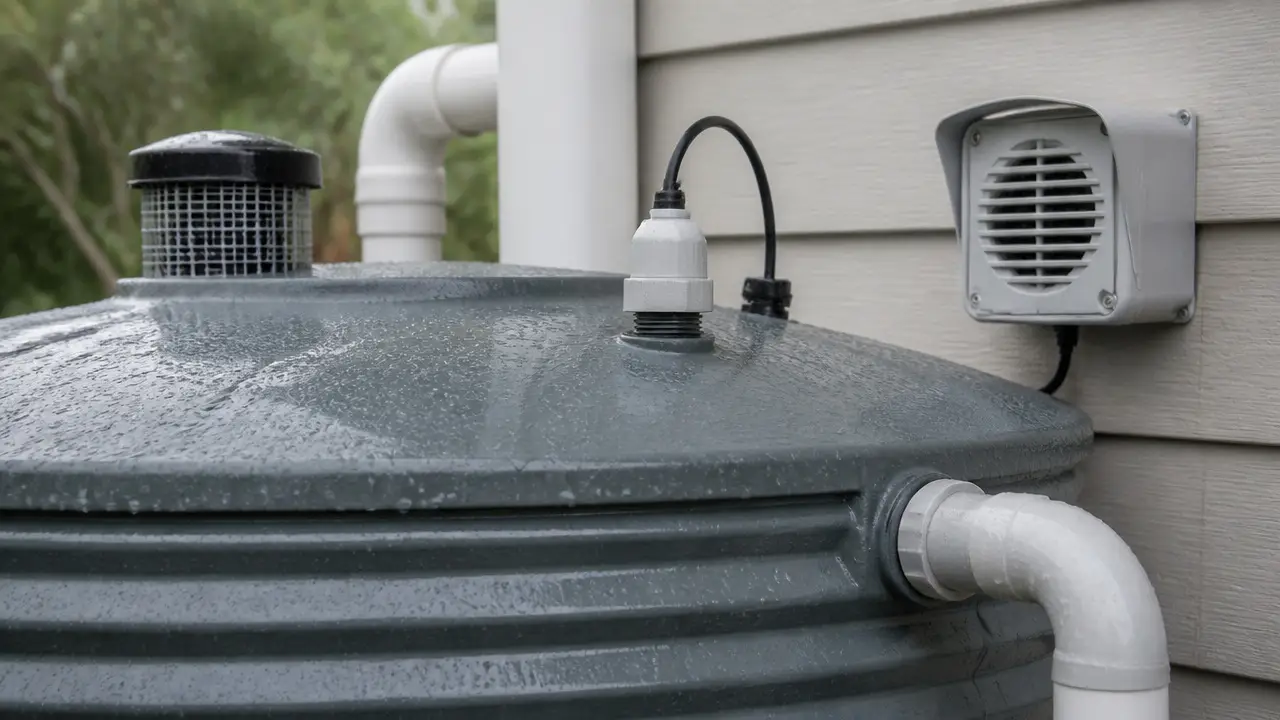
Review placement and features of home water alarms to compare how this decision affects connected system stages.
If the system already has limited pressure, choose a meter with low flow resistance.
Also consider other restrictions such as filters, check valves, elbows, narrow hoses, and small fittings.
Several small restrictions can add up.
Think About Water Quality
Meter choice also depends on what is flowing through it.
Municipal water is usually much cleaner than untreated rainwater from a storage tank.
Rainwater may carry:
- Sediment
- Small bits of organic material
- Fine roof debris
- Biofilm
- Mineral deposits
A meter with small moving parts may need cleaner water than a basic large-passage design.
Install appropriate screening or filtration where the system requires it, and inspect the meter according to its maintenance instructions.
A water flow meter measures water movement. It does not tell you whether water is safe to drink.
Look at Connection Type
Before choosing a meter, check how it connects to the system.
Common connections include:
- Threaded pipe fittings
- Union fittings
- Hose threads
- Flanged connections
- Clamp-on sensors
Confirm both the nominal connection size and the thread standard.
Two fittings can look similar while using different thread types.
This matters especially when joining components from plumbing, irrigation, pumps, IBC totes, and rainwater equipment.
Avoid building a long chain of reducers and adapters just to make an unsuitable meter fit.
Decide Whether You Need a Display
A basic meter may use a mechanical dial.
Electronic models may use:
- A local digital display
- A remote display
- A phone app
- A home automation connection
For a garden line or cistern outlet, a local display may be enough.
For a whole-house system, remote monitoring can be useful if you want to track water use without visiting the meter.
Remember that electronic features also create more things to maintain.
Check how the unit is powered and what happens if power or internet access is lost.
Accuracy Matters, but So Does the Measurement Range
It can be tempting to choose whichever meter claims the smallest accuracy percentage.
That number does not tell the whole story.
A meter may be very accurate within its normal operating range but less useful when water moves extremely slowly.
For home use, ask:
- What flow rates will this system actually produce?
- What is the lowest flow I need to detect?
- Will the pipe stay completely full?
- Is the water clean enough for this meter?
- Will installing the meter reduce flow?
A meter that matches the real system is usually more useful than one with impressive specifications that operates outside its ideal conditions.
Where Should a Water Flow Meter Be Installed?
Placement depends on what you want to measure.
If you want total household use, the meter normally needs to be on the main water line supplying the home.
If you only want rainwater use, place it on the rainwater distribution line.
If you want to check pump output, the meter is usually installed on the discharge side of the pump in a location allowed by the meter and pump instructions.
Some meters also require a length of straight pipe before and after the sensor. Elbows, valves, pumps, and other fittings can disturb water flow and reduce measurement accuracy.
Follow the meter manufacturer's installation requirements.
What Is Best for a Gravity-Fed Rain Barrel?
Gravity-fed systems need extra care because pressure and flow can be low.
A meter designed mainly for pressurized household plumbing may not respond well at rain-barrel flow rates.
Look for a meter with:
- A low minimum flow
- Low resistance
- Suitable outdoor materials
- Connections that match your hose or pipe
- A design that tolerates the expected water quality
Do not assume that adding a meter will have no effect on flow. In a low-pressure system, even small restrictions can noticeably slow watering.
What Is Best for a Cistern With a Pump?
A pumped cistern usually gives you more meter choices because the line is pressurized.
A suitable inline digital, mechanical, turbine, or ultrasonic meter may work depending on the system.
Before choosing one, check:
- Pump flow range
- System pressure
- Pipe diameter
- Water cleanliness
- Maximum temperature
- Connection type
- Minimum measurable flow
- Pressure loss through the meter
If the meter is being used to diagnose pump performance, remember that pressure and flow need to be considered together.
A high flow reading does not automatically mean the system has enough pressure for every fixture or irrigation device.
Can a Flow Meter Help Find Leaks?
Yes, but it has limits.
If every faucet, appliance, irrigation valve, and known water user is turned off, continued flow can be a sign that water is escaping somewhere.
A sensitive meter may make small continuous flows easier to notice.
However, not every unexpected reading means a leak. Automatic appliances, water treatment equipment, irrigation systems, toilet fill valves, and other devices may use water without being obvious.
A flow meter can help identify unusual use, but finding the cause may still require inspection.
A Simple Way to Choose
For most homeowners, the best water flow meter is the simplest meter that reliably measures the flow range you actually have.
Use this order when comparing meter types:
- Decide what water you want to measure.
- Measure or confirm the pipe size.
- Estimate the normal and maximum flow.
- Check the lowest flow you need to detect.
- Confirm the pressure range.
- Consider sediment and water quality.
- Check connection compatibility.
- Consider pressure loss.
- Decide whether remote monitoring is useful.
- Confirm the installation requirements.
For a basic garden or rainwater system, a simple inline meter may be all you need.
For a whole-house system, a properly sized permanent meter with good low-flow detection is usually more useful.
For systems where cutting into the pipe is difficult, a compatible ultrasonic meter may be worth considering.
Frequently Asked Questions
What is the best type of water flow meter for a house?
For most pressurized household plumbing, a properly sized inline mechanical or electronic meter is a practical choice. Smart electronic meters can be useful if you also want water-use records and alerts. The meter still needs to match the pipe size, pressure, and flow range.
Can I install a water flow meter on a garden hose?
Yes. Hose-compatible flow meters can measure irrigation or tank-transfer water. Check the minimum flow rate and pressure limits, especially if the hose is supplied by a gravity-fed rain barrel.
Will a flow meter reduce my water pressure?
It can. Inline meters create some resistance to water movement. The effect may be small in a normal pressurized system but more noticeable in low-pressure or gravity-fed systems.
Can a water flow meter measure how much rainwater is in my tank?
Not directly. A flow meter measures water passing through a pipe. It does not measure the amount currently stored in a tank. A tank-level sensor is used for that job.
Can a water flow meter tell whether rainwater is safe to drink?
No. A flow meter only measures water movement or volume. Drinking-water safety requires suitable collection, treatment, maintenance, and appropriate water-quality testing. A flow reading provides no information about bacteria, chemicals, or other contaminants.
Are ultrasonic flow meters better than mechanical meters?
Neither type is always better. Ultrasonic meters can avoid moving parts and may allow non-invasive installation. Mechanical meters are often simpler. The best choice depends on pipe material, flow range, installation conditions, water quality, and the accuracy you need.
Can a flow meter detect a small plumbing leak?
Some meters can detect very low continuous flow, which can help reveal possible leaks. Check the meter's minimum measurable flow because not every meter is sensitive enough to detect very small water losses.