As an affiliate, we may earn a commission from qualifying purchases. We get commissions for purchases made through links on this website from Amazon and other third parties.
The best device for detecting water leaks in most homes is a smart water leak sensor placed near likely leak points. It can detect a small amount of water on the floor and send an alert before the leak causes major damage.
For stronger protection, especially for a whole house, the better option is a whole-house leak detection system with an automatic shutoff valve. This type watches water use in the main supply line and can shut off the water when it detects an unusual flow pattern.
The right choice depends on what you want to protect, where a leak could happen, and whether you need an alarm or automatic water shutoff.
The Best Leak Detector Depends on the Job
There are three main types of water leak detection devices.
| Device type | Best use | What it detects | Can stop the leak? |
|---|---|---|---|
| Point leak sensor | Under sinks, near tanks, appliances, pumps | Water touching the sensor | Usually no |
| Smart leak sensor | Same locations, with remote alerts | Water touching the sensor | Usually no |
| Whole-house leak detector with shutoff | Main household water supply | Unusual flow or continuous water use | Yes, on many systems |
For most homeowners, smart point sensors are the simplest place to start. They are easy to position around common leak areas.
If an unnoticed plumbing leak could cause serious damage while nobody is home, a whole-house system with automatic shutoff provides more protection.
Smart Water Leak Sensors Are Best for Local Problems
A point leak sensor sits on the floor or another surface where leaking water is likely to collect.
Many have two or more electrical contacts underneath. When water bridges those contacts, the sensor sounds an alarm. Smart versions can also send a notification through Wi-Fi or another home automation network.
They work well near:
- Water heaters
- Washing machines
- Dishwashers
- Refrigerators with water lines
- Toilets
- Sinks
- Sump pumps
- Water filters
- Pressure tanks
- Pumps and treatment equipment
For rainwater systems, sensors can also be useful around indoor cistern connections, pumps, filters, pressure tanks, and plumbing manifolds.
A point sensor cannot detect every type of leak. Water must normally reach the sensor before it reacts.
Placement therefore matters as much as the device itself.
Whole-House Leak Detection Offers More Protection
Whole-house leak detectors monitor water moving through the main plumbing line.
Instead of waiting for water to reach a floor sensor, they look for unusual water use. Depending on the system, this may include:
- Water running continuously
- Abnormally high flow
- Water use at unusual times
- Very small flows that continue for long periods
Some systems include a motorized valve that automatically closes the main water supply when a serious leak is suspected.
This can be especially useful for:
- Vacation homes
- Cabins
- Homes left empty for long periods
- Finished basements
- Homes with plumbing above living spaces
- Properties where a plumbing failure could release large amounts of water
Automatic shutoff systems are more complicated than simple floor sensors. Installation may require cutting into the main water line, working with electrical connections, or configuring the system correctly.
A qualified plumber is usually the safer choice for installing a whole-house automatic shutoff valve.
Point Sensors and Flow Sensors Detect Different Problems
These devices should not be treated as interchangeable.
Point sensors detect actual water
A floor sensor responds when water physically reaches it.
This makes it useful for sudden leaks such as:
- A washing machine hose failure
- Water dripping from a filter housing
- A leaking water heater
- A loose pipe connection
- Overflow around a pump or tank
But it may miss a leak occurring somewhere else.
Flow sensors detect unusual water movement
A whole-house detector watches how water is being used.
That means it may notice leaks that never reach a nearby floor sensor, including water escaping inside walls or continuously flowing through a plumbing fixture.
However, identifying unusual flow is not the same as physically confirming a leak. Normal activities such as irrigation, filling a large tank, or long periods of water use can affect how some systems interpret flow.
What About Acoustic Water Leak Detectors?
Acoustic leak detectors listen for the sound or vibration created by water escaping from a pressurized pipe.
These are mainly useful for locating hidden leaks after a problem is already suspected.
Professional plumbers and leak-detection companies may use specialized acoustic equipment to trace leaks behind walls, under floors, or underground.
For normal home monitoring, an acoustic detector is usually not the first device to buy. A point sensor or whole-house monitoring system is generally more useful for continuous protection.
What About Moisture Meters?
A moisture meter measures moisture inside or near materials such as wood, drywall, and flooring.
It can help investigate:
- Damp walls
- Stains
- Suspected plumbing leaks
- Water damage
- Moisture around windows or roofs
A moisture meter can help confirm that an area is wetter than expected, but it is not normally a continuous leak alarm.
It also cannot automatically identify why the material is wet. Moisture may come from plumbing, roof leaks, condensation, groundwater, or another source.
What to Look for in a Water Leak Detector
You do not need the most complicated device. You need one that works reliably in the location you are protecting.
A loud local alarm
A sensor should provide a clear warning when water reaches it.
This remains useful even if your internet connection is down or your phone is unavailable.
Remote alerts
Smartphone notifications are valuable when you are away from home.
Check whether remote notifications depend on:
- Wi-Fi
- A home hub
- Bluetooth
- A manufacturer's online service
A Bluetooth-only device may have limited usefulness when nobody is home.
Battery monitoring
A wireless detector is only useful while its battery has power.
Review evaluating battery and connectivity in water detectors to compare installation details that support reliable daily use.
Choose a system that gives a low-battery warning, and include battery checks in normal home maintenance.
Sensor cable support
Some detectors use a sensing cable rather than one small detection point.
A cable can cover a larger area around equipment such as a water heater, treatment system, or row of plumbing components.
Automatic shutoff
If preventing a large release of water is important, look beyond alarms and consider a system capable of closing the main supply.
Automatic shutoff adds complexity, so proper installation and testing matter.
Suitable operating environment
Check whether the detector is designed for the temperature and humidity where you plan to install it.
This matters in garages, crawlspaces, pump rooms, basements, cabins, and other areas that may become cold or damp.
Where Should Leak Sensors Be Placed?
Place sensors where leaking water is likely to reach them early.
Do not simply put one somewhere in the room.
For example, around a water heater, place the sensor where water from the tank or plumbing connections would naturally collect.
Useful locations often include:
- Directly beneath plumbing connections
- Near supply hoses
- Beside filter housings
- Near valves and pumps
- At the lowest point beside a tank
- Near appliances connected to water
Avoid positions where normal splashes, floor cleaning, condensation, or occasional harmless water will constantly trigger alarms.
Water Leak Detection for Rainwater Systems
Rainwater equipment introduces a few additional leak points.
Common areas to watch include:
- Tank outlets
- Bulkhead fittings
- Pumps
- Filter housings
- Pressure tanks
- Check valves
- Indoor plumbing connections
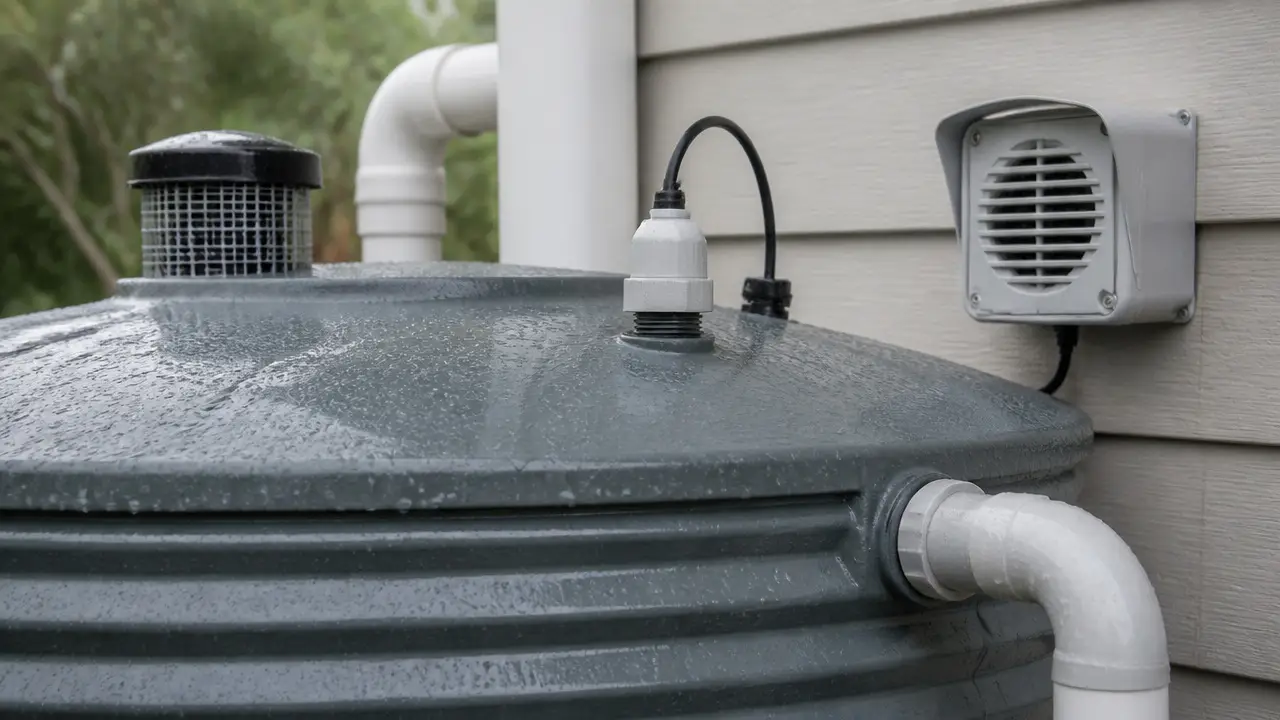
A bulkhead fitting is the fitting that passes through the wall of a tank so a pipe, valve, or hose can connect to it.
Outdoor tank leaks are often easier to notice than indoor plumbing leaks, but they can still waste stored water.
A sensor near indoor rainwater equipment can warn you if a fitting, pump connection, or filter housing begins leaking.
Do not depend on an electronic sensor as a substitute for proper fittings, pipe support, overflow planning, and routine inspection.
Will a Leak Detector Find a Leak Inside a Wall?
A basic floor sensor will only respond if leaking water eventually reaches it.
A whole-house flow monitor may notice unexplained water use before water becomes visible, but it generally cannot tell you the exact location of the leak.
If you suspect a hidden leak, signs may include:
- Unexplained continuous water use
- Damp drywall
- Warped flooring
- Water stains
- Unexpected pump cycling
- Sounds of running water when fixtures are off
A plumber or leak-detection specialist may need to locate the source using pressure testing, acoustic equipment, thermal imaging, moisture measurements, or other diagnostic methods.
Avoid opening walls, floors, or buried plumbing randomly without first narrowing down the problem.
A Leak Detector Does Not Replace Maintenance
Leak detectors provide another layer of protection. They do not make plumbing maintenance unnecessary.
Regularly inspect accessible:
- Flexible supply hoses
- Pipe joints
- Shutoff valves
- Tank fittings
- Filter housings
- Pump connections
- Water heater connections
- Irrigation connections
Replace damaged or deteriorated parts before they fail.
If you use automatic shutoff equipment, test it according to its instructions. A valve that has never been tested should not be assumed to operate correctly during a leak.
Which Type Should You Choose?
For a typical home, start with smart point water sensors in several high-risk locations.
They are particularly useful under sinks and near appliances, water heaters, pumps, and filtration equipment.
For greater protection, add a whole-house flow-monitoring system with automatic shutoff. This is the better choice when you need the system to react even when nobody is home.
If you are already dealing with an unexplained hidden leak, neither device is a complete diagnostic tool. That is when professional leak-location equipment and plumbing inspection become more useful.
Frequently Asked Questions
What is the best device for detecting a water leak?
For most homes, smart water leak sensors are the easiest and most practical option. For broader protection, a whole-house flow detector with an automatic shutoff valve can detect unusual water use and may stop the supply.
Can a water leak sensor detect water behind a wall?
A normal floor sensor cannot directly detect water behind a wall unless the water reaches the sensor. A whole-house flow monitor may notice unexplained water use, but professional equipment may still be needed to locate the leak.
Are smart water leak detectors worth using?
They can be useful because they can warn you about leaking water even when you are away from home. Their value depends heavily on correct placement, reliable connectivity, battery maintenance, and regular testing.
Where should I put water leak sensors?
Place them near likely leak sources, including water heaters, washing machines, sinks, toilets, pumps, filters, pressure tanks, and other water connections. Position them where leaking water will naturally collect.
Can a leak detector automatically turn off my water?
Some whole-house systems include a motorized shutoff valve. Basic point sensors usually only sound an alarm or send a notification.
Can a moisture meter find a plumbing leak?
A moisture meter can identify unusually damp building materials and help investigate a suspected leak. It usually cannot determine the exact source or provide continuous leak monitoring.
How often should water leak detectors be tested?
Follow the device manufacturer's maintenance and testing instructions. Also check batteries, alarms, notifications, and any automatic shutoff function regularly rather than assuming the system is still working.