As an affiliate, we may earn a commission from qualifying purchases. We get commissions for purchases made through links on this website from Amazon and other third parties.
A water leak detector should go where a leak is most likely to start and where water will reach the sensor early. In most homes, that means placing detectors on the floor near water heaters, washing machines, toilets, sinks, dishwashers, refrigerators with water lines, and other plumbing equipment.
The best location is usually beside or slightly downhill from the possible leak, not directly underneath pipes where the sensor may be hard to reach.
Best Places to Put Water Leak Detectors
You do not need a detector beside every pipe in the house. Start with places where a leak could cause a lot of damage before anyone notices it.
Near the Water Heater
A water heater is one of the highest-priority locations.
Put a detector on the floor near:
- The bottom of the tank
- Supply-line connections
- Drain connections
- The edge of the drain pan, if one is installed
If the heater is in a closet or finished room, early detection is especially useful.
Do not place the detector inside a drain pan unless its manufacturer allows it. A small amount of normal water in the pan could otherwise trigger repeated alarms.
For tankless heaters, place the detector beneath or near the plumbing connections where leaking water would reach the floor.
Behind or Beside the Washing Machine
Washing machines have several possible leak points, including:
- Hot and cold supply hoses
- Hose connections
- Drain hoses
- Internal valves and pumps
Place a sensor on the floor behind or beside the machine.
Try to position it where water from either supply hose or the machine itself would spread.
Do not push the detector so far behind the washer that you cannot test it or replace its batteries.
A leak detector is useful here, but it does not replace regular inspection of washer hoses and connections.
Under Kitchen and Bathroom Sinks
Sink cabinets often hide small leaks for a long time.
Place the detector on the lowest part of the cabinet floor, preferably beneath or near:
- Supply shutoff valves
- Flexible supply lines
- Drain traps
- Garbage disposal connections
- Water filter connections
Before choosing a spot, look at the cabinet floor. If it slopes slightly, put the sensor where water naturally collects.
Keep cleaning bottles and stored items from blocking water from reaching the detector.
Near Toilets
A toilet can leak from several places, including the supply line, shutoff valve, tank connection, or the seal beneath the toilet.
Place the detector on the floor beside or behind the toilet.
A good position is near the supply connection while still allowing water from the toilet base to reach the sensor.
Avoid locations that regularly get wet from showers, baths, or floor cleaning. Frequent false alarms may cause people to ignore a real one.
Under or Near the Dishwasher
Dishwasher leaks are often difficult to see because much of the plumbing is hidden.
If possible, place a sensor:
- Beside the dishwasher
- Under an adjacent cabinet
- Near the water supply connection
- Where water leaking from beneath the dishwasher would spread
A sensor cable can sometimes cover a larger area than a small point-style detector.
Do not place an ordinary electronic detector inside the dishwasher opening or anywhere it could interfere with the appliance.
Behind a Refrigerator With a Water Line
Refrigerators with ice makers or water dispensers usually have a small water supply line.
Leaks can develop at:
- The wall valve
- Supply tubing
- Connectors
- The refrigerator's internal water system
Place a detector on the floor behind or beside the refrigerator where water from the line is likely to travel.
Leave enough access to test and maintain the detector.
In Basements
Basements often contain several possible water sources.
Useful detector locations include:
- Near water heaters
- Near plumbing manifolds
- Below bathrooms or kitchens
- Near water treatment equipment
- Near pumps
- Around basement utility areas
- At known low points
One detector in the middle of a large basement may not provide much warning. Water can travel along walls, framing, or floor slopes without reaching it quickly.
Several detectors placed near individual risk areas usually provide better coverage.
In Crawl Spaces
A leak detector can also help in an accessible crawl space, especially below kitchens, bathrooms, utility rooms, or plumbing equipment.
However, crawl spaces can be humid, dirty, and difficult to access.
Choose a detector intended for those conditions. Make sure its alarm or connected notification system can actually alert you inside the house.
Do not enter a crawl space that is unsafe, flooded, structurally questionable, or difficult to exit just to install or check a sensor.
Near HVAC Equipment
Air conditioners, heat pumps, furnaces, and air handlers may produce condensate water.
A blocked condensate drain or failed pump can cause water damage.
A detector may be useful near:
- Condensate pans
- Condensate pumps
- Indoor air handlers
- HVAC equipment located above finished rooms
Place it where overflowing water would reach it without interfering with the equipment.
If you repeatedly find water around HVAC equipment, find the cause rather than relying on the detector as the solution.
Near Water Filters and Treatment Equipment
Whole-house filters, softeners, UV systems, pressure tanks, and other plumbing equipment contain fittings that can leak.
Consider putting a detector below or near:
- Filter housings
- Pipe unions
- Bypass valves
- Pressure tanks
- Treatment equipment connections
Account for household water sensors for early leak alerts to verify fitting standards across the complete plumbing path.
This is especially useful when the equipment is in a finished basement or utility room where a slow leak could cause significant damage.
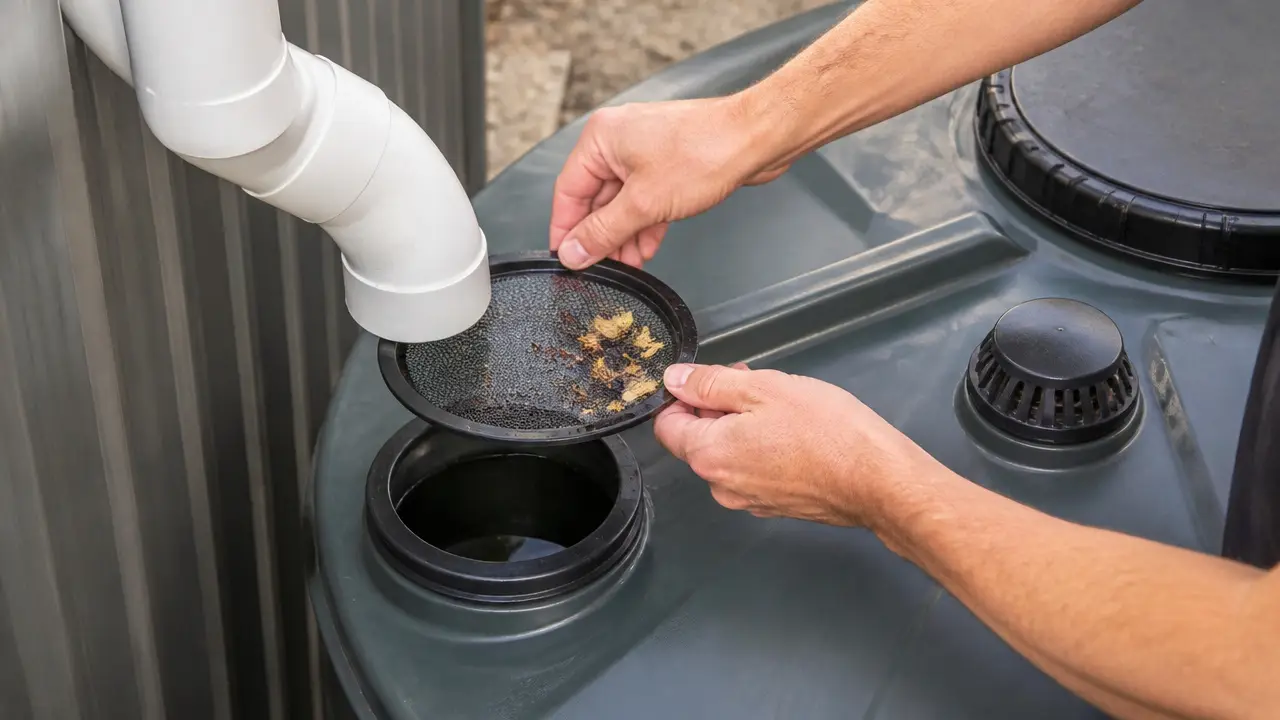
Around Rainwater System Equipment
If part of a rainwater system is installed inside a house, garage, basement, or utility room, leak detection can be useful there too.
Possible locations include near:
- Rainwater pumps
- Pressure tanks
- Filter housings
- Pipe connections
- Indoor storage connections
- Valves and manifolds
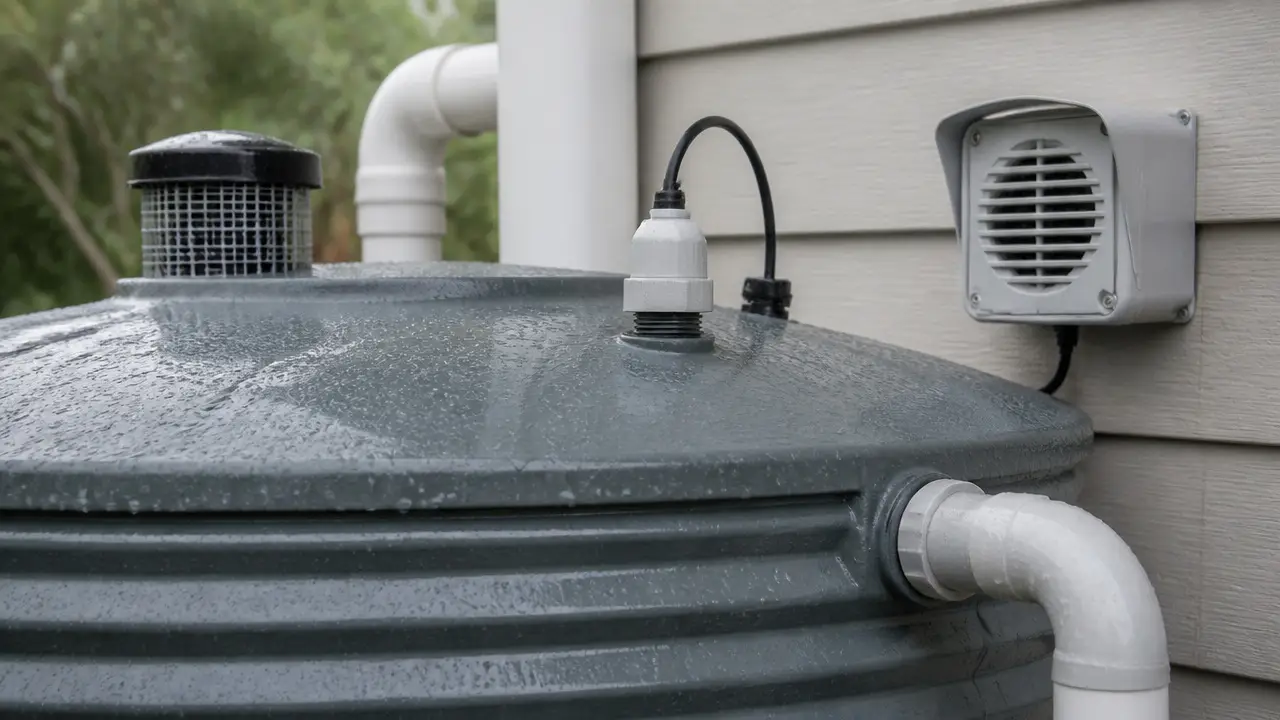
Pay particular attention to threaded fittings, unions, bulkhead connections, and equipment that operates under pressure.
A bulkhead fitting is a fitting that passes through the wall of a tank and creates a sealed pipe connection.
A leak detector can warn you about escaping water, but it does not prevent an overflowing tank or replace properly sized drains and overflow piping.
Put Detectors Where Water Will Actually Travel
The closest location to the plumbing is not always the best location.
Water follows gravity. It may:
- Run toward a floor drain
- Collect against a wall
- Follow grout lines
- Move beneath an appliance
- Settle in a low part of a cabinet
If you already know which direction the floor slopes, place the sensor along that path.
For example, if a washing machine sits on a slightly sloped basement floor, putting the sensor a foot away at the low point may detect a leak sooner than putting it directly underneath the machine.
Point Sensors vs. Leak-Sensing Cables
The ideal location also depends on the detector design.
Point sensors
A point sensor detects water when it touches contacts on the bottom or side of the unit.
They work well in small locations such as:
- Sink cabinets
- Beside toilets
- Near water heaters
- Behind refrigerators
They only detect water that reaches that specific spot.
Leak-sensing cables
Some systems use a cable or rope-style sensor that detects moisture anywhere along its length.
These can work well:
- Behind several appliances
- Around a water heater
- Along a basement wall
- Around larger plumbing systems
They provide wider coverage but still need to be installed according to the manufacturer's instructions.
Where Not to Put a Leak Detector
Avoid putting a detector somewhere that prevents it from doing its job.
Poor locations include:
- On a shelf above the plumbing
- Behind obstacles that keep water away from it
- In places that regularly get wet during normal use
- Where it can be kicked or moved easily
- Somewhere inaccessible for testing
- Inside equipment unless specifically designed for that use
Also avoid assuming that water will drip straight downward. Pipes can carry water along their surface before it drops, and floors can send it surprisingly far from the leak.
Should You Put a Detector Near the Main Water Line?
It can be useful, but a small sensor beside the main line only detects water that reaches the sensor.
Some homes also use whole-house leak monitoring systems. These may watch water flow through the main plumbing line and can sometimes control an automatic shutoff valve.
That is different from a simple floor sensor.
A floor detector finds water in a particular location. A whole-house monitor looks for unusual water use or other signs of a plumbing problem.
The two approaches can complement each other.
Prioritize the Highest-Risk Locations
If you only have a few detectors, start with:
- Water heater
- Washing machine
- Kitchen sink or dishwasher
- Refrigerator water line
- Bathrooms
- Basement plumbing equipment
Change the order based on your house.
For example, a water heater sitting in an unfinished garage may pose less property-damage risk than a washing machine on the second floor.
Think about both how likely a leak is and what the water could damage.
Test the Detectors Regularly
A leak detector is only useful if it still works.
Follow the manufacturer's instructions for testing it. For battery-powered detectors, check the batteries and low-battery warnings regularly.
Connected detectors also depend on their communication system. Make sure:
- Wi-Fi or another connection still works
- Notifications are enabled
- The detector is still paired with its app or hub
- The sensor has not been moved during cleaning
Check the detector whenever you inspect the nearby hoses, valves, filters, or plumbing connections.
Frequently Asked Questions
How many water leak detectors should I have?
There is no single number that works for every house. Place detectors at the major water-risk areas first, such as the water heater, washing machine, kitchen appliances, bathrooms, and basement plumbing. Larger homes may need several detectors because one sensor only covers the area that water can reach.
Should a water leak detector go under the water heater?
It should be close enough to detect leaking water, but the exact position depends on the detector and any drain pan around the heater. Placing it beside the heater or near the edge of the pan often makes it easier to test and maintain.
Should I put a water leak detector under every sink?
It can be worthwhile, especially in finished kitchens and bathrooms. Sink cabinets can hide slow leaks from supply lines, shutoff valves, drains, and filters.
Where should I put a leak detector near a washing machine?
Place it on the floor behind or beside the washer where water from the supply hoses, drain, or machine would travel. Keep it accessible enough for testing and battery replacement.
Can I put a leak detector in a basement?
Yes. Basements are often good places for detectors because they contain water heaters, pumps, filters, pressure tanks, and plumbing lines. Place sensors near specific leak risks and at low points rather than relying on one detector for the entire basement.
Will a water leak detector stop a leak?
A basic leak detector only sounds an alarm or sends a notification. Some systems can communicate with an automatic shutoff valve, but their capabilities vary. A detector should not be assumed to stop water unless the complete system is specifically designed to do so.
Where should I place a leak detector if the floor slopes?
Place it in the path water is likely to follow, usually slightly downhill from the possible leak. The lowest nearby point may detect escaping water sooner than a spot directly beneath the plumbing.