As an affiliate, we may earn a commission from qualifying purchases. We get commissions for purchases made through links on this website from Amazon and other third parties.
What Are Three Types of Leak Detectors?
Three common types of leak detectors are water-contact sensors, flow-monitoring leak detectors, and acoustic leak detectors.
They all look for leaks in different ways. A water-contact sensor detects water where it should not be. A flow detector watches how water moves through a pipe. An acoustic detector listens for sounds caused by leaking pressurized water.
For a rainwater harvesting system, the best choice depends on where you are trying to find leaks. A rain barrel connection needs a different approach than a buried supply line or a pressurized pump system.
1. Water-Contact Leak Detectors
Water-contact detectors are sometimes called spot sensors, moisture sensors, or water sensors.
They are placed where leaking water is likely to collect. When water touches the sensing contacts, the detector sounds an alarm or sends an alert.
Common locations include:
- Under pumps
- Near filters
- Beside water heaters
- Around indoor rainwater equipment
- Under pipe connections
- Near washing machines or toilets supplied by stored water
These sensors are simple because they detect the result of a leak rather than measuring what is happening inside the pipe.
Where Water-Contact Sensors Work Best
They work well in places where water will reach the sensor quickly after a fitting, filter housing, or pipe starts leaking.
For example, an indoor rainwater pump may have several threaded fittings. A small sensor placed on the floor beneath the equipment can warn you if one starts dripping.
They are less useful for outdoor systems where normal rain, condensation, or irrigation water may regularly wet the sensor.
They also cannot detect a leak that drains somewhere else before reaching the detector.
2. Flow-Monitoring Leak Detectors
Flow-monitoring detectors watch how much water passes through a pipe.
Some systems simply report unusual water use. Others can close a valve automatically if the flow pattern suggests a major leak.
A flow detector may notice problems such as:
- Water flowing continuously when nothing should be using it
- An unusually high flow rate
- Water running for much longer than normal
Flow rate means the amount of water moving through a pipe during a given amount of time, such as gallons per minute.
Where Flow Detectors Work Best
Flow monitoring makes the most sense on a pressurized water line serving several fixtures or irrigation zones.
For example, a rainwater cistern may feed a pump that supplies toilets or garden irrigation. A flow-monitoring device installed in the main supply line can help identify unexpected water use somewhere downstream.
However, flow monitoring has limits.
A slow leak may be too small to trigger an alarm. Normal irrigation can also involve long periods of steady water use, so the monitoring system must be suitable for the way the water system operates.
Automatic shutoff equipment also needs to match the pipe size, pressure, flow requirements, and intended water use.
3. Acoustic Leak Detectors
Acoustic leak detectors listen for the sound or vibration created when pressurized water escapes through a crack, damaged joint, or small opening.
Professional leak-location equipment may use sensitive microphones, vibration sensors, or electronic listening devices.
These tools can help locate leaks in places that are difficult to inspect directly, including:
- Buried pipes
- Pipes inside walls
- Underground water lines
- Long pressurized supply runs
Where Acoustic Detection Works Best
Acoustic equipment is most useful when you already suspect a pressurized pipe is leaking but cannot see where the leak is located.
For example, if a cistern pump runs more often than usual even though water use has not increased, a buried distribution pipe could be leaking. Acoustic testing may help narrow down the location before excavation begins.
These tools are generally more specialized than simple water sensors. Pipe material, soil conditions, background noise, water pressure, and the size of the leak can all affect how easily the leak can be detected.
Professional leak-location help may be worthwhile when pipes are buried, hidden behind finished walls, or expensive to access.
Comparing the Three Types
| Leak detector type | What it detects | Best suited for |
|---|---|---|
| Water-contact sensor | Water touching the sensor | Floors, equipment areas, exposed fittings |
| Flow-monitoring detector | Unexpected water movement through a pipe | Main pressurized supply lines |
| Acoustic detector | Sound or vibration from escaping water | Hidden or buried pressurized pipes |
No single detector finds every kind of leak.
A larger system may use more than one method. For example, an indoor pump room could have water-contact sensors while the main pressurized line also has flow monitoring.
Which Type Is Best for a Rainwater System?
Reviewing comparing water leak detector options helps compare the benefits and drawbacks at this design stage.
Start by thinking about where a leak could occur and what would happen if it did.
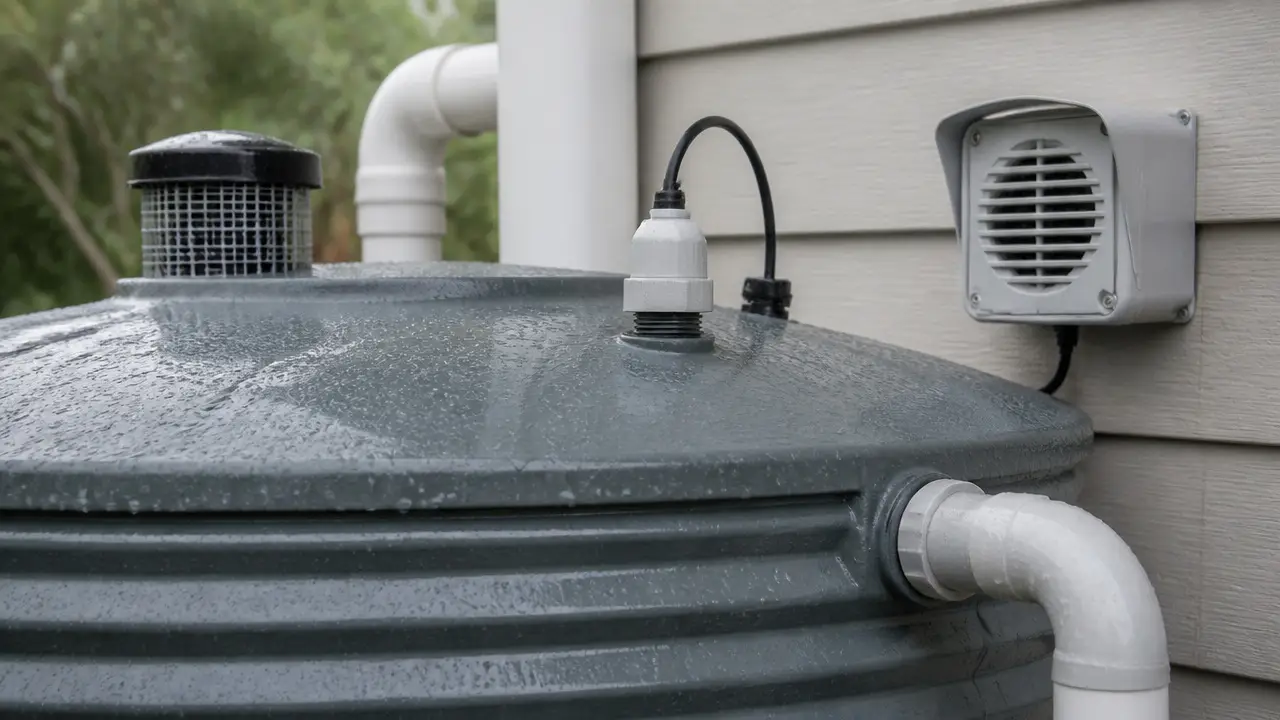
For a simple rain barrel, regular visual inspection is often more useful than advanced electronic monitoring. Check the spigot, overflow fitting, hose connection, and any bulkhead fittings. A bulkhead fitting is a fitting that passes through the wall of a tank and creates a sealed connection.
For an indoor pump or filtration system, water-contact sensors can provide an early warning if a housing, fitting, or pipe starts dripping.
For a pressurized household reuse system, flow monitoring may provide broader coverage because it can detect unusual water movement beyond the equipment room.
For buried pressurized lines, acoustic detection may help locate a suspected leak without immediately digging up the entire pipe route.
Leak Detectors Do Not Replace Routine Inspection
Leak detectors are useful warning tools, but they should not be the only way you check a rainwater system.
Inspect accessible components periodically for:
- Drips around threaded fittings
- Cracks in hoses
- Damp soil near buried lines
- Corrosion or damaged clamps
- Loose tank fittings
- Wet areas around pumps
- Unexpected drops in stored water
- Pumps starting when no water should be running
A sudden unexplained loss of tank water can also indicate a leak. Remember that evaporation, irrigation use, overflow, and inaccurate level readings can cause water levels to change too.
Pay Attention to Pump Behavior
Pump operation can provide another clue.
A pump that repeatedly starts and stops when no fixture is being used may indicate a problem somewhere in a pressurized system. Possible causes include a leaking pipe, dripping fixture, faulty check valve, pressure-tank problem, or another pressure-related issue.
Do not assume the pipe itself is leaking without checking the other likely causes.
Electrical pump systems should be inspected and repaired conservatively. Turn to a qualified plumber, pump technician, or electrician when diagnosis requires opening electrical equipment, working on pressure controls, or accessing buried or concealed plumbing.
Outdoor Leak Detection Has Extra Challenges
Rainwater systems are often outdoors, where ordinary moisture can make leak detection harder.
Rain, irrigation spray, condensation, overflowing gutters, and tank overflow can all create wet areas without a plumbing leak.
This is one reason simple moisture sensors may produce false alarms outdoors.
Instead, pay attention to several signs together. For example, constantly wet soil along a pressurized pipe route combined with unexplained pump cycling and rapid tank-level loss is more meaningful than wet soil alone.
Check Connections Before Assuming the Tank Is Leaking
Many apparent tank leaks actually come from fittings attached to the tank.
Check accessible connections such as:
- Spigots
- Bulkhead fittings
- Overflow fittings
- Pump suction connections
- Tank outlets
- Flexible hoses
Do not climb onto tanks or enter cisterns to inspect them. Large tanks and cisterns can create fall, structural, electrical, and confined-space hazards.
If a large tank appears cracked or structurally damaged, stop using it as needed to prevent further damage and contact the tank manufacturer or a qualified installer.
Frequently Asked Questions
What is the simplest type of leak detector?
A water-contact sensor is usually the simplest. It detects water when moisture reaches its sensing contacts. It works best near equipment or fittings where leaking water is likely to collect.
Can a leak detector automatically shut off the water?
Some flow-monitoring systems can operate an automatic shutoff valve. The valve and detector must be suitable for the pipe size, pressure, flow requirements, and system design.
Can a flow meter detect a very small leak?
Sometimes, but not always. Detection depends on the sensitivity of the equipment and the amount of water escaping. Very small leaks may fall below the device's detection threshold.
Can leak detectors find underground leaks?
Acoustic leak-location equipment can sometimes help identify buried leaks in pressurized pipes. Results depend on pipe material, pressure, soil, background noise, and other conditions.
Why does my rainwater pump run when nobody is using water?
Possible causes include a plumbing leak, dripping fixture, faulty check valve, pressure-tank problem, or pressure-control issue. Repeated unexplained pump cycling should be investigated because it can waste water and increase wear on the pump.
Can I put a water sensor beside a rain barrel?
You can, but outdoor rain and irrigation water may trigger it even when the barrel is not leaking. Regular inspection of the barrel, outlet, overflow, and fittings is often more practical.
How can I tell if my rainwater tank is leaking?
Look for unexplained water loss, persistent wet areas, drips around fittings, or visible tank damage. Rule out normal water use, overflow, evaporation, and inaccurate level readings before concluding that the tank itself has a leak.