As an affiliate, we may earn a commission from qualifying purchases. We get commissions for purchases made through links on this website from Amazon and other third parties.
A water leak can be hard to find when the water never reaches a visible surface. It may be escaping underground, behind a wall, under a tank, through a buried pipe, or from a fitting that only leaks when the system is under pressure.
The best way to find a hidden leak is to confirm that water is being lost, isolate sections of the system, and then inspect the smallest possible area. This works for household plumbing as well as rainwater tanks, cisterns, pumps, garden lines, and buried supply pipes.
First Confirm That You Really Have a Leak
Before opening walls or digging up pipes, make sure water is actually disappearing.
Possible signs include:
- A storage tank level dropping when no water is being used
- A water meter moving while all fixtures are off
- A pump starting when nobody is using water
- Damp soil during otherwise dry weather
- Unexplained algae or plant growth around a pipe route
- Reduced water pressure
- Air entering a pump or irrigation line
- Water stains, peeling paint, or musty smells
- A constantly wet area below a tank
- An unusually high household water bill
Some water loss is not caused by a leak. Evaporation, irrigation timers, overflowing tanks, dripping faucets, toilets, automatic appliances, and intentional drain lines can all use water without being immediately obvious.
Use the Water Meter to Check Household Plumbing
If your property has a water meter, it is often the easiest place to start.
Turn off faucets, washing machines, irrigation systems, dishwashers, ice makers, and other water-using equipment. Make sure nobody uses water during the test.
Check the meter.
Many meters have a small flow indicator that moves when even a small amount of water passes through the meter. Digital meters may display current flow instead.
If the meter continues showing water use when everything should be off, water is probably moving somewhere in the system.
Do not shut off equipment that must remain supplied for safety unless you understand how the system works.
Isolate Indoor and Outdoor Plumbing
If you have an accessible main shutoff for the building, you can sometimes narrow the problem further.
For example:
- Confirm that the meter shows unexplained flow.
- Shut off the building supply at the appropriate valve.
- Check the meter again.
If the meter stops, the leak is probably somewhere after that valve.
If the meter continues moving, the leak may be in the service line between the meter and the building.
Valve arrangements vary. If you are unsure which valve controls which part of the property, have a plumber identify the system before relying on this test.
Check a Rainwater Tank by Watching the Water Level
Hidden leaks in rainwater systems are often easier to diagnose by measuring the tank level.
Stop adding water to the tank and avoid using stored water during the test. Mark the water level or measure from a fixed point at the top of the tank.
Check it again later.
A falling level can indicate leakage, but first rule out:
- Pump operation
- Irrigation timers
- Dripping outlets
- Overflow or siphoning
- Connected tanks equalizing
- Evaporation from open storage
- Automatic top-up or drain systems
Large open tanks can lose some water to evaporation, especially during hot or windy weather. A rapid drop is more suspicious.
Isolate Sections of the Water System
Finding an invisible leak becomes much easier when you divide the system into sections.
A rainwater installation might contain:
- Tank
- Tank outlet
- Valve
- Pump suction line
- Pump
- Pressure pipe
- Filters
- Irrigation line
- Household reuse plumbing
Close valves between sections where the system allows it.
Then watch whether the tank level, pressure, or meter reading continues to change.
For example, if a tank loses water with the outlet valve closed, the tank itself or a fitting attached directly to it may be leaking.
If the tank holds water after the outlet is closed, the leak is probably downstream.
This process of elimination can reduce a large property to a relatively small section that needs inspection.
Check Tank Fittings Before Blaming the Tank
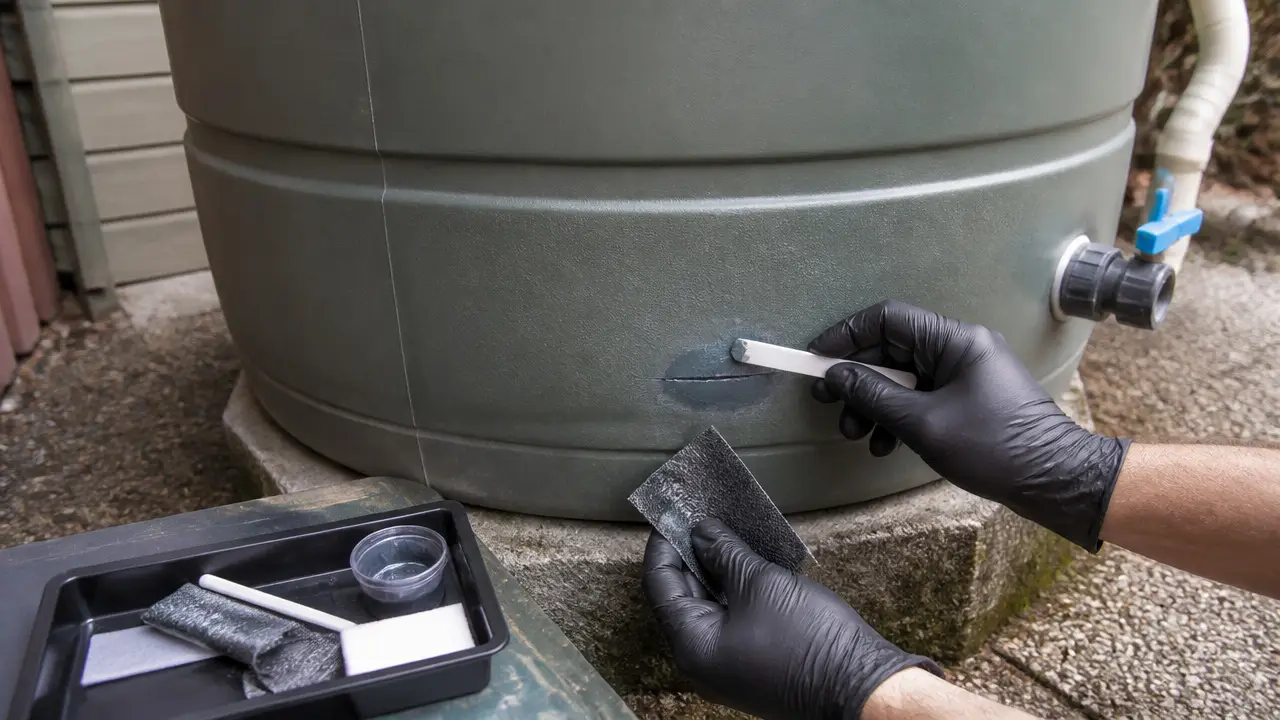
A leak near the bottom of a storage tank does not always mean the tank wall has failed.
Common leak points include:
- Bulkhead fittings
- Tank outlet threads
- Valves
- Flexible couplings
- Hose connections
- Pump fittings
- Overflow fittings
- Level gauges
A bulkhead fitting is a fitting that passes through the wall of a tank and creates a sealed connection.
A slow leak can run along the underside of the tank or foundation before becoming visible somewhere else. That can make the actual leak several feet away from the wet spot.
Dry the area as well as possible and inspect each fitting individually.
A dry paper towel wiped around a fitting can sometimes reveal moisture that is difficult to see.
Do not tighten plastic tank fittings aggressively. Excessive force can deform seals, strip threads, or crack the tank connection.
Look for Pressure Loss
Pressurized systems offer another clue.
If the pump reaches its normal shutoff pressure but then starts again when nobody is using water, something may be allowing pressure to escape.
Possible causes include:
- Pipe leak
- Dripping fixture
- Irrigation valve leak
- Toilet fill problem
- Faulty check valve
- Pressure tank problem
- Pump-side leak
Do not assume every pressure drop means water is leaking externally. A failed check valve, for example, can allow water to move backward through the system.
Repeated unexplained pump cycling should be investigated because frequent starting can also shorten pump life.
Look for Wet Soil Along Buried Pipes
An underground pipe leak may not produce standing water.
Instead, look for subtle differences along the pipe route.
Possible clues include:
- One patch of unusually green grass
- Soft or muddy soil
- Water appearing downhill from the pipe
- Soil settling
- Moss or algae growth
- A damp area that remains after surrounding soil dries
Remember that underground water can travel along trenches, gravel beds, foundations, and utility channels. The wettest point is not always directly above the damaged pipe.
Avoid digging until you know where underground utilities are located.
Listen for Leaking Water
Pressurized leaks can sometimes be heard even when they cannot be seen.
In a quiet area, listen near:
- Exposed valves
- Pipe penetrations
- Hose connections
- Pump houses
- Accessible wall sections
- Floors above buried pipes
A leak may sound like a hiss, faint rushing noise, or vibration.
Professional leak detection technicians use sensitive acoustic equipment to locate sounds traveling through pipes and surrounding materials. This can be useful when the pipe is buried or hidden inside a finished building.
Check Toilets and Automatic Water Users
Understanding a suitable DIY leak detection method helps assess practical alternatives for the next planning step.
An invisible household leak may actually be going down a drain.
Toilets are a common example. Water can slowly pass from the tank into the bowl without making much noise.
Other easily missed water users include:
- Water softeners
- Reverse-osmosis systems
- Refrigerator ice makers
- Humidifiers
- Automatic livestock waterers
- Irrigation systems
- Pool filling equipment
- Boiler or heating-system makeup lines
Shutting these systems off one at a time can help identify the source of unexplained meter movement.
Check Irrigation Zones Separately
Buried irrigation systems can lose a large amount of water without producing an obvious puddle.
Run each irrigation zone separately and look for:
- Weak sprinklers
- Uneven spray patterns
- Bubbling soil
- Water coming from unexpected places
- One unusually wet section
- Drip tubing that does not pressurize normally
For a rainwater irrigation system, also watch pump behavior. A damaged line may cause the pump to run much longer than usual because the system cannot reach its normal pressure.
Check Pump Suction Lines for Air Leaks
Not every plumbing leak releases water.
On the suction side of a pump, a loose fitting or damaged pipe can pull air into the system instead.
Possible signs include:
- Pump losing prime
- Bubbles in clear filter housings
- Reduced flow
- Pump sounding different
- Water surging from outlets
A suction leak can exist without producing a visible wet area because air enters the pipe rather than water flowing out.
Connections between the tank and pump deserve close inspection if the pump repeatedly loses prime.
Use a Simple Tank Isolation Test
For rain barrels, IBC totes, and cisterns, a basic isolation test can help distinguish tank leakage from plumbing leakage.
Where the system design allows it:
- Stop incoming rainwater.
- Turn off the pump.
- Close the tank outlet valve.
- Mark or measure the water level.
- Leave the system unused.
- Check whether the level changes.
If the level remains stable, the problem is probably somewhere after the outlet valve.
If the level keeps falling, inspect the tank, outlet penetration, drain fittings, and other connections below the waterline.
Do not enter a cistern or enclosed water tank to inspect it. Tanks and confined spaces can contain dangerous atmospheres and present serious entry hazards.
Check for Overflow and Accidental Siphoning
Water can disappear from a tank even when nothing is broken.
A hose or overflow line can sometimes create a siphon that continues draining after water has started flowing.
A siphon is water flowing through a tube from a higher level to a lower level after the tube has filled with water.
Check whether any hose, overflow pipe, cleaning line, or irrigation tube ends lower than the water level inside the tank.
If water loss stops when that line is disconnected or raised, unintended siphoning may be the cause.
Trace Water Backward From the Wet Area
When you finally find moisture, do not assume the leak is directly above it.
Water can travel along:
- Pipes
- Beams
- Roof framing
- Concrete
- Insulation
- Cable openings
- Pipe trenches
- Tank bases
Follow the wet path toward its highest or driest transition point.
For example, water appearing near the bottom of a wall may have entered several feet higher around a pipe penetration.
When Specialized Leak Detection Helps
Some leaks cannot be found reliably with normal visual checks.
Professional leak detection may use tools such as:
- Acoustic sensors
- Pressure testing
- Thermal imaging
- Pipe locating equipment
- Tracer methods
- Inspection cameras
These tools are especially useful for pipes beneath concrete slabs, underground service lines, finished walls, and large buried water systems.
Thermal cameras can sometimes reveal temperature differences caused by moisture, but they do not directly prove that a plumbing leak exists. Other conditions can create similar patterns.
Avoid Destructive Searching Too Early
Cutting open walls or digging trenches should usually come after basic isolation tests.
A better order is:
- Confirm unexplained water loss.
- Shut off normal water users.
- Identify which part of the system is losing water.
- Inspect exposed fittings and valves.
- Check pressure or water-level changes.
- Narrow the suspected section.
- Use professional detection when the location is still uncertain.
This reduces unnecessary damage and makes repairs easier.
When to Call a Plumber or Leak Detection Specialist
Professional help is a good idea when:
- The leak appears to be under a concrete slab.
- Water may be near electrical equipment.
- A buried service line appears damaged.
- The leak is inside a finished wall or ceiling.
- Structural materials are staying wet.
- You cannot safely isolate the plumbing.
- A large cistern or underground tank may be leaking.
- The pump or pressure system is behaving unpredictably.
- Water loss continues but you cannot locate the source.
Electrical equipment exposed to water should be treated cautiously. Do not handle wet electrical equipment or wiring unless it has been made safe by a qualified person.
Frequently Asked Questions
How can I tell if I have a hidden water leak?
Turn off known water users and watch your water meter, tank level, or pump behavior. Continued meter movement, falling tank levels, or unexplained pump cycling can indicate water movement somewhere in the system.
Can a water leak exist without making anything wet?
Yes. Underground leaks may drain into soil, and household leaks can discharge directly into drains. Pump suction lines can also pull air inward rather than leaking water outward.
How do I find a leak in a rainwater tank?
Stop water use, close the tank outlet if the system allows it, and monitor the water level. If the level continues falling, inspect the tank wall and fittings below the waterline. If it stops falling, investigate downstream plumbing.
Why does my water pump start when nobody is using water?
Possible causes include a plumbing leak, dripping fixture, irrigation leak, failed check valve, or pressure-system problem. Isolating sections of the system can help identify which side is losing pressure.
Can water travel far from where a pipe is leaking?
Yes. Water can travel along pipes, trenches, framing, concrete, or other surfaces before becoming visible. The wet spot may not be directly beside the leak.
How do professionals find underground water leaks?
Leak detection specialists may use acoustic listening equipment, pressure tests, pipe locators, thermal imaging, inspection cameras, or other methods depending on the type of plumbing and where it is installed.
Should I dig up a buried pipe if I suspect a leak?
Not until you have narrowed down the likely location and identified nearby underground utilities. Unnecessary excavation can damage other services and may not reveal the actual leak.