As an affiliate, we may earn a commission from qualifying purchases. We get commissions for purchases made through links on this website from Amazon and other third parties.
Best Overall
Best Food-Contact Silicone
Best Flexible RTV Sealant
A sealant used around a rainwater tank has two jobs: it must bond to the actual surface, and it must remain appropriate for the water contact and exposure it will see. Those are separate questions.
A food-contact or NSF-related claim does not mean a product bonds to every tank plastic. Likewise, a waterproof pond sealant is not automatically the right material for drinking-water plumbing. Start with the repair location, tank material, and intended water use.
For leaks around fittings, a flexible silicone may be useful on compatible surfaces. For a small crack or hole, a putty may fill a gap better. For polyethylene tank walls, however, many conventional adhesives bond poorly, so match the sealant to the resin before treating it as a permanent fix.
Water-Safe Sealants at a Glance
| Product | Best For | Water-Contact Evidence | Main Tradeoff |
|---|---|---|---|
| J-B Weld WaterWeld | Small compatible cracks and holes | Manufacturer states NSF certification for potable-water contact | Rigid putty; adhesion still depends on surface material |
| Silco RTV 4500 | Flexible food-contact sealing | NSF/ANSI 51 and food-grade claims in product information | Water-resistant rather than a universal submerged-tank repair |
| ASI 502 100% RTV Silicone | Flexible waterproof seams on compatible surfaces | Product information says UL and NSF recognized, with incidental food-contact allowance | Certification scope is not the same as a whole potable-water system approval |
| Aquascape Black Silicone | Non-potable tanks, ponds, and water features | Product information says safe for fish, plants, and wildlife after proper cure | Not positioned here as a potable-water sealant |
| J-B Weld SteelStik | Metal fittings and components | Metal-focused epoxy product | Not a general tank-wall or potable-water sealant |
Match the Sealant to the Job
A silicone bead is good at staying flexible between two compatible surfaces. That makes silicone useful around flanges, seams, and nonmoving joints when the manufacturer allows the material combination.
Epoxy putty behaves differently. It fills space and cures hard, making it useful for a small hole or crack where a rigid repair is appropriate. It is not a replacement for a gasket that needs to compress and move.
If the leak is at a bulkhead fitting, disassemble and inspect the mechanical seal before adding sealant. A damaged gasket or cracked fitting should usually be replaced rather than buried under layers of adhesive.
Best Overall: J-B Weld WaterWeld
1 / 5
J-B Weld WaterWeld Epoxy Putty Stick

Material
Two-part epoxy putty
Set Time
15-25 min product claim
Cure
About 1 hr product claim
Water Contact
NSF potable-water contact claim
WaterWeld ranks first because the manufacturer addresses water-service repair directly. It states that the putty is NSF certified and safe for contact with potable water, and sells it for plumbing, tanks, pools, boats, and other wet repairs.
The putty format is best for a small compatible crack, hole, or irregular gap rather than for a long flexible seam. It can be kneaded and pressed into place, then cures hard.
Performance is mixed. Some repairs hold on water tanks and plumbing, while others fail to bond to a particular PVC surface or lose adhesion under active leaking. Drain below the repair and prepare the surface whenever possible, even though the product can set in wet conditions.
Why It Works
- Manufacturer directly documents potable-water contact certification.
- Putty fills gaps rather than relying on a thin surface bead.
- Can set in wet conditions according to the manufacturer.
- Short cure schedule suits small repairs.
What To Keep In Mind
- A hard epoxy repair is not ideal where a joint needs to flex.
- Match the sealant to the tank or fitting material.
- Active leaks can interfere with bonding.
- A certified repair material does not make untreated rainwater safe to drink.
Best Food-Contact Silicone: Silco RTV 4500
2 / 5
Silco RTV 4500 Food Contact Safe Silicone
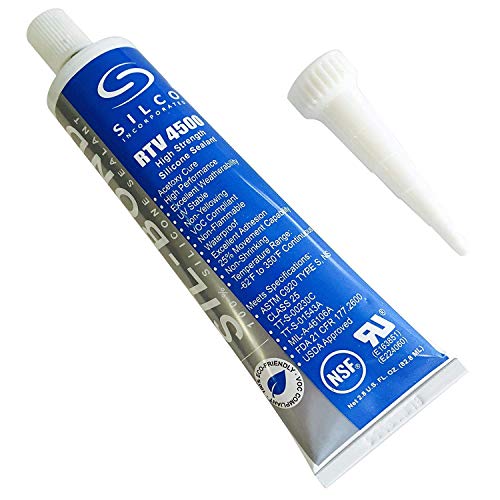
Material
100% RTV silicone product claim
Certification
NSF/ANSI 51 product claim
Form
2.8 oz squeeze tube
Finish
Clear
Silco RTV 4500 is the better choice when the repair needs a flexible silicone rather than hard putty. The manufacturer identifies it as an acetoxy RTV silicone approved as food grade under NSF/ANSI Standard 51 and says it bonds to many surfaces.
That makes it useful around a compatible flange, gasket interface, or small nonstructural seam where flexibility matters. It is less convincing as a patch over a cracked plastic tank wall, where it can fail even after cleaning and sanding.
Use it where the joint design calls for sealant and the tank material is supported. Do not assume that a food-contact rating means it will adhere to polyethylene or remain appropriate for every submerged application.
Why It Works
- Flexible silicone suits joints that experience small movement.
- The manufacturer includes NSF/ANSI 51 food-contact documentation.
- Small squeeze tube works for fitting-scale repairs.
- Clear finish is less visible around light-colored hardware.
What To Keep In Mind
- Food-contact documentation is not the same as universal potable-tank approval.
- Adhesion to some plastics can be poor.
- Open tubes may cure in storage, so cap and store them as directed.
- Allow the full specified cure before water contact.
Best Flexible RTV Sealant: ASI 502 100% RTV Silicone
3 / 5
ASI 502 100% RTV Silicone

Material
100% RTV silicone
Waterproofing
Waterproof product listing
Recognition
UL and NSF product claim
Form
2.8 oz squeeze tube
ASI 502 is a one-part moisture-curing RTV silicone that stays flexible and resists weathering, UV exposure, and freeze-thaw conditions. It carries UL and NSF recognition, with incidental food-contact allowance under an FDA regulation.
The useful rainwater role is sealing a compatible nonporous joint that will be exposed outdoors. It can repair small water-reservoir and valve leaks after curing.
Keep the certification language narrow. Recognition and incidental food-contact claims do not mean every use inside a potable rainwater tank is approved. Follow the application and cure requirements for the intended use.
Why It Works
- Cured silicone remains flexible.
- The manufacturer specifies outdoor weather resistance.
- Waterproof product positioning suits wet-service joints.
- Its non-slump formula helps with vertical or overhead beads.
What To Keep In Mind
- Match the certification scope to the exact water-contact use.
- Surface compatibility still determines adhesion.
- Do not use silicone to hide a failed mechanical gasket or cracked fitting.
Best for Non-Potable Water Features: Aquascape Black Silicone
4 / 5
Aquascape Black Silicone Sealant

Material
Silicone
Tube Size
10.1 oz
Waterproofing
Waterproof product listing
Use
Ponds and water features
Aquascape Black Silicone is designed around ponds, water features, and aquariums. The manufacturer says it is waterproof and safe for fish, plants, and wildlife when properly cured.
That makes it relevant to non-potable rainwater systems used for gardens, decorative water, or similar outdoor applications where a black flexible bead suits the installation. The larger tube is also more practical than a small squeeze tube for a longer seam.
It ranks below the NSF-documented options because it is not positioned as a potable-water-tank sealant. Cure instructions also deserve attention: short handling times can be confused with the longer full-cure period required before water exposure.
Why It Works
- Flexible waterproof silicone is designed for wet outdoor environments.
- Black finish can blend with dark liners and fittings.
- Larger tube suits longer seams.
- The manufacturer addresses fish, plant, and wildlife contact.
What To Keep In Mind
- Treat it as a non-potable water-feature sealant unless your exact application is otherwise documented.
- Allow the full cure time before refilling.
- Adhesion can fail on poorly prepared or incompatible surfaces.
Best for Metal Components: J-B Weld SteelStik
5 / 5
J-B Weld SteelStik
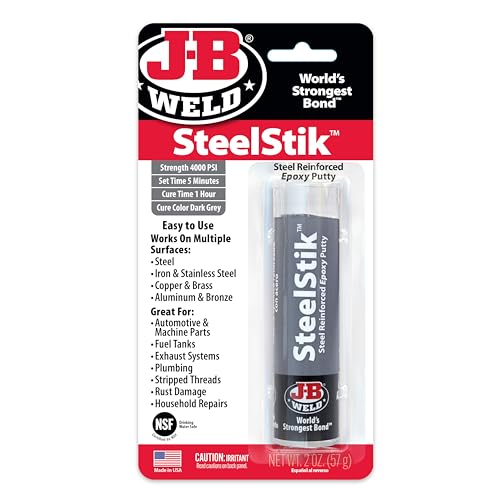
Material
Steel-reinforced epoxy putty
Set Time
3-5 min product claim
Cure
About 1 hr product claim
Use
Metal repair
SteelStik is included for metal hardware around the tank, not as a general water-contact sealant for the tank interior. It is a steel-reinforced, non-rusting epoxy putty for metal repair that sets quickly.
A small compatible metal bracket or fitting repair is its natural role. If the leak is at a threaded brass valve, however, first check whether replacing the valve, gasket, or adapter is the safer repair.
SteelStik lacks the same potable-water contact documentation as WaterWeld, so keep it out of drinking-water-contact uses unless the manufacturer supports the exact application.
Why It Works
- Metal-focused formulation fits hardware repairs.
- Fast set time is useful after careful preparation.
- Putty can rebuild a small missing or damaged area.
What To Keep In Mind
- Not a universal tank-wall sealant.
- Do not infer potable-water suitability from general chemical-resistance claims.
- Short work time requires the repair area to be ready before mixing.
Where Sealant Helps—and Where It Does Not
Around a flange or fitting
A suitable silicone can supplement a joint when the manufacturer calls for it, but the gasket and fitting still need to be mechanically sound.
On a small compatible crack
A putty may bridge a small crack if the surface material is supported and the wall is stable. A growing crack suggests a structural problem.
On polyethylene tank walls
Polyethylene is difficult for many standard adhesives. Do not assume a silicone or epoxy will bond simply because its label says plastic. Use it only when the tank manufacturer or sealant maker supports that material pairing.
In a drinking-water system
Use certification that specifically covers the actual application. Even then, drinking-water safety depends on the complete rainwater system, suitable treatment, and current water testing—not the sealant alone.
Frequently Asked Questions
What sealant is safe for a rainwater tank?
The answer depends on tank material, repair location, and intended water use. Use documentation covering the exact water-contact application and match the sealant to the tank or fitting material.
Is food-grade silicone automatically safe inside a potable-water tank?
No. Food-contact standards and potable-water system certifications can cover different uses. Check the exact certification and application instructions rather than relying on the words food grade alone.
Can silicone seal a polyethylene rainwater tank?
Some silicones do not bond well to polyethylene. Use silicone for a tank-wall repair only when it supports that plastic.
Is epoxy better than silicone for a tank leak?
They solve different problems. Epoxy putty fills and hardens around a small compatible defect, while silicone remains flexible and is often better suited to joints and seams.
Should I seal around a leaking bulkhead fitting?
Inspect the gasket, nut, fitting body, and tank hole first. If one of those parts is damaged, replacing it is usually better than covering the outside with sealant.
Does an NSF sealant make rainwater safe to drink?
No. A suitable sealant only addresses one material in the system. Drinking-water use still requires appropriate collection, storage, treatment, plumbing, and current water testing.
For an actual crack or hole in the tank wall, compare the best water tank patch kits before choosing a flexible sealant. If the problem is a smaller barrel, the best rain barrel repair kits cover plastic welding, putty, tape, and fitting repairs. When the leak centers on a wall connection, the best bulkhead fittings for water tanks may solve the mechanical seal instead of masking it.