
As an affiliate, we may earn a commission from qualifying purchases. We get commissions for purchases made through links on this website from Amazon and other third parties.
Best Overall
Best for Weldable Plastic
Best for Metal Repairs
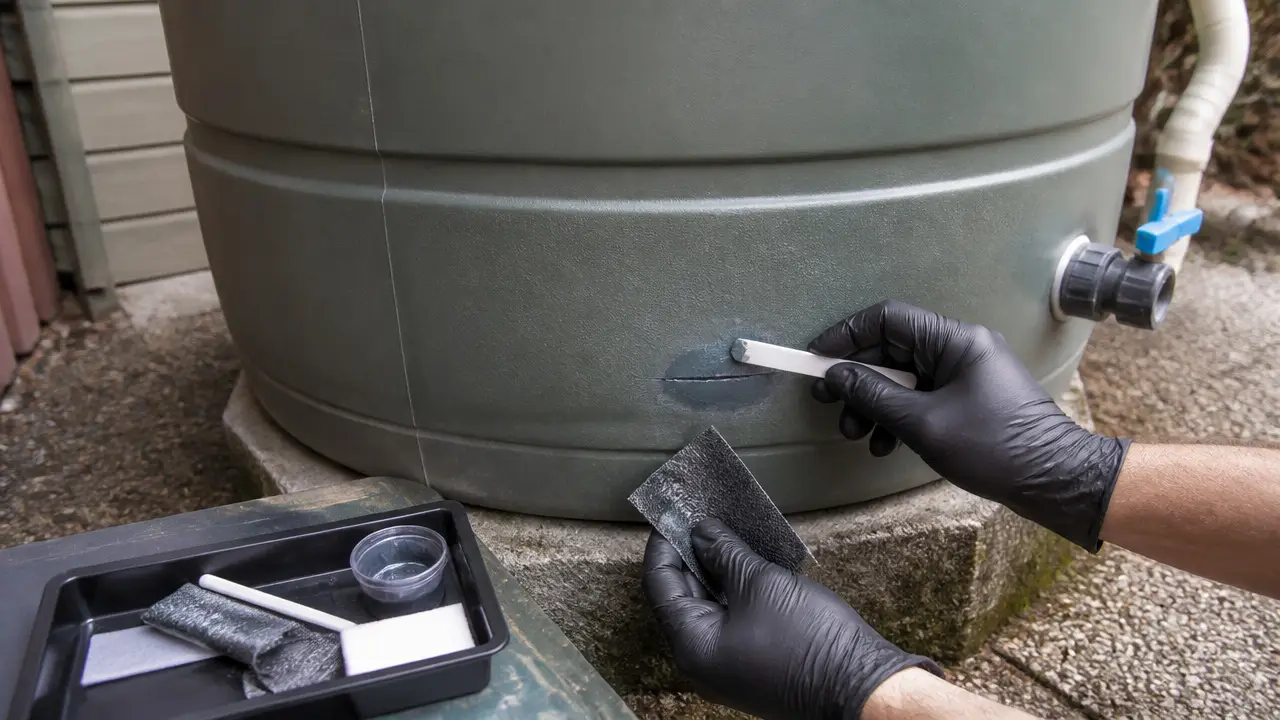
A water-tank patch only works when the repair material is compatible with the tank. That sounds obvious, but it is the reason many otherwise strong epoxies fail on rainwater tanks made from polyethylene or polypropylene.
Before buying a kit, identify the tank material, locate the full crack, and decide whether the damage is cosmetic, a small leak, or a structural failure. A patch around a fitting is also different from a crack through the tank wall. Sometimes the correct repair is replacing a gasket, bulkhead, or valve rather than coating the area with adhesive.
The four options here cover different repair methods. None is a universal fix for every rainwater tank, and a large crack, distorted wall, unknown plastic, or failed structural seam can be a reason to replace the container rather than trust a field repair.
Water Tank Patch Options at a Glance
| Product | Best For | Main Strength | Main Tradeoff |
|---|---|---|---|
| J-B Weld WaterWeld | Small compatible-surface leaks and cracks | Putty form, cures in wet conditions, documented potable-water contact certification | Adhesion depends heavily on surface and tank material |
| JOUNJIP Plastic Welding Kit | Weldable thermoplastic repairs | Heat-weld method with mesh and plastic rods | Requires correct resin match and careful hot-tool use |
| J-B Weld SteelStik | Metal tank parts and fittings | Fast-setting steel-reinforced epoxy putty | Not the right material for a typical polyethylene tank wall |
| J-B Weld PlasticWeld | Compatible rigid plastics other than PE/PP | Moldable plastic-repair putty | Product information says it does not adhere to polyethylene or polypropylene |
Identify the Tank Material Before You Patch
Many rainwater tanks and barrels are made from polyethylene. Some fittings and smaller containers may use polypropylene or other plastics. Adhesives that bond well to PVC, ABS, fiberglass, or metal can perform poorly on low-surface-energy plastics such as polyethylene.
Look for a molded resin code, manufacturer documentation, or a tank model specification. If you cannot identify the material, avoid making a permanent-use claim based on the patch alone.
Also drain and clean the repair area when practical. Even a product that can cure in wet conditions usually benefits from a clean surface without algae, dirt, oils, loose plastic, or active water pressure pushing through the crack.
Best Overall: J-B Weld WaterWeld Epoxy Putty
1 / 4
J-B Weld WaterWeld Epoxy Putty Stick

Form
Two-part epoxy putty stick
Set Time
15-25 min product claim
Cure
About 1 hr product claim
Special Feature
Can set in wet conditions
WaterWeld is the most versatile starting point in this group because it is designed as a kneadable repair putty for leaks, cracks, plumbing, tanks, and other wet-service repairs. The manufacturer also states that it is NSF certified for potable-water contact, which is more relevant to a water system than generic automotive adhesive claims.
The putty format is useful for a small crack or irregular area because it can be pressed and shaped over the damaged surface rather than brushed on as a thin coating. It can hold on water-tank and plumbing repairs, but it can also fail to bond to PVC or give way when an active leak pushes through the repair.
That mixed performance is a reminder that curing under water is not the same as bonding perfectly to every wet material. If possible, empty the tank below the repair, prepare a clean dry surface, and remove water pressure while the putty cures.
Why It Works
- Putty can be shaped over small holes, cracks, and irregular surfaces.
- It is designed to cure in wet conditions.
- Potable-water contact certification is specifically documented by the manufacturer.
- Short set and cure times make it practical for small repairs.
What To Keep In Mind
- Compatibility with the actual tank resin still needs to be confirmed.
- Active leaking through the repair area can undermine adhesion.
- Large wall cracks or distorted tanks may need replacement rather than putty.
- Follow the manufacturer's mixing, surface-prep, and cure directions exactly.
Best for Weldable Plastic: JOUNJIP Plastic Welding Repair Kit
2 / 4
JOUNJIP Plastic Welding Repair Kit

Tool
80 W plastic welder
Max Temperature
525 F product claim
Included
Mesh, welding rods, tips, sandpaper
Method
Heat welding
A plastic-welding kit repairs differently from epoxy. Instead of relying only on adhesive bonding, it melts compatible plastic around the damaged area and can reinforce the repair with mesh and welding material.
That can be a better approach for some thermoplastic tanks, but only when the tank resin and welding material are compatible. A good-looking melt is not enough; mixing incompatible plastics can leave a weak joint that opens again when a full tank flexes.
The kit includes an 80-watt welding iron, mesh, welding rods, tips, sandpaper, and repair tape. The mesh helps reinforce plastic repairs. The hot tool also brings more risk than putty, so this option makes the most sense for someone comfortable with plastic welding and able to work on an emptied, ventilated tank away from flammable material.
Why It Works
- Heat welding can create a mechanical repair on compatible thermoplastics.
- Included mesh can reinforce a crack or damaged area.
- Kit includes the main tools needed for a small plastic-welding job.
What To Keep In Mind
- Identify the tank resin before selecting welding rod material.
- Do not weld a tank while it contains water or unknown residues.
- The tool reaches high temperatures; follow heat and electrical safety directions.
- Tank-wall flex and structural loading still matter after the repair.
Best for Metal Repairs: J-B Weld SteelStik
3 / 4
J-B Weld SteelStik
Form
Steel-reinforced epoxy putty
Set Time
3-5 min product claim
Cure
About 1 hr product claim
Use
Metal repair
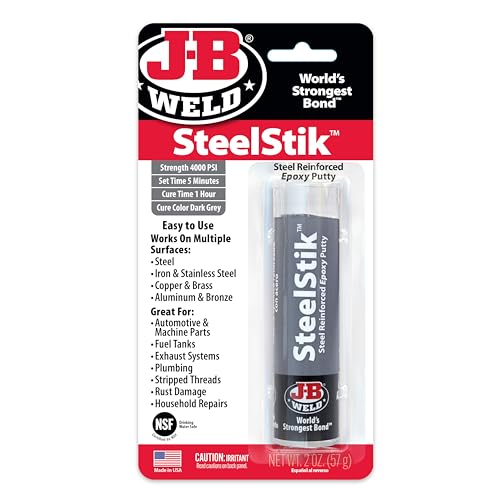
SteelStik belongs in a rainwater repair kit for metal components rather than for the wall of a typical plastic storage tank. Think metal brackets, metal pipe sections, or a compatible metal fitting that has developed a small defect and is suitable for epoxy repair.
Its fast set time is useful for a small prepared repair, but it also gives less working time than WaterWeld. Have the damaged area cleaned, shaped, and ready before mixing the putty.
Do not choose SteelStik simply because the name sounds stronger. A steel-reinforced epoxy is not automatically compatible with polyethylene, and it does not fix a failed gasket or loose bulkhead connection.
Why It Works
- Specifically formulated around metal repair.
- Fast-setting putty can be shaped around a small compatible defect.
- Can be machined or finished after curing.
What To Keep In Mind
- Not intended as a universal plastic-tank patch.
- Very short working time requires preparation before mixing.
- A leaking threaded fitting may need a new fitting or seal rather than external putty.
Best for Compatible Non-PE/PP Plastics: J-B Weld PlasticWeld
4 / 4
J-B Weld PlasticWeld Epoxy Putty

Form
Epoxy putty
Work Time
About 20-25 min product claim
Cure
2-3 hr product claim
Key Limit
Does not adhere to polyethylene or polypropylene
PlasticWeld is useful only after checking the tank material. The manufacturer says it does not adhere to polyethylene, polypropylene, and some other plastics. Because those resins are common in water-storage products, that warning is a major limitation for rainwater use.
On a compatible plastic, the putty can be molded, shaped, sanded, drilled, and cut after curing. It can repair a compatible plastic valve, but that does not override the resin restriction.
This is the product to keep for a known compatible rigid plastic—not the one to buy first for an unidentified rain barrel.
Why It Works
- Moldable putty suits irregular cracks and missing plastic on compatible surfaces.
- Longer work time than SteelStik gives more shaping time.
- Can be finished after curing.
What To Keep In Mind
- The manufacturer says it does not adhere to polyethylene or polypropylene.
- Identify the resin before use on a tank or barrel.
- Incomplete or slow curing can occur, making correct mixing important.
When a Patch Is the Wrong Repair
The leak is around a bulkhead fitting
A loose nut, damaged gasket, cracked fitting, or mismatched hole size may be the real problem. Smearing sealant around the outside can hide the symptom without fixing the failed connection.
The crack grows when the tank fills
A tank wall carries much more load when full. If a crack opens under load or the wall is visibly deformed, a small surface patch may not be a dependable repair.
The tank material is unknown
Do not assume an epoxy labeled for plastic will bond to every plastic. Identify the resin or get material guidance from the tank manufacturer.
The tank is used for drinking water
A repair material suitable for garden-water storage is not automatically appropriate for potable use. The repair, tank, fittings, treatment system, and current water test all matter.
Basic Repair Checklist
Drain the water level below the damaged area when possible. Clean the surface and allow it to dry if the product permits. Mark the ends of a crack so you can see whether it grows during preparation.
Read the patch manufacturer's compatibility and cure instructions before mixing anything. Prepare all tools first because two-part putties can have short working times.
After curing, refill the tank gradually and inspect the repair before leaving it unattended. Watch not only the patched spot but also nearby fittings and the wall around the damage.
Frequently Asked Questions
What is the best patch for a polyethylene water tank?
There is no universal adhesive answer. Polyethylene is difficult for many epoxies to bond to, so identify the tank resin and use a repair method specifically compatible with that plastic. Plastic welding may be appropriate for some tanks when the resin and welding material match.
Can I patch a tank without draining it?
Some repair putties can cure in wet conditions, but draining below the repair usually makes cleaning, inspection, and bonding easier. Follow the product's directions and remove water pressure when practical.
Can epoxy fix a crack near a tank fitting?
Sometimes, but first check the fitting itself. A failed gasket, cracked bulkhead, loose nut, or incorrect hole can be the true leak source and may need replacement rather than an external patch.
Is PlasticWeld good for polyethylene rain barrels?
J-B Weld says PlasticWeld does not adhere to polyethylene or polypropylene, so it should not be chosen for those tank materials.
Is WaterWeld safe for potable-water contact?
The manufacturer's product information states that WaterWeld is NSF certified and safe for potable-water contact. That does not make an entire rainwater system potable by itself; tank condition, treatment, plumbing, and water testing still matter.
When should I replace a tank instead of patching it?
Replacement is safer when the crack is large or growing, the wall is badly deformed, a structural seam has failed, the plastic is brittle across a wide area, or the material cannot be identified well enough to choose a compatible repair.
If the leak is actually at a tank wall connection, compare the best bulkhead fittings for water tanks before covering the area with patch material. For rebuilding an outlet assembly, the best water tank fitting kits can help replace several worn parts together. If the valve itself is damaged, see the best ball valves for rainwater tanks for compatible shutoff options.