
As an affiliate, we may earn a commission from qualifying purchases. We get commissions for purchases made through links on this website from Amazon and other third parties.
Best Overall
Best Simple 2-Inch Valve
Best 1.5-Inch Union Pair
A ball valve is a simple way to isolate a rainwater tank, pump line, filter, or section of PVC plumbing. The important part is choosing a valve that matches the pipe size and connection style already in the system. A 2-inch socket valve is not interchangeable with a 1.5-inch valve, and a true-union design solves a different maintenance problem than a basic glued-in shutoff.
The four valves here are larger PVC-system options rather than small garden-hose spigots. Three are built around 2-inch plumbing. One is a 1.5-inch true-union pair. For a gravity-fed tank, their published pressure ratings are far above ordinary static head, so pressure should not be the main buying reason. Pipe size, full-port flow, and whether the valve can be removed without cutting the line matter more.
Before buying, measure the actual pipe and identify whether the valve uses slip/socket connections that are solvent-welded into the plumbing. Once a basic slip valve is glued in, replacing it later usually means cutting pipe. A true-union valve adds removable ends so the center valve body can be serviced or replaced more easily.
Rainwater Tank Ball Valves at a Glance
| Product | Best For | Key Strength | Tradeoff |
|---|---|---|---|
| FANOVO 2-Inch True Union | Serviceable 2-inch tank plumbing | Full-port flow with removable union ends | Handle can become difficult to turn and material details conflict |
| Eastman 2-Inch PVC Valve | Simple permanent 2-inch shutoff | Straightforward quarter-turn slip installation | No union ends for easy removal |
| DERNORD 1.5-Inch True Union Pair | Smaller PVC lines and paired valve needs | Two 1.5-inch full-port union valves | O-ring leaks and long-term durability are concerns |
| FANOVO SCH80 2-Inch Union | Heavier 2-inch full-port layout | True-union body and full-flow path | Material and dimensions conflict; size labeling has caused fit problems |
True Union or Basic Slip Valve?
A basic slip valve is simple: glue pipe into both ends and use the handle to open or close flow. That is a good fit when the valve is accessible and the plumbing is unlikely to need disassembly.
A true-union valve adds threaded union nuts on both sides of the center body. The pipe-side adapters remain glued into the system, while the valve body can be removed after the unions are loosened. That is especially useful around pumps, filters, or tank manifolds that may need service.
The extra parts do add more seals. Each union has an O-ring that needs to be clean, seated properly, and tightened evenly. A true-union valve is easier to service, but only if its union seals are maintained.
A Full-Port 2-Inch Valve You Can Remove for Service
1 / 4
FANOVO 2-Inch True Union Ball Valve

Pipe Size
2 in
Connection
Socket slip true union
Port
Full port
The FANOVO 2-inch true-union valve is the most useful all-around choice for a larger rainwater system that may need future service. It uses 2-inch socket-slip connections and a full-port internal path, so the valve is designed to avoid unnecessary restriction compared with a reduced-bore shutoff.
The two union connections are the main advantage. Once the pipe-side sockets are installed, the center valve can be removed without cutting the PVC line. That is valuable next to a pump, filter, tank outlet, or manifold where maintenance access matters.
The product information does not identify the exact material consistently. The valve has a 150 psi service rating, but a typical rainwater storage line does not need that pressure rating as a performance feature. More relevant is the operating feel: some installed valves become stiff to turn. Leave enough space around the handle to grip it properly and exercise the valve periodically rather than leaving it untouched for years.
Why It Works
- True-union ends let the valve body come out without cutting the pipe.
- A 2-inch full-port path suits larger tank plumbing.
- Quarter-turn operation makes isolation quick.
- Extra union O-rings are included for maintenance.
What To Keep In Mind
- The exact material is uncertain.
- The handle can become stiff in some installations.
- Socket sizing must match the actual 2-inch pipe standard before glue is applied.
A Simple Permanent Two-Inch Shutoff
2 / 4
Eastman 2-Inch PVC Ball Valve
Pipe Size
2 in
Connection
Slip
Pressure Rating
150 psi
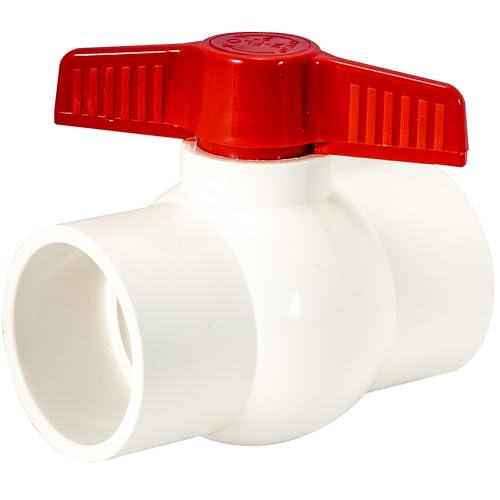
The Eastman valve is the simplest 2-inch option here. It uses slip connections on both sides and a quarter-turn handle, making it a practical inline shutoff for Schedule 40 PVC plumbing where removability is not a priority.
Its PVC construction and 150 psi rating are consistent product specifications. The exact overall dimensions conflict. For a rainwater tank line, the valve's value is not its high pressure rating but its uncomplicated installation: two aligned pipe ends, solvent-welded sockets, and one handle for isolation.
Because there are no union ends, future replacement normally requires cutting the pipe or installing unions elsewhere in the line. That is reasonable for a low-cost accessible branch but less attractive immediately beside equipment that may be serviced often.
Why It Works
- Straightforward 2-inch slip connections suit common Schedule 40 layouts.
- Quarter-turn operation gives quick shutoff.
- The simple body has fewer union seals to maintain.
- The simple valve operates reliably in ordinary water plumbing.
What To Keep In Mind
- The exact overall dimensions are uncertain.
- A glued-in body is harder to replace than a true-union valve.
- Dry-fit the valve orientation before solvent welding so the handle remains accessible.
A Pair of Serviceable Valves for 1.5-Inch Lines
3 / 4
DERNORD 1.5-Inch True Union Ball Valves

Pipe Size
1.5 in
Pack
2 valves
Connection
Socket true union
The DERNORD set is the only 1.5-inch choice in this group and comes as a two-pack. That makes it useful for a smaller rainwater manifold where you want isolation on both sides of a pump, filter, or treatment stage without stepping up to 2-inch pipe.
The valves use socket connections, full-port flow, union ends, EPDM O-rings, and PTFE seats. Their pressure rating is 200 psi at the specified test temperature, although that is far beyond ordinary gravity-tank pressure and should not drive the selection.
The concern is sealing and long-term service. Some packages have arrived with wrong-size O-rings, and some valves developed persistent union leaks or failed within two years under light use. Keep spare compatible seals available and pressure-test every union after installation before burying or enclosing the plumbing.
Why It Works
- The 1.5-inch size suits smaller large-bore rainwater plumbing.
- Two valves can isolate both sides of serviceable equipment.
- True-union construction allows removal without cutting pipe.
- Full-port design avoids unnecessary internal narrowing.
What To Keep In Mind
- The exact material is uncertain.
- Inspect O-rings before assembly; incorrect seals can leak immediately.
- Long-term durability is less reassuring than the higher-ranked options.
A Heavier Two-Inch Full-Port Union Valve
4 / 4
FANOVO SCH80 2-Inch True Union Ball Valve
Pipe Size
2 in
Connection
Slip socket true union
Port
Full port
This FANOVO valve uses a heavier Schedule 80-style body with a 2-inch full-port, slip-socket, double-union layout. It is intended for a serviceable water-system connection where the valve may need to be removed while the pipe ends remain in place.
The product information gives conflicting material and overall dimensions, but the 2-inch connection and union configuration are consistent. Glue-up is straightforward and the handle is sturdy, though size labels across other variants can be confusing. Measure the actual pipe and match it to the selected 2-inch version before installation.
It ranks below the other 2-inch true-union option because variant sizing is less clear. In a correctly matched system, though, the full-port union format is well suited to a tank outlet, pump line, or large irrigation branch.
Why It Works
- A 2-inch full-port path keeps the valve from becoming a major restriction.
- Double unions make the center body removable.
- The larger handle gives good leverage for quarter-turn operation.
What To Keep In Mind
- The exact material and overall dimensions are uncertain.
- Match the exact selected size instead of relying on family-listing labels.
- Support nearby pipe so the union body is not carrying external load.
Where a Ball Valve Fits in a Rainwater System
Directly After the Tank Outlet
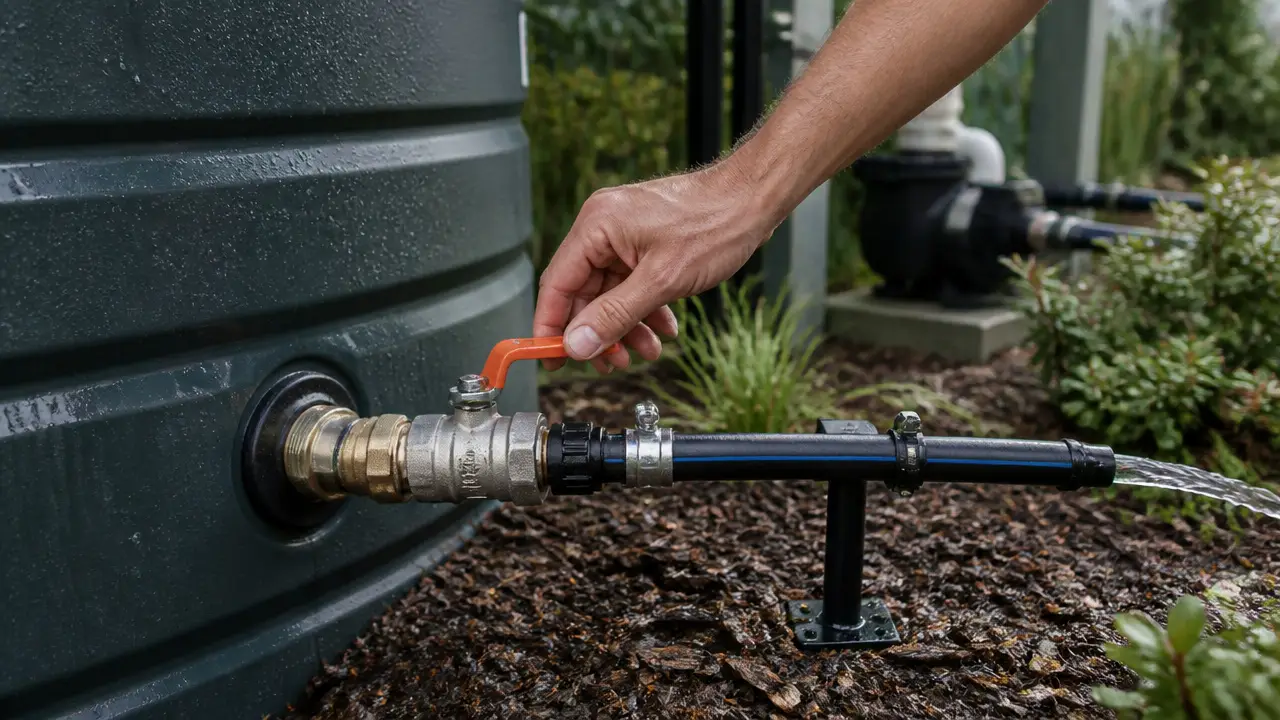
A valve close to the tank lets you isolate everything downstream. That is useful when servicing a pump, filter, hose manifold, or damaged pipe without draining the full tank.
Leave enough straight pipe or union space so the valve can actually be removed later.
On Both Sides of Serviceable Equipment
A filter or pump is easier to remove when valves isolate both the upstream and downstream sides. This is where a two-pack of true-union valves can make sense.
On Irrigation Branches
Separate ball valves can shut off individual garden zones or hose branches while the main storage system stays available.
How to Install a PVC Ball Valve
Dry-fit the complete line first. Position the handle so it can rotate a full quarter turn without hitting the tank, wall, pump, or another pipe.
For solvent-welded sockets, use the pipe preparation and cement system appropriate for the PVC components. Apply it evenly and seat the pipe fully without leaving the valve twisted under stress.
On true-union valves, keep union O-rings clean and seated. Do not glue union threads or O-ring surfaces. Tighten union nuts evenly by hand according to the product instructions rather than using excessive wrench force.
Let solvent-welded joints cure as required before filling or pressurizing the line.
Full-Port Flow and Gravity Systems
A full-port ball valve keeps the opening through the valve close to the pipe bore. That can matter in gravity-fed rainwater plumbing, where available pressure is already low and every restriction reduces flow.
A reduced internal opening may be acceptable on a small branch, but it makes less sense on a main tank outlet or pump suction line. This is why the true-union full-port valves can be useful even when their high pressure ratings are irrelevant to the storage system.
For pump suction, also avoid unnecessary elbows, undersized pipe, and air leaks. The valve is only one part of the flow path.
Common Ball Valve Problems
The Handle Becomes Hard to Turn
Sediment, long periods without movement, or valve wear can make operation stiff. Exercise the valve periodically and replace a body that requires excessive force.
A Union Leaks
Check the O-ring for dirt, twisting, damage, or the wrong size. Clean the mating surfaces and reassemble without overtightening the union nut.
The Valve Does Not Fit the Pipe
Nominal sizing or a wrong variant may be the problem. Measure the pipe outside diameter and match it to the selected socket size before applying cement.
Flow Drops More Than Expected
Check whether the valve is truly full port, whether the handle is fully open, and whether the rest of the line has smaller fittings or clogged screens.
The Valve Needs Replacement but Is Glued In
A basic slip valve normally has to be cut out. If future service is likely, add unions or choose a true-union valve from the start.
Frequently Asked Questions
What size ball valve should I use on a rainwater tank?
Match the valve to the pipe and the flow required by the tank outlet, pump, or irrigation line. The options here are 1.5- and 2-inch valves for larger PVC plumbing.
Is a true-union ball valve worth it?
It is especially useful near pumps, filters, or other equipment that may need service. The union ends let you remove the valve body without cutting the pipe.
Does a higher PSI rating make a valve better for a rainwater tank?
Not by itself. Gravity storage systems usually operate at much lower pressure. Connection size, flow path, materials, serviceability, and compatibility matter more.
What does full port mean on a ball valve?
A full-port valve keeps the internal opening close to the connected pipe bore, reducing the restriction created by the valve when it is fully open.
Can I use a 2-inch ball valve on a pump suction line?
Yes when the pump inlet, pipe size, valve type, and flow requirements all match. Keep suction plumbing well sealed and supported.
Why is my true-union valve leaking at the nut?
The union O-ring may be dirty, twisted, damaged, or incorrectly sized. The union seal should be inspected and reseated rather than simply tightened harder.
For the tank-wall connection before the valve, bulkhead fittings for water tanks cover the pass-through hardware. If you want the bulkhead and valve together, water tank fitting kits compare bundled outlet packages. For a hose that disconnects quickly without threading, camlock fittings for water tanks cover another large-line connection style. If a pump sits downstream, transfer pumps for rainwater help match flow and lift to the storage system.