As an affiliate, we may earn a commission from qualifying purchases. We get commissions for purchases made through links on this website from Amazon and other third parties.
Checking a tank level tells you how much water is left and whether your collection system is keeping up with use. The best method depends on the tank shape, whether you can see inside, and whether you want a simple manual check or a permanent level gauge.
For most rainwater tanks, you can check the level with a sight tube, float gauge, dipstick, electronic sensor, or by measuring the water depth and converting it to volume.
The Simplest Ways to Check a Tank Level
Common methods include:
- Looking through a translucent tank wall
- Using a clean dipstick
- Installing a clear sight tube
- Using a mechanical float gauge
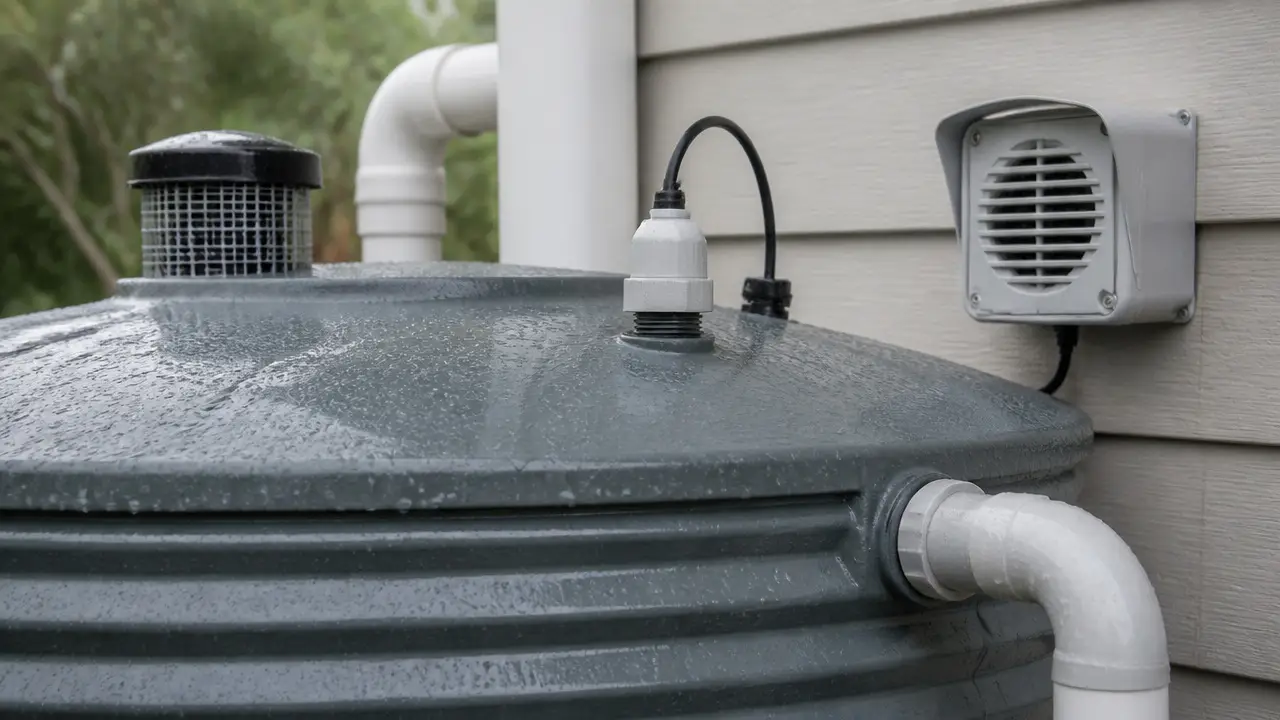
- Installing an electronic or ultrasonic level sensor
You do not need an electronic monitor for every tank. A rain barrel used for garden watering may only need a simple visual check. A large cistern supplying pumps or household fixtures may benefit from a permanent gauge.
Method 1: Check Through the Tank Wall
Some polyethylene tanks are light enough for the water line to be visible through the side.
Stand where light reaches the tank and look for a change in color between the wet and dry parts of the wall.
You may also be able to shine a flashlight against the outside of the tank. The water-filled section often looks different from the empty section.
This method works best with:
- Light-colored plastic tanks
- Smaller rain barrels
- Tanks that are not heavily stained
- Tanks located where you can safely see most of the wall
It may not work on dark, opaque, metal, concrete, or buried tanks.
Do not climb onto a tank just to see through an upper opening.
Method 2: Use a Dipstick
A dipstick is one of the easiest ways to measure water depth in an accessible tank.
Use a clean, straight rod that can reach the bottom without damaging the tank.
How to check the level
- Open the inspection lid from a safe position.
- Lower the clean stick vertically until it gently touches the bottom.
- Remove it.
- Look for the wet line.
- Measure from the bottom end of the stick to the wet line.
That measurement is the approximate water depth.
For example, if the tank is 48 inches deep and the wet mark reaches 24 inches, the water depth is about half the tank height.
That does not always mean the tank is exactly half full. Tank shape matters.
A vertical tank with straight sides has a fairly direct relationship between depth and volume. Horizontal, rounded, tapered, or irregular tanks do not.
Keep the dipstick clean
Anything placed inside stored water can introduce dirt or contaminants.
If the water may eventually be used for drinking after proper treatment, avoid putting dirty tools, hands, or improvised materials into the tank.
Drinking-water use requires suitable collection, treatment, testing, and maintenance. Measuring the level does not tell you anything about water safety.
Method 3: Install a Sight Tube
A sight tube is a clear vertical tube connected near the bottom of the tank.
Water inside the tube rises to roughly the same height as the water inside the tank. You can therefore see the level without opening the tank.
A basic arrangement looks like this:
Tank outlet → shutoff valve → clear vertical tube
The tube should be securely supported.
A shutoff valve is useful because it lets you isolate the tube if it leaks or needs cleaning.
Sight tube limitations
Clear tubing exposed to sunlight can encourage algae growth. It may also discolor over time.
Covering the tube when you are not reading it can reduce light exposure.
Make sure the tubing, fittings, valves, and tank connection are suitable for the water system and operating pressure.
Do not drill a new hole into a full tank unless you understand how the fitting will be installed and sealed. A poorly installed tank penetration can cause a major leak.
Method 4: Use a Mechanical Float Gauge
A float gauge uses a float inside the tank connected to an external indicator.
As the water rises and falls, the indicator moves.
Mechanical gauges can be useful because they:
- Need no electricity
- Provide a quick reading
- Avoid repeated tank opening
- Can work on many above-ground tanks
Installation varies by gauge and tank design.
Make sure the gauge is suitable for the tank height and mounting location. The float must also be able to move without becoming trapped by internal pipes, filters, pumps, or tank walls.
Method 5: Use an Electronic Level Sensor
Electronic systems can display the tank level remotely.
Common technologies include:
- Ultrasonic sensors
- Pressure sensors
- Float switches
- Submersible level sensors
Some systems display a percentage. Others report water depth or trigger a low-level warning.
Ultrasonic sensors
An ultrasonic sensor is usually mounted near the top of the tank. It sends a signal toward the water surface and measures the distance back.
Because it does not need to touch the water, it can be useful for larger tanks.
Its reading can be affected by:
- Tank shape
- Internal pipes
- Condensation
- Foam
- Incorrect mounting
- Sensor dead zones near the top of the tank
Follow the sensor manufacturer's mounting and calibration requirements.
Pressure sensors
A pressure sensor near the bottom of the tank estimates water depth from the pressure created by the water above it.
These systems can work well, but the sensor must be compatible with the water and expected depth.
Float switches
A float switch is usually used to detect a specific level rather than give a continuous reading.
For example, one can tell a pump controller that the tank is nearly empty.
This can help prevent a pump from running dry.
Electrical components around water should be installed according to their instructions and applicable electrical requirements. Get qualified help where mains-voltage wiring or unfamiliar electrical work is involved.
How to Calculate How Much Water Is Left
If your tank has straight vertical sides, you can estimate the remaining volume from the water depth.
Use:
Water remaining = tank capacity × water depth ÷ usable tank height
For example, imagine a tank holds 1,000 gallons when the usable water depth is 60 inches.
If you measure 30 inches of water:
For practical steps for identifying how full a rainwater tank is, first evaluate the storage-vessel configuration for the installation area.
1,000 × 30 ÷ 60 = 500 gallons
The tank contains about 500 gallons.
This method assumes the tank has a uniform cross-section from bottom to top.
Why Tank Shape Matters
Water depth and water volume are not always proportional.
A vertical cylindrical tank has the same horizontal area through most of its height, so half the depth is roughly half the volume.
A horizontal cylindrical tank is different. Half the measured height does not follow a simple straight-line percentage throughout the tank.
The same problem applies to:
- Rounded tanks
- Oval tanks
- Tapered tanks
- Underground cisterns
- Irregularly shaped tanks
For these tanks, use the manufacturer's volume chart when available.
You can also create your own calibrated level marks if you know how much water is added at each stage.
How to Mark Tank Levels
Permanent level marks can make manual checking much easier.
You might mark:
- Full
- 75%
- Half
- 25%
- Low
If the tank has straight sides, the marks can usually be spaced evenly by height.
For irregular tanks, use known volume measurements rather than equally spaced marks.
Do not assume evenly spaced height markings equal evenly spaced water volumes.
Check the Usable Water Level, Not Just the Bottom
A tank can contain water that your system cannot actually use.
For example, a pump intake may sit several inches above the bottom to avoid pulling settled debris into the system.
If the tank contains 6 inches of water but the pump inlet is 8 inches above the bottom, that remaining water is not available to the pump.
When deciding whether your tank is nearly empty, consider:
- Pump intake height
- Outlet height
- Sediment space
- Low-level pump cutoff
- Tank shape
The useful level may therefore be different from the actual water depth.
How Often Should You Check the Level?
Check more often when water supply or demand changes quickly.
That may include periods of:
- Low rainfall
- Heavy irrigation
- Hot weather
- Increased household use
- Pump problems
- Suspected leaks
A garden barrel might only need checking before watering.
A tank supplying toilets, irrigation, livestock water, or other regular loads may benefit from a permanent gauge that is easy to read.
What If the Tank Level Drops Too Fast?
An unexpected drop can indicate more than normal water use.
Check for:
- Open taps
- Leaking hoses
- Dripping valves
- Split pipes
- Loose fittings
- Tank leaks
- Irrigation systems running longer than expected
- Pump systems cycling unexpectedly
Also check the overflow and inlet area. Sometimes water appears to be disappearing when the tank simply did not fill as much as expected during the previous rainfall.
Tracking tank levels over several days can help you separate normal consumption from a leak.
What If the Tank Is Not Filling?
If the water level stays low after rain, inspect the collection path.
Start at the roof and follow the water toward the tank.
Check:
- Gutters for blockages.
- Downspouts for leaks or disconnected sections.
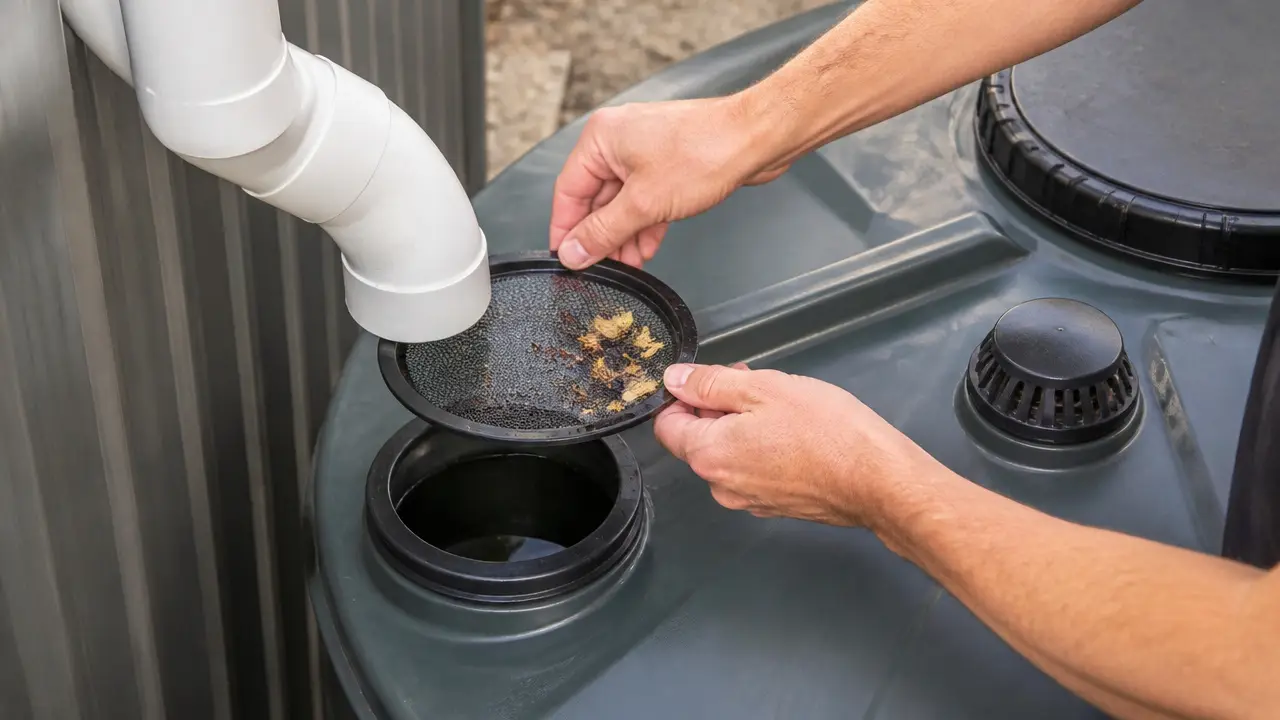
- Leaf screens for debris.
- First-flush devices for problems.
- Inlet screens for clogging.
- Tank overflow for signs that water is bypassing storage.
A first-flush device diverts the first portion of roof runoff so some dust and debris are kept out of the tank.
Do not judge collection performance from rainfall alone. Roof area, rainfall depth, system losses, tank capacity, and existing water level all affect how much the tank gains.
Keep Tank Openings Secure
Avoid leaving inspection covers open after checking the level.
A properly closed tank helps keep out:
- Insects
- Animals
- Leaves
- Dirt
- Sunlight
It also reduces the chance of someone accidentally dropping an object into the tank.
Openings large enough for a person to enter should never be treated as normal access points. Tanks and cisterns can present serious confined-space hazards. Do not enter a water tank for routine inspection or level checking.
Which Tank Level Method Is Best?
For a small rain barrel, a visual check or dipstick may be enough.
For a frequently used above-ground tank, a sight tube or mechanical float gauge can make checking much easier.
For a large cistern, buried tank, pump-fed system, or tank that is difficult to access, a properly installed electronic sensor may be more practical.
Choose a method based on:
- Tank size
- Tank shape
- Access
- Water use
- Pump setup
- Power availability
- How precise the reading needs to be
The most useful gauge is one you can read safely and easily enough to check regularly.
Frequently Asked Questions
How can I tell how full my water tank is?
You can use a visible water line, dipstick, sight tube, mechanical float gauge, or electronic level sensor. The best method depends on the tank material, shape, and accessibility.
Can I measure a tank level with a stick?
Yes. If the tank opening can be reached safely, lower a clean straight stick until it gently touches the bottom. The wet mark shows the approximate water depth.
Does half the water depth mean the tank is half full?
It does for many tanks with straight vertical sides. It may not for horizontal, rounded, tapered, or irregular tanks. Use a tank volume chart for those shapes when available.
How do I know how many gallons are left in my tank?
For a straight-sided tank, multiply the total capacity by the measured water depth and divide by the usable tank height. For irregular tanks, use the manufacturer's capacity chart or calibrated markings.
Can I install a clear tube to show the water level?
Yes. A properly connected sight tube can show the same approximate water level as the tank. Use suitable fittings, support the tube, and consider a shutoff valve so it can be isolated if damaged.
Why does my tank gauge say empty when water is still inside?
The gauge may need calibration, or it may be measuring usable water rather than every inch at the bottom. The pump intake and tank outlet may also sit above the tank floor.
Are electronic tank level sensors accurate?
They can provide useful readings when correctly selected, mounted, and calibrated. Tank shape, sensor location, condensation, internal fittings, and installation errors can affect readings.
Should I climb onto my tank to check the water level?
No. Use a level-reading method that can be checked safely from the ground or another secure location. Falls and unstable tank surfaces are unnecessary risks for routine level checks.