As an affiliate, we may earn a commission from qualifying purchases. We get commissions for purchases made through links on this website from Amazon and other third parties.
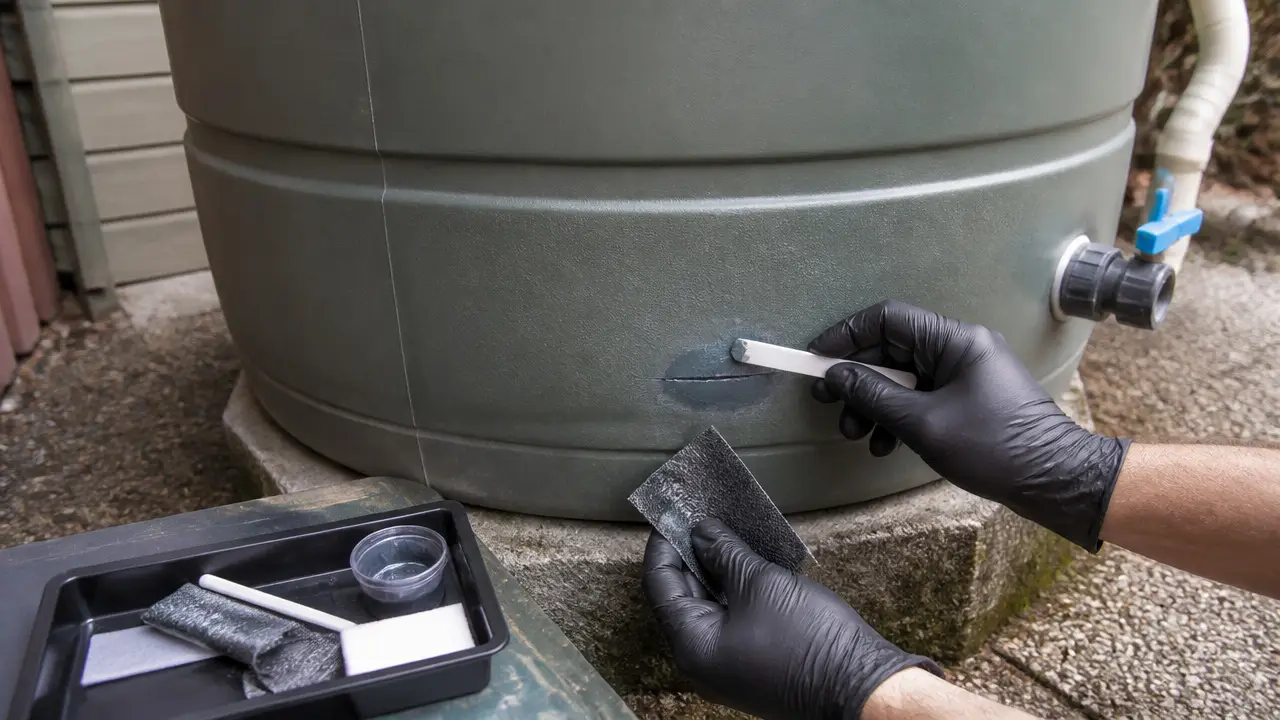
Cracked polyethylene can often be repaired, but the right method depends on the type of polyethylene, the size and location of the crack, and what the part is used for. For many linear polyethylene water tanks and rain barrels, plastic welding with compatible polyethylene filler is the usual repair method. Ordinary glue, silicone, and general-purpose epoxy are much less dependable because polyethylene is difficult for adhesives to grip.
A small crack in an otherwise sound rainwater tank may be worth repairing. A long crack, brittle tank wall, damaged tank bottom, or repeated cracking is a stronger reason to replace the tank or have it inspected by the manufacturer or a plastic-welding professional.
Can Cracked Polyethylene Be Repaired?
Yes. Many polyethylene cracks can be repaired.
The most common options are:
- Plastic welding for compatible thermoplastic polyethylene
- A manufacturer-approved repair kit
- A mechanical repair that removes the damaged area and installs a suitable fitting, plug, or patch system
- Replacement when the surrounding plastic is no longer sound
Plastic welding works by heating the original polyethylene and compatible filler material until they soften enough to fuse together. This is different from simply covering the crack with glue.
The important word is compatible. Polyethylene comes in several forms, and they do not all repair the same way.
Identify the Polyethylene Before You Start
Do not assume that every polyethylene tank can be welded with the same rod or method.
Common materials include:
- HDPE, or high-density polyethylene
- LDPE, or low-density polyethylene
- Linear polyethylene, which is common in rotationally molded tanks
- Crosslinked polyethylene, often called XLPE
A molded recycling mark may help. HDPE is commonly marked with recycling code 2, while LDPE is commonly code 4. Large tanks may instead have the resin type on the manufacturer's label or paperwork.
This matters because ordinary thermal welding is commonly used on linear polyethylene. Crosslinked polyethylene behaves differently because its polymer structure limits the movement needed for normal fusion welding. Specialized repair methods may be needed.
If the material cannot be identified, contact the tank or container manufacturer before heating it.
Decide Whether the Crack Is Safe to Repair
Look at more than the crack itself. A repair will not last if the tank keeps putting the same stress on that area.
A small crack in a flat, lightly stressed section of a rain barrel is a much better repair candidate than a crack at the bottom of a large cistern.
Consider replacement or professional repair when:
- The crack is at the tank bottom or lower corner
- Several cracks are present
- The plastic looks chalky, brittle, or badly weathered
- The crack runs through a molded support area
- The wall has changed shape around the crack
- A fitting has pulled or torn through the tank wall
- The tank has been damaged by freezing
- The crack grows when the tank is filled
- The tank holds chemicals or another hazardous liquid
- The manufacturer's instructions say the damage is not repairable
A full tank puts a large load on its walls. Even a repair that does not leak while empty may behave differently once the tank is filled.
Check Why the Polyethylene Cracked
Before welding anything, find the likely cause.
Common causes include poor support, impact, freezing, movement around plumbing connections, or aging plastic.
Uneven Tank Support
A water tank needs the support recommended by its manufacturer. A low spot, sharp stone, or uneven base can bend the tank as its weight increases.
Repairing the crack without fixing the base may simply cause another crack.
Plumbing Stress
Rigid pipe can pull sideways on a tank fitting. Pumps can also transmit vibration through plumbing.
A cracked area near a bulkhead fitting may mean the plumbing needs better support or a more flexible connection.
A bulkhead fitting is a fitting that passes through a tank wall and seals around the hole with a gasket.
Freezing
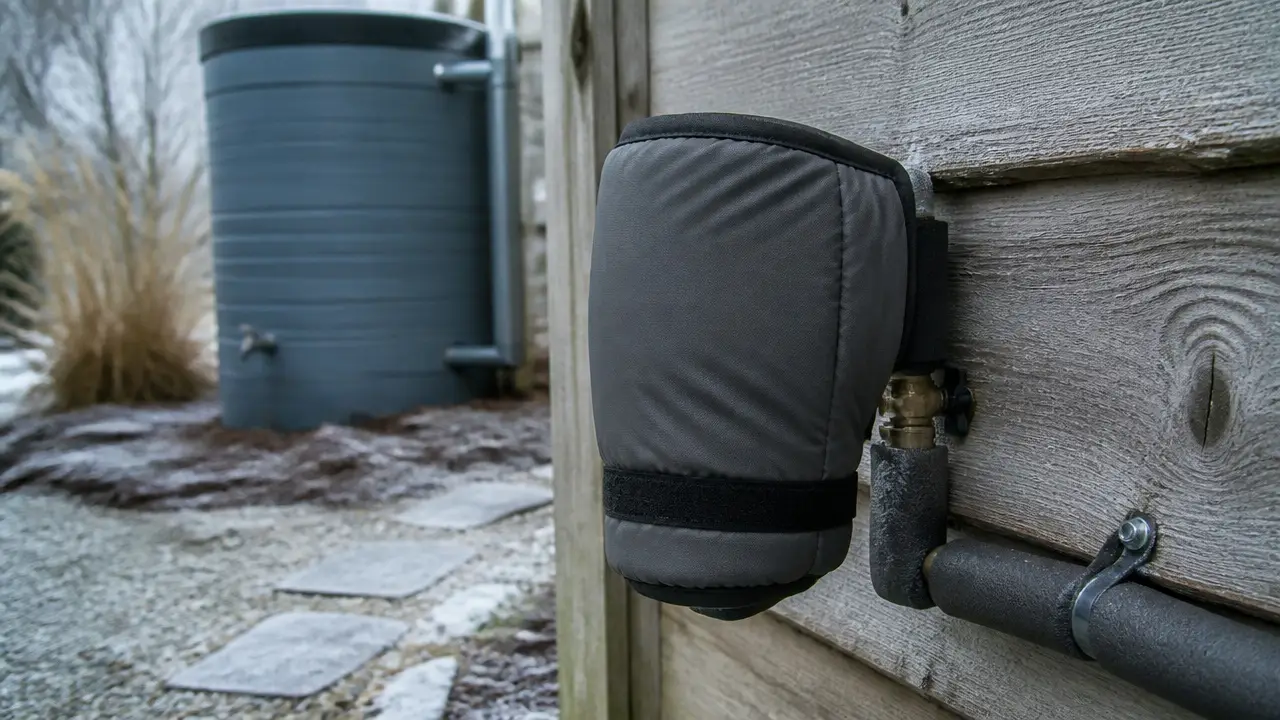
Water expands when it freezes. Trapped water in a tank, valve, pipe, or fitting can put enough force on polyethylene to distort or crack it.
The crack should not be treated as the only problem if freezing caused it.
Aging and Sun Exposure
Outdoor polyethylene tanks are normally made for outdoor service when properly specified, but aging and exposure can still affect the material over time.
If the entire wall has become brittle, repairing one crack may only delay another failure.
What You Need for a Plastic-Welded Repair
Exact tools depend on the tank and the manufacturer's repair method, but a typical small repair may require:
- A plastic welding tool intended for polyethylene
- Compatible polyethylene welding rod or manufacturer-supplied repair material
- A scraper or suitable tool for preparing the groove
- Mild detergent and clean water
- Clean cloths
- Eye protection
- Heat-resistant gloves
Use filler material made for the polyethylene being repaired. Using an unknown piece of plastic as filler can produce a poor weld even if it looks similar.
Some polyethylene tank manufacturers provide dedicated welding kits and instructions for their linear polyethylene tanks. One manufacturer's procedure, for example, calls for cleaning the damage, making a V-shaped groove partway into the wall, warming the area, and filling the groove with its specified welding material.
Follow the tank manufacturer's procedure when one is available rather than copying temperature, groove depth, or filler recommendations from an unrelated tank.
How to Repair a Small Crack in Polyethylene
1. Empty the Tank Completely
Remove the water so the damaged wall is not under load.
Disconnect pumps or electrical equipment that could start while you are working. Close or isolate supply lines as needed.
Work from outside the tank whenever possible. Do not climb inside a tank or cistern to make the repair. Tank interiors can present confined-space hazards even when they previously held only water.
If the crack cannot be repaired safely from outside, use a qualified repair service.
2. Clean and Dry the Repair Area
Wash away dirt, algae, grease, sediment, and other material around the crack.
Let the polyethylene dry fully.
A dirty surface can interfere with welding and can hide the true ends of the crack.
Cleanliness also matters with adhesives because polyethylene already has low surface energy, making it difficult to bond even under good conditions.
3. Inspect the Full Length of the Crack
Look carefully for fine extensions at both ends.
Also check the opposite side of the tank wall when it can be viewed safely without entering the tank.
Do not automatically drill holes at the crack ends unless the manufacturer or repair procedure specifically calls for that technique. Every new hole or sharp edge changes how stress moves through the tank wall.
4. Prepare the Crack as Directed
Plastic welding normally requires more than melting over the surface.
For some linear polyethylene repairs, the crack is opened into a shallow V-shaped groove. The groove gives the filler material space to fuse with the original polyethylene rather than sitting as a thin layer over the crack.
Polyethylene tank repair instructions may call for a V-groove extending partway through the wall rather than cutting all the way through it. The correct depth depends on the particular repair system and tank construction.
Avoid leaving sharp cuts or corners. Sharp areas can concentrate stress and become starting points for another crack.
5. Weld With Compatible Polyethylene
Heat both the prepared tank material and the proper filler according to the welding-tool or tank manufacturer's instructions.
The goal is fusion. The filler should become part of the softened parent material instead of forming a separate strip stuck to its surface.
Hot-air and extrusion welding methods work by heating the repair surface and compatible polyethylene filler so the materials can fuse.
Do not use a propane torch or open flame as a substitute for a controlled plastic-welding tool. Too much heat can scorch, thin, distort, or degrade the tank wall.
More heat does not automatically produce a stronger repair. Excessive heating can damage the polyethylene and create new stresses as the area cools.
6. Build the Repair in Controlled Passes
A deeper prepared groove may require more than one welding pass.
Follow the filler and tool instructions instead of trying to fill a large crack with one thick blob of melted plastic.
Avoid making the repaired section unnecessarily stiff or bulky. The surrounding tank wall still needs to flex as the tank fills and empties.
7. Let the Repair Cool Naturally
Review a suitable way to patch a plastic water tank to compare stored supply required between realistic refill opportunities.
Do not refill the tank while the polyethylene is still warm.
Allow the repair to return to normal temperature without forcing it to cool rapidly unless the repair instructions specifically say otherwise.
Heating and cooling can create localized stress in polyethylene, which is one reason careful heat control matters.
8. Test the Tank Gradually
For an atmospheric rainwater tank, test with water rather than pressurizing the tank.
Start with a low water level and inspect the repair. If it remains dry, add more water in stages while continuing to watch both the repair and the surrounding wall.
Check again after the tank has remained filled for a while.
A repaired crack that starts opening, bulging, or weeping as the water level rises should not simply be reheated again and again. Stop filling and reassess the damage.
When a Mechanical Repair May Make More Sense
Plastic welding is not the only way to repair polyethylene.
Mechanical repair can sometimes be used for both linear and crosslinked polyethylene. The damaged area may be cut or routed away and replaced by a compatible fitting, plug, sleeve, or other mechanical component. Poly Processing describes this approach as a common field repair for rotationally molded polyethylene parts.
For example, a damaged area around an existing outlet might sometimes be converted to a properly sized bulkhead-style repair if the tank manufacturer approves the method.
This is not the same as bolting a random piece of plastic over a crack. The shape of the opening, gasket material, fitting size, wall condition, and stress around the repair all matter.
On a large cistern, an unusual crack, or an XLPE tank, ask the manufacturer or an experienced polyethylene fabricator which mechanical repair is suitable.
Why Glue and Epoxy Often Fail on Polyethylene
Polyethylene is a low-surface-energy plastic. In simple terms, many liquids and adhesives do not spread across it and grip it easily.
That is why general-purpose epoxy, construction adhesive, super glue, and ordinary sealant may peel away even when they bond well to other plastics.
Special adhesives designed for low-surface-energy plastics do exist, sometimes with primers or other surface treatments. But that does not mean every polyethylene adhesive is suitable as a structural water-tank repair.
For a tank wall that flexes under hundreds or thousands of pounds of water, use a repair system specifically approved for that material and application.
Do Not Use Silicone as a Structural Crack Repair
Silicone sealant may stop a small seep for a short time in some situations, but it should not be treated as a structural polyethylene repair.
It does not restore the strength of a split tank wall.
This is especially important when the crack formed because the wall is moving under load. Sealing the surface without addressing that movement leaves the original failure in place.
Be Careful Around Fittings
Cracks beside outlets and bulkhead fittings deserve extra attention.
Check for:
- A fitting that is overtightened
- A damaged or hardened gasket
- Pipe hanging from the tank without support
- A valve placing leverage on the fitting
- Misaligned rigid plumbing
- Movement of the tank on its base
Do not keep tightening a leaking bulkhead fitting. More force can distort the gasket or increase stress on the polyethylene.
Support connected pipe independently so the tank wall is not carrying the plumbing.
Repairing a Rain Barrel
Small rain barrels are usually easier to assess because the water load is smaller and much of the barrel can be inspected from outside.
A short crack in sound linear polyethylene may be repairable with the appropriate polyethylene welding system.
Before repairing it, check the barrel bottom and stand. A barrel holding water is heavy. The stand should be stable and should support the barrel as intended.
If the barrel has become brittle or has several cracks, replacement is generally more practical than repeatedly welding individual splits.
Repairing an IBC Tote
IBC totes require a different judgment.
The inner bottle is supported by its outer cage and pallet. A crack can indicate impact, age, chemical exposure, freezing, or stress.
Do not assume a repaired IBC bottle is suitable for drinking-water storage simply because the crack no longer leaks. Its previous contents, material condition, repair materials, cleanliness, and intended use all matter.
For garden or other non-potable use, a damaged tote still needs to be structurally sound.
Non-potable means water that is not intended for drinking.
If the bottle has major wall damage, a damaged lower section, an unknown history, or several brittle areas, replacement is usually the safer choice.
What About Polyethylene Used for Drinking Water?
Treat repairs to drinking-water storage more carefully than repairs to a garden barrel.
Potable means suitable for drinking.
A leak-free repair does not prove that the water is safe to drink. Repair materials must be appropriate for the intended water contact, and the entire collection and treatment system still matters.
Roof-collected drinking water requires suitable collection surfaces, debris control, prefiltration, treatment designed for the actual hazards, proper maintenance, current laboratory testing, and compliance with applicable local requirements.
If a repaired polyethylene tank is part of a potable-water system, confirm the repair method and materials with the tank manufacturer and use qualified water-treatment help where needed.
Prevent the Crack From Coming Back
After repairing the polyethylene, correct whatever caused the damage.
Check the whole installation for:
- Uneven support
- Sagging or unstable stands
- Unsupported pipe
- Rigid plumbing that cannot move with the tank
- Freeze exposure
- Overflow problems
- Impact risks
- Tank movement
- Fitting leaks
- Severe weathering
Polyethylene tanks naturally move somewhat as they fill and empty. A poorly shaped repair, sharp cut, or stressed fitting can concentrate that movement in one area and start another crack.
Inspect the repair during normal tank maintenance, especially after freezing weather or after the tank has gone through several full and empty cycles.
When to Stop Repairing and Replace the Polyethylene
Replacement is usually the better choice when the material around the crack is failing, not just the crack itself.
A new weld cannot make badly aged polyethylene young again.
Replace the part or get professional guidance if you find extensive brittleness, several spreading cracks, severe deformation, major base damage, or a repair that repeatedly opens.
Large tanks also deserve more caution. The consequences of sudden failure increase greatly as stored water volume rises.
A repair should restore useful service to otherwise sound polyethylene. It should not be used to keep a failing tank in service indefinitely.
Frequently Asked Questions
Can you repair cracked polyethylene with epoxy?
General-purpose epoxy is usually unreliable on polyethylene because polyethylene has low surface energy and is difficult to bond. Special adhesives for polyethylene exist, but a structural tank crack is normally better handled with a manufacturer-approved welding or mechanical repair method.
What is the best way to repair a polyethylene water tank?
For many linear polyethylene tanks, compatible plastic welding is a common method. The crack is cleaned and prepared, then compatible polyethylene filler is fused into the damaged area. Always check the tank manufacturer's repair instructions first.
Can HDPE be plastic welded?
Yes. HDPE is a thermoplastic and can be welded using suitable equipment and compatible HDPE material. Correct surface preparation and heat control are important.
Can crosslinked polyethylene be welded?
Crosslinked polyethylene does not behave like normal linear polyethylene during thermal welding. Ordinary polyethylene welding methods may not be suitable. Manufacturer-approved specialized or mechanical repairs may be required.
Can I repair polyethylene with a soldering iron?
A general soldering iron gives limited temperature and heat control and may damage the plastic. A tool and filler system intended for polyethylene repair is a better choice, especially for water-storage tanks.
Should I drill a hole at the end of a polyethylene crack?
Not automatically. Although stop holes are used in some types of plastic repair, drilling changes the tank wall and can create stress points if done poorly. Follow the tank manufacturer's repair method rather than adding holes without a specific reason.
How do I know whether a repaired polyethylene tank is safe?
Inspect the surrounding plastic, correct the cause of the crack, and test an atmospheric tank gradually with water. Stop using it if the repair opens, leaks, or causes the wall to deform. For drinking-water storage, a successful leak repair does not by itself establish that the stored water is potable.