As an affiliate, we may earn a commission from qualifying purchases. We get commissions for purchases made through links on this website from Amazon and other third parties.
Cracked plastic can sometimes be restored, but the right repair depends on the type of plastic, the crack location, and how much stress the part carries.
For rain barrels, water tanks, lids, pipes, and fittings, a repair may work well if the crack is small and the surrounding plastic is still strong. A badly split tank, brittle plastic, or a crack near a heavily loaded fitting may be safer to replace.
The key is to repair the plastic in a way that matches the material and the job it has to do. Glue alone is not always enough.
Can Cracked Plastic Be Repaired?
Yes. Many types of plastic can be repaired by:
- Plastic welding
- Using a compatible plastic repair adhesive
- Applying a patch made from compatible plastic
- Replacing a cracked fitting or removable part
A good repair should do more than fill the visible gap. It should also handle the forces that caused the crack.
That matters with water-storage equipment because the weight of water puts steady pressure on tank walls.
A container holding hundreds of gallons can place a large load on a damaged area. A repair that seems solid when the tank is empty may begin leaking once the tank is full.
First Find Out Why the Plastic Cracked
Before repairing anything, look for the cause.
Common causes include:
- Impact damage
- Freezing water
- Excessive tightening of fittings
- Poor support under a tank
- UV damage from years of sun exposure
- Repeated flexing
- Stress around drilled holes
- A fitting that is pulling sideways on the tank wall
- Aging and brittle plastic
Fixing the crack without fixing the cause often leads to another failure.
For example, if an IBC tote outlet cracked because a rigid pipe was hanging from it, repairing the crack but reconnecting the same unsupported pipe may put the same load back on the damaged area.
Identify the Type of Plastic
Plastic repair methods are not universal.
Rainwater equipment may be made from materials such as:
- High-density polyethylene, or HDPE
- Low-density polyethylene, or LDPE
- Polypropylene, or PP
- PVC
- ABS
Rain barrels, storage tanks, and IBC tote bottles are often made from polyethylene.
Polyethylene can be difficult to bond with ordinary household glue because its surface does not accept many adhesives well. Plastic welding is often more suitable when a structural repair is needed.
Look for a recycling symbol or material marking molded into the item when possible.
Do not assume that two plastics that look alike are compatible.
Plastic Welding Can Restore Some Cracks
Plastic welding joins compatible plastic by heating it until the material softens and bonds together.
It can be useful for cracks in polyethylene tanks and similar equipment when the surrounding material is still in good condition.
A typical repair may involve opening and cleaning the damaged area, joining the crack, and adding compatible filler material where needed.
The important word is compatible. Welding rod or patch material should match the plastic being repaired.
Heating plastic incorrectly can weaken or deform it. Large tanks can also be difficult to repair safely because the damaged area may be under substantial stress.
For an expensive cistern or a crack near the bottom of a large tank, professional plastic repair may be a better choice than a first-time DIY welding attempt.
Can You Repair Cracked Plastic With Glue?
Sometimes, but adhesive selection matters.
Many general-purpose glues do not bond well to polyethylene or polypropylene. Even if they initially stick, water pressure, temperature changes, and movement can cause the bond to fail.
Adhesives designed for a specific plastic may work for:
- Small non-structural cracks
- Covers and lids
- Lightly loaded parts
- Some pipe or equipment components
Do not assume an adhesive is suitable for drinking-water contact simply because it is waterproof.
If repaired equipment will be part of a potable water system, any material that contacts the water needs to be appropriate for that intended use. Potable means suitable for drinking.
A repaired rainwater tank should not automatically be considered safe for drinking-water storage simply because it no longer leaks. Drinking-water use requires the whole collection, storage, treatment, testing, and maintenance system to be suitable.
Patches Can Reinforce Weak Areas
A patch can sometimes spread the load over a larger area than simply filling the crack.
The patch should normally be made from a material compatible with the original plastic.
Patches may be useful on:
- Rain barrels
- Tank walls
- Non-pressurized covers
- Some storage containers
The shape of the patch matters. Sharp corners can concentrate stress, while rounded edges generally spread it more gradually.
A patch also needs enough sound plastic around the crack to support it. If the surrounding tank wall is brittle or heavily degraded, attaching a patch to it may not solve the problem.
Cracks Around Bulkhead Fittings Need Extra Attention
A bulkhead fitting is a fitting that passes through the wall of a tank or barrel and creates a sealed connection.
These areas often crack because they carry more stress than the surrounding wall.
Possible causes include:
- A hole drilled too close to an edge
- An oversized or poorly shaped hole
- Overtightening
- Heavy valves hanging from the fitting
- Rigid pipe putting sideways force on the tank
- Movement as the tank fills and empties
A small crack next to a bulkhead fitting can be more serious than a similar crack high on the side of a barrel.
Water pressure increases with depth, so fittings near the bottom of a tank experience more pressure than openings near the top.
Sometimes the better repair is to remove the damaged fitting, repair or reinforce the area, and reinstall a properly supported connection. If the hole itself is badly distorted, replacement of the tank may be more dependable.
Pressure Changes the Repair Decision
A rain barrel or atmospheric storage tank is not the same as a pressurized pipe or pressure vessel.
A repair that works on an open rain barrel should not automatically be used on:
- Pressurized plumbing
- Pump housings
- Pressure tanks
- Pressure washer components
- Compressed-air equipment
A failed pressure component can release energy suddenly.
Cracked pressure-rated plastic parts generally deserve a much more conservative approach. Replacement is often preferable unless the manufacturer provides an approved repair procedure.
Freeze Damage Can Be Difficult to Restore
Reviewing practical steps for repairing a cracked rain barrel helps compare tank material choices for the intended end use.
Water expands when it freezes.
If a rain barrel, filter housing, pump, or pipe freezes while full, the resulting crack may be only one part of the damage. The plastic may have stretched or weakened elsewhere.
After freeze damage, inspect nearby:
- Seams
- Fittings
- Threads
- Valves
- Corners
- Tank bottoms
A repaired crack does not guarantee that these areas are still sound.
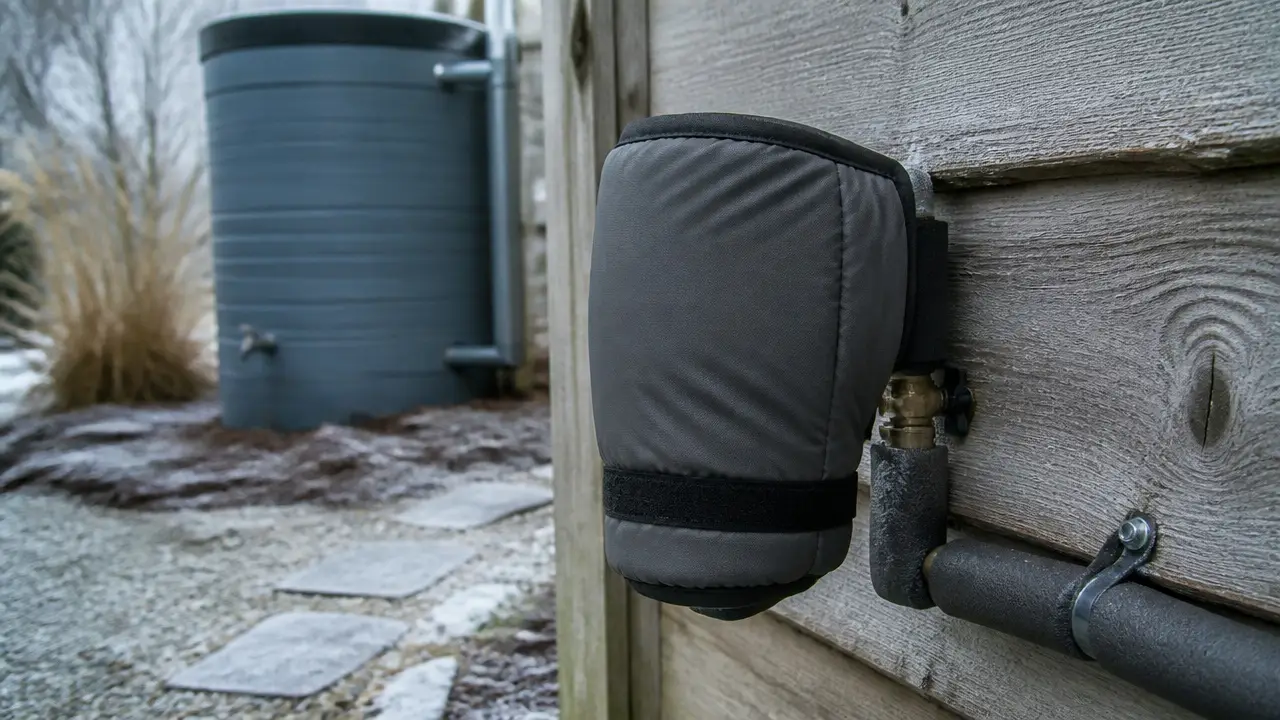
In freezing climates, future protection may require draining exposed equipment, providing suitable insulation, relocating components, or following the equipment manufacturer's winterizing instructions.
Sun-Damaged Plastic May Not Be Worth Repairing
UV exposure can gradually make some plastics brittle.
Signs include:
- Fading
- Chalky surfaces
- Numerous fine cracks
- Plastic that breaks when lightly flexed
- Cracks appearing in several areas
If one crack appears in otherwise flexible, sound plastic, repair may be reasonable.
If cracks are developing throughout the item, the material itself may be reaching the end of its useful life. Repairing one spot may simply move the failure somewhere else.
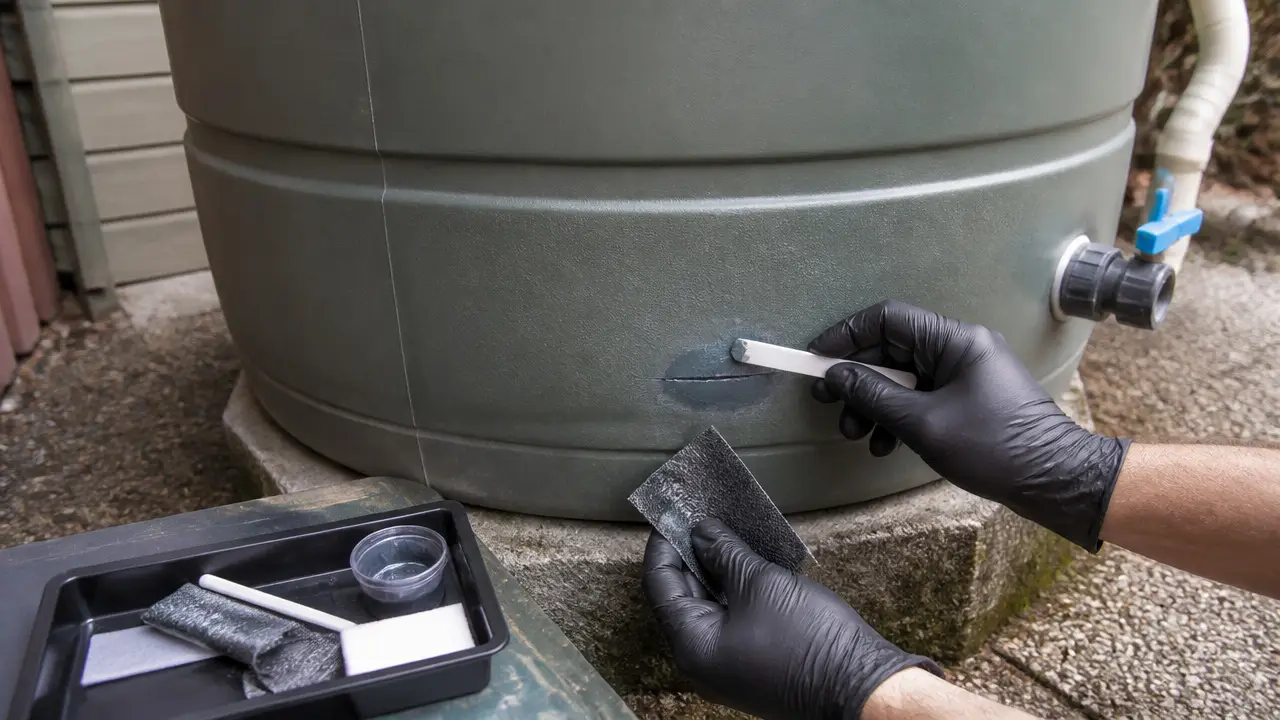
Small Rain-Barrel Cracks Are Usually Easier to Repair
A typical above-ground rain barrel is relatively forgiving because it holds less water than a large cistern.
Before repairing one:
- Drain it completely.
- Clean and dry the damaged area.
- Identify the plastic if possible.
- Inspect around the crack for additional damage.
- Choose a repair method compatible with that plastic.
- Remove any load that caused the crack.
- Test the barrel gradually before returning it to full service.
Do not immediately fill a newly repaired barrel to the top.
Adding water gradually lets you check whether the repair stretches, separates, or begins leaking as pressure increases.
Large Tanks Need More Caution
A large tank carries much greater loads.
Water weighs about 8.34 pounds per U.S. gallon. That means even a 500-gallon tank can hold more than 4,000 pounds of water, not including the tank itself.
The base must support that load evenly.
Cracks near these areas deserve special caution:
- Tank bottoms
- Lower sidewalls
- Molded seams
- Outlet connections
- Structural ribs
- Areas that have buckled or deformed
If a large tank wall has changed shape or the crack continues growing, replacing the tank or having it evaluated by a qualified repair specialist may be safer than relying on a surface patch.
A Flat, Stable Base Can Prevent Repeat Cracking
Some tank cracks are actually support problems.
A tank should rest on a base suitable for its design. Uneven support can allow the bottom or sidewall to flex differently as the water level changes.
Check for:
- Settled soil
- Sharp stones
- Sagging platforms
- Uneven blocks
- Unsupported tank edges
- Twisted IBC tote frames
Correcting the support problem may be just as important as repairing the plastic.
Large storage tanks also create substantial structural loads. Do not place them on decks, elevated platforms, or building structures unless those structures are designed to carry the expected weight.
When Replacement Is Better Than Repair
Replacement is usually the safer choice when:
- The plastic is brittle over a large area.
- Several cracks are appearing.
- A tank wall is badly distorted.
- A structural seam has failed.
- The crack is continuing to grow.
- A pressure-rated component is damaged.
- The repair cannot be inspected once installed.
- Failure could flood a building or damage property.
- The manufacturer advises replacing the damaged part.
- The intended water use makes the repair material unsuitable.
Small removable parts such as valves, connectors, filter housings, and fittings are often more sensible to replace than repair.
Test a Repaired Water Container Carefully
After repairing a non-pressurized barrel or tank, inspect it before putting it back into normal use.
Fill it in stages rather than all at once.
Watch the repaired area for:
- Moisture
- Stretching
- New cracks
- Bulging
- Separation of the patch
- Movement around fittings
Check again after the container has remained filled for a while.
Also inspect the support beneath the tank and any attached plumbing.
A leak-free test does not prove that a repair will last indefinitely. Include the repaired area in routine inspections.
Frequently Asked Questions
Can you permanently repair cracked plastic?
Sometimes. A properly made plastic weld or compatible repair can last a long time when the surrounding plastic is sound and the original cause of the crack has been corrected. A repair is less dependable when the plastic is brittle, distorted, or exposed to continuing stress.
Can a cracked plastic rain barrel be repaired?
Yes, many small cracks in rain barrels can be repaired. Plastic welding or another repair method compatible with the barrel material may work. Cracks around the bottom or outlet deserve closer inspection because these areas carry more water pressure.
For a water storage repair, patching a plastic water tank requires materials compatible with the specific plastic.
What is the best way to repair polyethylene?
Plastic welding is commonly used for structural repairs in polyethylene because many ordinary adhesives do not bond strongly to it. The filler material should be compatible with the original polyethylene.
Can epoxy fix a polyethylene water tank?
Many standard epoxies have difficulty bonding reliably to polyethylene. Some specialized systems are designed for low-surface-energy plastics, but compatibility must be confirmed before use. For structural tank damage, plastic welding may be more appropriate.
Is a repaired plastic tank safe for drinking water?
Not automatically. The repair material must be suitable for the intended water contact, and the entire rainwater system must also be suitable for potable use. Drinking-water systems require appropriate collection, treatment, maintenance, current laboratory testing, and compliance with applicable local requirements.
Why does a repaired plastic crack keep coming back?
The crack may still be under stress. Common causes include poor tank support, an unsupported fitting, rigid plumbing pulling on the wall, freezing, or brittle plastic. The underlying cause must be corrected along with the visible crack.
Should a cracked IBC tote be repaired?
Small damage may sometimes be repairable, but the location and condition of the tote matter. Cracks near the bottom, outlet, or badly stressed areas deserve caution because a full IBC tote holds a large amount of water. Replace the inner bottle if the damage is extensive, the plastic is brittle, or a dependable repair cannot be made.