4 Best Mosquito Control Products for Rain Barrels
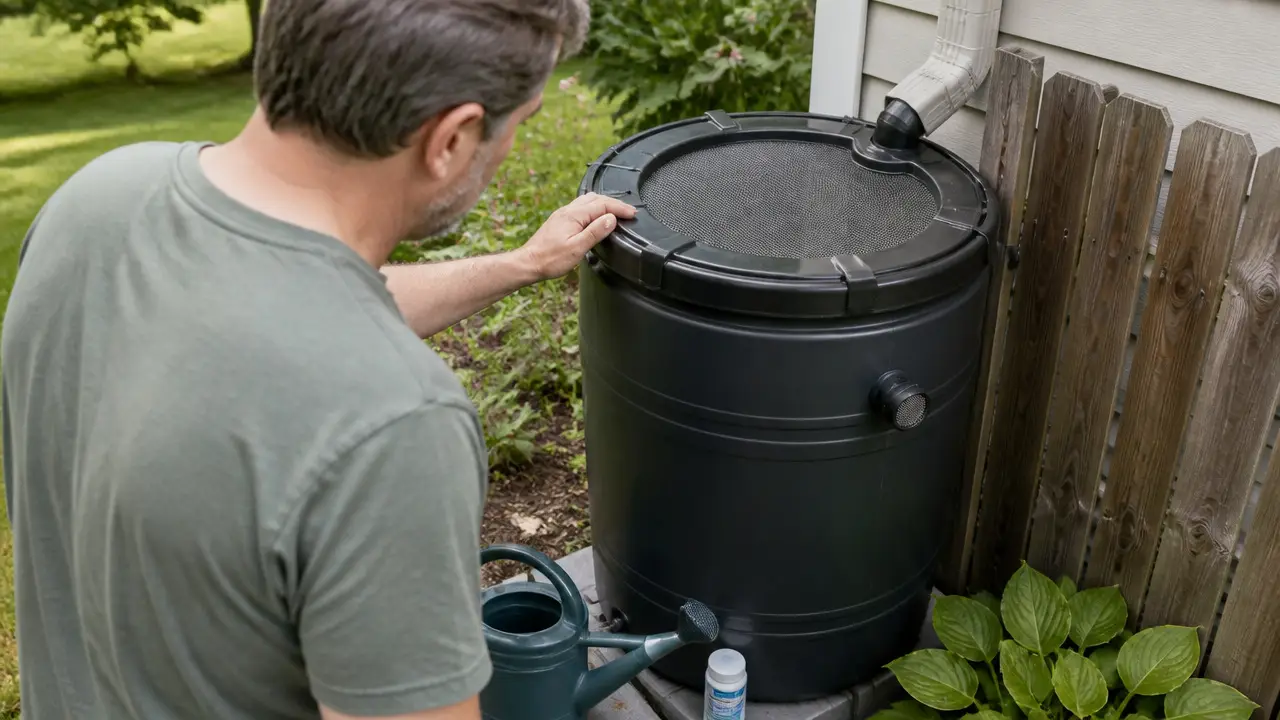
Compare mosquito control products for rain barrels by Bti form, treatment interval, dosing flexibility, and barrel setup while keeping prevention first.

System cleaning, stored-water care, mosquitoes, algae, and stagnation.
Compare mosquito control products for rain barrels by Bti form, treatment interval, dosing flexibility, and barrel setup while keeping prevention first.
Maintain a rainwater system by cleaning catchment surfaces, screens, first flush, tank, filters, pumps, controls, outlets, and overflow on a regular schedule.
Copper can inhibit some algae, but placing pipe in a trough gives uncertain dosing and may harm animals, plants, plumbing, or water quality. Use safer controls.
Adding vinegar to a rain barrel can alter pH and damage some materials without reliably sanitizing stored water. Learn safer cleaning and algae-control approaches.
Cracked plastic can sometimes be restored by welding, adhesive, or a patch, but resin type, load, water contact, damage, and access determine repairability.
Vinegar may damage algae on cleaned surfaces, but it is not a dependable long-term treatment for stored water. Learn how light, nutrients, and upkeep control growth.
Professionals clean water tanks by assessing hazards, isolating systems, draining or vacuuming sludge, washing surfaces, disinfecting when needed, and testing work.
Water-tank cleaning cost varies with capacity, access, sludge, water removal, confined-space controls, disinfection, repairs, travel, and local labor rates.
Clean a rain barrel by disconnecting inflow, draining safely, removing sediment, scrubbing surfaces, rinsing, checking fittings, and restoring screened use.
Use only a food-grade IBC with a verified safe history for drinking water, then follow approved cleaning, disinfection, rinsing, testing, and storage.