As an affiliate, we may earn a commission from qualifying purchases. We get commissions for purchases made through links on this website from Amazon and other third parties.
The best repair kit for cracked plastic is the one made for the exact plastic you are repairing. For many rain barrels, IBC totes, and molded water tanks made from polyethylene, a plastic-welding kit with matching polyethylene filler rod is often a better choice than a general-purpose epoxy or glue.
That does not mean every cracked tank should be welded. The crack location, tank size, water use, and cause of the damage all matter. A crack beside a fitting, along a molded seam, or near the bottom of a large tank may be under too much stress for a simple DIY repair.
Start by Identifying the Plastic
Do not choose a repair kit from the crack size alone. First find out what the container is made from.
Look for a recycling or material code molded into the tank, barrel, tote, pipe, or other part. Common materials include:
| Plastic | Common uses | Repair approach to consider |
|---|---|---|
| HDPE or PE | Rain barrels, IBC bottles, many water tanks | Plastic welding with compatible PE filler |
| PP | Some tanks, fittings, containers | Plastic welding with compatible PP filler |
| PVC | Pipe, fittings, some rigid containers | PVC-compatible repair or solvent-welding system |
| ABS | Pipe and rigid molded parts | ABS-compatible repair material |
| Unknown plastic | Older tanks or unmarked containers | Identify the material before choosing a kit |
HDPE means high-density polyethylene. It is one of the most common plastics used for molded water-storage tanks.
Polyethylene and polypropylene can be difficult to glue because they have low-surface-energy surfaces. In simple terms, many adhesives do not naturally grip them well. Adhesive makers therefore use special formulations or primers when bonding these plastics.
That is why a tube labeled simply "plastic epoxy" is not automatically a good repair for a polyethylene rain tank.
What Is the Best Repair Kit for an HDPE Water Tank?
For an ordinary, non-pressurized HDPE rain barrel or water tank, look for a plastic-welding setup that includes:
- A controllable plastic-welding tool intended for the job
- HDPE or PE filler rod that matches the tank material
- Basic surface-preparation tools
- Clear operating instructions for the plastic being repaired
- Replacement filler rod that is easy to obtain later
The filler rod matters. Melting an unrelated piece of plastic into the crack does not give you a known compatible repair.
The heating tool also matters. Plastic welding works by softening compatible materials so they join together. Too little heat can leave a weak bond. Too much heat can burn, distort, or weaken the surrounding plastic.
A hot-air plastic welder can offer more control than improvised methods such as a soldering iron. Whatever method you use, follow the equipment and tank manufacturer's instructions.
Never use an open flame to repair a plastic tank.
Why Plastic Welding Often Makes More Sense Than Epoxy
A molded polyethylene tank expands, flexes, and moves as it fills and empties. Temperature changes can also make the plastic move.
A rigid patch stuck over a flexible surface may eventually separate.
Plastic welding instead joins compatible thermoplastic materials. When done correctly on a suitable crack, the repair becomes part of the surrounding plastic rather than simply sitting on top of it.
This is especially useful for polyethylene and polypropylene, which are harder to bond with ordinary adhesives.
But welding cannot correct every problem. If the tank wall is brittle, badly UV-damaged, distorted, or repeatedly cracking, repairing one spot may only move the failure somewhere else.
When an Adhesive Repair Kit Can Work
An adhesive kit can still make sense when its manufacturer specifically lists your plastic and your application.
Check the label for the actual material, such as:
- HDPE
- PE or polyethylene
- PP or polypropylene
- PVC
- ABS
Do not assume that "works on plastic" includes all of these.
Some adhesive systems intended for polyethylene or polypropylene use special chemistry or a separate surface primer because these materials are unusually difficult to bond.
Also check whether the cured repair will tolerate:
- Continuous water contact
- Outdoor exposure
- Temperature changes
- Flexing of the container
- The expected water temperature
A repair compound that works on a rigid indoor plastic part may not be suitable for the side of a large outdoor cistern.
What About Repair Tape?
Waterproof repair tape can be useful as a temporary leak-control measure, but it should not usually be treated as the best permanent solution for a structural tank crack.
Water pressure pushes outward on the tank wall. A crack may also continue growing underneath the tape.
Tape is more reasonable for low-stress temporary repairs while you empty the tank or arrange a proper repair. It is less convincing as a permanent fix for a large tank that repeatedly fills with hundreds of gallons of water.
Crack Location Matters as Much as Crack Size
Before buying a kit, look at where the damage occurred.
A small crack high on a rain barrel
This is usually a relatively low-stress repair. A compatible plastic-weld repair may be practical if the surrounding plastic is still healthy.
A crack near the bottom
Be more cautious. The lower wall carries greater water pressure when the tank is full.
A repair that stays dry during a quick test can still fail once the tank has been filled for some time.
A crack around a bulkhead fitting
A bulkhead fitting is the fitting that passes through the wall of a tank and creates a sealed connection for a pipe, valve, or hose.
Cracks around these fittings often indicate mechanical stress rather than simple surface damage.
The fitting may be overtightened, misaligned, unsupported, or pulling sideways on the tank wall. Repairing the crack without fixing that problem may cause it to return.
A crack along a molded seam
Treat seam failures cautiously. They can involve the original structure of the tank rather than isolated impact damage.
For a large cistern, replacing the tank or having the manufacturer or a qualified plastic-repair professional assess it may be safer than experimenting with a DIY kit.
Consider Why the Plastic Cracked
A good repair is not only about sealing the opening. You also need to keep the cause from damaging the tank again.
Common causes include:
- Impact damage
- A fitting that was overtightened
- Unsupported pipe pulling on a fitting
- Tank movement on an uneven base
- Freezing water
- Long-term sunlight and weather exposure
- Age-related brittleness
- Tank deformation from poor support
For example, welding a freeze crack and then leaving the tank full through another hard freeze does not solve the underlying problem.
Likewise, repairing a crack beside a valve will not last reliably if a heavy hose continues to pull sideways on that valve.
How to Repair a Suitable Plastic Tank Crack
The exact procedure depends on the tank and repair system, so follow the instructions supplied with both whenever possible.
A typical repair starts like this.
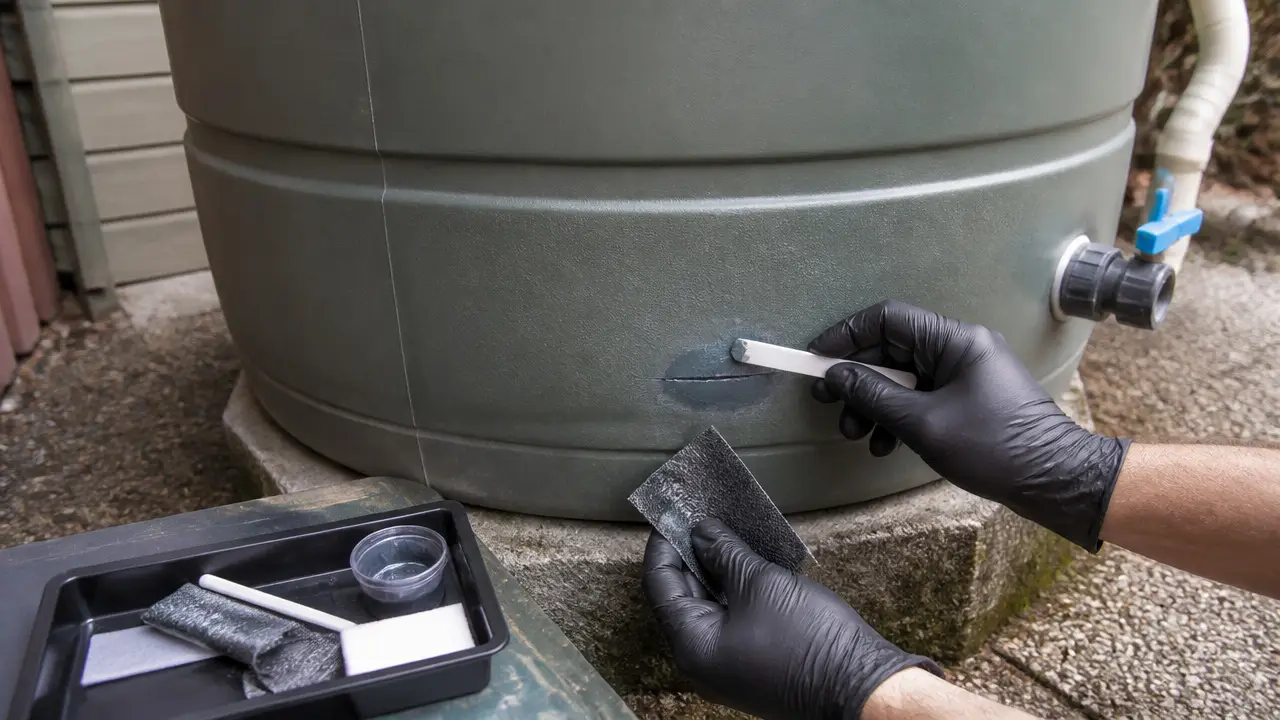
1. Empty the tank
Do not try to weld a tank while water is pressing against the repair area.
Relieve any pressure and disconnect pumps or other equipment as needed.
2. Clean and dry the area
Dirt, algae, oil, old sealant, and moisture can interfere with a repair.
For epoxy suited to cracked-plastic repair, first evaluate the decision’s effect on the full rainwater path.
Use cleaning methods that will not damage the plastic. Allow the repair area to dry completely.
3. Confirm the plastic type
Check markings on the tank before selecting filler rod, adhesive, or another repair material.
If you cannot identify the plastic, do not guess simply because two materials look similar.
4. Inspect beyond the visible crack
Look for:
- Several nearby cracks
- Brittle plastic
- Deep scratches
- Distortion
- Stress around fittings
- A damaged tank base
Widespread damage may make replacement more sensible than repair.
5. Follow the repair system's preparation instructions
Some methods require cleaning or shaping of the damaged area. Adhesive systems may require sanding, primers, or other preparation.
Plastic-welding procedures depend on the material, equipment, and wall thickness.
Do not improvise heating temperatures or use an open flame.
6. Let the repair cool or cure fully
Do not refill the tank immediately unless the repair instructions specifically allow it.
Adhesives may need substantial curing time. Welded material also needs to cool before being loaded.
7. Test gradually
For a non-pressurized rainwater tank, add a modest amount of water first and inspect the repair.
Then increase the water level in stages while watching for:
- Dampness
- Crack growth
- Wall distortion
- Movement around nearby fittings
Do not stand where a sudden tank-wall failure could release a large volume of water toward you.
Repairs to IBC Totes Need Extra Care
An IBC tote normally has a plastic inner bottle supported by an outer metal cage.
The bottle is commonly polyethylene, but confirm the markings on your specific container.
A small upper-wall crack and damage around the lower outlet are very different repair situations. The bottom portion of a full tote carries substantial water load.
Also consider the tote's previous contents. Do not cut, grind, heat, or weld a container that held unknown, flammable, hazardous, or incompatible chemicals.
For rainwater use, the original history of a reused tote matters even when the crack itself is repairable.
Repairs in Freezing Climates
Frozen water expands and can split barrels, tanks, valves, fittings, and pipe connections.
If freezing caused the crack, repairing it is only half the job.
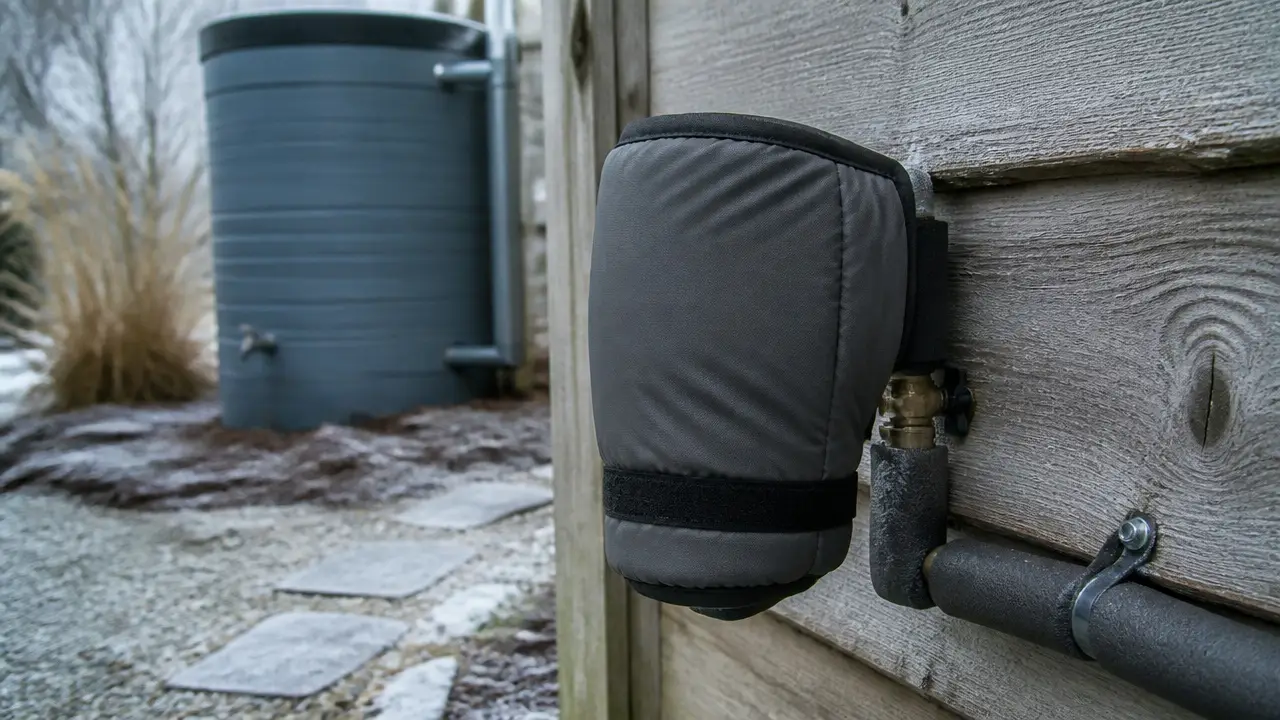
Depending on the system and climate, freeze protection may involve draining exposed components, providing appropriate winter storage, protecting vulnerable plumbing, or following the tank manufacturer's cold-weather guidance.
Do not assume that an adhesive or weld makes a previously freeze-damaged tank safe to leave full through another winter.
Be More Conservative With Drinking-Water Tanks
Potable means intended for drinking or other uses that require drinking-water-quality materials.
If a tank stores potable water, do not use a repair product merely because it is waterproof.
Materials that contact drinking water need to be suitable for that use. NSF explains that NSF/ANSI/CAN 61 addresses health effects from materials and components in contact with drinking water, while other standards may address product performance.
Check the repair product's certification and its exact approved application rather than assuming that certification of one product in a line covers another. NSF listings can include limits on where and how a certified repair material may be used.
For a potable tank, it is sensible to check with the tank manufacturer before repairing a structural crack.
Also remember that repairing a potable-water tank does not establish that the water itself is safe to drink. Drinking-water safety depends on the complete collection, storage, treatment, maintenance, and testing system.
When Replacement Is Better Than a Repair Kit
A DIY kit is not always the sensible option.
Consider replacing the tank or getting professional advice when:
- Several cracks are appearing
- The plastic has become brittle
- A large section of wall is distorted
- A crack is spreading from a major fitting
- A molded seam is failing
- The tank has suffered major freeze damage
- The tank carries a large volume above occupied or valuable areas
- The tank is part of a pressurized system
- The previous tank contents make heating or cutting unsafe
- The manufacturer does not approve structural field repairs
- A potable-water repair cannot be made with suitable materials
A patch can stop a leak without restoring the original strength of the container. That distinction becomes increasingly important as tank size and stored-water volume increase.
Choosing the Best Kit
For most rainwater applications, choose the repair method in this order:
- Identify the plastic.
- Find the cause of the crack.
- Check whether the damaged location is suitable for repair.
- Choose a repair system explicitly compatible with that plastic.
- For HDPE and PP tanks, consider matching-material plastic welding before relying on ordinary glue.
- For potable systems, verify drinking-water suitability for the exact repair product and use.
- Replace or professionally assess badly damaged or high-risk tanks.
The words "plastic repair kit" on the package are much less important than material compatibility.
Frequently Asked Questions
Can you repair a cracked plastic water tank?
Often, yes. Small localized cracks in otherwise sound, non-pressurized plastic tanks may be repairable. The correct method depends on the plastic, crack location, tank condition, and intended water use. Major seam, fitting, bottom-wall, or widespread damage may justify replacement instead.
What is the best way to repair an HDPE tank?
Plastic welding with compatible polyethylene filler material is often a practical choice for repairable HDPE tank cracks. Ordinary adhesives can have trouble bonding polyethylene, so any adhesive alternative should specifically state that it works with HDPE or PE.
Will epoxy stick to a polyethylene water tank?
Some specialized adhesive systems can bond polyethylene, but many ordinary epoxies do not bond it reliably. Check that the manufacturer specifically lists PE or HDPE and that the product suits continuous water exposure and the intended use.
Can I use a soldering iron to repair a rain barrel?
Melting plastic with a soldering iron may produce an uneven or overheated repair. A suitable plastic-welding tool that provides controlled heating and uses compatible filler material is generally a more appropriate approach. Do not use an open flame.
Can waterproof tape permanently fix a cracked rain barrel?
Tape may temporarily slow a leak, especially in a low-stress area, but it does not necessarily repair the structural crack underneath. A compatible weld or other permanent repair method is usually a better choice when the container will continue holding significant amounts of water.
Is it safe to repair a drinking-water tank with plastic epoxy?
Only use repair materials whose suitability and certification cover the exact drinking-water application. Being waterproof does not by itself make an epoxy suitable for potable-water contact. Check the product documentation and tank manufacturer's guidance.
Should I repair a crack around a tank outlet?
Inspect it carefully first. A crack around an outlet or bulkhead fitting can be caused by overtightening, unsupported plumbing, or sideways force. The cause must be corrected as well as the crack. Serious damage around a heavily loaded lower fitting may require professional assessment or tank replacement.