As an affiliate, we may earn a commission from qualifying purchases. We get commissions for purchases made through links on this website from Amazon and other third parties.
The most common water leak in a house is a leaking toilet, often caused by a worn or poorly sealing toilet flapper. The flapper is the rubber or plastic seal inside the tank that opens when you flush.
Toilet leaks are easy to miss because the water usually runs from the tank into the bowl instead of onto the floor. The U.S. Environmental Protection Agency says toilets are often the source of household leaks, and most toilet leaks are caused by old or worn flappers.
Why Toilet Leaks Are So Common
A toilet tank has several moving parts that operate every time the toilet is flushed. The flapper is one of the parts most likely to wear out.
When the toilet finishes filling, the flapper should make a watertight seal over the flush valve. If it does not, water slowly escapes from the tank into the bowl.
The fill valve then adds more water to replace what was lost. This cycle may happen all day without leaving a visible puddle.
Common causes include:
- A worn or hardened flapper
- Mineral buildup on the flapper or valve seat
- A flapper that does not fit the flush valve correctly
- A chain that is too short and holds the flapper slightly open
- A fill valve that is adjusted incorrectly
- A damaged flush valve seal
You may hear the toilet refill every few minutes. With a smaller leak, you may hear nothing at all.
How to Check a Toilet for a Leak
A simple dye test can find many silent toilet leaks.
- Remove the toilet tank lid.
- Add a few drops of food coloring to the tank water.
- Do not flush the toilet.
- Wait about 10 minutes.
- Look at the water in the toilet bowl.
If colored water appears in the bowl, water is leaking from the tank.
Flush the toilet after the test so the coloring does not remain in the tank. This is also the test recommended by EPA WaterSense for checking for toilet leaks.
Check the flapper first
If the dye reaches the bowl, look at the flapper.
It should:
- Sit flat over the flush valve
- Close completely after each flush
- Feel flexible rather than stiff or brittle
- Match the size and design of the toilet's flush valve
A replacement flapper must fit the toilet correctly. A part that looks close enough may still leak if its shape or size is wrong.
Some newer toilets use different flush-valve seals instead of a traditional flapper. Check the toilet design before buying replacement parts.
How to Tell If Your House Has Another Hidden Leak
If you suspect a leak but cannot find it, your water meter can help.
First, turn off faucets and make sure toilets, washing machines, dishwashers, irrigation systems, and other water-using equipment are not running.
Check the meter reading. Wait while no water is used, then check it again.
If the meter continues to register water use, there may be a leak somewhere in the system. EPA WaterSense suggests comparing meter readings before and after a two-hour period with no water use.
A meter test tells you that water is moving. It does not tell you where the leak is.
If your home uses a private well or rainwater pump instead of a utility meter, frequent pump cycling when no fixtures are running can also point to a leak or pressure-system problem. Pump cycling can have other causes, so it should not be treated as proof of a plumbing leak.
Other Common Water Leaks in a House
Toilets are not the only places worth checking. EPA WaterSense also lists dripping faucets, leaking valves, and poor plumbing connections among common household leaks.
| Leak location | Common sign | Possible cause |
|---|---|---|
| Toilet | Tank refills by itself | Worn flapper or flush-valve seal |
| Faucet | Drip from spout | Worn cartridge, washer, or seal |
| Under sink | Damp cabinet | Loose fitting, drain leak, or supply connection |
| Showerhead | Dripping after use | Loose connection or worn valve |
| Appliance hose | Water around washer or dishwasher | Damaged hose or connection |
| Water heater | Water around unit | Valve, fitting, tank, or plumbing problem |
| Outdoor faucet | Dripping or wet wall | Worn valve or damaged connection |
| Irrigation system | Wet areas or unexpected water use | Broken fitting, valve, or pipe |
A visible drip is usually easier to find than a toilet leak. However, leaks inside walls, ceilings, floors, and underground pipes can cause more property damage before they are discovered.
Signs of a Hidden Plumbing Leak
Watch for changes that do not have an obvious explanation.
Possible warning signs include:
- Water meter movement when everything is off
- A sudden increase in water use
- A toilet that periodically refills
- Damp spots inside cabinets
- Water stains on ceilings or walls
- Peeling paint or swollen drywall
- Flooring that becomes damp or distorted
- Persistent musty odors
- Unexplained wet areas outdoors
- A pump that starts when no water is being used
These signs do not always prove that a pipe is leaking. Condensation, roof leaks, drainage problems, appliance leaks, and groundwater can produce similar symptoms.
The location of the moisture matters.
Faucet Leaks Are Common but Easier to Notice
A dripping faucet is one of the best-known household leaks because you can usually see or hear it.
The problem is often inside the faucet rather than in the supply pipe. Depending on the faucet design, the worn part may be a washer, cartridge, O-ring, or valve seat.
Before taking a faucet apart, shut off its water supply.
Replacement parts must match the faucet. Mixing similar-looking cartridges or seals can result in another leak.
Water appearing beneath a sink also deserves a closer look. It might come from the faucet supply lines, shutoff valves, drain fittings, garbage disposal, dishwasher connection, or water running across the countertop.
Dry the area first, then watch where fresh water appears.
Pay More Attention to Supply-Line Leaks
Explore a suitable DIY leak detection method to evaluate the connection between this choice and system operation.
A toilet flapper may be the more common problem, but a leaking pressurized supply pipe can be much more urgent.
A supply pipe is normally under pressure whenever the water system is on. If it splits or a fitting comes apart, it may release water continuously.
Treat active leaks near these areas seriously:
- Ceilings
- Electrical equipment
- Water heaters
- Washing-machine hoses
- Dishwasher connections
- Refrigerator water lines
- Pipes inside walls
- Main water-service lines
If water is spreading quickly, shut off the appropriate water supply if you can do so safely.
Do not handle electrical equipment while standing in water or when water is reaching outlets, wiring, panels, or powered appliances. Shut power off only from a safe, dry location when appropriate, or call qualified help.
When a Leak Is a Reasonable DIY Repair
Some leaks are simple enough for many homeowners to handle.
Examples include:
- Replacing a compatible toilet flapper
- Adjusting a toilet chain
- Tightening an accessible loose connection
- Replacing a simple faucet washer or cartridge
- Replacing an accessible hose that is designed for homeowner replacement
The important part is identifying the actual source before replacing parts.
A wet fitting does not always mean that fitting is leaking. Water can travel along a pipe from a leak higher up.
After any repair, dry the area and check it again while the fixture is operating.
When to Call a Plumber
Professional help makes sense when the leak involves:
- Pipes inside a wall or ceiling
- A buried water line
- Repeated unexplained meter movement
- Major corrosion
- A water heater tank
- A failed main shutoff valve
- Significant water damage
- Plumbing that must be cut or rerouted
- A leak you cannot positively locate
- Repeated leaks from the same area
A plumber can also pressure-test sections of the plumbing when visual checks do not reveal the problem.
If a leak has soaked walls, insulation, ceilings, or flooring, fixing the plumbing is only part of the job. Wet building materials may also need proper drying and damage assessment.
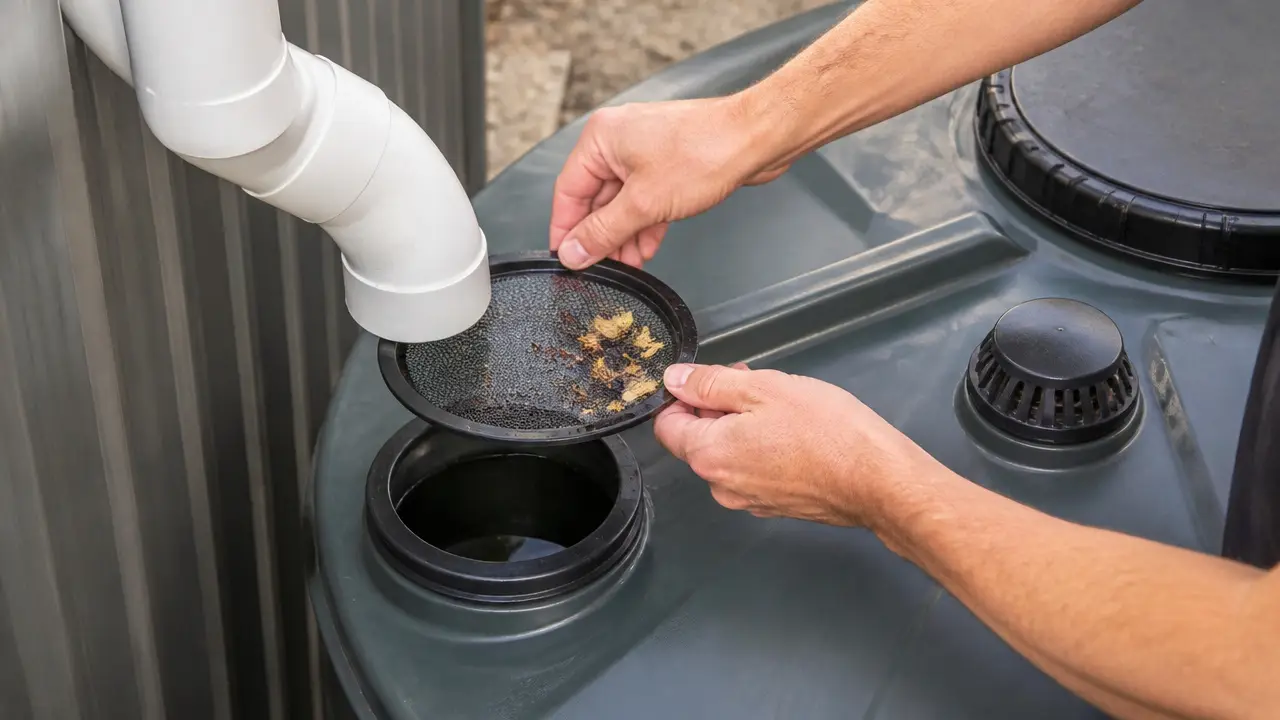
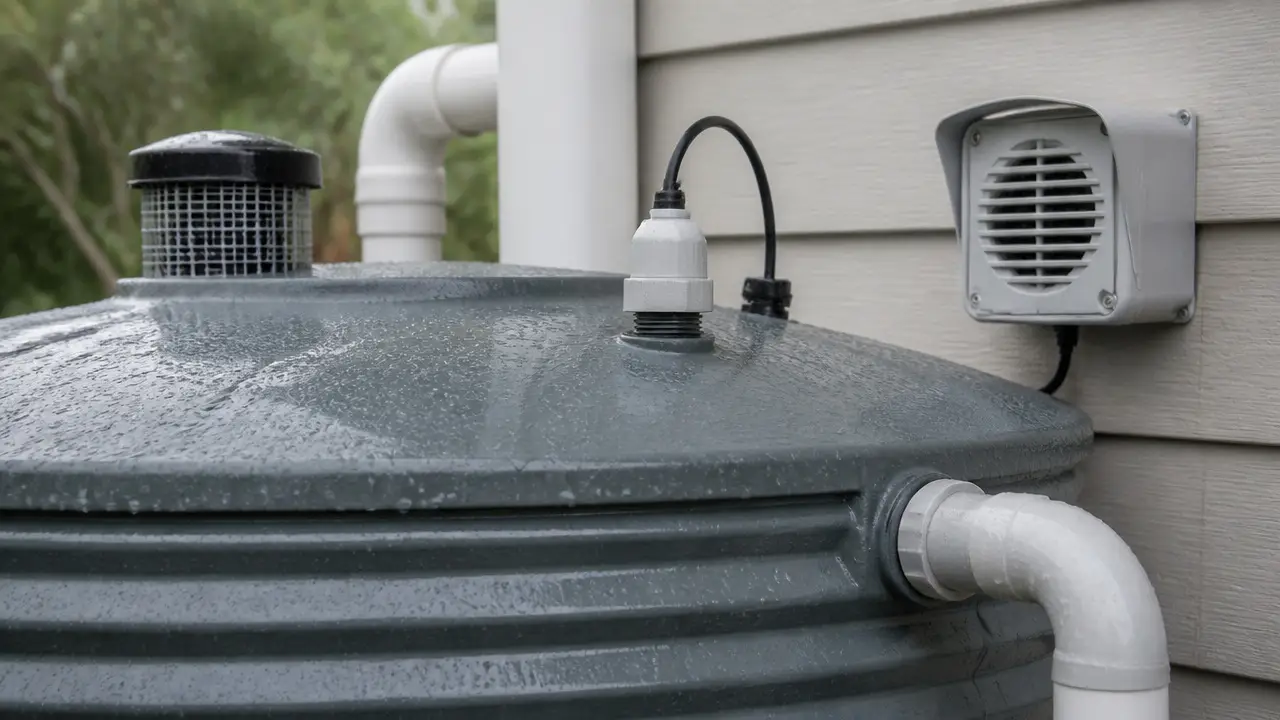
What About Houses That Use Rainwater?
A household supplied partly or fully by stored rainwater can have the same fixture leaks as a home connected to municipal water.
A leaking toilet can be especially noticeable in a rainwater system because it continuously drains stored water from the tank. It may also cause a pressure pump to cycle more often.
If stored water seems to disappear faster than expected, check both sides of the system:
- The storage tank and fittings
- Pump and pressure-system connections
- Buried or exposed supply lines
- Toilets
- Faucets
- Appliances
- Irrigation valves and lines
Do not assume the tank itself is leaking until the plumbing downstream has been checked.
Start With the Toilet
If you are trying to find the most likely household leak, check the toilets first.
A worn toilet flapper can leak quietly for a long time without producing a puddle. A simple dye test can often find the problem in minutes.
If the toilets pass the test, check faucets, accessible plumbing connections, appliance hoses, and your water meter next. If water is still moving when everything should be off, the problem may be hidden and worth having professionally located.
Frequently Asked Questions
What is the most common water leak in a house?
A leaking toilet is one of the most common household water leaks. The usual cause is an old or worn toilet flapper that allows water to pass from the tank into the bowl.
How do I know if my toilet is leaking?
Put a few drops of food coloring in the toilet tank without flushing. If colored water appears in the bowl within about 10 minutes, the tank is leaking into the bowl.
Can a toilet leak without making noise?
Yes. A small flapper leak can be almost silent. The toilet may only refill occasionally, making the problem easy to miss.
How can I check my whole house for a water leak?
Stop all water use and watch your water meter. If the meter continues to register water use, there may be a leak somewhere in the plumbing system.
What is the most dangerous type of household water leak?
A pressurized pipe leak can cause serious damage because water may continue flowing until the supply is shut off. Leaks near electrical equipment also require extra caution.
Why does my toilet refill when nobody has used it?
Water may be slowly leaking from the tank into the bowl. A worn flapper, damaged flush-valve seal, or incorrect fill-valve adjustment are common causes.
Can a water leak cause a rainwater pump to keep turning on?
Yes. A plumbing leak downstream of the pump can reduce system pressure and cause the pump to cycle. Pump cycling can also result from pressure-tank, check-valve, or control problems, so inspect the full system before assuming there is a leak.