As an affiliate, we may earn a commission from qualifying purchases. We get commissions for purchases made through links on this website from Amazon and other third parties.
In most homes, toilets use more indoor water than any other single fixture. The U.S. EPA says toilets account for nearly 30% of the average home's indoor water use. Showers, faucets, and clothes washers are also major users.
The answer changes when you count water used outside. Lawn and garden irrigation can become the largest water use on the whole property, especially during hot or dry weather. Across the United States, outdoor use averages about 30% of household water use, but it can be much higher in dry climates.
What Uses the Most Water Indoors?
Bathrooms usually account for the largest share of indoor household water use. Toilets are the biggest single part of that total.
A typical home's major indoor uses include:
| Water use | Typical importance |
|---|---|
| Toilets | Usually the largest single indoor use |
| Showers | One of the largest regular uses |
| Faucets | Frequent small uses add up |
| Clothes washers | Can use a large amount over many loads |
| Leaks | Can quietly become a major source of waste |
| Dishwashers | Usually smaller than toilets, showers, or laundry |
Your household may be different. The number of people in the home, fixture age, shower length, laundry habits, and leaks all affect the total.
Toilets Are Usually the Biggest Indoor Water User
A toilet uses water every time it is flushed. In a home with several people, those flushes add up quickly.
EPA WaterSense says toilets account for nearly 30% of average indoor residential water consumption.
Older toilets may also use much more water per flush than newer models. Current federal standards and high-efficiency models have reduced toilet water use, so the toilet's share may be lower in a home with newer fixtures.
A leaking toilet can change the numbers even more.
A worn flapper or faulty fill valve may allow water to move from the tank into the bowl all day. The leak may be quiet enough that you do not notice it.
If your water use suddenly rises without a clear reason, checking the toilets is a sensible first step.
Showers Are Another Major Water Use
Showers are one of the largest indoor uses after toilets. EPA estimates that showering accounts for nearly 17% of residential indoor water use.
The amount depends mainly on two things:
Flow rate is how much water comes from the showerhead during a certain amount of time. It is often measured in gallons per minute, or GPM.
The other factor is shower length.
For example, a showerhead running at 2 gallons per minute for 10 minutes uses about:
2 gallons per minute × 10 minutes = 20 gallons
A longer shower or higher-flow showerhead uses more.
This also means reducing shower time can lower both water use and the energy needed to heat that water.
Faucets Add Up Throughout the Day
A single faucet use may seem small. But kitchen and bathroom faucets are used many times each day.
Water is used for:
- Washing hands
- Brushing teeth
- Shaving
- Washing dishes
- Rinsing food
- Cleaning
- Filling containers
The important factor is not only faucet flow. It is also how long the faucet stays open.
A slow drip should not be ignored either. Several small leaks around a house can add up over weeks and months.
Clothes Washers Can Use a Large Amount
Laundry is another important part of household water use.
The amount depends on the washer, cycle, load size, and how often the household does laundry.
Older machines may use considerably more water than newer efficient machines. Running partial loads frequently can also increase water use per item of clothing.
When the washer allows it, combining laundry into full loads is usually more efficient than washing several small loads.
Extra rinses and pre-wash cycles also increase water use.
Leaks Can Become One of the Largest Water Users
A leak is different from normal household use because the water provides no benefit.
Common sources include:
- Running toilets
- Dripping faucets
- Leaking hose connections
- Damaged irrigation lines
- Faulty appliance connections
- Underground plumbing leaks
Undetected leaks can waste thousands of gallons over time.
One simple check is to stop all intentional water use and look at the water meter. Check it again after a period when nobody has used water. A changing reading may indicate a leak. EPA also recommends watching water bills for unexplained increases.
Some meters have small flow indicators that make continuous leaks easier to spot.
Outdoor Watering May Use More Than Anything Indoors
If "household water use" includes the yard, the answer can change completely.
Landscape irrigation is a major water user in many homes.
Nationally, about 30% of residential water use occurs outdoors. During hot weather or in dry areas, outdoor use can reach a much larger share of a household's total.
Large water users can include:
- Lawn sprinklers
- Garden irrigation
- Trees and landscaping
- Pools
- Outdoor cleaning
- Hose use
A sprinkler system may move hundreds of gallons during a watering session because it covers a large area for a long time.
Poorly adjusted irrigation can also lose water through runoff, wind, evaporation, broken heads, or watering areas that do not need it.
Why Outdoor Use Matters for Rainwater Harvesting
Outdoor demand is often one of the most practical places to use collected rainwater.
Garden irrigation generally does not require the same treatment system that would be needed if rainwater were being considered for drinking. Even so, the water should be collected, stored, and distributed in a way that suits the intended use.
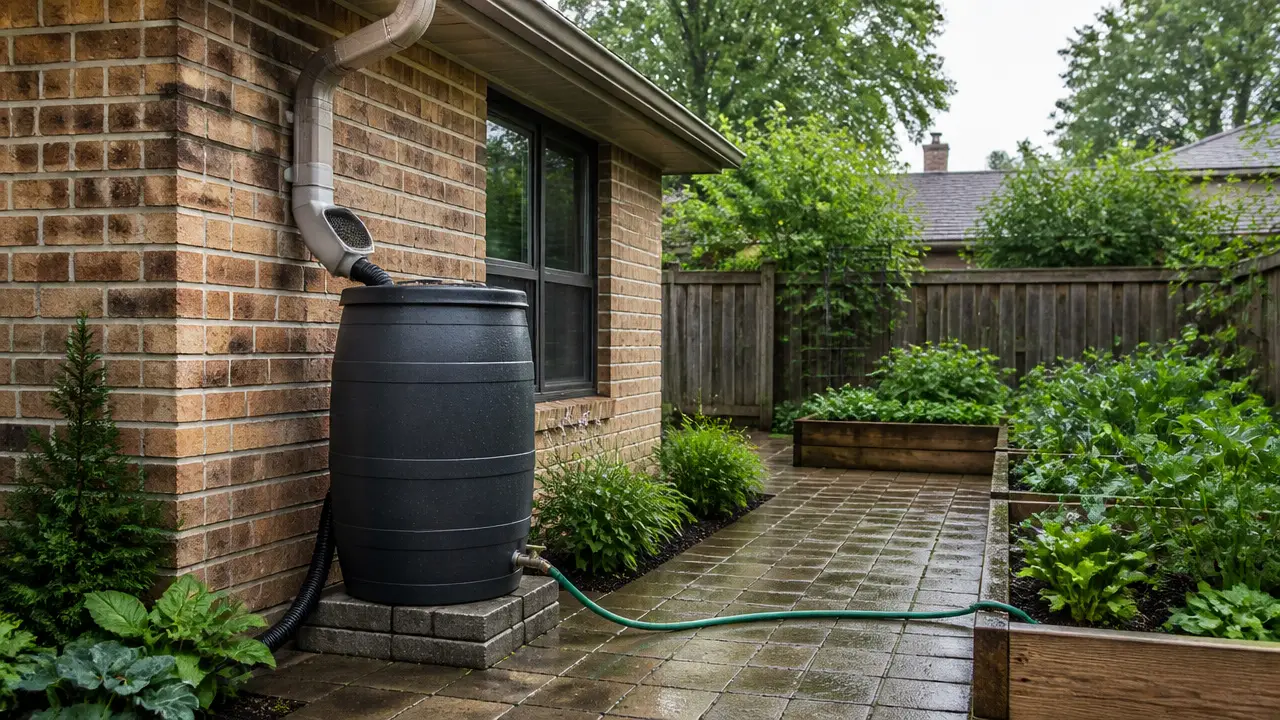
For example, a rain barrel may supply a small garden bed. A larger cistern may support drip irrigation or other landscape watering.
Reviewing daily water demand for a two-person household helps understand airflow and overflow provisions around the storage vessel.
The useful storage size depends on:
- Roof collection area
- Local rainfall
- Storage capacity
- Garden water demand
- Dry periods between storms
- Available pump or gravity flow
A large tank does not create more water. It only stores what the roof and rainfall can supply.
Rainwater used for irrigation is generally considered non-potable water, meaning water that is not intended for drinking.
Using collected rainwater for toilet flushing, laundry, or other indoor purposes is more complex. Plumbing must prevent rainwater from entering the drinking-water system. Treatment requirements and permitted uses also vary by location, so local plumbing and health requirements should be checked before connecting rainwater to household plumbing.
How to Find What Uses the Most Water in Your House
National averages are useful, but your own water use matters more.
Start with your water bill or meter.
Check Your Monthly Use
Look at several months rather than one bill.
A large summer increase often points toward irrigation, pools, or other outdoor use.
Consistently high use throughout the year may point toward indoor habits, older fixtures, or leaks.
Check for Continuous Flow
Turn off faucets, washing machines, dishwashers, irrigation, and other known water users.
Then check the meter.
If water continues to register when nothing should be running, look for a leak.
Check Toilets
Listen for toilets that refill when nobody has flushed them.
A toilet that regularly turns itself on may be losing water through the tank.
Look at Irrigation Separately
If possible, estimate how often each irrigation zone runs and how long it operates.
Outdoor watering can easily hide the savings made by reducing small indoor uses.
Pay Attention to Repeated Uses
Frequency matters.
One short faucet use does not consume much water. But dozens of faucet uses every day can become significant.
The same applies to flushing, showering, and laundry.
Where Water-Saving Efforts Usually Matter Most
Start with the largest uses rather than worrying about every small amount of water.
A practical order is often:
- Find and repair leaks.
- Check toilets for unnecessary water loss.
- Review lawn and garden irrigation.
- Look at shower flow and shower length.
- Run efficient laundry loads.
- Reduce unnecessary faucet running.
For homes with large irrigated landscapes, outdoor watering may deserve attention before anything indoors.
For homes without irrigation, toilets, showers, faucets, laundry, and leaks are usually the more useful places to investigate.
How Rainwater Can Reduce Household Water Demand
If you are planning a rainwater system, it helps to match the stored water to a large and suitable demand.
Garden watering is often a straightforward place to start.
Instead of trying to supply every household use, you might collect roof runoff for:
- Garden irrigation
- Landscape watering
- Other suitable outdoor non-potable uses
This can reduce demand on your normal water supply when rainfall and storage are available.
Do not assume that roof runoff is automatically safe for drinking. Drinking-water use requires a suitable collection system, treatment designed for the actual water quality, ongoing maintenance, current laboratory testing, and compliance with applicable local requirements.
Frequently Asked Questions
What uses the most water inside a house?
Toilets are usually the largest single indoor water use. The bathroom as a whole accounts for more than half of indoor household water use in the average U.S. home. Showers and faucets are also major users.
Does a shower or toilet use more water?
Across an average household, toilets generally use more total indoor water than showers. A particular household could be different if people take long showers or have very efficient toilets.
Does a washing machine use a lot of water?
It can. Laundry is one of the larger indoor uses, especially in a household that runs many loads. Washer design, cycle selection, and load size all affect the amount used.
What wastes the most water in a home?
Leaks can waste a very large amount because they may continue day and night. Toilets, irrigation systems, faucets, pipes, and appliance connections are common places to check.
Does watering the lawn use more water than a shower?
It can use far more. Irrigation covers a large area and may run for many minutes at a high total flow rate. In dry climates or during summer, outdoor water use can make up most of a household's total water consumption.
Where should I start if I want to reduce water use?
Start by checking for leaks and reviewing the largest regular uses. Toilets, irrigation, showers, and laundry are usually more important than very small occasional uses.
Can rainwater replace some household water use?
Yes, for suitable uses. Garden and landscape irrigation are common examples. Indoor uses require more planning because the rainwater system must remain properly separated from drinking-water plumbing and comply with local requirements.