As an affiliate, we may earn a commission from qualifying purchases. We get commissions for purchases made through links on this website from Amazon and other third parties.
A flow meter should be installed in a section of pipe where the water flow is steady, the pipe stays full, and the meter can be reached for reading and maintenance. In most rainwater systems, this means placing it on a straight run of pipe after major debris filtration and before the equipment or water-use point you want to measure.
The exact location also depends on what you want the meter to tell you.
Choose the Location Based on What You Want to Measure
A flow meter measures how much water is moving through a pipe. Some meters show the current flow rate, such as gallons per minute, while others also total the amount of water used over time.
Place the meter so all the water you want to measure must pass through it.
Installation location should be decided together with selecting the right water flow meter for the expected pipe size and flow range.
For example:
- To measure total water leaving a rainwater tank, install the meter on the tank's main outlet line.
- To measure irrigation use, put it on the irrigation supply line before that line splits into separate zones.
- To measure one irrigation zone, install it only on that zone's branch.
- To monitor pump output, place it on the pump's discharge side where conditions meet the meter manufacturer's requirements.
- To track household rainwater use, install it on the rainwater supply line before individual fixtures or branches.
Installing the meter farther upstream gives you a broader total. Installing it farther downstream lets you measure a specific use.
Install the Meter Where the Pipe Stays Full
Many common flow meters need a completely full pipe to measure correctly.
Avoid locations where air can collect or where water only partially fills the pipe. This can happen near high points, poorly designed gravity lines, or pipes that drain between uses.
A full pipe is especially important with electronic meters that calculate flow from water movement inside the pipe.
If you are measuring a gravity-fed rain barrel or tank outlet, check that the meter is designed for the low pressure and low flow available. A meter made for a pressurized household line may not perform well on a slow gravity-fed system.
Use a Straight Section of Pipe
Flow can become turbulent after elbows, tees, valves, pumps, reducers, and other fittings. Turbulence can reduce meter accuracy.
Whenever possible, install the flow meter in a straight section of pipe with some straight pipe before and after it.
Do not assume there is one correct straight-pipe distance for every meter. Required spacing depends on the meter design, pipe size, nearby fittings, and manufacturer instructions.
Some meters are much more sensitive to disturbed flow than others.
If you are planning a new system, leave enough open pipe around the meter so you can meet its installation requirements without rebuilding the plumbing later.
Put the Meter After Basic Debris Filtration
In a rainwater system, it is usually better to keep leaves, insects, grit, and tank sediment away from the flow meter.
Roof runoff may carry debris even when the water looks clear. Small particles can interfere with moving parts or accumulate inside some meters.
A typical arrangement might look like:
Rainwater tank → coarse filter or suitable prefilter → pump → flow meter → irrigation or other use
That order is only an example. Pump type, filtration needs, meter design, and intended water use can change the correct layout.
A meter with a small internal passage may need cleaner water than a meter designed for dirty irrigation water.
Always check the meter's allowable particle size and filtration requirements.
Should a Flow Meter Go Before or After a Pump?
For many pressurized rainwater systems, installing the flow meter on the discharge side of the pump is the more practical choice.
The discharge side is the pipe carrying water away from the pump.
This location often provides:
- A full pipe
- Positive water pressure
- Easier measurement of delivered water
- Less risk of interfering with pump suction
Putting unnecessary restrictions on a pump's suction line can cause problems. Pumps generally work best when the suction path is short, adequately sized, and as unrestricted as practical.
Some specialized systems do use meters on suction lines, but you should not add one there unless the meter and pump setup are designed for it.
Do Not Install It Right Against the Pump
A pump can create uneven or swirling flow immediately downstream.
A meter installed directly against the pump outlet may therefore give less reliable readings with some meter designs.
Use the straight-pipe spacing specified for your meter. An elbow, check valve, pressure tank connection, or reducer between the pump and meter may also affect the required layout.
Manufacturer instructions should take priority over a generic plumbing rule.
Check the Direction of Flow
Many flow meters are directional.
Look for an arrow on the meter body. The arrow should point in the same direction that water normally travels through the pipe.
Installing a directional meter backward can cause incorrect readings or prevent the meter from working at all.
Before tightening fittings, trace the water path:
Tank or source → meter inlet → meter outlet → point of use
This simple check can save a lot of rework.
Match the Meter to the Pipe and Expected Flow
Location alone does not guarantee useful readings.
A meter also needs to match the system's:
- Pipe size
- Connection type
- Normal flow rate
- Minimum measurable flow
- Maximum allowed flow
- Working pressure
- Water quality
- Installation orientation
Flow rate is the amount of water moving through the pipe during a period of time, often shown in gallons per minute or liters per minute.
A large meter on a very small garden flow may not register accurately. A small meter on a high-output pump may create excessive restriction or exceed its operating range.
Do not reduce a large pipe drastically just to fit a smaller meter without checking the effect on flow and pressure.
Keep Valves and Fittings Away From the Meter When Required
Review choosing a suitable flow meter to understand whether the selected components work together before purchase.
Partially closed valves can create highly disturbed flow.
If possible, avoid installing the meter immediately after:
- Ball valves
- Gate valves
- Check valves
- Pressure regulators
- Tees
- Sharp elbows
- Pipe reducers
- Filters that create uneven discharge
These components are not necessarily a problem if sufficient straight pipe separates them from the meter.
Follow the meter manufacturer's upstream and downstream spacing requirements.
Where to Put a Meter in an Irrigation System
For a rainwater-fed irrigation system, a useful arrangement is often:
Tank → pump → filter → flow meter → pressure regulator → irrigation zones
However, this order is not universal.
For example, a meter may need to be placed after a pressure regulator if the meter has specific pressure requirements. Some filters also need to be positioned differently based on the pump and irrigation equipment.
If you want to detect leaks across the entire irrigation network, install the meter before the system divides into zones.
If you want to compare water use between zones, each zone needs its own measurement point.
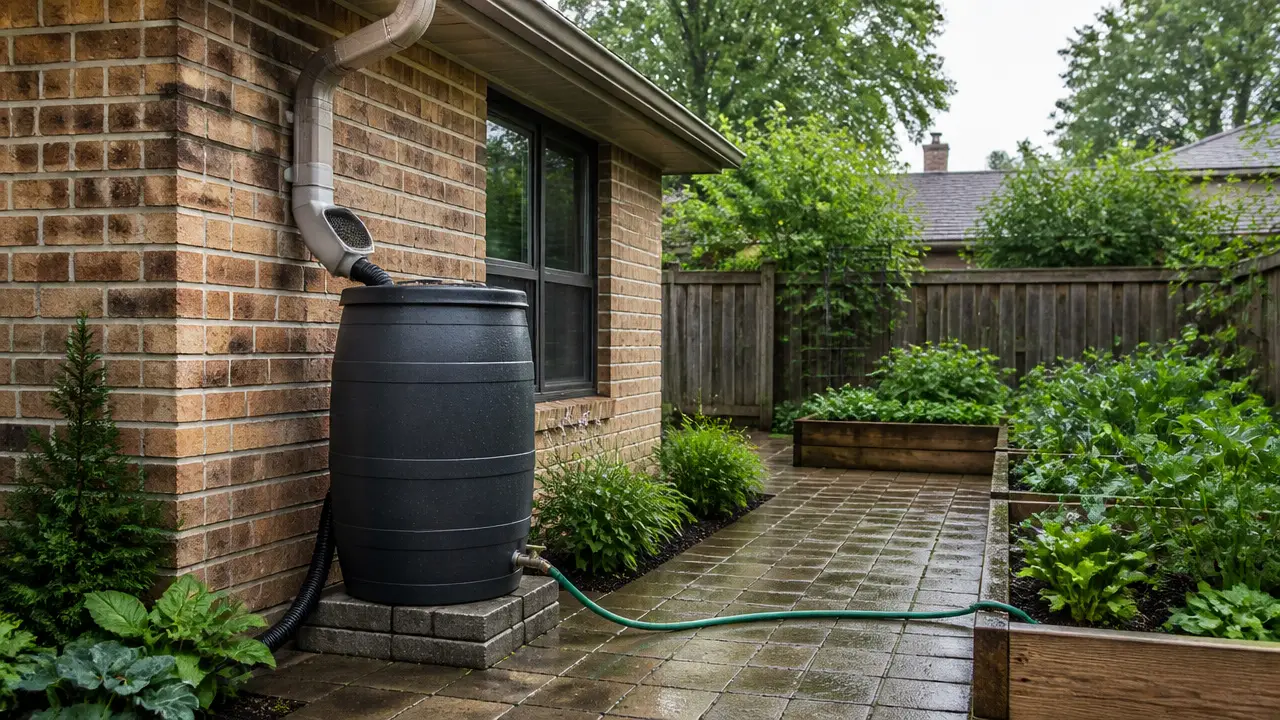
Where to Put a Meter on a Rain Barrel
Gravity-fed rain barrels usually have low water pressure.
A flow meter can be installed on the outlet line, but make sure the meter can operate at the available flow and pressure. Some conventional household meters create too much resistance for a simple barrel system.
For a basic rain barrel feeding a hose or drip line, the layout might be:
Rain barrel outlet → filter if needed → compatible flow meter → irrigation line
Keep the meter below the normal water level when possible so the pipe is more likely to remain full.
Remember that gravity pressure falls as the barrel empties, so flow readings may change even when the outlet valve stays in the same position.
Where to Put a Meter on an IBC Tote or Cistern
For an IBC tote or larger cistern, the meter can usually go on the main outlet line after the tank connection.
If the system uses a pump, the meter is commonly placed after the pump and any filtration required to protect it.
If you are connecting equipment to an IBC tote, check the outlet adapter, hose size, pipe thread, and meter connection before buying fittings. IBC outlets are not all identical.
Using several reducers and adapters can create unnecessary restriction and more possible leak points.
Make the Meter Accessible
Do not bury or hide a serviceable meter where you cannot inspect it.
Leave enough room to:
- Read the display
- Remove the meter
- Clean a strainer
- Tighten fittings
- Replace batteries if applicable
- Check for leaks
- Repair wiring on electronic models
Outdoor meters may also need protection from weather, direct sun, accidental impact, or flooding depending on their enclosure rating.
Do not put an electronic meter underwater unless it is specifically rated for that use.
Protect It From Freezing
Water trapped inside a flow meter can freeze and damage the meter body or internal parts.
In freezing climates, install the meter as part of a system that can be properly winterized. That may mean placing it in a protected location or designing the plumbing so the vulnerable section can be drained.
Do not assume insulation alone will prevent freezing.
Follow the meter manufacturer's winterization instructions.
A Practical Installation Rule
For most rainwater and irrigation systems, start with this layout:
Water source → debris control or filtration → pump if used → straight pipe → flow meter → point of use
Then adjust the location based on what you want to measure and the requirements of the actual meter.
The most important rules are simple: keep the pipe full, avoid badly disturbed flow, install the meter in the correct direction, stay within its flow and pressure limits, and leave room for maintenance.
Frequently Asked Questions
Should a flow meter be installed before or after a pump?
It is commonly installed after the pump on a pressurized rainwater system. This lets the meter measure delivered water without adding unnecessary restriction to the pump's suction line. Check the requirements for both the pump and meter.
Can a flow meter be installed vertically?
Some can, while others have orientation limits. A vertical installation may also affect whether the pipe remains completely full. Follow the manufacturer's approved mounting positions and flow direction.
Can I install a flow meter directly after an elbow?
It may work, but an elbow can create turbulent flow that affects accuracy. Many meters require a length of straight pipe between the elbow and the meter. Use the spacing specified for your model.
Does a flow meter need a filter before it?
It depends on the meter and the water quality. Rainwater may contain grit and other debris that can damage or clog certain meters. A suitable upstream filter or strainer is often helpful, but it must also be sized so it does not restrict the required flow.
Where should a flow meter go in a drip irrigation system?
For total irrigation use, install it on the main supply line before the irrigation system divides into zones. Its exact position relative to the filter and pressure regulator depends on the meter's operating requirements.
Can a flow meter work on a gravity-fed rain barrel?
Yes, if the meter can measure the low flow and low pressure produced by the barrel. Some meters designed for pressurized plumbing may not work well in gravity-fed systems.
Can I put a flow meter underground?
Only if the meter and its electrical components are rated for the conditions in the enclosure or burial location. It should remain accessible for inspection and replacement, and it must be protected from flooding, freezing, and physical damage.