As an affiliate, we may earn a commission from qualifying purchases. We get commissions for purchases made through links on this website from Amazon and other third parties.
The easiest way to clean rain gutters is to remove the loose debris first, then rinse the gutter with a garden hose. For many one-story homes, a telescoping gutter-cleaning tool used from the ground is the simplest option because it reduces ladder use. If packed leaves or mud must be removed by hand, a small gutter scoop and bucket are usually easier to control than a pressure washer.
If your gutters feed a rain barrel, IBC tote, or cistern, bypass or disconnect the storage system before cleaning. Dirty rinse water can carry leaves, sediment, bird droppings, and other roof debris into your stored water.
The Easiest Cleaning Method Depends on the Gutter
There is no single best method for every house. Start with the least complicated method that can clear the gutter without putting you in an unsafe position.
| Gutter condition | Simple cleaning method |
|---|---|
| A few dry leaves | Telescoping gutter tool from the ground |
| Loose leaves and twigs | Gutter scoop, followed by a hose rinse |
| Wet leaves and mud | Scoop debris out by hand, then rinse |
| Blocked downspout | Flush carefully after removing debris at the opening |
| Very high or hard-to-reach gutters | Professional gutter cleaning |
| Gutters near power lines | Do not position a ladder near the lines; use a safer method or professional help |
Ground-based tools work best when the debris is light and loose. Thick, decomposed leaves can form a heavy layer that usually needs to be scooped out.
A Simple Way to Clean Gutters
1. Disconnect the Rainwater System First
If the gutter drains into rainwater storage, keep the cleaning water out of the tank.
Depending on your system, you may be able to:
- divert the downspout away from the tank,
- switch a downspout diverter to bypass,
- disconnect the pipe leading to the tank, or
- temporarily direct runoff to a suitable drainage area.
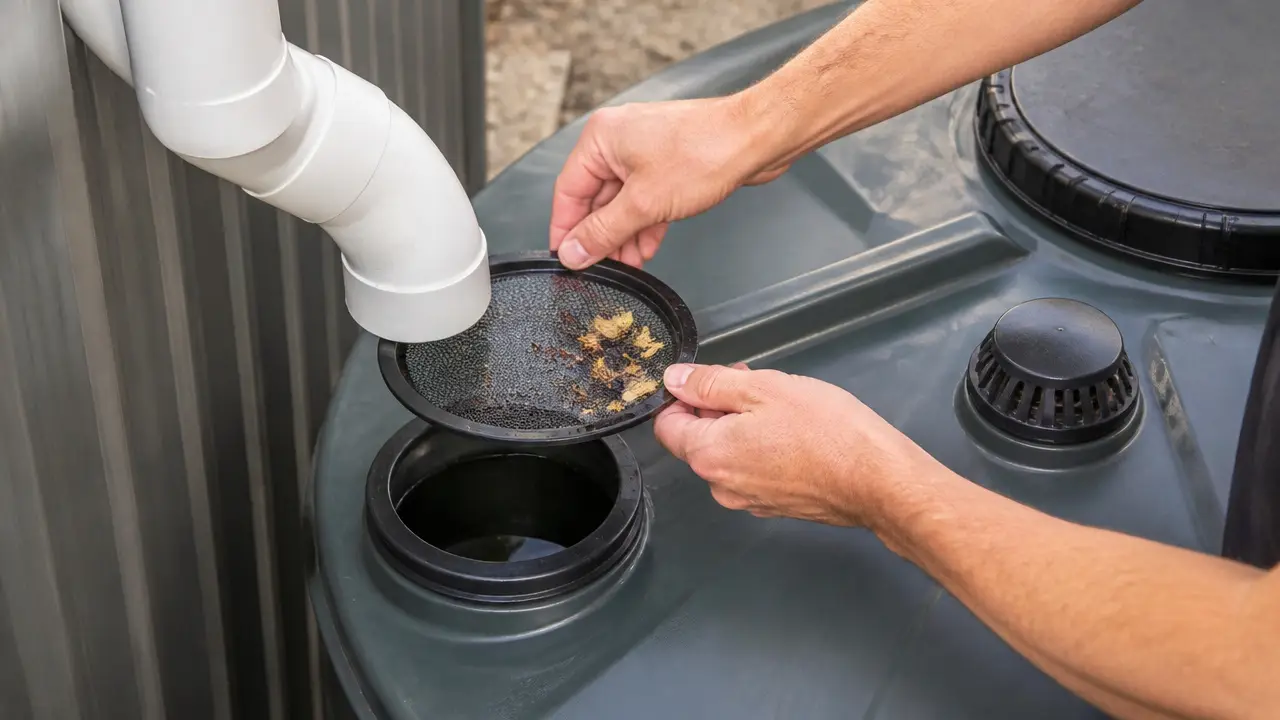
Also check your first-flush diverter if you have one. A first-flush device sends the dirtiest initial roof runoff away from storage. It is useful during normal rain, but it is not a substitute for bypassing the tank while you intentionally wash dirty gutters.
Do not simply hose gutter debris into a rain barrel or cistern.
2. Remove Large Debris
Start with leaves, twigs, seed pods, and other material you can easily remove.
For reachable gutters, a plastic gutter scoop works well. A small container or bucket can keep the debris from falling onto patios, garden beds, or rainwater equipment below.
Avoid scraping aggressively with sharp metal tools. They can damage gutter coatings, seams, or liners.
If you can reach the gutter effectively with a telescoping tool while standing on the ground, that is often the easier choice.
3. Work Toward the Downspout
Remove most of the solid material before using water.
This matters because washing a large pile of leaves directly into the downspout can turn a dirty gutter into a blocked downspout.
As you clean, look for places where water would have difficulty reaching the outlet. Heavy sediment sometimes collects around joints and low spots.
4. Rinse With a Garden Hose
Once the solids are gone, use a moderate stream of water to rinse remaining dirt toward the outlet.
You usually do not need high pressure.
Watch how the water moves. A properly draining gutter should send water toward the downspout rather than leaving large pools behind.
Standing water after rinsing may indicate:
- accumulated debris you missed,
- an improperly sloped gutter,
- a sagging section,
- a blocked outlet, or
- a damaged gutter.
A pressure washer can make a simple cleaning job harder. It can throw dirty material onto siding and roofs, and using powerful equipment while standing on a ladder adds another hazard.
5. Check the Downspout
After the gutter is mostly clean, confirm that water can pass through the downspout.
Start with a modest amount of hose water. If water quickly backs up at the opening, stop adding more water and investigate the blockage rather than forcing a large volume into the pipe.
Check accessible parts such as:
- the downspout opening,
- removable strainers,
- elbows,
- cleanouts, and
- detachable sections.
Long or concealed blockages may require more disassembly or professional cleaning.
For a rainwater harvesting system, also inspect any leaf screen, downspout filter, or pre-tank filter. Cleaning the gutter while leaving these parts clogged will still restrict flow during the next storm.
Cleaning From the Ground Is Usually Easier
For a one-story house, a telescoping gutter-cleaning attachment can greatly reduce the amount of climbing required.
Several basic approaches are available. Some tools pull debris toward you with a hooked end. Others use water or air to move lightweight material.
They work best when:
- the gutter is not extremely high,
- you can see or judge your progress,
- debris is relatively loose,
- there are few complicated roof sections, and
- the downspout is not already badly clogged.
There is a tradeoff. Blowing or spraying debris from below can scatter wet dirt around the house. A scoop gives you more control over where the debris goes.
If you cannot tell whether the gutter is actually clean from the ground, do not assume that water flowing from the downspout means every section is clear.
If You Need a Ladder, Keep the Job Simple
Gutter cleaning becomes much more hazardous when it requires working from a ladder.
Before using one, inspect the ladder and place it on firm, level ground. Do not use a damaged ladder or put its feet on boxes, blocks, or another unstable surface.
Keep your body between the ladder's side rails rather than leaning sideways to reach more gutter. Move the ladder instead.
OSHA's portable-ladder guidance recommends maintaining three points of contact while climbing and keeping your body near the center of the ladder. It also advises inspecting the ladder before use and keeping ladders away from overhead electrical hazards.
The U.S. Consumer Product Safety Commission specifically advises people doing jobs such as gutter cleaning to place ladders on solid, level ground and have another adult present as a spotter. It also warns about the serious electrical hazard created by ladders near overhead wires.
Consider efficient gutter-cleaning methods to coordinate the conveyance path from the roof surface into the tank.
Do not climb onto the roof merely because moving the ladder repeatedly feels inconvenient. Steep roofs, wet roofing, difficult access, high gutters, and nearby electrical lines are good reasons to have the work done professionally.
What About Gutter Guards?
Gutter guards can reduce the amount of large debris entering a gutter, but they do not make the gutter maintenance-free.
Leaves can collect on top of a guard. Fine material can also pass through some guards and settle in the bottom of the gutter.
For a rainwater harvesting system, this matters because small organic particles and roof sediment can still travel toward your tank.
Periodically inspect:
- the top of the guard,
- material underneath it,
- downspout openings,
- roof-to-gutter screens, and
- rainwater prefilters.
A gutter guard should be treated as one part of debris control rather than a replacement for inspection and cleaning.
Keep Gutter Debris Out of Stored Rainwater
Clean gutters are especially important when the roof is a rainwater collection surface.
Leaves and other organic debris can break down in the gutter. When rain arrives, some of that material can wash into the collection system. This increases the amount of sediment and organic matter your screens, first-flush equipment, filters, and tank must handle.
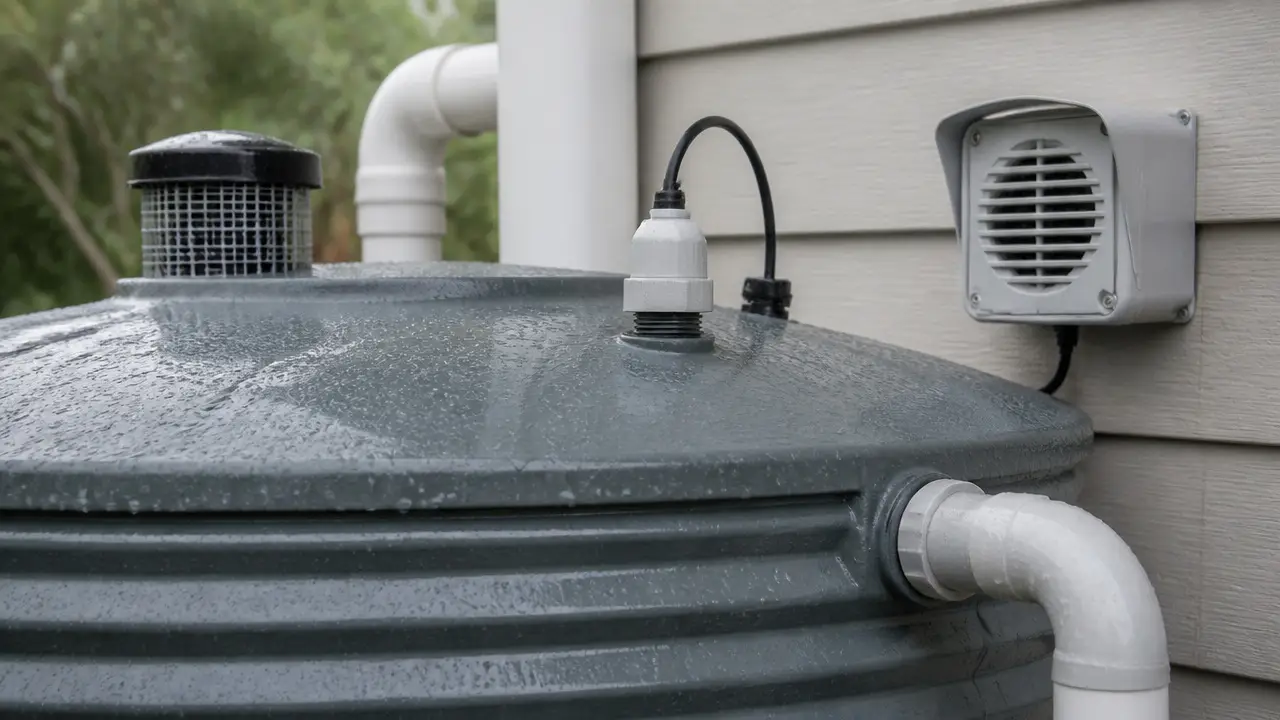
A practical collection path might include:
roof → gutter → leaf screen → first-flush or other prefiltration → storage tank
The exact setup depends on the intended water use and system design.
Cleaning the gutters does not make collected rainwater safe to drink. Roof runoff can contain contaminants that are not visible in the gutter. Drinking-water use requires a suitable collection and treatment system, ongoing maintenance, current laboratory testing, and compliance with applicable local requirements.
How Often Should You Clean Rain Gutters?
There is no useful schedule that fits every property.
Inspect them more often when the roof is near:
- deciduous trees,
- pine trees,
- flowering trees,
- heavy seed or pollen sources, or
- areas that collect windblown debris.
A good time to check gutters is after major leaf fall and before periods when you expect to collect substantial rainwater.
Also inspect the system after unusually strong storms if branches, leaves, or roofing debris may have entered it.
For rainwater harvesting, the important question is not simply how many months have passed. Check whether debris is accumulating enough to restrict drainage or send excessive material into the collection system.
Signs the Gutters Need Attention
You do not always have to climb up to notice a problem.
During a normal rain, look from a safe location for:
- water spilling over the gutter edge,
- little or no flow from a downspout,
- water leaking from gutter joints,
- unusually slow drainage,
- vegetation growing from the gutter, or
- water entering places it normally does not.
For a rainwater system, unexpectedly low flow into storage can also point to a clogged gutter, screen, diverter, or downspout.
However, low tank inflow can have other causes. Check the entire collection path rather than assuming the gutter is responsible.
When Gutter Cleaning Is No Longer a Simple DIY Job
Professional help makes sense when reaching the gutter requires risky ladder placement, walking on a steep roof, or working close to electrical lines.
You may also need repair rather than cleaning if you find:
- badly sagging gutters,
- loose mounting hardware,
- damaged fascia,
- separated seams,
- major corrosion,
- broken downspouts, or
- poor gutter slope.
Cleaning debris will not correct these problems.
For a rainwater harvesting system, damaged gutters can also reduce collection efficiency and send water somewhere the system was not designed to handle it.
Frequently Asked Questions
What is the quickest way to clean gutters?
For light, loose debris on a one-story home, a telescoping gutter tool used from the ground is often quickest. For packed leaves and mud, scooping out the material first and then rinsing with a garden hose is usually more effective.
Can I clean gutters without a ladder?
Sometimes. Telescoping gutter-cleaning tools can remove or flush debris from many one-story gutters. They are less effective when debris is packed tightly, the gutter is very high, or the layout makes it difficult to reach from the ground.
Is it okay to hose leaves down the downspout?
Remove most leaves before rinsing. Sending a large amount of debris down the downspout can cause a blockage, especially at elbows and narrow connections.
Should I use a pressure washer to clean my gutters?
Usually, a garden hose is enough after large debris has been removed. A pressure washer can scatter dirty material and makes ladder work more complicated. It may also damage some gutter components if used improperly.
Should I clean gutters before collecting rainwater?
Yes. Removing accumulated leaves, sediment, and other debris reduces the amount of material entering the rainwater system. Bypass the storage tank while cleaning so dirty wash water does not enter your stored supply.
Do gutter guards mean I never have to clean the gutters?
No. Guards can reduce large debris but can still collect material on top or allow fine sediment into the gutter. The gutter, downspout, guards, and rainwater prefilters still need periodic inspection.
Does cleaning my gutters make rainwater safe to drink?
No. Clean gutters are only one part of rainwater management. Roof runoff may contain microorganisms, chemicals, metals, and other contaminants. Drinking-water use requires appropriate collection, treatment, maintenance, laboratory testing, and attention to local requirements.