As an affiliate, we may earn a commission from qualifying purchases. We get commissions for purchases made through links on this website from Amazon and other third parties.
For most raised beds, the easiest watering system to use is drip irrigation with pre-spaced emitter tubing connected to a simple timer.
It takes a little more setup than watering by hand, but once installed, it can water the bed slowly and evenly with very little daily work. A soaker hose can be even quicker to install, but drip tubing usually gives you better control and is easier to adjust as your garden changes.
Why Drip Irrigation Works Well in Raised Beds
Raised beds are a good match for drip irrigation because the planting area is small and clearly defined.
Drip tubing delivers water close to the soil instead of spraying the whole bed. This can:
- Reduce water wasted between plants.
- Keep leaves drier than overhead sprinklers.
- Water slowly enough for the soil to absorb moisture.
- Make watering more consistent.
- Work with an automatic hose timer.
A basic system can run from a garden faucet. The main tubing brings water to the bed, while smaller tubing or dripline spreads the water through the growing area.
For many gardeners, the easiest layout is dripline with emitters already built into the tubing. An emitter is the small outlet that releases water at a controlled rate. Pre-spaced emitters mean you do not have to install a separate dripper beside every plant.
The Simplest Raised-Bed Setup
A practical system usually follows this path:
Faucet → timer → pressure regulator → filter → supply tubing → drip tubing in the bed
Each part has a job.
Hose timer
A timer turns the water on and off automatically. This removes much of the daily work from watering.
You still need to check the soil and adjust the schedule as weather and plant needs change. A timer should not be treated as a set-it-and-forget-it device.
Pressure regulator
Most drip systems are designed to run at lower pressure than a normal household faucet may provide.
A pressure regulator lowers the incoming pressure to a level suitable for the irrigation components. Use one that matches the requirements of your tubing and fittings rather than choosing a pressure setting at random.
Filter
Small drip openings can clog with dirt, rust, sediment, or other debris.
A filter helps protect the emitters. This becomes especially important when irrigation water comes from a rain barrel, tote, cistern, or other stored-water system.
Supply tubing
The larger supply line carries water from the faucet to the raised bed.
If you have several beds, one supply line can often run past them, with branches feeding each bed.
Dripline
Dripline has small emitters built into the tubing at regular intervals.
You can run several parallel lines along the length of the bed. The number and spacing of those lines depend on the bed width, soil, plants, and emitter spacing.
Dripline Is Usually Easier Than Individual Drippers
There are two common ways to build a drip system.
One uses small individual emitters placed beside each plant. This can work well for widely spaced plants, but every emitter needs its own connection.
The other uses tubing with emitters already installed.
For mixed raised-bed gardens, pre-spaced dripline is often simpler because you do not need to redesign the system every time you move lettuce, carrots, herbs, or other closely spaced plants.
Individual emitters may make more sense for permanent plants with wide spacing, such as tomatoes or peppers planted in the same locations each season.
Is a Soaker Hose Easier?
A soaker hose may be the easiest system to install.
You place the hose on the soil, connect it to a water source, and let water seep through the hose wall.
That simplicity makes soaker hoses useful for gardeners who want very few parts.
However, they can be harder to control precisely. Water output may vary with:
- Hose length.
- Water pressure.
- Elevation.
- Age of the hose.
- Mineral or sediment buildup.
They can also be difficult to troubleshoot because you cannot easily see individual watering outlets.
A soaker hose is a good choice when installation simplicity matters most. Dripline is usually better when you want a system that is easier to control, expand, and repair.
What About Sprinklers?
Small sprinklers can water raised beds, but they are rarely the easiest long-term option.
Sprinklers wet a much larger area than drip irrigation. Wind can move the spray away from the bed, and nearby paths may receive water that plants do not need.
They also wet plant leaves.
That does not mean overhead watering is always bad. Rain does the same thing. But drip irrigation gives you more control over where irrigation water goes.
For a few small beds, dripline generally makes more sense.
How to Lay Drip Tubing in a Raised Bed
The goal is to spread water across the root zone rather than watering one narrow strip.
For a rectangular bed, a common approach is to run several straight drip lines along the length of the bed.
Do not assume one line down the center will water the entire bed. Water movement depends heavily on soil.
Sandy soil
Water tends to move downward quickly and spread less from side to side.
Sandy beds may need irrigation lines closer together or more frequent watering.
Loamy soil
Loam generally spreads water both downward and sideways reasonably well.
It is often forgiving when used with drip irrigation.
Clay-heavy soil
Water moves more slowly through clay-rich soil.
Long watering sessions can create pooling if water is applied faster than the soil can absorb it.
The best spacing is the one that creates overlapping moist zones around your plants. After installing the system, run it and check the soil in several places rather than assuming the whole bed is receiving equal water.
Adding a Timer Makes the Biggest Difference
The tubing determines where water goes. The timer determines how much daily attention the system requires.
A timer is especially useful if you:
- Have several raised beds.
- Travel frequently.
- Forget to water consistently.
- Garden during hot weather.
- Want to water early in the day without doing it manually.
However, irrigation should still be checked regularly.
Evaluate pressure-regulator needs in irrigation systems to understand operating limits before the pump runs for long periods.
Plants need different amounts of water depending on temperature, wind, rainfall, plant size, growth stage, and soil conditions. A timer schedule that works in spring may be excessive or inadequate later in the season.
How Long Should You Run Drip Irrigation?
There is no single correct runtime for every raised bed.
Runtime depends on:
- Emitter flow rate.
- Emitter spacing.
- Number of drip lines.
- Soil type.
- Bed depth.
- Plant type.
- Weather.
- Recent rainfall.
Flow rate means how much water an emitter releases during a given amount of time.
Instead of starting with a universal number of minutes, water the bed and then check how deeply moisture has moved into the soil.
The goal is usually to wet the active root area without leaving the soil waterlogged or allowing large amounts of water to drain unused from the bottom of the bed.
A finger check works for a quick inspection. Digging carefully into the soil in several places gives you a better picture of how evenly the system is watering.
Using Drip Irrigation With a Rain Barrel
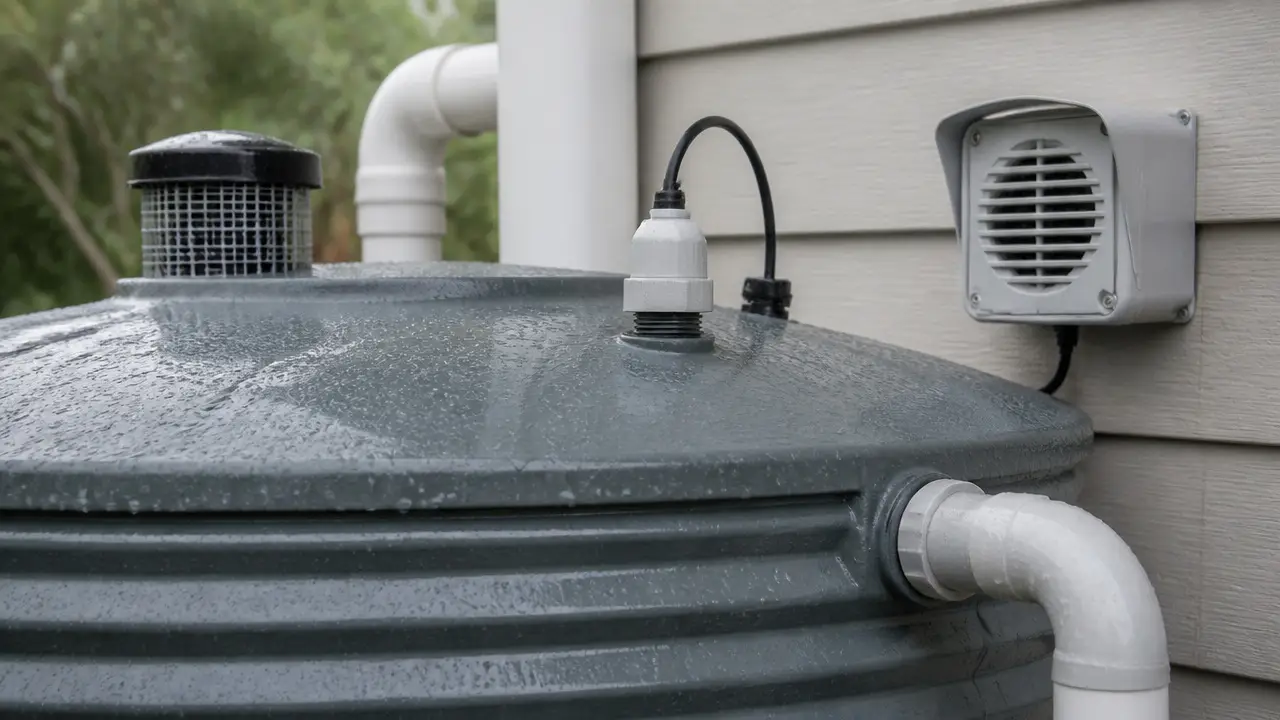
Raised beds can also be watered from stored rainwater, but gravity-fed systems need more planning.
A rain barrel creates pressure from head height, which is the vertical distance between the water surface and the irrigation outlet.
A small height difference creates much less pressure than a household faucet.
Because of that, standard pressure-regulated drip components may not work properly with a low-pressure rain barrel system. Some emitters may barely flow, especially as the barrel empties.
If you want to irrigate directly from a rain barrel, make sure the tubing, emitters, filter, valves, and timer are designed to operate at the pressure available from your setup.
Sediment is another concern. Stored rainwater should be screened and filtered well enough to protect small irrigation openings from clogging.
A pump can provide more consistent pressure for larger systems, but adding a pump also adds electrical, plumbing, maintenance, and dry-run protection requirements.
The Easiest System for Several Raised Beds
For multiple beds, avoid building a completely separate system for every bed unless there is a reason to do so.
A simpler arrangement is usually:
- Run one main supply line past the beds.
- Branch from the main line into each bed.
- Add a shutoff valve for each bed.
- Connect several drip lines inside each bed.
- Flush the ends periodically.
Individual shutoff valves are useful because not every bed always needs the same amount of water.
For example, a bed containing established tomatoes may need a different watering pattern from a newly seeded bed.
If the differences are large, separate irrigation zones may be easier than trying to make one watering schedule fit everything.
Keep the Connections Simple
Many drip irrigation problems are not caused by the emitters. They come from mismatched fittings.
Tubing that looks similar may not have the same inside or outside diameter.
Before buying connectors, check:
- Tubing dimensions.
- Fitting size.
- Timer thread type.
- Pressure regulator connections.
- Filter connections.
- Valve sizes.
It is easiest to stay within one compatible tubing and fitting system unless you know exactly how the different sizes connect.
Avoid forcing tubing onto fittings that are not designed for it. A connection that seems tight when dry can leak or blow apart when the system is pressurized.
Maintenance Is Simple but Still Necessary
A raised-bed drip system does not require much daily attention, but it does need periodic checks.
Inspect it for:
- Clogged emitters.
- Loose fittings.
- Split tubing.
- Chewed lines.
- Leaks.
- Kinked tubing.
- Blocked filters.
- Uneven watering.
Flush drip lines occasionally so sediment does not build up at the ends.
If the water source contains more debris, filtration and flushing become even more important.
At the start of the growing season, run the system before planting heavily and make sure every section is flowing properly.
Do You Need to Bury the Tubing?
Usually, no.
Dripline can sit on the soil surface and be held in place with irrigation stakes. A light layer of mulch can cover it.
Keeping the tubing fairly accessible makes leaks and clogs easier to find.
Avoid burying fittings deeply where they will be difficult to inspect.
If you cultivate the soil with tools, make sure you know where the irrigation lines are before digging.
What About Freezing Weather?
Drip systems need extra attention in freezing climates.
Water left inside tubing, timers, filters, valves, and pressure regulators can freeze and damage components.
Follow the manufacturer's winterizing instructions for the parts in your system. Disconnect equipment that is not designed to remain outdoors through freezing conditions.
Do not assume flexible tubing alone makes the entire system freeze-proof.
Which System Should You Choose?
For most raised-bed gardeners, the choices are straightforward.
| System | Best for | Main drawback |
|---|---|---|
| Pre-spaced dripline | Easiest overall long-term setup | Requires several fittings during installation |
| Soaker hose | Fastest simple installation | Less precise and harder to troubleshoot |
| Individual drip emitters | Widely spaced plants | More small parts to install |
| Hand watering | One or two very small beds | Requires regular attention |
| Sprinklers | Broad planted areas | Waters beyond the root zone and wets foliage |
If you want the least daily work while still having good control, pre-spaced dripline with a timer is usually the easiest raised-bed watering system.
Keep the layout simple. Use compatible fittings, include filtration and pressure control when required, and check the soil rather than relying only on the timer.
Frequently Asked Questions
Is drip irrigation or a soaker hose better for raised beds?
Drip irrigation usually gives you better control and is easier to repair or expand. A soaker hose may be easier to install because it has fewer parts. For a permanent raised-bed system, pre-spaced dripline is often the more practical choice.
Can I connect raised-bed drip irrigation directly to a garden hose?
Often, yes, but the system may also need a pressure regulator and filter. Check the operating requirements of the drip tubing, timer, and fittings you are using.
How many drip lines should I put in a raised bed?
It depends on the width of the bed, emitter spacing, plants, and soil type. The lines should create overlapping moist areas across the root zone. Check the soil after running the system to confirm that dry strips are not being left between lines.
Should drip tubing go above or below mulch?
Either can work, but placing the dripline on the soil and putting mulch above it is common. This keeps water close to the soil while still allowing access if the tubing needs repair.
Can I use a rain barrel for raised-bed drip irrigation?
Yes, but ordinary drip equipment may need more pressure than a gravity-fed barrel can provide. Use components compatible with the available pressure and include suitable filtration to help prevent clogged emitters.
Do raised-bed drip systems need a filter?
A filter is a good idea because drip openings are small and can clog. Filtration is particularly important when using stored rainwater or another water source that may contain sediment.
Can I leave a drip irrigation system outside during winter?
That depends on the components and your climate. Freezing water can damage timers, regulators, filters, valves, and fittings. Follow the manufacturer's winterizing instructions and protect or remove parts that are not designed for freezing conditions.