As an affiliate, we may earn a commission from qualifying purchases. We get commissions for purchases made through links on this website from Amazon and other third parties.
Emitter tubing and drip tubing are both used in drip irrigation, but the names do not always mean the same thing.
Emitter tubing has drip emitters built into the tubing at fixed spacing. Water comes out through those built-in outlets along the line.
Drip tubing is a broader term. It may refer to tubing with built-in emitters, often called dripline, or to plain polyethylene tubing that carries water to separate emitters or smaller distribution lines.
The important difference is not the label on the tubing. It is whether the tubing already has emitters, how far apart they are, and how the line fits the irrigation system.
Emitter Tubing vs. Drip Tubing at a Glance
| Feature | Emitter tubing | Drip tubing |
|---|---|---|
| Built-in emitters | Yes | Sometimes |
| Emitter spacing | Fixed | Fixed if emitters are built in |
| Can be plain tubing | No | Sometimes |
| Best for | Rows, beds, and evenly spaced watering | General drip irrigation |
| Outlet placement | Determined by the tubing | Depends on tubing type |
| Easy to customize individual outlet locations | Limited | Yes, if using blank tubing with added emitters |
Because manufacturers and gardeners use these terms differently, always check the tubing description rather than relying on the name alone.
What Is Emitter Tubing?
Emitter tubing is irrigation tubing made with small water outlets installed inside or along the tube at regular intervals.
These outlets are called emitters. An emitter limits the amount of water leaving the tubing so irrigation happens slowly instead of spraying water across a large area.
For example, emitter tubing might have an outlet every several inches or every foot. The exact spacing depends on the tubing.
Once water enters the line, each emitter releases water near its location.
This makes emitter tubing useful for:
- Vegetable rows
- Raised beds
- Flower beds
- Ground covers
- Closely spaced shrubs
- Long planting strips
It works especially well when many plants need roughly the same watering pattern.
The Emitter Locations Cannot Easily Be Changed
The main limitation is that the emitters are already installed.
If a tubing line has emitters spaced at fixed intervals, you cannot move those outlets to match a different planting layout.
That is usually fine for closely planted beds. It may be less useful for trees or widely spaced plants where water is needed only at selected points.
What Is Drip Tubing?
"Drip tubing" can describe several kinds of tubing used in a drip irrigation system.
In some systems, drip tubing means tubing with emitters already installed. In that case, it may be essentially the same thing as emitter tubing.
In other systems, drip tubing means plain polyethylene tubing used to carry water.
Plain tubing has no built-in outlets. You can connect separate emitters, fittings, or smaller tubing where water is needed.
That makes blank tubing much more flexible for irregular plant spacing.
For example, you might run a main drip tube along a row of shrubs and install one or more emitters beside each plant.
Built-In Emitters Are the Main Difference
The easiest way to compare the two is to ask:
Does this tubing already have water outlets built into it?
If yes, it is emitter tubing or dripline.
If no, it is generally being used as supply or distribution tubing, even if the seller calls it drip tubing.
The technical overview “What Are Common Drip Irrigation Mistakes?” shows where an undersized or incompatible component can restrict delivery.
This distinction matters because the two types are installed differently.
With emitter tubing, the watering points are already determined.
With blank tubing, you decide where the watering points go.
When Emitter Tubing Works Better
Emitter tubing is usually a good choice when plants are arranged fairly evenly.
A vegetable bed is a common example. Instead of installing a separate emitter beside every plant, you can run emitter tubing along each row.
The built-in outlets provide watering along the whole line.
Emitter tubing can also simplify installation because fewer individual parts are needed.
You do not have to punch a hole and install an emitter at every watering point.
However, the emitter spacing should make sense for the plants and soil.
Closely spaced outlets can provide more continuous watering along a row. Wider spacing may work better where plants are farther apart.
Soil also affects how water spreads after it leaves an emitter. Water may spread differently through sandy soil than through heavier soil.
When Blank Drip Tubing Works Better
Plain drip tubing is often better when plants are unevenly spaced.
Examples include:
- Fruit trees
- Landscape shrubs
- Large container plants
- Mixed garden beds
- Individual plants placed far apart
You can run tubing past the plants and add emitters only where water is needed.
This also makes it easier to give different plants different watering arrangements.
A large shrub might use more than one outlet, while a smaller plant might use only one.
Blank tubing can also serve as the supply line feeding several sections of emitter tubing.
For example, a larger line might run beside a raised-bed area. Smaller sections of emitter tubing can branch from it and run through each bed.
Do Not Confuse Emitter Tubing With Soaker Hose
Emitter tubing releases water through designed outlets.
A soaker hose releases water through many tiny pores in the hose material.
They can serve similar garden purposes, but they work differently.
The related explainer “What Is the Easiest Drip Irrigation System to Use?” connects the fitting choice to leak control and reliable flow.
Emitter tubing usually provides more defined discharge points. A soaker hose allows water to seep along much of its surface.
Neither should be assumed to provide identical flow or pressure requirements.
Check Emitter Spacing Before Buying
Examine estimating gph do i need for drip irrigation to verify a maintenance response tied to verified water-quality trends.
When using tubing with built-in emitters, spacing is one of the most important specifications.
Spacing tells you how far apart the water outlets are.
Choose spacing based on the area you want to wet rather than simply matching one emitter to every plant.
For closely planted crops, water from neighboring outlets may overlap within the soil.
For widely spaced plants, fixed emitter tubing may release water in places where no plant needs it. Individual emitters connected to blank tubing may make more sense.
Check Flow Rate Too
Flow rate is how much water moves through an emitter or irrigation line during a given period.
Individual emitter flow affects how quickly the soil receives water.
Do not assume two tubes with the same emitter spacing release the same amount of water.
Emitter design, pressure, tubing length, and other system conditions can affect performance.
When extending an existing system, check that the new tubing is suitable for the system's operating pressure and available water flow.
Tubing Size Must Match the Fittings
Drip irrigation tubing is available in different sizes, and similar-looking tubing is not always interchangeable.
Before connecting emitter tubing to existing drip tubing, confirm the actual inside and outside dimensions required by the fittings.
A fitting that is too loose can leak or disconnect. One that is too tight may be difficult to install or may damage the tubing.
This becomes especially important when combining parts from different irrigation systems.
Do not assume that products carrying similar nominal size labels will fit each other.
Pressure Regulation May Be Needed
Drip irrigation normally works at lower pressure than many household water supplies.
A pressure regulator may be part of the system when water comes from a pressurized faucet or pump.
Too much pressure can cause poor emitter performance, leaks, or connections that separate.
Very low pressure can cause another problem. Emitters farther down a line may receive less water than expected.
The planning note “What Is the Best Drip Irrigation Kit?” connects the fitting choice to leak control and reliable flow.
If a rainwater pump supplies the irrigation system, consider both pressure and available flow when planning the line.
Using Emitter Tubing With Rainwater
Emitter tubing can work well with stored rainwater, but debris control becomes important.
Roof runoff can carry:
- Leaves
- Grit
- Organic debris
- Insect material
- Sediment from a tank
Small emitter passages can clog.
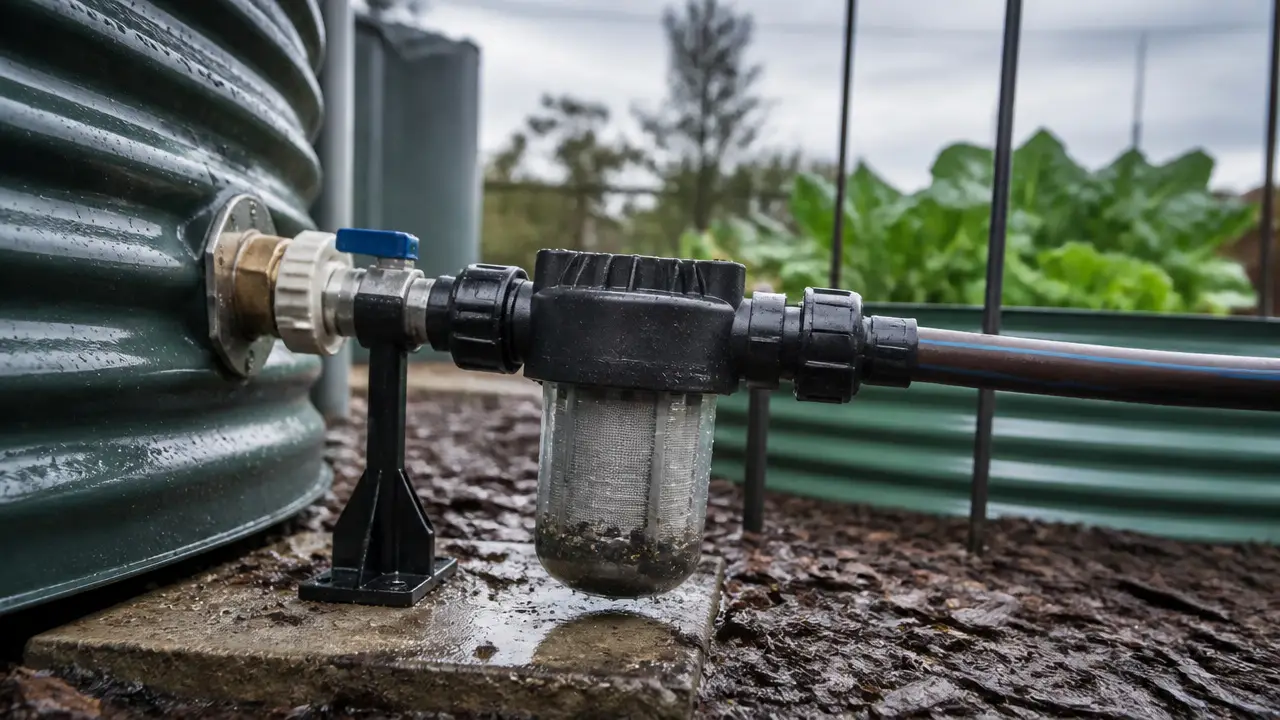
A rainwater irrigation system commonly benefits from debris removal before water reaches the emitters. The suitable filtration setup depends on the emitter requirements and the condition of the stored water.
Check the irrigation equipment's filtration requirements rather than choosing a filter only by appearance.
If a pump is involved, also make sure the pump can provide suitable flow and pressure without repeatedly running dry.
Collected rainwater used for irrigation should still be managed carefully. Roof runoff is not automatically clean simply because it looks clear.
Maintenance Is Similar for Both
Both emitter tubing and other drip tubing should be checked during the watering season.
Look for:
- Clogged outlets
- Damaged tubing
- Loose fittings
- Leaks
- Kinked lines
- Uneven watering
- Sediment buildup
Systems using stored rainwater may need more frequent inspection if sediment enters the irrigation lines.
Some systems can also be flushed through an accessible line end. Follow the tubing manufacturer's guidance rather than forcing high-pressure water through emitters.
In freezing climates, exposed irrigation components may also need seasonal draining or other freeze protection appropriate to the system.
Which One Should You Use?
Choose emitter tubing when you want many watering points at regular intervals. It is especially convenient for rows and planting beds.
Choose blank drip tubing with separate emitters when plants are spaced irregularly or you need more control over exactly where water is released.
If a product is simply labeled "drip tubing," check whether it is:
- Blank distribution tubing
- Tubing with built-in emitters
- A complete dripline intended to release water along its length
That small check prevents many compatibility and layout problems.
Frequently Asked Questions
Is emitter tubing the same as dripline?
Usually, yes. Dripline commonly means tubing with emitters built into it at regular intervals. Product terminology varies, so check the specifications before connecting it to an existing system.
Does all drip tubing have emitters?
No. Some drip tubing is plain tubing used to carry water. Separate emitters or smaller distribution lines can then be connected wherever water is needed.
Can I add emitters to emitter tubing?
You generally do not need to because it already contains emitters. Adding extra outlets may also change the flow demands on the irrigation zone. If you need custom outlet locations, blank tubing is usually easier to work with.
Is emitter tubing good for raised beds?
Yes. It can be convenient for raised beds because the built-in outlets provide water at regular intervals. Choose emitter spacing and line placement that fit the bed and plants.
Can emitter tubing run directly from a rain barrel?
Sometimes, but performance depends on the irrigation equipment and available water pressure. A gravity-fed barrel may not provide enough pressure for some emitters to work evenly. Check the tubing's operating requirements before planning a gravity system.
Does emitter tubing need a filter?
Filtration is often important because emitter passages can clog with debris. This is especially relevant when irrigation water comes from a rain barrel, IBC tote, or cistern. Use filtration appropriate for the emitter manufacturer's requirements.
Which is better for trees, emitter tubing or blank drip tubing?
Blank tubing with separately placed emitters is often more flexible for widely spaced trees. It lets you position outlets where each tree needs water instead of releasing water continuously between trees.