As an affiliate, we may earn a commission from qualifying purchases. We get commissions for purchases made through links on this website from Amazon and other third parties.
Put the pressure regulator upstream of the drip tubing and downstream of the main water-control and filtration parts. Its job is to reduce the higher supply pressure before that water reaches drip emitters and fittings.
For a simple drip irrigation setup, a common order is:
Water source → shutoff or timer → backflow device → filter → pressure regulator → main drip tubing → emitters
The exact order can change when you use pumps, zone valves, fertilizer injectors, or other controls, but the regulator should always be placed where it can protect the low-pressure drip system.
Why Drip Irrigation Needs a Pressure Regulator
Most household water supplies operate at more pressure than drip irrigation parts need.
Drip emitters, thin-wall tubing, barbed fittings, and small connectors are designed to work within a limited pressure range. Too much pressure can cause:
- Fittings to pop apart
- Tubing to swell or split
- Emitters to release too much water
- Uneven watering
- Shorter component life
A pressure regulator reduces the incoming pressure to a level suitable for the downstream irrigation equipment.
Do not choose a regulator based only on a pressure number printed on the device. The regulator also needs to handle the flow required by your irrigation zone.
Where the Regulator Goes in a Basic Drip System
A typical hose-fed system might be arranged like this:
Faucet → timer → backflow preventer → filter → pressure regulator → drip tubing
Putting the regulator before the drip tubing means every emitter and low-pressure fitting downstream receives regulated water.
Why the Filter Usually Comes Before the Regulator
Drip systems have very small openings that can clog with sand, sediment, rust, algae, or other debris.
A filter protects the emitters, but it can also help protect the pressure regulator from debris. This is especially useful when the water comes from:
- Rain barrels
- IBC totes
- Cisterns
- Wells
- Ponds or other untreated sources
The filter must be suitable for the water source and the emitter manufacturer's requirements. A filter's micron rating describes the approximate size of particles it is designed to catch. A smaller micron number means finer filtration.
Where to Put a Regulator With an Irrigation Valve
If your drip system is controlled by an irrigation valve, the regulator is commonly installed downstream of that valve:
Water supply → backflow protection → zone valve → filter → pressure regulator → drip line
This arrangement lets each irrigation zone have its own pressure regulator.
That is useful when one zone uses drip irrigation while another runs sprinklers at a higher pressure.
Some systems use a filter and pressure regulator built into one assembly. In that case, follow the flow-direction markings and installation instructions for that unit.
Should the Regulator Go Before or After a Timer?
For many simple faucet-fed systems, the regulator goes after the timer.
A typical setup is:
Faucet → timer → backflow device → filter → regulator → drip tubing
This keeps the timer on the higher-pressure supply side while protecting the drip components downstream.
However, timers have their own allowable inlet and outlet pressure ranges. Follow the timer manufacturer's instructions if they specify a different layout.
Where to Put the Regulator When Using a Pump
With a pumped system, place the irrigation pressure regulator after the pump and before the drip distribution tubing.
For example:
Tank → pump → filter → pressure regulator → drip mainline → emitters
Additional valves, check valves, pressure tanks, or controls may be needed depending on the pump system.
A drip regulator should not be treated as a substitute for proper pump controls. If a pump can build excessive pressure when flow stops, the system may also need pressure-switch controls, a pressure tank, bypass arrangement, or other equipment designed for that pump.
Pay Attention to Pump Flow
Many irrigation pressure regulators operate properly only while water is flowing through them.
A pump also has operating limits. A very small drip zone may not use enough water to keep some pumps operating correctly.
Check both:
- Required drip-zone flow
- Regulator operating flow range
- Pump minimum and maximum flow
- Pump pressure
- Required outlet pressure
If the pump cycles rapidly, runs against a closed outlet, or repeatedly loses prime, the problem should be corrected rather than relying on the drip regulator to control the pump.
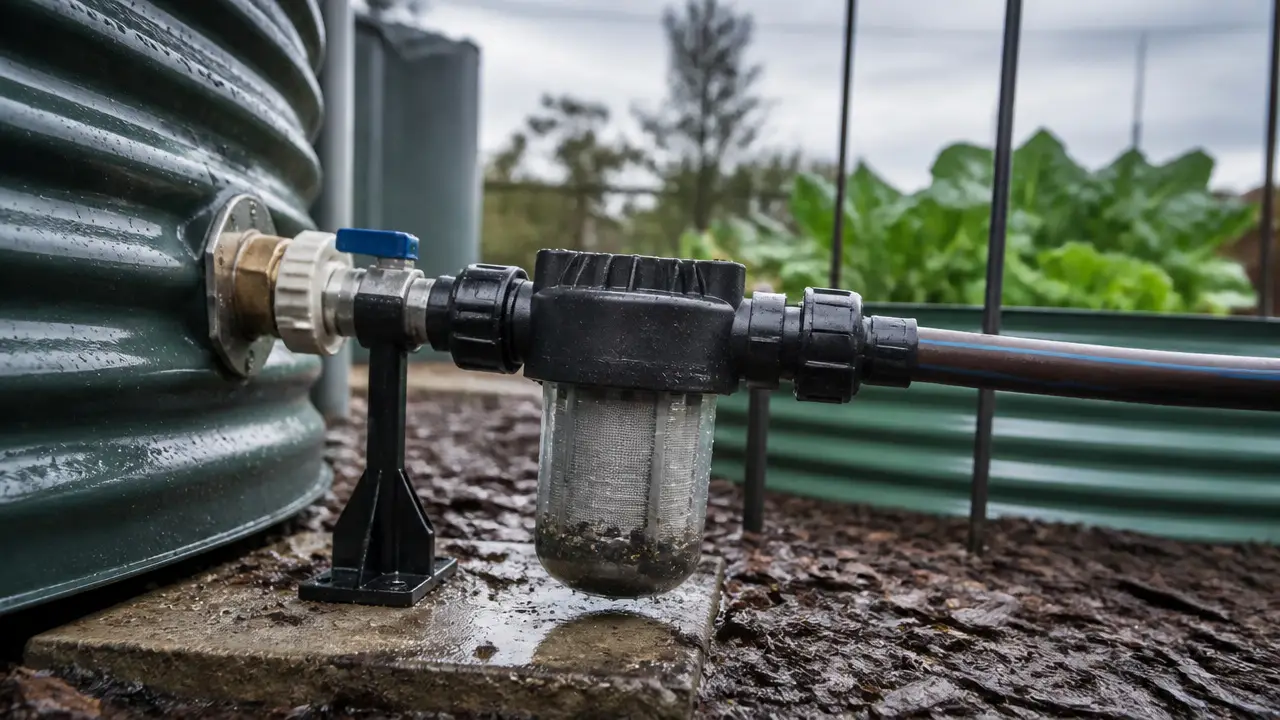
Where to Put a Regulator on a Rain Barrel or Gravity System
A pressure regulator is often unnecessary on a gravity-fed rain barrel.
Gravity produces relatively little pressure. Approximately 2.31 feet of vertical water height produces about 1 psi under ideal static conditions. Real systems also lose pressure through hoses, filters, valves, fittings, and elevation changes.
For example, a barrel sitting only a few feet above a garden may already have much less pressure than a standard drip pressure regulator expects at its inlet.
Installing a conventional regulator in such a system can make flow worse.
For gravity-fed irrigation, check whether the emitters and other components are designed specifically for low-pressure operation.
Review practical steps for choosing a water pressure regulator to evaluate pressure fluctuations linked to priming trouble.
If a pump is added between the rainwater tank and the irrigation system, a regulator may then be needed downstream of the pump.
Should You Put One Regulator at the Water Source or One on Each Zone?
Either layout can work.
A single regulator near the water source can serve several zones when all of them:
- Need the same pressure
- Operate within the regulator's flow range
- Use compatible irrigation equipment
Separate regulators are often better when different zones have different requirements.
For example, one property might have:
- A drip bed that needs low pressure
- A micro-sprayer zone with different requirements
- Conventional sprinklers that operate at higher pressure
Regulating only the drip zone prevents you from unnecessarily reducing pressure to equipment that needs more.
Do Not Put the Regulator at the End of the Drip Line
A pressure regulator cannot protect upstream drip components if it is installed at the far end of the irrigation tubing.
It needs to reduce pressure before water enters the parts that require lower pressure.
The regulator should therefore be close to the beginning of the drip zone rather than near the last emitter.
Check the Direction of Flow
Many regulators are directional.
Look for:
- A flow arrow
- "IN" and "OUT" markings
- Manufacturer installation instructions
Installing a directional regulator backward can prevent it from working correctly.
The same rule applies to many filters, backflow devices, valves, and fertilizer injectors.
Match the Regulator to the Drip Equipment
There is no single correct pressure for every drip irrigation system.
The proper pressure depends on the tubing and emitters being used. Use the pressure range specified by their manufacturer.
Also check the regulator's:
- Inlet pressure range
- Outlet pressure
- Minimum flow
- Maximum flow
- Connection size
- Installation orientation, if specified
Flow rate is the amount of water moving through the system over time, usually expressed in gallons per minute or gallons per hour.
A regulator that is correctly sized for pressure can still perform poorly if the irrigation zone falls outside its intended flow range.
Do You Need a Pressure Gauge?
A gauge is not required on every small system, but it can make troubleshooting much easier.
A gauge installed downstream of the regulator can help determine whether the drip system is actually receiving the expected pressure while it is running.
This is important because pressure measured when no water is moving can be different from pressure while the irrigation zone is operating.
If emitters are watering unevenly, check more than the regulator. Low flow can also result from:
- A dirty filter
- A partially closed valve
- Long or undersized tubing
- Too many emitters on one line
- Large elevation changes
- A weak pump
- Low water level in a gravity-fed tank
A Simple Layout to Remember
For many home drip systems, this arrangement is a useful starting point:
Source → control → backflow protection → filtration → pressure regulation → drip distribution
The important part is that the regulator comes before the pressure-sensitive drip components.
For rainwater systems, also make sure the filtration, pump, tubing, fittings, and emitters work together. Correct pressure alone will not fix poor flow, clogged emitters, or a pump that is poorly matched to the irrigation zone.
Frequently Asked Questions
Does a drip irrigation pressure regulator go before or after the filter?
It usually goes after the filter. Filtering the water first helps keep debris out of both the regulator and the small drip emitters downstream. Follow the component manufacturer's instructions if a particular regulator requires another arrangement.
Does the pressure regulator go before or after the irrigation valve?
For a drip-only zone, the regulator is commonly installed after the zone valve. This lets you regulate only that zone while leaving other irrigation zones at their required pressure.
Can I put a pressure regulator directly on a hose faucet?
Yes, some systems use faucet-connected regulators. Other components such as a timer, backflow device, and filter may also need to be installed between the faucet and drip tubing. Follow the installation requirements for those components.
Do I need a pressure regulator for a rain barrel drip system?
Often not. A gravity-fed rain barrel may have too little pressure for a normal irrigation regulator to work properly. Use drip components designed for low-pressure gravity systems. If you add a pump, regulation may become necessary.
Can I install the pressure regulator after the drip tubing?
It should be installed before the tubing and emitters that need protection. A regulator at the end of the system cannot reduce the pressure already experienced by upstream components.
Why is my drip pressure still too high after installing a regulator?
Possible causes include an incorrectly installed regulator, a regulator outside its intended flow range, the wrong regulator rating, or pressure being measured under conditions different from normal operation. Check the flow-direction arrow and verify pressure while the irrigation zone is running.
Can one pressure regulator serve several drip zones?
Yes, if the zones need the same pressure and their operating flow stays within the regulator's limits. Separate regulators can be more practical when zones use different types of irrigation equipment or have different pressure requirements.