As an affiliate, we may earn a commission from qualifying purchases. We get commissions for purchases made through links on this website from Amazon and other third parties.
For many home drip irrigation systems, 40 psi is higher than needed and may be too much pressure. A common operating range is about 20 to 30 psi, although the correct pressure depends on the tubing, emitters, and other parts in your system. Colorado State University Extension notes that drip systems commonly operate around 20 to 30 psi, depending on the manufacturer.
Some drip equipment is designed for 40 psi, so 40 psi is not automatically unsafe. The important number is the maximum operating pressure listed for your specific tubing and emitters.
What Happens if Drip Irrigation Pressure Is Too High?
Drip irrigation is designed to release water slowly. Too much pressure can make the system harder to control.
Possible problems include:
- Emitters releasing more water than intended
- Tubing separating from fittings
- End caps or connectors popping off
- Small leaks becoming larger
- Uneven watering
- Premature wear on emitters and fittings
Pressure-sensitive emitters are especially affected because their flow increases as pressure rises. Pressure-compensating emitters can maintain a steadier flow across a wider pressure range, but they still have operating limits.
Rain Bird, for example, describes some residential drip systems as having a maximum operating pressure of about 25 to 30 psi and supplies connection kits with 25- or 30-psi regulators.
Is 40 PSI Always Too High?
No.
There are drip irrigation components made to operate at 40 psi. Some commercial and landscape drip equipment uses higher operating pressures than basic garden drip kits. Rain Bird's current drip catalog, for example, includes both 30-psi and 40-psi regulator options for different applications.
That is why you should not choose a regulator based only on a general rule.
Check the specifications for:
- Main drip tubing
- Dripline
- Individual emitters
- Barbed fittings
- Filters
- Valves
- Pressure regulators
If the manufacturer calls for 20 or 25 psi, feeding the system directly at 40 psi is not a good idea. If the entire system is designed around 40 psi, that pressure may be appropriate.
What Pressure Should a Home Drip System Use?
For a typical garden system, 20 to 30 psi is a useful starting range, but the manufacturer's operating range should decide the final setting. Colorado State University Extension gives roughly the same 20-to-30-psi range for typical drip irrigation.
A simple setup might look like this:
Water source → filter → pressure regulator → drip tubing → emitters
A household water connection may also require an approved backflow-prevention device. Backflow protection keeps irrigation water from being drawn back into drinking-water plumbing. Requirements vary, so check with your water provider or local authority if the drip system connects to household potable water.
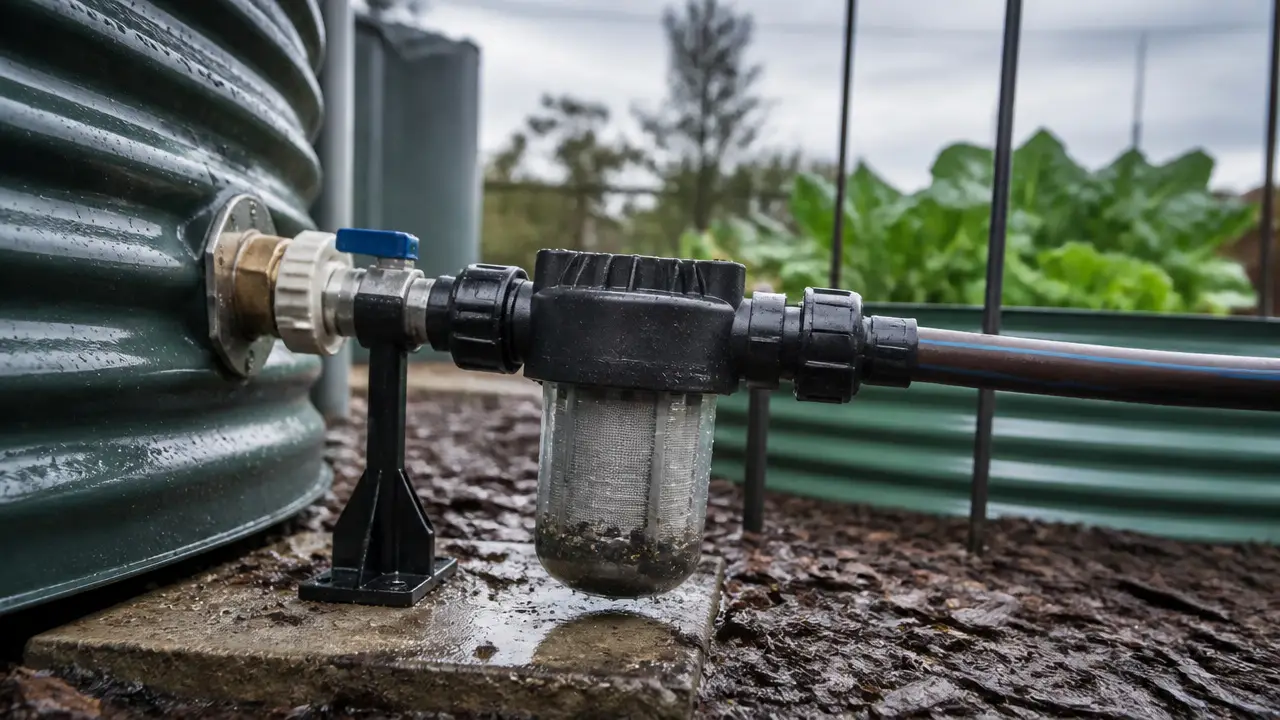
For rainwater irrigation, the arrangement can be different depending on whether the water comes from a gravity-fed tank or a pump.
Should You Use a Pressure Regulator at 40 PSI?
If your drip equipment is designed for less than 40 psi, yes, a pressure regulator is the normal solution.
A pressure regulator reduces the incoming pressure to a level suitable for the irrigation equipment.
For example, if your hose bib or rainwater pump supplies around 40 to 60 psi but your dripline is designed for 25 psi, you could use a regulator intended to deliver approximately 25 psi.
Do not assume every regulator will work with every system. Check its:
- Regulated outlet pressure
- Required inlet pressure
- Minimum and maximum flow
- Connection size
- Installation direction
A regulator also does not replace a filter. Small drip passages clog easily, so filtration is normally an important part of the system.
Measure Pressure While the System Is Running
One detail can cause confusion: static pressure and operating pressure are not the same thing.
Static pressure is the pressure measured when water is not flowing. Dynamic, or operating, pressure is the pressure while the irrigation system is running.
You might measure 40 psi at a faucet with everything turned off but see noticeably less pressure once the drip zone starts flowing.
If you are troubleshooting a drip system, measuring pressure while the zone is operating gives you a more useful picture of what the emitters are actually receiving.
Long tubing runs, filters, fittings, elevation changes, and high flow all affect operating pressure.
Watch for Elevation Changes
Use practical considerations for 30 psi too high for drip irrigation to evaluate garden consumption relative to available rainwater.
Pressure also changes with height.
A dripline running uphill loses pressure. A line running downhill gains pressure. This becomes important on sloped properties or when a storage tank and garden are at very different elevations.
Colorado State University Extension recommends accounting for elevation when selecting operating pressure and notes that pressure-compensating emitters can help where pressure varies along a system.
Do not raise the entire system pressure just to compensate for a poorly performing distant section without checking the cause. A long run, undersized tubing, excessive total flow, or clogged filter may be the real problem.
What About a Rainwater Pump Set to 40 PSI?
A rainwater pump supplying 40 psi can work with drip irrigation, but the drip zone may still need pressure regulation.
For example:
Cistern → pump → filter → pressure regulator → drip zone
The pump can operate at the pressure it needs for other uses while the regulator lowers pressure specifically for the drip system.
This can be useful when the same rainwater system also supplies garden hoses or other fixtures that need more pressure.
Make sure the pump can provide the required flow rate as well as pressure. Flow rate is the amount of water delivered over time, usually measured in gallons per minute or gallons per hour. Adequate pressure does not guarantee adequate flow.
Signs Your Pressure May Be Too High
Check the system if you notice:
- Fittings repeatedly coming apart
- Dripline swelling or leaking
- Emitters spraying rather than dripping
- Excessive flow near the beginning of a line
- Large differences in watering from expected emitter output
- End fittings repeatedly blowing off
These symptoms can have other causes, so verify the pressure before replacing parts.
If pressure measures around 40 psi and your equipment specifies a lower maximum pressure, installing the correct regulator is usually the appropriate fix.
The Bottom Line
40 psi is too high for many common residential drip irrigation systems, but it is not too high for every drip system.
Many garden drip systems are designed to operate around 20 to 30 psi. Some equipment can operate at 40 psi or higher. Always follow the operating-pressure limits for your specific tubing and emitters.
If your water source provides 40 psi and your drip equipment calls for less, use a properly sized pressure regulator rather than relying on partially closing a faucet or valve to control pressure.
Frequently Asked Questions
Will 40 psi damage drip irrigation tubing?
It can if the tubing or fittings are rated for a lower operating pressure. High pressure can contribute to leaks, separated fittings, and incorrect emitter flow. Check the tubing manufacturer's maximum operating pressure.
Is 30 psi safe for drip irrigation?
Thirty psi is within the operating range of many drip systems. Some manufacturers use 30-psi regulators specifically for drip irrigation. However, you should still follow the pressure rating of your particular tubing and emitters.
Is 25 psi enough for drip irrigation?
Yes, 25 psi is enough for many residential drip systems. Some drip connection kits use a 25-psi regulator. Long runs, elevation changes, and total emitter flow can affect how much pressure remains farther down the line.
Can I reduce drip pressure by partially closing the faucet?
Partially closing a valve can restrict flow, but it is not a reliable substitute for a pressure regulator. System pressure changes as flow conditions change. A regulator designed for the required pressure provides more consistent control.
Where should the pressure regulator go in a drip system?
It is normally installed near the beginning of the drip zone before the drip tubing. A typical system also includes filtration, and systems connected to household drinking-water plumbing may require backflow protection.
Does a drip irrigation system need a filter?
Usually, yes. Drip emitters have small water passages that can clog with sediment or debris. Filtration is especially important with stored rainwater because particles can enter from the roof, gutters, tank, or plumbing.
Can a rain barrel produce 40 psi without a pump?
Not under normal gravity-fed conditions. A rain barrel provides only a small amount of pressure from the height of the stored water above the outlet. A pump would generally be needed when a rainwater system requires pressures similar to a household water supply.