As an affiliate, we may earn a commission from qualifying purchases. We get commissions for purchases made through links on this website from Amazon and other third parties.
An inline water filter does not have one fixed lifespan. Its useful life depends on the filter media, how much water passes through it, and how dirty that water is. The safest rule is to replace the filter at the manufacturer’s stated time limit or gallon capacity, whichever comes first. EPA and NSF guidance also stresses changing cartridges on schedule because filters lose effectiveness as they are used.
In a clean municipal-water line, an inline filter may reach its expected service capacity. In a rainwater, well-water, or irrigation system, sediment and organic debris can shorten that life a great deal. A filter that should last months under one set of conditions may clog much sooner in another.
What Determines the Lifespan of an Inline Water Filter?
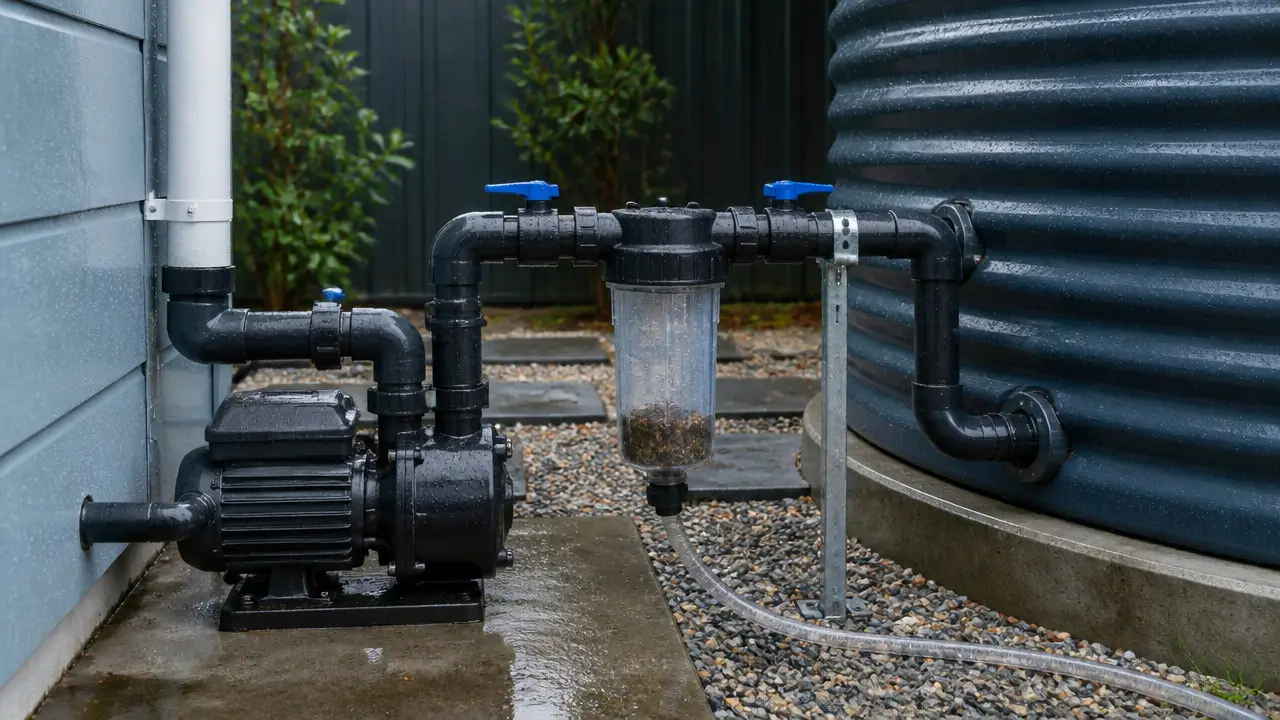
An inline filter sits directly in a water line. Water enters one end, passes through the filter media, and leaves through the other end.
Some inline filters are disposable. Others use a reusable housing with a replaceable cartridge. The housing itself may last for years if it remains undamaged, but the filtering material inside has a much shorter service life.
Several factors determine how quickly that material wears out.
Water volume
Filters can only treat a certain amount of water before their useful capacity is reached.
Manufacturers may rate a filter by:
- gallons treated
- months of normal use
- both gallons and months
- pressure drop or another service indicator
If a filter is rated by both gallons and time, do not assume you can keep using it just because you have not reached the gallon limit. The time limit can also matter.
NSF notes that certified drinking-water filters have established service cycles, and their cartridges should be replaced according to the specified capacity.
Amount of sediment
Sediment is one of the biggest reasons inline filters need early replacement.
Rainwater can carry:
- roof grit
- pollen
- dust
- bits of leaves
- insect material
- sediment from the bottom of a tank
Well water may contain sand, silt, iron particles, or other suspended material.
These particles fill the spaces in a filter. As they collect, water has a harder time passing through.
A sediment-heavy supply can therefore clog a cartridge long before a cleaner water supply would.
Filter type
Different filters wear out in different ways.
A sediment filter mainly catches particles. Its useful life usually ends when it becomes heavily loaded or produces too much pressure loss.
An activated carbon filter can adsorb certain chemicals and compounds that affect taste or odor. Adsorb means the substances stick to the surface of the carbon. Carbon has a limited capacity, so it must eventually be replaced even if water still flows through it.
Specialty cartridges may be designed for particular contaminants. Their service life should be based on the manufacturer's stated capacity rather than appearance alone.
Filter size
A larger filter generally has more surface area or filtering material available than a small inline cartridge of the same general type.
But physical size alone does not tell you how long a filter will work. Media type, construction, incoming water quality, flow rate, and treatment claims all matter.
Use the rated service capacity rather than comparing filters only by their outside dimensions.
Flow rate
Flow rate means how much water moves through the filter during a given amount of time.
Putting a small filter in a high-flow line can create problems. The filter may restrict water from the start, and it may clog quickly.
This matters especially with pumps, irrigation systems, and whole-house lines. A filter must be able to handle the system's required flow without creating excessive restriction.
How Do You Know When an Inline Filter Needs Replacing?
Do not wait for the water to look bad before replacing a filter.
The most reliable replacement trigger is reaching the manufacturer's stated service interval or water capacity. EPA recommends tracking the days or gallons used when a filter does not have its own replacement indicator.
There are also signs that a filter may need attention sooner.
Water flow becomes noticeably slower
Reduced flow is common with sediment filters.
As trapped material fills the filter, resistance increases. A faucet may run more slowly, an irrigation system may lose flow, or a pump may have trouble supplying water through the restriction.
Check other possible causes before blaming the cartridge. A closed valve, blocked screen, pinched hose, clogged pump inlet, or low tank level can produce similar symptoms.
Pressure drops across the filter
Filters create some resistance even when clean. As they clog, that resistance usually increases.
Systems with pressure gauges before and after the filter make this easier to see.
A growing difference between inlet and outlet pressure can indicate that the filter is loading with debris. Follow the filter manufacturer's recommended pressure-drop limit rather than guessing when the cartridge is too restricted.
Taste or odor returns
A carbon filter that once reduced an unwanted taste or odor may become less effective as its adsorption capacity is used up.
However, taste and smell are not reliable drinking-water safety tests. Water can contain harmful contaminants without an obvious change in taste, smell, or appearance.
The replacement date arrives
A filter may look clean and still be due for replacement.
This is especially important when the cartridge is being used for a specific drinking-water contaminant reduction claim. Do not extend the service interval simply because flow still seems normal.
EPA notes that filters are only effective when maintained according to their instructions, and delayed replacement can reduce the protection expected from the system.
Why Rainwater Can Shorten Filter Life
Roof-collected rainwater can be much harder on an inline filter than treated municipal water.
The first part of a storm can wash accumulated material from the roof into the collection system. Even after larger debris is screened out, fine particles can reach the tank.
A good rainwater system normally deals with larger contaminants before asking a fine filter to handle them.
Review key facts about the lifespan of a whole house water filtration system to understand a workable connection between unlike components.
Depending on the system, that may include:
roof screening → first-flush control → tank settling → coarse filtration → finer filtration
A first flush is a method of diverting some of the initial roof runoff so that part of the dirt accumulated between rains does not enter storage.
It does not make the remaining water safe to drink. It simply helps manage incoming contamination and debris.
If a very fine cartridge is installed directly after a dirty rainwater tank with no earlier sediment control, it may clog quickly.
Does a Lower Micron Rating Mean a Filter Lasts Longer?
Not necessarily. It can actually mean the opposite.
A micron is one-millionth of a meter. A filter's micron rating describes the size of particles it is intended to capture under specified conditions.
A finer filter can trap smaller material. But when water contains a lot of sediment, those smaller pores can become blocked rapidly.
For example, it usually makes little sense to send heavily sedimented tank water straight into the finest filter in a multi-stage system. A coarser sediment stage upstream can remove larger particles first and reduce the load on later stages.
A micron rating also does not tell you everything a filter removes. CDC notes that different filtration technologies remove different contaminants and that many common household filters are not designed to remove disease-causing microorganisms.
Can You Make an Inline Filter Last Longer?
You can often improve useful filter life by reducing the amount of unnecessary material reaching it.
For a rainwater system, this can include keeping gutters and collection surfaces reasonably clean, using suitable inlet screens, controlling sediment before fine filtration, and drawing water from a point that does not constantly pull settled sludge from the bottom of the tank.
A sediment filter can also be placed ahead of a more expensive or more specialized treatment stage when the equipment is designed for that arrangement.
Do not reduce maintenance simply to extend cartridge life. The goal is not to keep one cartridge in service as long as possible. The goal is to give each treatment stage reasonably clean incoming water while replacing it before its useful capacity is exceeded.
Can You Clean and Reuse an Inline Water Filter?
Only if the filter is specifically designed to be cleaned.
Some irrigation screens, mesh filters, and disc filters can be opened and cleaned repeatedly. Some sediment-filter designs are also washable.
Many disposable carbon and drinking-water cartridges are not.
Rinsing a disposable cartridge does not restore its original contaminant-removal capacity. It can also introduce contamination or damage the media.
Follow the instructions for the exact cartridge and housing you have.
Replacement Filters Must Fit the Housing
Do not assume that cartridges are interchangeable because they look similar.
The length, diameter, seal, end design, flow direction, and treatment media all need to match the system.
NSF warns that an incorrect cartridge can allow water to bypass the filtering material even when the replacement appears to fit the housing.
This matters especially when the filter is being relied on for a certified drinking-water treatment claim.
Check the housing or system manual for the correct replacement cartridge rather than choosing by appearance alone.
Inline Filters and Drinking Rainwater
An inline filter should not be treated as proof that collected rainwater is potable.
Potable means suitable for drinking. Non-potable water is water used for purposes such as irrigation or other approved uses where drinking-water quality is not required.
Roof runoff can contain microorganisms, animal waste, particles, chemicals, and materials picked up from the roof and collection system.
CDC emphasizes that different filters remove different contaminants, and many common household filters do not remove harmful germs.
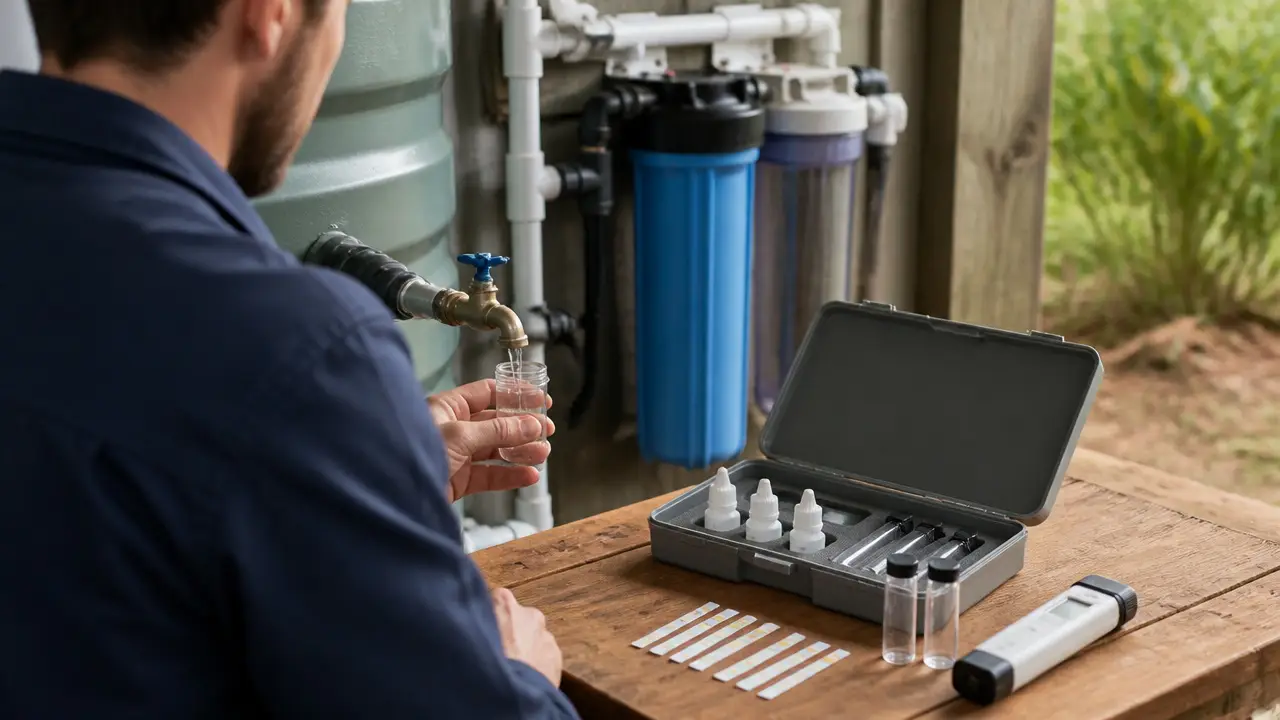
If rainwater is intended for drinking, filtration is only one part of the decision. A suitable system may require careful collection, prefiltration, appropriate treatment stages, sanitary storage and plumbing, regular maintenance, and current laboratory testing. Local health and plumbing requirements also need to be checked.
Changing an inline filter on time is important, but a new cartridge by itself does not establish that rainwater is safe to drink.
A Simple Replacement Routine
A practical maintenance routine is easier than trying to remember when every filter was installed.
When installing a new inline cartridge:
- Record the installation date.
- Record the filter's rated gallon capacity and time limit.
- Confirm that the replacement cartridge matches the housing.
- Inspect upstream screens and sediment filters.
- Watch for unusual drops in flow or pressure.
- Replace the cartridge when its stated limit is reached, even if it still looks usable.
- Inspect seals and the housing each time the filter is serviced.
If the system treats drinking water, follow the manufacturer's sanitation and cartridge-change instructions carefully.
EPA and CDC both recommend maintaining filters according to their instructions rather than extending service intervals based only on appearance.
Frequently Asked Questions
How long does an inline water filter usually last?
There is no universal lifespan. Inline filters are normally replaced according to a specified number of gallons, a time interval, or both. Incoming water quality can make a filter clog or reach its useful capacity sooner.
Can an inline filter last for years?
The filter housing may last for years if it remains in good condition, but the cartridge or filtering media usually requires much more frequent replacement. Follow the service interval specified for the cartridge.
Does low water pressure mean the filter is worn out?
It can. A clogged sediment filter creates resistance and may reduce flow or downstream pressure. Check for other problems such as blocked screens, closed valves, low pump pressure, or restricted hoses before replacing parts unnecessarily.
Does a dirty-looking filter always need replacing?
Heavy visible loading is a good reason to inspect or replace a sediment cartridge, but appearance is not a reliable measure for every filter. Carbon and contaminant-reduction filters may reach their rated capacity without looking obviously dirty.
Will a prefilter make an inline filter last longer?
It often can when sediment is the main problem. Removing larger debris before water reaches a finer cartridge reduces the amount of material the finer stage must hold. The prefilter must also be cleaned or replaced as required.
Can I keep using a filter if the water still tastes fine?
Do not use taste as the replacement standard. A filter can reach the end of its rated service capacity without producing an obvious taste or odor change. Follow the manufacturer's gallon or time limit.
Can an inline filter make rainwater safe to drink?
Not by itself. An inline filter only performs the treatment functions it was designed and verified to perform. Drinking rainwater requires a whole-system approach that considers collection, contamination risks, treatment, storage, maintenance, laboratory testing, and applicable local requirements.