As an affiliate, we may earn a commission from qualifying purchases. We get commissions for purchases made through links on this website from Amazon and other third parties.
Inline water filters can develop problems when they clog, leak, are installed the wrong way, or are used for contaminants they were not designed to remove.
Most problems are easy to trace once you look at flow, pressure, connections, filter condition, and the intended water use. The key is to treat the filter as one part of the water system, not as a complete treatment system by itself.
Common Inline Water Filter Problems
1. Reduced Water Flow
Low flow is one of the most common signs of a filter problem.
As the filter traps dirt, sediment, rust, or other material, water has less room to pass through. Flow can slowly drop until faucets, irrigation lines, or appliances receive much less water than normal.
Common causes include:
- A clogged filter cartridge
- Heavy sediment in the incoming water
- A filter that is too small for the required flow
- A very fine filter installed too early in the system
- A partially closed valve
- Kinked or restricted tubing
A filter's micron rating describes the approximate size of particles it is designed to catch. A lower micron number generally means finer filtration. Finer filters can clog faster when the incoming water contains a lot of sediment.
Check the cartridge first if flow was good after installation but became worse over time.
If flow has always been poor, the filter housing, cartridge, tubing, or connection size may be too restrictive for the system.
2. The Filter Clogs Too Quickly
A filter that needs constant replacement often has a problem upstream.
For example, rainwater coming directly from a roof can contain leaves, grit, pollen, insects, roofing debris, and fine sediment. Sending all of that material directly into a fine inline filter can clog it quickly.
A better system may use several stages, such as:
- Gutter screens or debris guards
- A first-flush device, which diverts some of the first runoff from the roof
- Tank inlet screening
- Settling inside the storage tank
- Coarser filtration before finer filtration
The exact arrangement depends on how the water will be used.
If a fine cartridge repeatedly turns brown or fills with sediment, simply replacing it with another identical cartridge may not solve the underlying problem.
3. Leaks Around the Filter Housing
Leaks often appear around threaded connections, housing seals, or push-fit fittings.
Possible causes include:
- Loose fittings
- Damaged threads
- A pinched or dirty O-ring
- A cracked housing
- Excessive system pressure
- Incorrect pipe-thread sealant
- Tubing that was not fully inserted into a fitting
- Connections that do not match
Shut off the water and release pressure before opening a pressurized filter housing.
Inspect the O-ring carefully. Dirt, twisting, flattening, or damage can stop it from sealing properly. Follow the filter manufacturer's instructions for cleaning, lubrication, and replacement because not every lubricant or sealant is suitable for every material.
Do not keep tightening a plastic housing to stop a leak. Excessive force can damage the threads or crack the housing.
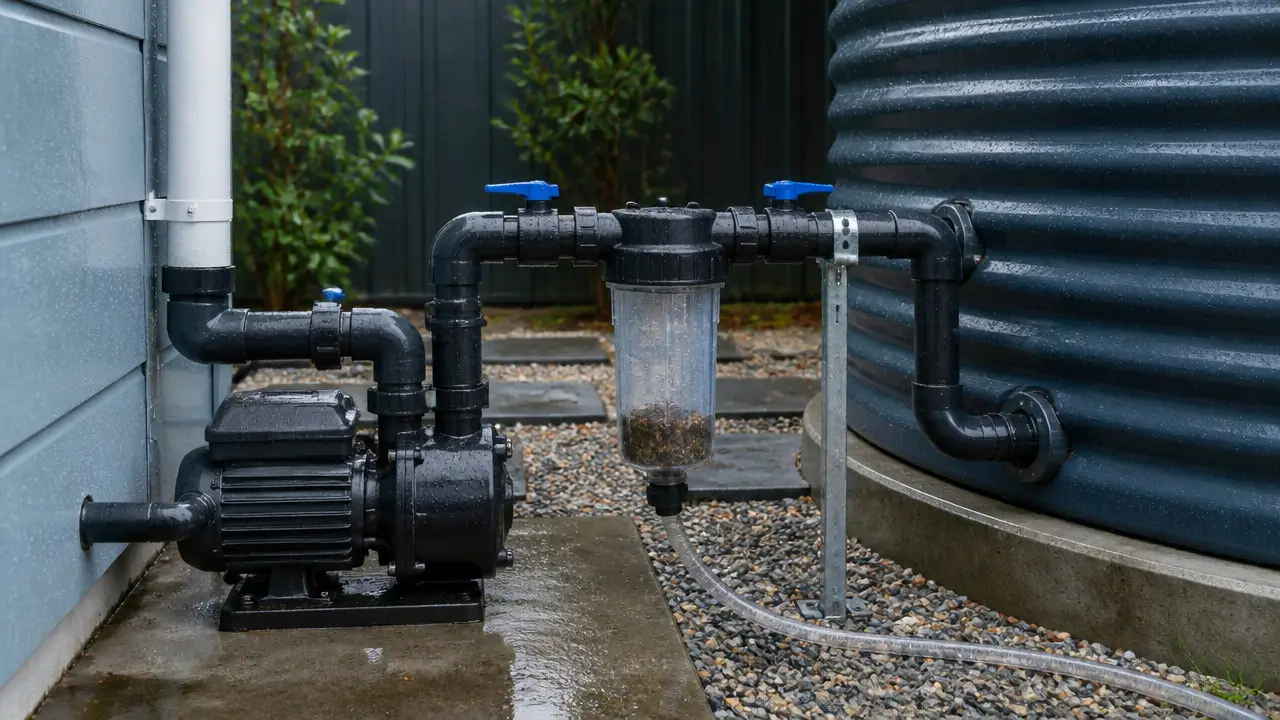
4. Air Leaks on Pump Suction Lines
An inline filter installed before a pump can cause a different kind of leak.
Instead of water leaking out, air may be pulled into the suction line.
This can lead to:
- Loss of pump prime
- Reduced flow
- Unstable pressure
- Pump cycling
- Bubbling or spurting water
- Difficulty getting the pump started
Suction-side connections must be especially well sealed because even a small air leak can interfere with pump operation.
A dirty filter on the suction side can also make it harder for the pump to draw water. Some pumps should not have a restrictive fine filter installed directly on their inlet.
Check the pump manufacturer's installation requirements before adding filtration ahead of the pump.
5. Filter Housing Cracks
Plastic filter housings can crack from physical damage, high pressure, overtightened fittings, freezing, or age.
Freezing is a major concern in exposed rainwater and irrigation systems.
Water expands when it freezes. A filter bowl that remains full of water can crack even if the rest of the plumbing looks undamaged.
In freezing climates, exposed filters may need to be drained, removed, relocated, insulated, or otherwise winterized according to the system design.
Insulation alone does not guarantee freeze protection.
Replace a cracked housing. Repairing a pressurized filter housing with glue, tape, or sealant is generally not a dependable solution.
6. Water Bypasses the Filter
Sometimes water appears to be flowing normally, but little filtration is actually happening.
This can occur when:
- The cartridge is installed incorrectly
- A cartridge is missing
- A seal is damaged
- The cartridge does not fit the housing
- Internal parts are missing or misaligned
- A bypass valve is open
A cartridge that is slightly too short or the wrong shape may allow water to travel around it rather than through the filter media.
Use cartridges specifically designed to fit the housing.
7. The Filter Does Not Remove the Expected Contaminant
Not all inline filters do the same job.
A sediment filter mainly removes suspended particles. It does not automatically remove microorganisms, dissolved chemicals, salts, or every substance that could affect drinking-water safety.
Activated carbon filters may reduce certain tastes, odors, and chemicals depending on their design and certification, but they should not be treated as universal purification devices.
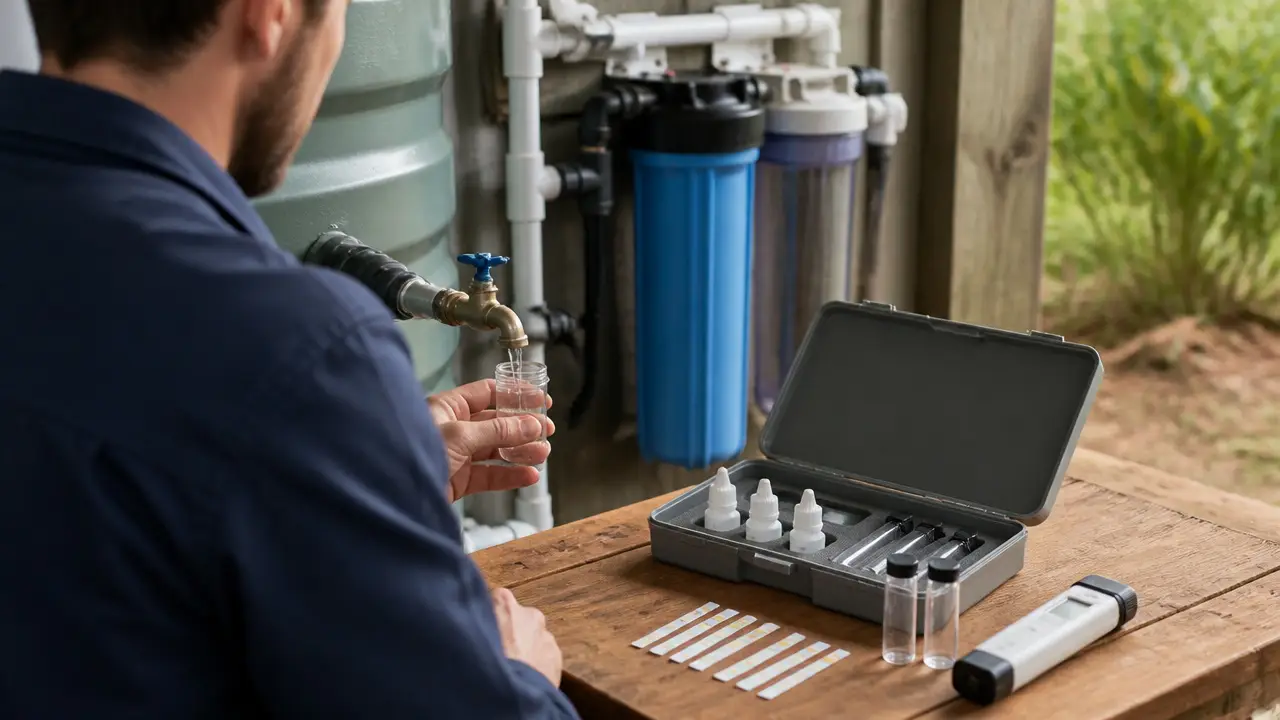
A water-quality meter can also be misleading if it is used for the wrong purpose. For example, a total dissolved solids, or TDS, meter measures the electrical conductivity associated with dissolved minerals and salts. A low TDS reading does not prove that water is microbiologically safe.
Choose filtration based on the contaminant you actually need to address and the intended use of the water.
8. Bad Taste or Odor Returns
Some inline filters are used to improve taste or odor.
If the problem returns quickly, possible causes include:
- An exhausted carbon cartridge
- Water sitting in the filter for long periods
- Contamination elsewhere in the plumbing
- Organic material in a rainwater tank
- Algae or biofilm growth
- A filter that does not address the actual cause
Replacing the filter may help if the media has reached the end of its service life, but recurring odor should be investigated throughout the system.
Clean storage, protected openings, suitable plumbing, and regular maintenance are also important.
9. Slime or Biofilm Develops Inside the Housing
Water filters can become places where microorganisms grow if conditions allow it.
A biofilm is a layer of microorganisms and organic material that sticks to a wet surface.
It may develop when:
- Water remains stagnant
- The housing is rarely cleaned
- Organic material reaches the filter
- Filters are left in service too long
- Warm conditions encourage growth
Replacing only the cartridge may not remove buildup from the housing itself.
Clean and maintain the housing according to the manufacturer's instructions whenever cartridges are changed.
If the water is intended for drinking, visible growth or recurring microbial concerns should be treated as a water-quality issue, not just a filter-maintenance problem.
10. Pressure Drops Too Much Across the Filter
Every filter creates some resistance to water flow.
The pressure loss becomes larger when:
- The cartridge gets dirty
- The filter is too small
- Flow demand is high
- The cartridge has very fine filtration
- Several filters are installed in series
- Small tubing or fittings restrict flow
This matters in systems supplying showers, household plumbing, pumps, or irrigation equipment.
For example, an irrigation controller may open several zones or outlets that demand more water than the filter can pass comfortably. Pressure downstream can then fall even though the pump and tank are working correctly.
Check the filter's permitted flow and pressure range against the needs of the whole system.
11. The Filter Causes Pump Cycling
An automatic pump may repeatedly start and stop if a clogged or restrictive filter changes the pressure conditions in the plumbing.
Possible signs include:
- Short bursts of water
- Rapid pump starts
- Pressure that rises and falls
- Automatic pump controls switching frequently
Do not assume the pump controller is faulty.
Check for:
- Clogged filters
- Closed valves
- Restricted pipework
- Leaks
- Pressure tank problems
- Incorrect pump settings
Persistent rapid cycling can damage pumping equipment and should be corrected rather than ignored.
12. The Cartridge Collapses or Becomes Damaged
A filter cartridge can deform or collapse when the pressure difference between its inlet and outlet becomes too large.
This may happen when the cartridge becomes severely clogged while the pump continues trying to push water through it.
Other possible causes include:
- Using the wrong cartridge
- Excessive temperature
- Excessive pressure
- Incorrect installation
Replace damaged cartridges and determine why the pressure difference became excessive before installing another one.
13. The Wrong Filter Direction Is Used
Some inline filters have a required flow direction.
The housing or filter body may have an arrow showing which way water should travel.
Installing the filter backward can reduce performance or interfere with internal valves or media arrangements.
Check the flow arrow before installation and after plumbing modifications.
14. Connections Do Not Match the Plumbing
Inline filters are available with many different connection types and sizes.
Account for signs of a clogged or dirty water filter to understand the difference between a screening result and a safety finding.
Problems often start when users try to combine:
- Garden hose threads
- Pipe threads
- Compression fittings
- Push-fit tubing
- Barbed hose connections
- Different pipe diameters
Two fittings that look similar may use different thread standards.
Forcing mismatched fittings together can damage threads or create leaks.
Choose adapters that match both sides of the connection instead of relying on excessive thread tape or tightening force.
15. Filters Are Replaced Too Late
Filters do not last forever.
Waiting until water almost stops flowing is not always a good maintenance plan.
Signs that replacement may be needed include:
- Noticeable pressure loss
- Reduced flow
- Visible sediment loading
- Returned taste or odor problems
- Manufacturer service intervals being reached
Replacement timing depends heavily on water quality and water use.
Rainwater with heavy sediment may clog a cartridge much faster than clean municipal water running through the same type of filter.
16. Filters Are Replaced Too Often
The opposite problem also occurs.
Some users change filters on a fixed schedule even when the cartridge condition and manufacturer guidance do not require it.
A better maintenance plan considers:
- Water volume used
- Incoming water quality
- Pressure drop
- Cartridge condition
- Manufacturer instructions
- Intended water use
Adding pressure gauges before and after larger filters can help show when resistance through the filter is increasing.
17. The Filter Freezes
Outdoor filters are vulnerable to freezing because they often contain trapped water.
Possible results include:
- Split filter bowls
- Broken fittings
- Damaged cartridges
- Leaks after thawing
Before freezing weather, follow the winterizing method suitable for the entire water system.
This may include draining exposed components or moving removable filter assemblies to a protected location.
Do not assume that draining the tank automatically drains every filter housing and low point in the plumbing.
18. Hot Water Damages the Filter
Many common inline filters are designed for cold water only.
Installing them on hot-water plumbing can soften, distort, or weaken housings and filter media if the equipment is not rated for that temperature.
Always check the allowed temperature range before installation.
Use equipment specifically designed for hot water when hot-water filtration is required.
19. The Filter Is Installed in a Hard-to-Service Location
A filter may work well but still cause problems if it cannot be maintained easily.
Avoid placing filter housings where you cannot:
- Shut off the water
- Release pressure
- Unscrew the housing
- Remove the cartridge
- Place a bucket underneath
- Inspect for leaks
Large housings need enough clearance below them to remove the bowl.
Planning service space during installation can prevent a simple cartridge replacement from becoming a plumbing project.
20. The Filter Is Being Asked to Do Too Much
An inline filter works best when it has a clear job.
For example:
- A sediment filter catches particles.
- A carbon stage may address certain tastes, odors, and chemicals.
- Other treatment equipment may target specific water-quality concerns.
Trying to use one small inline filter to handle heavy roof debris, fine sediment, dissolved contaminants, microorganisms, and household water treatment is unlikely to work well.
For rainwater systems, good treatment begins before the inline filter. Roof condition, gutter screening, first-flush management, tank protection, settling, plumbing design, and maintenance all affect what reaches the filter.
How to Troubleshoot an Inline Filter
Start with the simplest checks.
Check the water flow
Compare flow before and after the filter if the system allows it.
A large difference suggests the filter or its fittings are restricting water.
Inspect the cartridge
Turn off the water and safely release pressure before opening a pressurized housing.
Look for:
- Heavy sediment
- Slime
- Deformation
- Damage
- Incorrect cartridge placement
Replace the cartridge if needed.
Check valves and tubing
Make sure valves are fully open and flexible lines are not pinched or kinked.
Inspect every connection
Look for dripping water, loose fittings, damaged seals, and signs that air may be entering a pump suction line.
Confirm the filter is the right size
A small filter may work well for one drinking-water faucet but restrict a pump supplying several irrigation outlets.
The filter must match the required flow.
Confirm the filter type
Make sure the filter media is designed for the problem you are trying to address.
Changing from one sediment cartridge to another will not solve a contaminant problem that requires a different treatment method.
When to Replace the Housing Instead of the Cartridge
Replacing the cartridge is usually enough when the media is simply dirty or exhausted.
Replace the housing or filter body if you find:
- Cracks
- Damaged threads
- Severe distortion
- Broken internal parts
- A damaged sealing surface that cannot hold pressure
Do not continue using a damaged pressurized housing.
Inline Filters and Drinking Water
Extra care is needed when filtered rainwater is intended for drinking, cooking, or other potable use.
Potable means water suitable for drinking.
An inline filter by itself does not establish that roof-collected rainwater is potable.
A drinking-water system may require suitable collection surfaces, debris control, protected storage, prefiltration, treatment designed for identified hazards, regular maintenance, and current laboratory testing.
The correct treatment depends on the source water and the risks present.
Follow applicable local requirements and use qualified water-treatment or plumbing professionals when designing a household drinking-water system.
Frequently Asked Questions
Why does my inline water filter keep clogging?
The incoming water probably contains more sediment than the cartridge can handle. Check the tank, pipes, roof runoff controls, and any upstream screens. Adding a coarser filtration stage before a fine filter can sometimes reduce rapid clogging.
Can a clogged water filter reduce water pressure?
Yes. A dirty filter increases resistance to flow. Pressure downstream can fall, especially when several taps or irrigation outlets are being used at once.
Why is my inline filter leaking after I changed the cartridge?
The housing O-ring may be dirty, twisted, damaged, or incorrectly seated. The housing may also be loose or damaged. Shut off the water, release pressure, and inspect the seal and housing according to the manufacturer's instructions.
Can an inline filter damage a water pump?
The filter itself normally does not damage the pump, but a badly clogged or incorrectly placed filter can restrict water supply. Some pumps may overheat, lose prime, cycle excessively, or operate poorly when their inlet flow is restricted. Follow the pump manufacturer's requirements.
How often should an inline filter be changed?
There is no single replacement interval for every system. Replacement depends on the filter type, water quality, volume used, pressure drop, and manufacturer instructions. Rainwater systems with more sediment may need more frequent maintenance.
Can an inline sediment filter make rainwater safe to drink?
No. A sediment filter mainly removes suspended particles. It does not by itself provide a complete drinking-water treatment process or prove that rainwater is free from harmful microorganisms or dissolved contaminants.
Why does my new filter have very low flow?
Possible causes include a cartridge that is too fine, a filter that is too small, undersized fittings, a closed valve, incorrect installation, or a cartridge that does not match the housing. Check the required flow direction and system sizing.
Should an inline filter go before or after the pump?
It depends on the pump and the filter. A coarse strainer may be suitable before some pumps, while fine filters are often better placed on the pressure side. A restrictive filter on the suction side can interfere with some pumps. Follow the pump and filter manufacturers' installation requirements.