As an affiliate, we may earn a commission from qualifying purchases. We get commissions for purchases made through links on this website from Amazon and other third parties.
Poor water quality happens when unwanted material gets into water, grows in it, or comes from the equipment that carries and stores it. In a rainwater system, problems can start in the air, on the roof, inside gutters, in the storage tank, or anywhere between the tank and the point of use.
Water quality also depends on what you plan to do with the water. Water that is acceptable for watering ornamental plants may not be suitable for washing food, bathing, or drinking.
Clear water is not proof that water is safe. Germs and dissolved chemicals can be present without changing the water's color, taste, or smell. The CDC notes that collected rainwater can contain both germs and chemicals even when it looks clean.
The Main Types of Water Quality Problems
Water contaminants can be grouped into several broad types. The EPA classifies drinking-water contaminants as physical, chemical, biological, or radiological.
For a typical household rainwater system, the first three are usually the most practical concerns.
Physical contamination
Physical contamination includes things you can often see in the water, such as:
- Dust
- Sand
- Roof grit
- Leaves
- Pollen
- Insect parts
- Sediment
- Pieces of organic matter
Physical contaminants can make water cloudy or dirty. They can also settle on the bottom of a rain barrel, IBC tote, or cistern.
Sediment is not only an appearance problem. A dirty tank can provide places where microorganisms and organic material collect. Sediment can also clog valves, pumps, irrigation emitters, and filters.
Biological contamination
Biological contaminants include bacteria, viruses, protozoa, parasites, algae, and other living organisms.
In a rainwater system, microorganisms can enter with:
- Bird or animal droppings on the roof
- Insects
- Decaying leaves
- Dirty gutters
- Contaminated equipment
- Surface water entering an improperly sealed tank
The CDC specifically notes that dirt and germs from a roof, including material from bird droppings, can wash into collected rainwater. Contamination can be greater when rain follows a long dry period because more material has had time to build up on the collection surface.
Biological contamination matters most when water may be swallowed, inhaled as a fine spray, or used for bathing, food preparation, or other higher-contact uses.
Chemical contamination
Chemicals can enter water before the rain reaches the roof or as water passes through the collection system.
Possible sources include:
- Air pollution
- Smoke and ash
- Roofing materials
- Roof coatings
- Gutters
- Flashing
- Pipes
- Fittings
- Storage-tank materials
- Nearby chemical use
The CDC notes that collected rainwater can pick up chemicals from the air and from roofing, gutter, piping, storage, and other system materials. Examples can include metals such as lead or copper when those materials are present in the collection path.
This is one reason a tank labeled merely as a "container" should not automatically be assumed suitable for storing water intended for household or drinking-water use.
What Causes Poor Quality in Collected Rainwater?
Rainwater quality depends on the whole path the water follows.
A problem at any stage can affect everything downstream.
Airborne dust, smoke, and pollution
Rain can collect material while falling through the atmosphere.
Depending on local conditions, this may include dust, smoke, pollen, or other airborne particles. A rainwater system near heavy traffic, industrial activity, wildfire smoke, or another pollution source may face different water-quality concerns than a system in another location.
The first rain after a dry period can also carry accumulated airborne material onto and off the roof.
A dirty collection roof
A roof acts as a large catchment surface.
Between storms it can collect:
- Bird droppings
- Leaves
- Pollen
- Dust
- Insects
- Moss
- Small animal debris
Rain washes some of this material into the gutters.
A clean-looking roof can still contribute contaminants that are too small to see.
Roof material matters as well. Water intended for higher-quality uses requires extra attention to whether roofing, coatings, flashing, sealants, and other surfaces are suitable for the intended water use.
Clogged or dirty gutters
Gutters can become collection points for leaves, dirt, animal waste, and decaying organic matter.
When rainwater passes through this material, contamination can move directly toward the tank.
Gutter guards can reduce large debris, but they do not eliminate the need for inspection and cleaning.
No first-flush control
A first-flush diverter is a device that sends the earliest runoff from a storm away from the storage tank.
That early runoff often carries a heavier load of dust, droppings, pollen, and other material that accumulated between storms.
The CDC recommends considering a first-flush diverter as one way to improve collected rainwater quality. The appropriate amount to divert depends partly on the roof area feeding the system.
A first flush can reduce contamination entering the tank, but it does not disinfect the water or make it potable.
Potable means suitable for drinking. Non-potable means the water is not intended for drinking.
Missing or damaged screens
Screens help keep leaves, insects, mosquitoes, and other large contaminants out of storage.
Problems can develop when:
- Screens tear
- Covers are left open
- Overflow pipes are unscreened
- Tank lids do not seal properly
- Inlet screens become clogged
An open rain barrel can quickly become a collection point for insects and debris.
The CDC recommends screening rainwater collection openings to help prevent mosquitoes from entering.
Sediment building up in the tank
Even a screened system usually allows some fine particles to reach storage.
Over time, these particles can settle into a layer on the bottom of a barrel or cistern.
Heavy sediment buildup can:
- Make water cloudy when disturbed
- Add organic material to the tank
- Clog outlets
- Increase filter loading
- Affect pumps and irrigation equipment
Tank design can make a difference. An outlet positioned directly at the lowest dirty part of a tank may pull more sediment than one arranged to avoid settled material.
Periodic inspection and cleaning are still necessary.
Sunlight entering the tank
Stored rainwater is generally easier to manage when the storage container blocks light.
Sunlight can encourage algae growth when nutrients and suitable conditions are present.
A clear or translucent tank placed in direct sunlight may therefore develop more biological growth than an opaque tank.
If a tank was not designed for outdoor water storage, also check whether its material is suitable for long-term exposure to sunlight and the intended use of the water.
Warm, stagnant water
Long storage periods can change water quality.
Warm water combined with organic material and little movement can create conditions that support microbial growth.
This does not mean stored rainwater automatically becomes unsafe after a specific number of days. Storage conditions vary too much for one universal time limit.
Instead, consider:
- Tank temperature
- Amount of organic matter
- Tank cleanliness
- Light exposure
- How often water turns over
- Intended water use
Look closely at contamination risks in fresh rainwater to verify the relevant trade-offs before the project advances.
Water intended only for garden irrigation has different quality requirements from water intended for household use.
Dirty plumbing and hoses
Water does not stop changing once it leaves the tank.
Poor water quality can also develop in:
- Garden hoses
- Distribution pipes
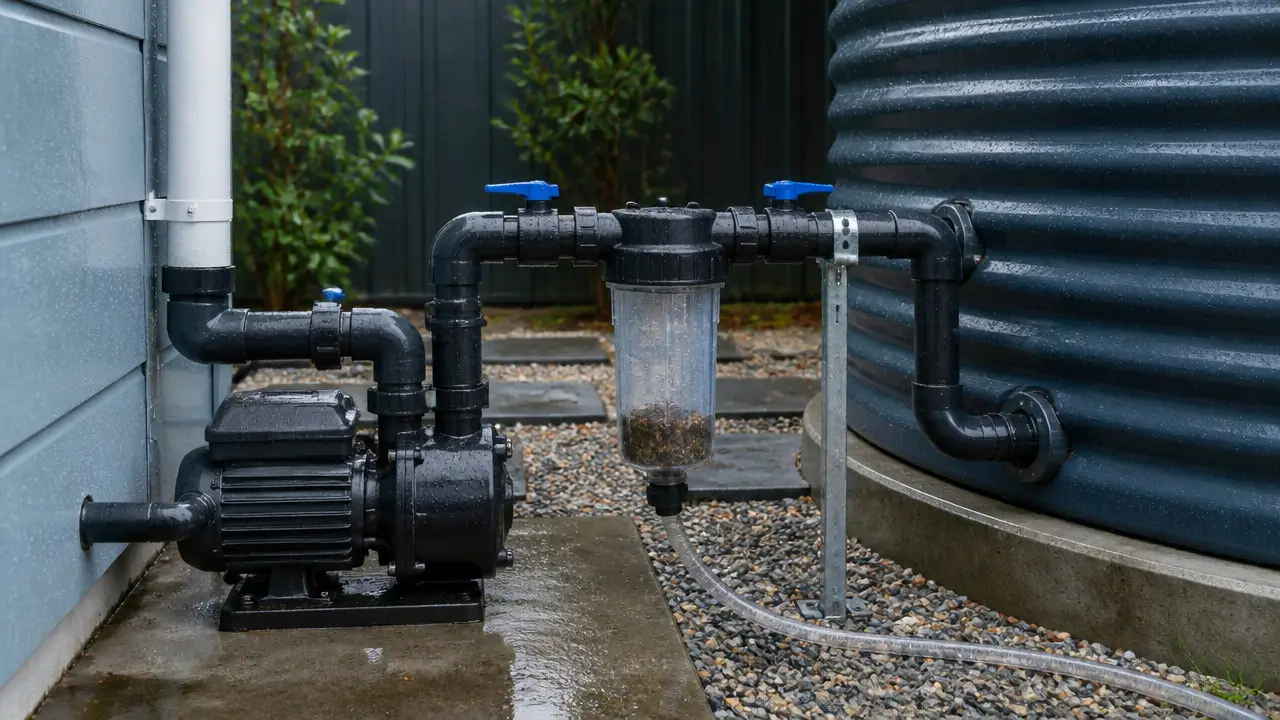
- Pump housings
- Pressure tanks
- Filter housings
- Faucets
- Dead-end plumbing sections
Sediment, biofilm, corrosion, or unsuitable materials can affect water after storage.
This is why testing only the tank may not always tell you what is reaching a household faucet.
Corroding metal components
Some water can cause plumbing materials to corrode.
Metals may then enter the water from pipes, faucets, fittings, or other components. EPA notes that lead, for example, can enter drinking water when plumbing containing lead corrodes. Water chemistry can influence how readily that corrosion occurs.
Use materials that are suitable for the water and its intended use rather than assuming every plumbing part is interchangeable.
Poor Maintenance Can Undo a Good System
A well-designed rainwater system still needs maintenance.
Common maintenance problems include:
- Leaving gutters full of debris
- Never cleaning inlet screens
- Allowing tank sediment to build indefinitely
- Ignoring damaged covers or seals
- Letting first-flush devices clog
- Leaving filters unchanged
- Failing to clean reusable filters
- Allowing UV equipment to operate outside its required conditions
- Ignoring pump or plumbing contamination
Water treatment equipment can itself become a problem when it is not maintained properly. CDC notes that microorganisms can grow in filters and other treatment equipment that is not properly maintained.
Follow the maintenance requirements for the actual equipment installed rather than choosing a filter and assuming it can operate indefinitely.
Treatment That Does Not Match the Problem
Another cause of poor water quality is using the wrong treatment method.
Different treatment stages do different jobs.
For example, a sediment filter may remove particles without reliably addressing dissolved chemicals or microorganisms. A treatment method intended for microorganisms may not remove a particular dissolved metal.
A micron rating describes the approximate size of particles a filter is designed to capture. It does not by itself tell you whether the water is safe to drink.
Similarly, UV treatment is not simply a lamp that makes any incoming water potable. Effective UV treatment depends on equipment design, adequate water clarity, correct flow conditions, lamp condition, and the rest of the treatment system.
EPA notes that drinking-water treatment may involve different processes depending on the contaminants present.
Treatment should therefore start with the water source, intended use, known risks, and appropriate testing rather than with a single filter chosen in isolation.
Cross-Connections Can Contaminate Clean Water
Rainwater plumbing should not be casually connected to a household drinking-water system.
A cross-connection is a connection that creates a possible path between water of different quality. Without proper protection, rainwater could enter plumbing carrying treated drinking water.
CDC advises keeping rainwater separate from piped drinking water so contaminants from the rainwater system cannot enter the treated supply.
Any system that connects rainwater to indoor plumbing deserves careful planning. Plumbing and backflow requirements vary by location, so check with the local water or plumbing authority before making that type of connection.
Can You Tell Poor Water Quality by Looking at It?
Sometimes, but not reliably.
Possible warning signs include:
- Cloudiness
- Floating debris
- Unusual color
- Slime
- Algae
- Sediment
- Unusual odor
- Metallic or unusual taste
These signs can tell you that something needs attention.
Their absence does not prove the water is safe.
Many biological and chemical contaminants cannot be identified by sight, smell, or taste. The EPA also points out that the mere presence of a contaminant does not automatically mean it is present at a harmful concentration. Testing is needed when the actual concentration matters.
Does TDS Tell You Whether Water Is Good?
Not by itself.
Total dissolved solids, usually shortened to TDS, is a measure related to the amount of dissolved material in water.
A TDS meter can help show that dissolved-ion levels differ between water samples. It cannot identify every chemical present, tell you whether disease-causing organisms are present, or prove that rainwater is safe to drink.
Water can have a low TDS reading and still contain contaminants that matter for health.
Use TDS as one measurement when it is useful for the system you are managing, not as a general drinking-water safety test.
How to Improve Rainwater Quality
The most effective approach is to control contamination throughout the system rather than trying to fix everything at the end.
A practical sequence is:
- Keep the catchment surface reasonably clean. Reduce leaves, droppings, and other obvious contamination where practical and safe.
- Maintain gutters and downspouts. Remove accumulated debris and repair damaged sections.
- Screen incoming water. Keep large debris and insects out of storage.
- Use appropriate first-flush control when needed. Divert dirtier initial roof runoff before it reaches the tank.
- Keep storage covered and protected from light. Prevent insects, animals, debris, and unnecessary sunlight from entering.
- Manage sediment. Inspect the tank and clean it when buildup becomes significant.
- Maintain plumbing and treatment equipment. Replace or clean components according to their requirements.
- Match treatment to the intended use. Garden water and drinking water do not require the same system.
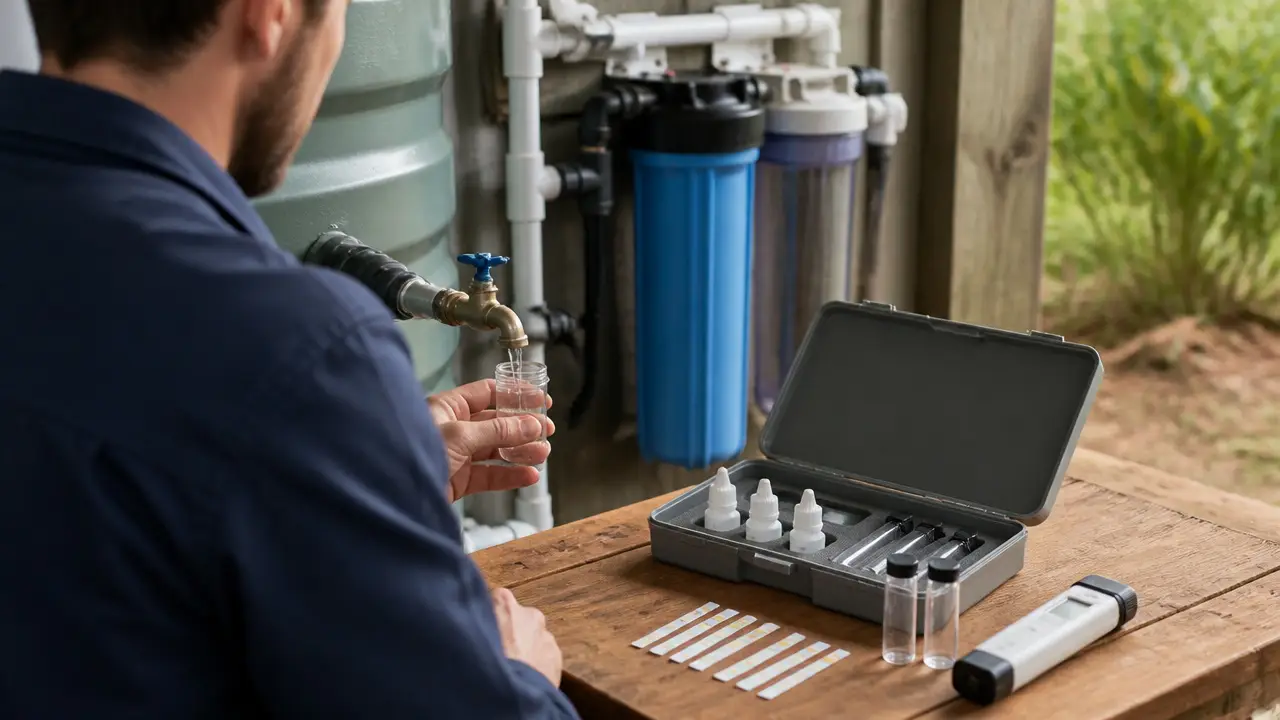
- Test when health decisions depend on water quality. Do not rely on appearance, taste, TDS, or one home test alone.
Drinking Rainwater Requires a Higher Standard
Rainwater used for landscape irrigation is mainly a system-management question.
Rainwater used for drinking is a water-safety question.
The CDC states that rainwater is not necessarily safe to drink and recommends regular testing for germs and chemicals when collected rainwater is used for drinking, cooking, or bathing.
For potable use, think about the complete system:
- Suitable roof and collection materials
- Debris control
- First-flush management
- Protected storage
- Appropriate treatment stages
- Properly maintained equipment
- Current laboratory testing
- Safe household plumbing
- Applicable local health and plumbing requirements
No single filter, purifier, UV unit, chemical treatment, test strip, or meter establishes that an entire rainwater system consistently produces potable water.
For drinking-water use, work with your local health authority and, when needed, a qualified water-treatment or plumbing professional. Testing should be selected for the risks associated with your source and system rather than using the same limited test panel everywhere.
Frequently Asked Questions
What is the most common cause of poor rainwater quality?
Material washing off the roof is one of the most common sources. Dust, leaves, pollen, insects, bird droppings, and other debris can enter the gutters and storage tank. Dirty storage and poor maintenance can make the problem worse.
Does a dirty rain barrel mean the water is unsafe?
A dirty barrel is a sign that cleaning or maintenance is needed, but appearance alone cannot establish whether water is safe or unsafe. Some contaminants are invisible. The intended use determines how much testing and treatment are necessary.
Can sunlight make stored rainwater worse?
Yes. Light can encourage algae growth when other suitable conditions are present. Opaque, covered storage generally makes algae easier to control than clear containers exposed to sunlight.
Does a first-flush diverter make rainwater safe to drink?
No. A first-flush diverter reduces some of the dirt and contamination washed from the roof at the beginning of a storm. It is a prefiltration measure, not a complete drinking-water treatment system.
Can a water filter fix poor rainwater quality?
It depends on the filter and the contamination. A sediment filter may remove particles but may not address microorganisms or dissolved chemicals. Treatment equipment must be selected for the contaminants of concern and maintained correctly.
Is clear rainwater good-quality water?
Not necessarily. Water can look clear while still containing microorganisms or dissolved chemicals. Appearance is useful for spotting some problems but cannot replace appropriate water testing.
Can I use a TDS meter to check whether rainwater is safe to drink?
No. A TDS meter measures dissolved ions indirectly and cannot tell you whether harmful microorganisms or specific chemicals are present. It should not be used as proof that rainwater is potable.
How often should I test rainwater?
There is no single testing schedule suitable for every system and use. CDC recommends regular testing for germs and chemicals when rainwater is used for drinking, cooking, or bathing. Your local health department can help determine which tests and testing frequency are appropriate for your system.