As an affiliate, we may earn a commission from qualifying purchases. We get commissions for purchases made through links on this website from Amazon and other third parties.
The best inline filter is the one that matches what is in the water, where the filter sits in the system, and what the water will be used for.
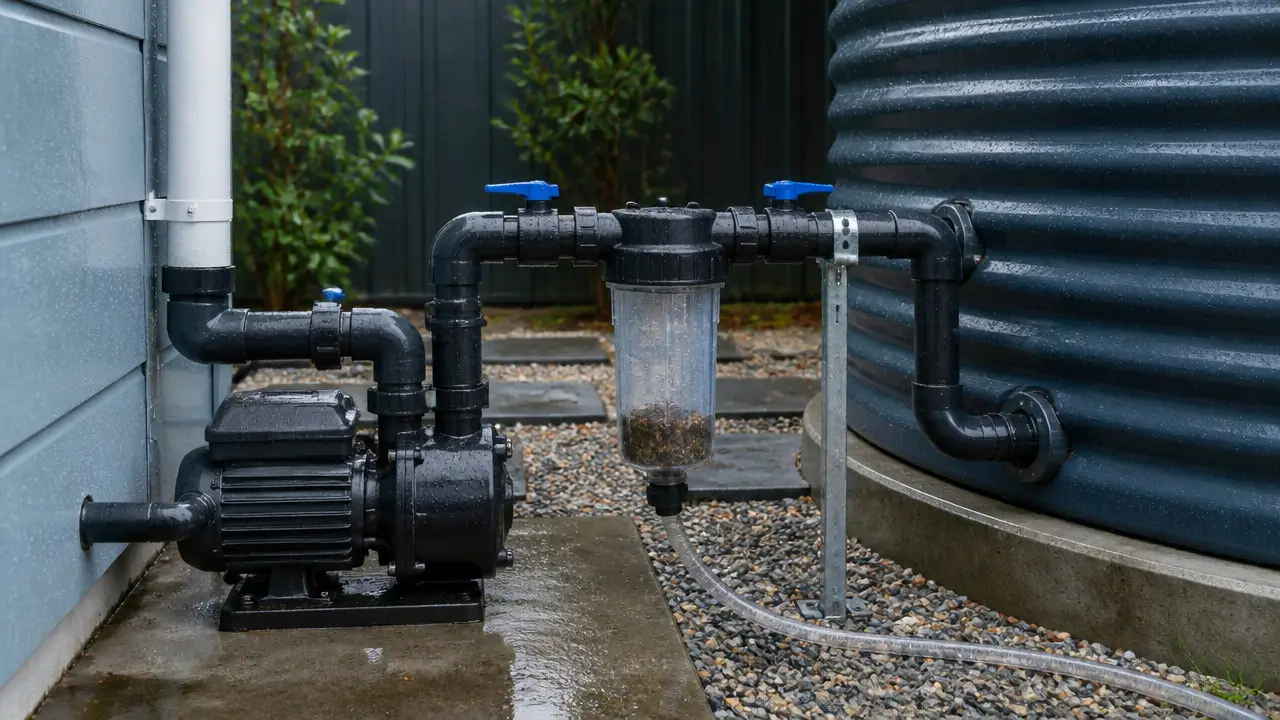
For most rainwater systems, a washable sediment filter is the best starting point. It can catch grit, insects, roof debris, and other particles before they reach pumps, valves, irrigation lines, or finer treatment stages. But an inline sediment filter does not make rainwater safe to drink.
If the water is intended for household or drinking use, the inline filter should be only one part of a larger treatment system.
What Is an Inline Water Filter?
An inline filter is installed directly in a water line. Water enters one side of the filter housing, passes through a screen or filter element, and exits through the other side.
Inline filters can be installed:
- Between a rain barrel and a garden hose
- Before an irrigation system
- Before a pump
- After a pump
- Between an IBC tote or cistern and household plumbing
- Before finer filters or treatment equipment
The right location depends on the filter type and what you are trying to protect.
What Type of Inline Filter Is Best?
There is no single filter that works best for every rainwater system.
Washable sediment filters are best for general debris
A washable screen or mesh filter is often the most useful inline filter for rain barrels, tanks, pumps, and irrigation systems.
It catches larger particles such as:
- Sand
- Grit
- Small leaves
- Insect debris
- Roof sediment
- Tank sediment
These filters are especially useful when the goal is to keep debris out of valves, hose fittings, pumps, sprinklers, and drip irrigation equipment.
A transparent housing can also be useful because you can see when debris is building up.
Cartridge sediment filters are better for finer particles
A cartridge filter uses a replaceable filter element inside a housing.
These filters are available in different micron ratings. A micron is a very small unit used to describe particle size. A lower micron rating generally catches smaller particles.
For example, a coarse filter may remove visible sediment while a finer filter can catch much smaller suspended particles.
Going straight to a very fine cartridge is not always better. If untreated rainwater contains a lot of debris, a fine cartridge can clog quickly.
A better arrangement is often:
- Keep leaves and roof debris out before storage.
- Use a coarse inline sediment filter.
- Add finer filtration only when the intended use requires it.
This staged approach usually reduces clogging.
Disc filters work well for irrigation
Disc filters contain stacked grooved discs that trap particles as water passes through them.
They can be a practical choice for irrigation because they handle sediment well and many designs can be cleaned rather than discarded.
They are commonly used before:
- Drip emitters
- Micro-sprayers
- Irrigation valves
- Small irrigation zones
The filter must still be fine enough to protect the downstream irrigation equipment.
Carbon filters are useful for some dissolved compounds and odors
Activated carbon is different from a sediment filter.
Rather than simply screening out particles, carbon can reduce certain chemicals, tastes, and odors depending on the carbon type, contact time, water chemistry, and filter design.
Carbon should generally come after sediment filtration because dirt can clog the carbon media.
A carbon inline filter does not provide complete treatment of roof-collected rainwater and should not be treated as proof that the water is potable.
Potable means suitable for drinking.
Choosing an Inline Filter by Water Use
The easiest way to select a filter is to start with what happens to the water after filtration.
| Water use | Useful inline filtration approach |
|---|---|
| Garden hose | Coarse washable sediment filter |
| Drip irrigation | Sediment or disc filter sized for the emitters |
| Pump protection | Coarse filter or strainer compatible with the pump |
| Toilet or laundry reuse | Sediment filtration based on system requirements |
| Household treatment | Staged sediment filtration followed by treatment appropriate to the intended use |
| Drinking water | Whole-system treatment, testing, maintenance, and compliance with applicable local requirements |
For simple outdoor systems, filtration is often mainly about preventing clogs.
For household systems, filtration becomes part of a larger water-quality plan.
The related explainer “What Is the Best Filter System for Rain Barrels?” clarifies when testing or treatment is needed before household use.
What Micron Rating Should You Choose?
The best micron rating depends on what you need to protect.
A micron rating describes the approximate size of particles a filter is designed to capture. Smaller numbers indicate finer filtration.
It may seem logical to choose the smallest micron rating available. In practice, that can cause problems.
Very fine filters can:
- Clog quickly
- Reduce water flow
- Increase pressure loss
- Require frequent replacement
- Place extra demands on a pump
If your tank contains visible sediment, start with better debris control and coarse filtration rather than relying on one extremely fine filter.
For irrigation, check the filtration requirements of your emitters or sprinkler equipment. Small drip passages usually need finer filtration than a normal garden hose.
For household treatment, micron selection should be based on the complete treatment design rather than one filter alone.
Check the Connection Size
An otherwise good filter can be frustrating if it does not fit the rest of the system.
Before choosing one, check:
- Pipe or hose diameter
- Thread type
- Male or female connections
- Hose-thread versus pipe-thread fittings
- Pump inlet and outlet sizes
- Direction of water flow
- Space available for removing and cleaning the filter
Avoid reducing a large water line to a tiny filter connection unless the lower flow is acceptable.
Restricting the line can reduce the amount of water available to sprinklers, pumps, or household fixtures.
Make Sure the Filter Can Handle the Flow
Every filter creates some resistance.
That resistance increases as:
- The filter gets finer
- The filter becomes dirty
- Flow demand increases
A filter that works well on a small rain barrel may be too restrictive for a pump feeding several irrigation zones.
Look at the filter manufacturer's allowable flow and pressure limits and compare them with the rest of the system.
Flow rate
Flow rate is the amount of water moving through the system over a given time.
A filter must allow enough flow for whatever is downstream.
Pressure
Gravity-fed rain barrels normally operate at very low pressure. Pumped systems can operate at much higher pressure.
Make sure the housing and fittings are intended for the pressure they will experience.
Never assume a filter designed for a low-pressure garden setup can safely be installed on a pressurized household system.
Where Should an Inline Filter Go?
Placement matters almost as much as filter type.
Before a pump
A coarse strainer may help keep larger debris out of a pump.
However, a fine filter on the suction side of a pump can sometimes restrict water enough to cause operating problems.
Follow the pump manufacturer's requirements for inlet filtration.
After a pump
Finer filters are often easier to use on the pressure side of a pump, provided the housing is rated for the system pressure.
This arrangement can provide more pressure to push water through the filter.
Before irrigation equipment
Place the filter upstream of the valves, emitters, or sprayers that need protection.
The installation guide “How to Filter Rainwater” clarifies when testing or treatment is needed before household use.
Installing a filter after the equipment it is supposed to protect defeats much of its purpose.
Before finer treatment
Coarse sediment removal should normally happen before finer cartridges, carbon media, UV equipment, and similar treatment stages.
Account for recommended inline filters for rain barrels and garden hoses to assess the cleaning or replacement step justified by test evidence.
Removing dirt first can improve the performance and service life of downstream equipment.
Do Not Expect the Inline Filter to Fix Poor Collection
A filter works better when less contamination enters the tank in the first place.
Useful upstream controls may include:
- Gutter screens
- Leaf guards
- Inlet screens
- Tank inlet screening
- A first-flush device when appropriate
- Covered storage
- Mosquito-resistant openings
A first flush is a device or arrangement that diverts some of the initial roof runoff, which may contain higher levels of roof debris and contaminants.
Filtration should support good collection practices, not replace them.
What Is the Best Inline Filter for a Rain Barrel?
For a basic rain barrel supplying a garden hose, a washable sediment filter is usually the simplest choice.
Look for a design that:
- Fits the existing hose or pipe connections
- Can operate at low gravity-fed pressure
- Is easy to open and clean
- Has enough screen area to avoid constant clogging
- Can handle outdoor conditions if it will remain exposed
Remember that gravity-fed barrels provide limited pressure. A restrictive fine filter can make an already slow hose flow even slower.
If your main goal is simply keeping debris from entering a watering wand or hose, coarse filtration is usually more practical than very fine filtration.
What Is the Best Inline Filter for an IBC Tote?
The same general rule applies to an IBC tote.
For garden or irrigation use, a washable sediment or disc filter is often useful downstream of the tote.
Pay close attention to fittings. IBC outlets commonly require adapters before they can connect to standard hose or pipe components.
The filter should not be expected to compensate for sediment that has accumulated heavily on the bottom of the tote. Periodic tank inspection and cleaning may still be necessary.
What Is the Best Inline Filter for Drip Irrigation?
For drip irrigation, choose a sediment or disc filter that meets the filtration requirements of the emitters.
Drip systems have very small water passages, so particles that pass easily through a garden hose can clog an emitter.
Also check that the filter can supply the total flow required by the irrigation zone.
A filter that is too small can reduce pressure throughout the system.
What About Drinking Water?
An inline filter by itself is not enough to establish that collected rainwater is safe to drink.
Roof runoff can contain contaminants from:
- Birds and animals
- Roofing materials
- Dust
- Air pollution
- Gutters
- Stored sediment
- Microorganisms
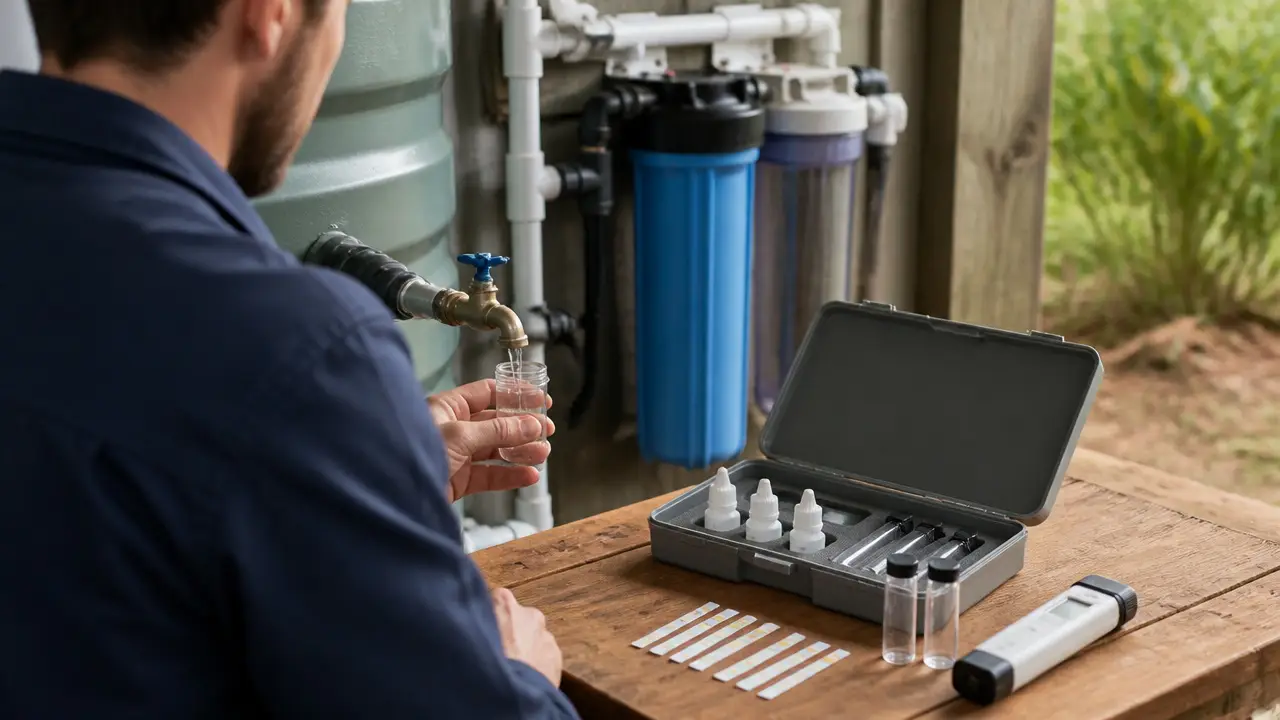
Drinking-water treatment requires a whole-system approach. Depending on the source and local requirements, that may involve suitable collection surfaces, debris exclusion, prefiltration, additional treatment stages, disinfection, maintenance, and current laboratory testing.
Home test strips, handheld meters, sediment filters, carbon cartridges, and individual purification devices cannot provide a complete safety assessment by themselves.
If rainwater will supply drinking water, work from current public-health guidance and applicable local rules. A qualified water-treatment professional can also help design and verify the system.
How to Pick the Best Inline Filter
For most systems, these factors matter more than brand names.
1. Start with the intended use
Decide whether the water will serve:
- Plants
- Irrigation
- Outdoor cleaning
- Toilets
- Laundry
- Household fixtures
- Drinking-water treatment
The more sensitive the use, the more important the overall treatment design becomes.
2. Identify what needs to be removed
Visible grit requires a different filter than very fine suspended particles.
The explanation of limits in “Is There a Filter for Rainwater?” helps separate a water-quality reading from an actual health risk.
If you do not know what is in the water, do not assume a finer filter automatically solves the problem.
3. Check downstream equipment
Find out what your:
- Pump
- Irrigation emitters
- Valves
- Treatment equipment
require.
The filter should protect those components without starving them of water.
4. Match the connections
Make sure the inlet and outlet sizes work with your hoses or plumbing.
Using several unnecessary reducers can create restrictions and more potential leak points.
5. Check pressure and flow limits
The filter housing must safely handle the system's operating conditions.
This is especially important in pumped systems.
6. Consider maintenance
A filter that is difficult to reach is likely to be neglected.
Install filters where they can be:
- Inspected
- Flushed
- Opened
- Cleaned
- Replaced without dismantling the whole system
Allow enough room below cartridge housings to remove the bowl or cartridge.
Keep the Filter Clean
A dirty filter can cause:
- Weak flow
- Lower pressure
- Uneven irrigation
- Pump problems
- Bypass or leakage if seals are damaged
- Reduced performance of downstream treatment
There is no universal cleaning schedule.
Inspection frequency depends on roof debris, tank cleanliness, rainfall patterns, water use, and filter size.
Check the filter more often when the system is new. Once you see how quickly it collects debris, you can establish a realistic maintenance routine.
Wash reusable elements as directed by the manufacturer and replace disposable cartridges at the recommended intervals or sooner when system performance indicates they are clogged.
In freezing climates, exposed housings and water-filled plumbing also need appropriate winter protection. A filter full of water can crack if it freezes.
The Bottom Line
For most rain barrels, tanks, and irrigation systems, the best inline filter is a properly sized, easy-to-clean sediment filter that matches the plumbing, flow rate, and downstream equipment.
Do not choose a filter based only on the smallest micron rating. Too-fine filtration can create unnecessary clogging and flow problems.
For drinking-water applications, an inline filter is only one treatment stage. Safe use depends on the entire collection and treatment system, ongoing maintenance, appropriate testing, and applicable local requirements.
Frequently Asked Questions
What is the best inline filter for rainwater?
For general outdoor rainwater use, a washable sediment filter is usually the most practical starting point. It catches debris while remaining relatively easy to clean. Finer filtration may be needed for irrigation emitters or later treatment stages.
Is a 5-micron filter better than a 50-micron filter?
Not automatically. A 5-micron filter catches smaller particles but may clog much faster. A 50-micron filter may be more suitable as an early sediment stage. The correct rating depends on the water and downstream equipment.
Should an inline filter go before or after the pump?
Coarse strainers may be placed before some pumps, while finer filtration is often installed after the pump. Follow the pump manufacturer's requirements because excessive inlet restriction can interfere with pump operation.
Can I put an inline filter on a rain barrel hose?
Yes, provided the filter is compatible with the hose connections and works at the barrel's low gravity-fed pressure. Avoid excessively fine filters that significantly reduce flow.
Which filter is best for drip irrigation?
Sediment screen and disc filters are both commonly suitable. Choose a filtration level that meets the requirements of the drip emitters and a filter size that can handle the irrigation zone's required flow.
Can an inline filter make rainwater drinkable?
No single inline filter can establish that roof-collected rainwater is safe to drink. Potable use requires an appropriate collection and treatment system, maintenance, current laboratory testing, and compliance with applicable health and plumbing requirements.
How often should an inline filter be cleaned?
There is no fixed schedule that works for every rainwater system. Inspect it regularly and clean it when debris accumulates or flow begins to drop. Systems receiving heavy roof debris may need much more frequent service.