As an affiliate, we may earn a commission from qualifying purchases. We get commissions for purchases made through links on this website from Amazon and other third parties.
UV water treatment can be a useful disinfection step, but it has several important disadvantages. It does not remove sediment, chemicals, metals, or other dissolved contaminants. It also needs clear water, electricity, correct flow, and regular maintenance to work as intended.
For a rainwater system, that means UV is usually one part of a treatment train rather than a complete treatment system.
UV Treatment Does Not Actually Filter the Water
The term UV filter is common, but ultraviolet treatment is not really a filter.
A UV unit exposes flowing water to ultraviolet light. The light can inactivate certain bacteria, viruses, and parasites so they can no longer reproduce. It does not physically trap contaminants.
According to the CDC, UV treatment with suitable prefiltration can treat parasites, bacteria, and viruses, but it does not remove chemicals.
This distinction matters with collected rainwater. Roof runoff can contain more than germs. Depending on the roof, surrounding environment, storage system, and local conditions, the water may also contain:
- Dirt and sediment
- Organic debris
- Dissolved minerals
- Metals
- Chemicals
- Odors or unwanted tastes
UV treatment does not make these contaminants disappear.
Cloudy Water Can Reduce UV Effectiveness
One of the biggest disadvantages of UV treatment is that the water needs to be clear enough for the light to reach microorganisms.
Suspended particles can block or shield microbes from UV light. The CDC recommends filtering water before UV treatment because UV does not work well in cloudy water.
This is especially important in rainwater harvesting systems.
Water entering a tank may contain:
- Fine roof dust
- Pollen
- Small pieces of leaves
- Algae
- Rust or sediment
- Organic material
Even if the water looks fairly clear, very small particles can still affect treatment.
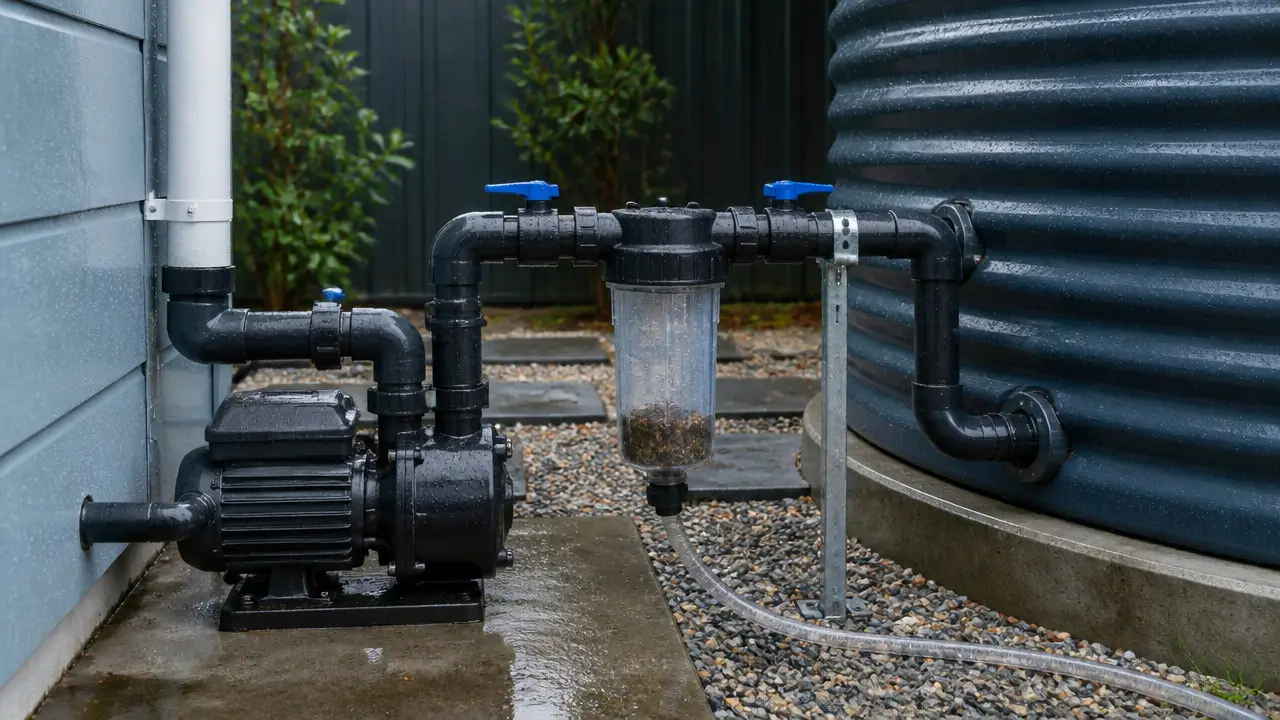
A typical rainwater setup may therefore need screening and sediment filtration before the UV unit. The exact treatment stages depend on the source water and intended use.
UV Does Not Remove Chemicals or Metals
UV light is mainly used for microbial disinfection. It should not be chosen as a solution for chemical contamination.
It does not normally remove contaminants such as:
- Lead
- Copper
- Arsenic
- Nitrates
- Salts
- Many pesticides
- Many other dissolved chemicals
The right treatment depends on what is actually present in the water.
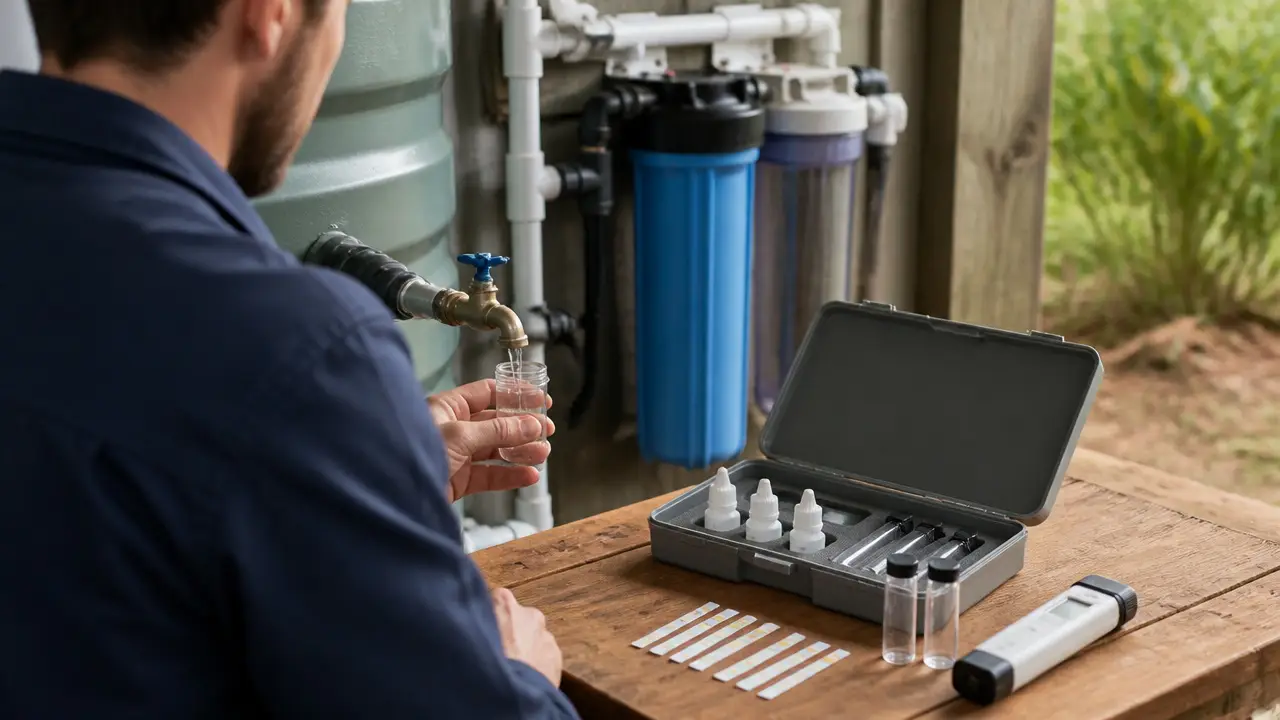
This is why water testing matters when rainwater is being considered for drinking or another sensitive household use. The CDC recommends testing water and choosing treatment based on the germs or chemicals of concern.
UV alone cannot establish that collected rainwater is safe to drink.
It Needs Electricity
Most whole-system UV units need continuous electrical power while water is being treated.
That creates a weakness for cabins, off-grid homes, and systems used during power outages.
If the lamp is not operating, water passing through the chamber may not receive the required UV treatment.
An off-grid installation may therefore need to account for:
- Available electrical power
- Battery capacity
- Inverter requirements
- Backup power
- Pump operation during outages
- Controls that prevent untreated water from being used
Simply having water stored in a tank does not solve the power requirement.
Flow Rate Matters
A UV unit can only treat water properly within its designed operating conditions.
Flow rate means how much water moves through the unit during a given amount of time.
If water moves through the UV chamber faster than the system was designed for, it may receive too little UV exposure.
That makes sizing important.
For example, a small system serving one drinking-water faucet has very different flow needs from a system supplying showers, sinks, and appliances at the same time.
The UV system needs to be selected for the actual peak flow, not just the average amount of water used per day.
The Lamp Loses Effectiveness Over Time
A UV lamp is a maintenance item.
A lamp may still appear to be glowing even when its useful UV output has fallen below the level required by the treatment system. Looking at the lamp is therefore not a reliable way to decide whether it is still providing the intended treatment.
Lamp replacement should follow the unit manufacturer's service schedule.
Some systems have:
- Lamp-life indicators
- Audible alarms
- Warning lights
- UV intensity sensors
- Automatic shutoff valves
These features can make failures easier to detect, but they do not remove the need for maintenance.
The Quartz Sleeve Can Become Dirty
Many UV systems place the lamp inside a clear quartz sleeve.
Water passes around this sleeve while UV light travels through it.
Mineral deposits, iron, sediment, or organic material can coat the sleeve. As the coating builds up, less UV light reaches the water.
The result can be reduced disinfection even if the lamp itself is operating.
The sleeve therefore needs inspection and cleaning according to the manufacturer's instructions.
Water quality can affect how quickly fouling occurs.
Prefilters Add More Maintenance
Because UV works best with clear water, a UV system often depends on filtration upstream.
For rainwater, this may include some combination of:
- Gutter screens
- Leaf screens
- First-flush diversion
- Tank inlet screening
- Sediment filters
- Other treatment stages
A first-flush diverter sends away some of the first roof runoff from a rainfall event, when roof debris and contaminants may be more concentrated.
Regarding the value of UV water purification, interpret a treatment standard based on the final water application.
Cartridge filters also need attention. If they become clogged, water pressure and flow can fall. If inappropriate filters are used or maintenance is skipped, water quality reaching the UV chamber may also suffer.
Adding UV therefore usually means maintaining more than just the UV lamp.
UV Provides No Lasting Disinfectant in the Plumbing
UV works while water is being exposed to the light. It does not leave a disinfecting chemical behind in the treated water.
This is sometimes called having no disinfectant residual.
The CDC notes that UV can disinfect water at the treatment point, but it does not continue killing germs as water travels through pipes afterward.
This matters if treated water later encounters contamination in:
- Storage tanks
- Dirty plumbing
- Dead-end pipes
- Poorly maintained fixtures
- Cross-connections
Good plumbing and system hygiene still matter after the UV unit.
For some systems, placing the UV unit close to the final point of use can help reduce the amount of plumbing located downstream.
A UV System Must Match the Intended Use
Not all UV systems are designed for the same purpose.
For drinking-water treatment equipment, certification and performance claims should be checked carefully.
NSF explains that NSF/ANSI 55 covers ultraviolet microbiological water treatment systems. Class A systems are intended to inactivate or remove microorganisms from contaminated water, while Class B systems are designed to reduce normally occurring non-disease-causing bacteria in water that is already considered disinfected.
Those are very different jobs.
A UV unit intended for supplemental treatment should not automatically be treated as suitable for microbiologically unsafe source water.
Certification also does not mean that a complete rainwater system is automatically suitable for drinking. The collection surface, storage tank, plumbing, other treatment stages, maintenance, water testing, and local requirements still matter.
UV Adds Equipment and Failure Points
A simple rain barrel feeding a garden hose may not need UV treatment at all.
Adding UV means adding another piece of equipment along with its:
- Electrical connection
- Plumbing connections
- Chamber
- Lamp
- Quartz sleeve
- Controls
- Prefilters
- Replacement parts
Every component creates another maintenance task or possible failure point.
For irrigation or other non-potable uses, UV treatment may provide little benefit unless microbial control is required for a specific reason.
Non-potable means water that is not intended for drinking.
The treatment system should match what the water will actually be used for.
UV Can Be a Poor Fit for Low-Maintenance Systems
UV is not a set-it-and-forget-it treatment method.
A reliable installation requires ongoing attention to:
- Prefilter condition
- Lamp condition
- Quartz sleeve cleanliness
- Flow rate
- Electrical supply
- Alarms and sensors
- Leaks
- Water quality
A poorly maintained UV system can create false confidence because water may continue flowing even when treatment performance has declined.
Systems used only seasonally also need proper shutdown and startup procedures according to the manufacturer's instructions.
In freezing climates, the UV chamber, filters, pipes, and related equipment must also be protected from freezing.
When UV Makes Sense in a Rainwater System
Despite its disadvantages, UV can be useful when microbial disinfection is required and the water has already been prepared for UV treatment.
A system might follow a general path such as:
Roof collection → debris control → storage → sediment treatment → other treatment required by water quality → UV disinfection → point of use
The exact arrangement should be based on the intended use and tested water quality.
UV is often most useful as a final microbial treatment stage rather than as the first or only treatment device.
For drinking-water use, collected rainwater should be treated as a whole-system water-quality project. Suitable collection materials, prefiltration, appropriate treatment, current laboratory testing, maintenance, and applicable local requirements all need to be considered.
Main Disadvantages at a Glance
| Disadvantage | Why it matters |
|---|---|
| Does not remove chemicals | Chemical and dissolved contaminants require other treatment |
| Does not remove sediment | Prefiltration is usually needed |
| Performs poorly with cloudy water | Particles can shield microorganisms from UV light |
| Requires electricity | Treatment can stop during a power failure |
| Requires correct flow | Excessive flow can reduce UV exposure |
| Lamp needs replacement | UV output declines with use |
| Sleeve needs cleaning | Deposits can block UV transmission |
| No disinfectant residual | Water can be contaminated again downstream |
| Adds maintenance | Filters, lamps, sleeves, alarms, and plumbing need attention |
| Not a complete drinking-water solution | Collection, treatment, testing, and maintenance must work together |
Frequently Asked Questions
Is a UV filter enough for rainwater?
Usually not if the water is intended for drinking. UV mainly provides microbial disinfection. It does not remove sediment, dissolved chemicals, or metals. Rainwater may require several treatment stages based on the source water and intended use.
Does UV remove bacteria from water?
UV treatment can inactivate bacteria when the unit provides the required UV exposure and the water conditions are suitable. It does not physically remove the organisms from the water.
Does UV remove chemicals from rainwater?
No. Standard UV disinfection is not a chemical-removal process. CDC guidance specifically notes that UV treatment does not remove chemicals.
Does rainwater need to be filtered before UV treatment?
Prefiltration is commonly important because particles and cloudy water can interfere with UV treatment. The CDC recommends filtering water before using UV because suspended material can shield microorganisms from the light.
What happens if the power goes out?
A powered UV system cannot provide normal UV treatment without electricity. Unless the system has backup power or a control that prevents untreated water from passing, water used during an outage may not receive the intended disinfection.
Can water be contaminated again after UV treatment?
Yes. UV does not leave a lasting disinfectant in the water. Contamination can occur downstream if treated water enters dirty plumbing, storage, or fixtures.
Is UV treatment worth using for garden rainwater?
Often it is unnecessary for basic outdoor irrigation. UV adds power use and maintenance. Whether it is useful depends on the irrigation method, crop, water quality, exposure route, and any applicable local requirements.