As an affiliate, we may earn a commission from qualifying purchases. We get commissions for purchases made through links on this website from Amazon and other third parties.
A UV water purifier usually does not create harmful side effects in properly treated water. Standard residential UV systems disinfect with ultraviolet light rather than adding chemicals. They normally do not change the taste, smell, mineral content, or pH of the water.
The bigger concerns are practical ones. UV can fail to disinfect water if the water is cloudy, the lamp or quartz sleeve is dirty, the flow is too high, or the power goes out. UV also does not remove most chemicals, sediment, metals, salts, or other dissolved contaminants. It should be treated as one part of a water-treatment system, not as a complete purifier by itself.
For collected rainwater, those limits matter even more because roof runoff can contain both germs and chemical contaminants.
What Does a UV Water Purifier Do?
A UV purifier passes water through a chamber containing an ultraviolet lamp. The UV light damages microorganisms so they can no longer reproduce effectively.
A properly designed UV system can be used to control certain:
- Bacteria
- Viruses
- Protozoa and other microorganisms
The exact performance depends on the unit, its rated flow, the UV dose it delivers, and the quality of the incoming water.
UV is a disinfection stage. It is not the same as a sediment filter, carbon filter, or reverse-osmosis system.
The CDC notes that particles in cloudy water can block microorganisms from UV light, which is why filtration is commonly needed before UV treatment.
Does UV Treatment Change the Water?
Normally, very little.
Standard UV disinfection does not usually add a disinfecting chemical to the water. It also does not work by removing minerals.
That means UV treatment generally does not:
- Make water salty
- Remove calcium or magnesium
- Change total dissolved solids
- Soften hard water
- Remove sediment
- Remove most metals
- Remove most pesticides or other chemicals
- Create a chlorine taste
Total dissolved solids, or TDS, is a measurement of dissolved substances such as minerals and salts in water. A normal UV disinfection unit does not significantly reduce TDS.
This is useful when the water chemistry is already acceptable, but it also means UV cannot solve chemical contamination problems.
The Main Potential Problems With UV Water Purifiers
1. UV Does Not Remove Chemical Contaminants
One of the biggest risks is expecting UV to do more than it can.
UV disinfection is mainly intended to control microorganisms. It does not automatically remove contaminants such as:
- Lead
- Arsenic
- Nitrates
- PFAS
- Dissolved salts
- Many pesticides
- Fuel or solvent contamination
If laboratory testing finds a chemical problem, you need a treatment method designed for that contaminant.
This is especially important with rainwater. Roofs, gutters, bird droppings, airborne debris, roofing materials, and storage equipment can introduce several different types of contamination.
A UV unit cannot establish that this water is safe to drink.
2. Cloudy Water Can Reduce UV Effectiveness
UV light needs to reach the microorganisms.
Suspended particles can scatter or block that light. Microorganisms may also be partly protected when attached to particles.
Health Canada notes that particles can reduce UV transmission and interfere with disinfection. Keeping turbidity low before disinfection helps reduce this problem.
Turbidity means the cloudiness caused by suspended material in the water.
This is why a UV purifier is commonly installed after suitable filtration rather than directly after a rain barrel, cistern, pond, or other untreated water source.
3. Dirty Quartz Sleeves Reduce UV Output
The UV lamp is normally separated from the water by a clear quartz sleeve.
Over time, minerals, iron, sediment, or other deposits can coat this sleeve. The lamp may still be glowing, but less useful UV light may be reaching the water.
This creates a dangerous type of failure because the treated water may look completely normal.
Cleaning schedules depend on the water quality and the UV system. Follow the manufacturer's maintenance instructions rather than assuming that a lit lamp means the system is disinfecting properly.
4. UV Lamps Lose Effectiveness With Age
UV lamps do not maintain the same useful output forever.
A lamp may continue producing visible light after its germicidal UV output has fallen below the level required by the system.
For that reason, lamp replacement should be based on the manufacturer's stated service interval, not simply on whether the lamp still lights up.
Some systems include:
- Lamp-life indicators
- UV intensity sensors
- Audible alarms
- Warning lights
- Automatic shutoff valves
These features can make failures easier to detect, but they do not eliminate the need for maintenance.
5. A Power Outage Stops Disinfection
Most plumbed UV systems need electricity continuously while water is flowing.
If the power fails, the UV treatment stops.
That matters in cabins, rural homes, off-grid systems, and other places where outages are common. Water should not simply be assumed safe because it has passed through an unpowered UV chamber.
If drinking-water treatment depends on UV, plan for power failures and follow the system manufacturer's restart and sanitation procedures after an outage.
6. UV Leaves No Disinfectant Residual
Chlorine can leave a small amount of disinfectant in treated water that continues working as the water moves through pipes.
UV does not.
The CDC notes that UV works at the treatment point but does not continue disinfecting the water as it travels through a distribution system.
This becomes important if treated water is stored afterward.
For example:
Tank → filters → UV → faucet
is usually easier to manage than:
filters → UV → large storage tank → faucet
In the second layout, water can potentially become contaminated again after UV treatment.
For many small systems, UV is therefore placed near the final point in the treatment train.
7. Wrong Flow Rate Can Reduce Treatment
Factor in key facts about the downside of UV disinfection water to understand compatibility among components before final selection.
Every UV unit has an operating flow range.
If water travels through the chamber faster than the system was designed to handle, it may receive too little UV exposure.
This can happen when:
- A larger pump is added
- Several taps operate at once
- A pressure system is changed
- A bypass valve is positioned incorrectly
- The UV unit was undersized from the start
The UV system should be sized around the maximum flow that can actually pass through it, not just the household's average water use.
8. Prefilters Add Their Own Maintenance
Adding filtration before UV improves system performance, but it also adds maintenance.
Sediment filters can become clogged. Carbon filters can eventually require replacement. Neglected filter housings and treatment equipment can also become places where microorganisms grow.
The CDC warns that treatment systems and filters need proper maintenance and that germs can grow in poorly maintained equipment.
The treatment train therefore needs to be maintained as a whole.
Can UV Water Purifiers Create Harmful Chemicals?
Standard residential UV disinfection is different from UV advanced oxidation, where UV is deliberately combined with chemicals such as hydrogen peroxide or chlorine to destroy certain chemical contaminants.
EPA notes that advanced oxidation can produce different treatment effects and may require additional treatment controls.
That is not the same process as a typical household UV disinfection chamber.
A normal UV unit should be used only within the operating conditions and water-quality limits specified for that system.
Are There Health Risks From the UV Light Itself?
In a properly installed closed UV chamber, people are not normally exposed to the ultraviolet light.
You should not operate a UV lamp outside its protective chamber or stare directly at an exposed operating UV lamp. UV radiation can damage eyes and skin.
Electrical service and lamp replacement should also be done according to the manufacturer's instructions. Disconnect power before maintenance when instructed to do so.
If the equipment is damaged, leaking, or has broken electrical components, stop using it until the problem has been corrected.
UV Treatment for Rainwater
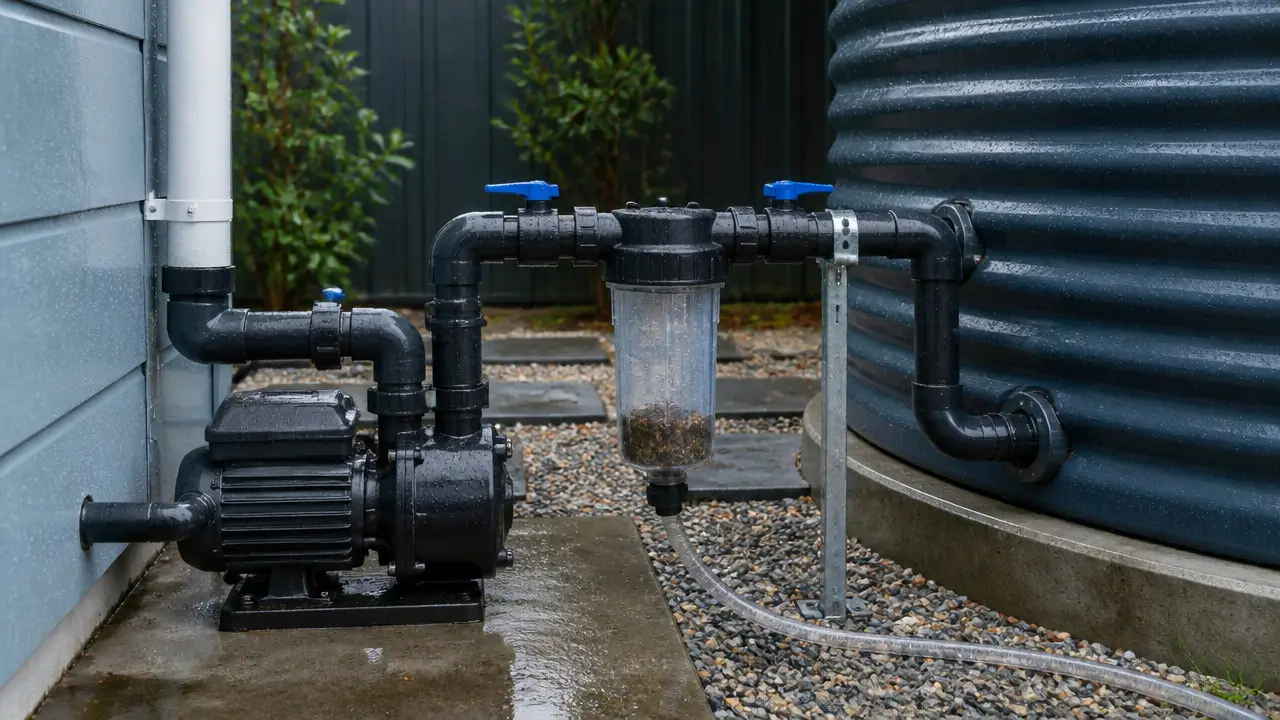
UV can be useful in a rainwater treatment system, but it should not be the first or only treatment step.
A typical system intended for higher-quality uses may involve several barriers, such as:
Roof collection → debris screening → first-flush control → covered storage → sediment filtration → additional treatment as needed → UV disinfection
A first flush is a device or arrangement that diverts some of the early roof runoff away from the tank. This early runoff can carry concentrated dust, droppings, and other debris.
The treatment stages needed after storage depend on what you plan to do with the water.
Water intended only for garden irrigation has very different requirements from water that will be used for drinking.
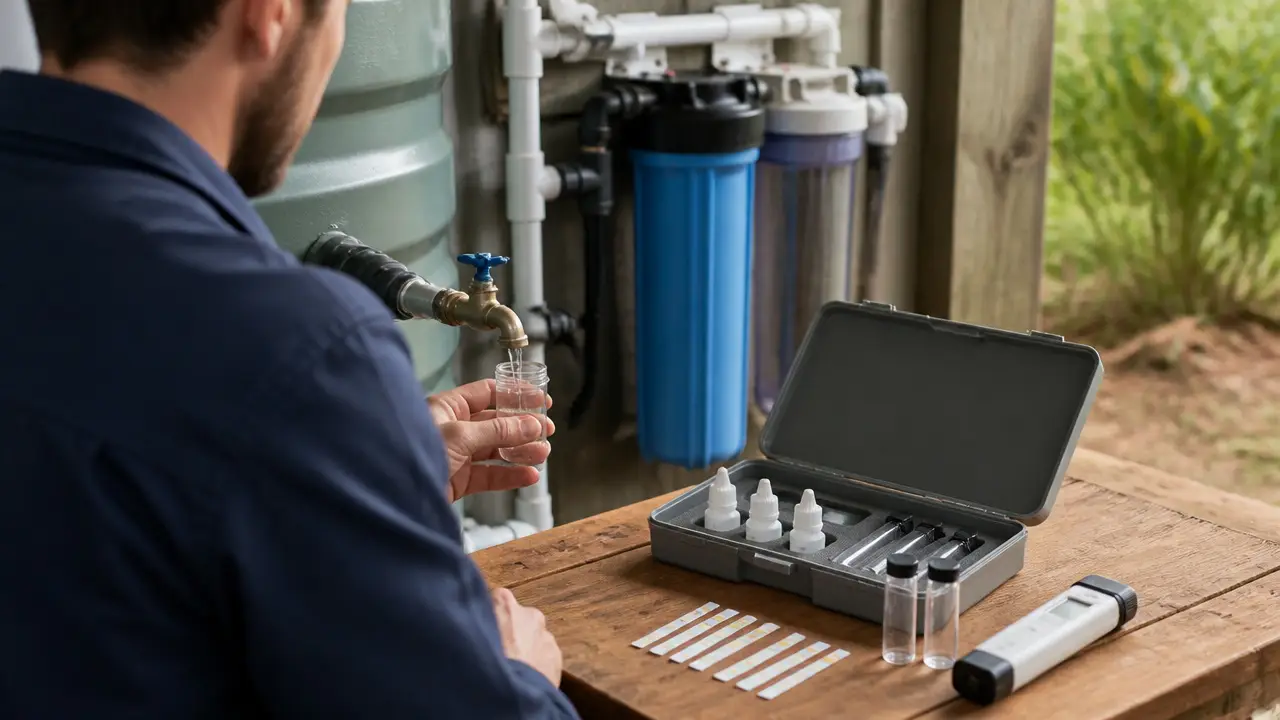
If rainwater will be considered for drinking, do not rely on UV alone. The CDC advises people using rainwater collection systems to test their water regularly for harmful germs and chemicals.
Drinking-water use should be treated as a whole-system decision involving suitable collection surfaces, contamination controls, filtration, appropriate treatment, current laboratory testing, maintenance, and applicable local requirements.
Choosing a UV System
For drinking-water applications, look beyond the words "UV purifier" on the package.
Check:
- What microorganisms the system is certified to address
- Maximum rated flow
- Required incoming water quality
- Connection sizes
- Water pressure limits
- Electrical requirements
- Lamp replacement interval
- Sleeve-cleaning requirements
- Alarm or UV-monitoring features
- Availability of replacement parts
NSF/ANSI 55 is a standard covering ultraviolet microbiological water-treatment systems.
NSF describes two main categories. Class A systems are designed for disinfection of contaminated water within the limits of the standard, while Class B systems provide additional bactericidal treatment for water that is already considered safe for human consumption.
Certification does not mean the unit removes every possible contaminant. Match the certified treatment claims to your actual water test results and intended use.
When UV Is a Good Fit
UV can make sense when:
- Microbial contamination is the main treatment concern
- Incoming water can be properly filtered
- The water is clear enough for effective UV transmission
- Electricity is reliable
- The required flow fits the UV unit
- The lamp and sleeve will be maintained
- Chemical water quality has already been addressed separately
It can work well as a final disinfection barrier for properly designed private-well and rainwater systems.
When UV Alone Is Not Enough
Do not depend on UV alone when:
- Water contains significant sediment
- Chemical contaminants may be present
- The water has not been tested
- Flow exceeds the unit's rating
- Maintenance is unlikely to be performed
- Power is unreliable with no treatment plan for outages
- Treated water will be stored where it can become contaminated again
The main problem with UV is usually not a harmful "side effect." It is false confidence from using the right technology in the wrong system.
UV can be a very useful disinfection step. It just needs clean enough water, correct sizing, reliable power, regular maintenance, and other treatment stages when the source water contains problems UV cannot address.
Frequently Asked Questions
Does UV-treated water have any harmful side effects?
A properly operating standard UV disinfection system normally does not add disinfecting chemicals or significantly change the taste, pH, mineral content, or TDS of the water. The main risks come from inadequate treatment, incorrect installation, poor maintenance, or contaminants that UV cannot remove.
Can you drink water directly after UV treatment?
Only if the entire water supply and treatment system is suitable for drinking water. UV treatment by itself does not prove that water is potable. Potable means suitable for drinking. Chemical contaminants, sediment, and other hazards may require separate treatment and laboratory testing.
Does a UV purifier remove chemicals from rainwater?
Not a standard residential UV disinfection unit. UV is mainly used to control microorganisms. Chemical contaminants require treatment technologies selected for the contaminants found in the water.
Do I need a filter before a UV purifier?
Often, yes. Suspended particles can interfere with UV treatment by blocking or scattering the light. The required prefiltration depends on the source water and the UV manufacturer's operating requirements.
What happens if the UV lamp burns out?
Water passing through the unit will no longer receive the intended UV treatment. Systems with alarms or automatic shutoff features can help make failures more obvious. Replace failed or expired lamps according to the manufacturer's instructions.
Can bacteria grow again after UV treatment?
UV does not leave a disinfectant residual in the water. Treated water can therefore become contaminated again in downstream tanks, pipes, fixtures, or other equipment. Clean system design and maintenance remain important after the UV chamber.
Does UV reduce TDS or water hardness?
No. Standard UV disinfection does not remove dissolved minerals responsible for TDS or hardness. A different treatment method is required if dissolved substances need to be reduced.