As an affiliate, we may earn a commission from qualifying purchases. We get commissions for purchases made through links on this website from Amazon and other third parties.
A UV water purifier can be a strong final disinfection step when the water is already clear and properly filtered. It can inactivate bacteria, viruses, and parasites without adding disinfecting chemicals to the water.
Its main weakness is just as important: UV does not remove dirt, sediment, metals, salts, pesticides, or most other chemical contaminants. It also works poorly when cloudy water or buildup blocks the UV light. For rainwater systems, that means UV should normally be treated as one part of a larger treatment setup rather than a complete purification system.
UV Water Purifier Pros and Cons at a Glance
| Pros | Cons |
|---|---|
| Inactivates many disease-causing microorganisms | Does not remove chemicals or dissolved contaminants |
| Does not add chlorine or other disinfectants | Needs clear, properly prefiltered water |
| Does not normally change water taste or odor | Needs electricity |
| Can treat water continuously as it flows | Lamp and quartz sleeve need maintenance |
| Does not create a filter waste stream during disinfection | Performance can fall without an obvious change in the water |
| Useful as a final treatment stage | Provides no lasting disinfectant protection after treatment |
| Can fit whole-house or smaller systems | Must be sized for the required flow rate |
What Does a UV Water Purifier Actually Do?
A UV purifier passes water through a chamber containing an ultraviolet lamp. The UV light damages microorganisms so they can no longer reproduce effectively.
The important word is disinfection.
A UV unit is not a filter. It does not physically strain contaminants out of the water.
With suitable pretreatment, UV systems can be effective against parasites, bacteria, and viruses. The CDC specifically notes that UV systems work better when the water is filtered before UV treatment.
That difference explains most of the pros and cons.
Pros of a UV Water Purifier
1. UV Can Control a Wide Range of Microorganisms
The biggest advantage is microbiological treatment.
A properly selected and operating UV system can inactivate microorganisms such as:
- Bacteria
- Viruses
- Protozoan parasites
This makes UV especially useful where microbial contamination is one of the main water-quality concerns.
For collected rainwater, this can matter because roof runoff may pick up bird droppings, insects, leaves, dirt, and other biological contamination before reaching the tank.
UV should not be used as evidence that untreated roof runoff is automatically safe to drink. The quality of the collection system and all treatment stages still matter.
2. It Does Not Add Disinfecting Chemicals to the Water
UV works with light rather than adding chlorine or another disinfectant.
That can be useful when you want microbial treatment without introducing a chemical disinfectant solely for that treatment step.
UV also avoids the need to store and dose disinfecting chemicals during normal operation.
3. It Usually Does Not Change Taste or Smell
Because conventional UV disinfection does not depend on adding chlorine to the water, it normally does not create a chlorine taste or odor.
However, UV will not fix an existing bad taste or smell caused by other contaminants.
If rainwater smells musty because of organic material in the tank, for example, adding a UV unit does not address the underlying cause.
4. Treatment Can Happen as Water Flows
A properly sized UV system can disinfect water as it passes through the treatment chamber.
There is no need to fill a separate treatment container and wait for a chemical contact period.
This can work well in systems supplying:
- A cabin
- A kitchen treatment line
- A whole-house rainwater system
- A pressurized cistern system
The UV unit still has to match the system's actual flow.
If water passes through too quickly for the unit's design, it may not receive the intended UV exposure.
5. UV Can Be a Useful Final Treatment Stage
UV works particularly well as part of a treatment train.
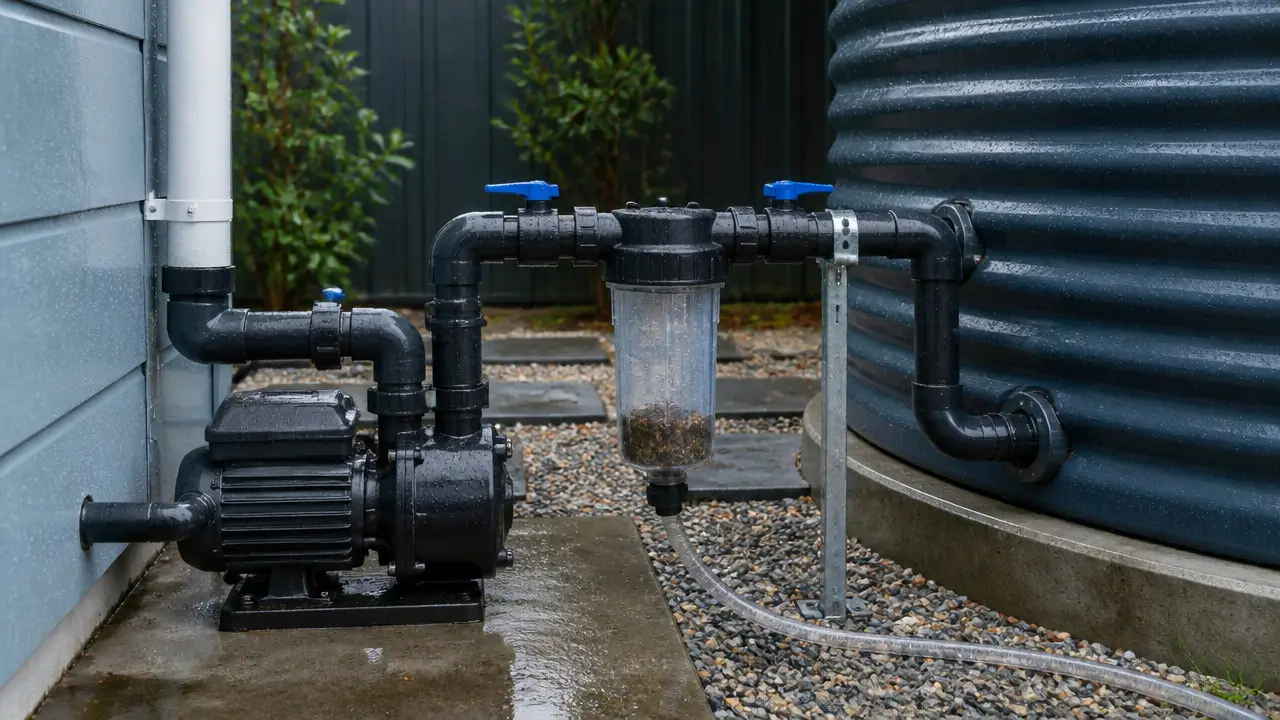
A rainwater system might follow a general path such as:
roof collection → debris control → storage → sediment filtration → additional treatment where needed → UV
The exact system depends on what the water will be used for and its tested quality.
Placing suitable filtration before UV helps keep particles from shielding microorganisms from the light. The CDC recommends filtering water before UV disinfection because UV does not work well in cloudy water.
Cons of a UV Water Purifier
1. UV Does Not Remove Chemical Contaminants
This is the most important limitation.
Standard UV disinfection should not be expected to remove contaminants such as:
- Lead
- Arsenic
- Nitrate
- Dissolved salts
- Many pesticides
- Other dissolved chemicals
The CDC specifically distinguishes UV treatment from technologies intended to remove chemicals.
The related explainer “What Is the Downside of UV Disinfection Water?” connects the measurement to a practical water-safety decision.
That matters with rainwater because contamination is not limited to germs.
Roofing materials, atmospheric pollution, nearby activities, storage components, plumbing, and other parts of the collection system can affect water quality.
If chemical contamination is a concern, another treatment method may be needed based on water testing.
2. Cloudy Water Can Reduce UV Performance
UV light must reach the microorganisms to work.
Suspended dirt and other particles can interfere with this process. A microorganism can effectively be shielded from the UV light by material in the water.
This is why sending raw tank water straight through a UV chamber is usually a poor system design.
Water may first need sediment removal or other pretreatment.
3. UV Does Not Remove Sediment
A UV chamber will not solve problems caused by:
- Sand
- Rust
- Silt
- Roof grit
- Small pieces of organic debris
Those contaminants require filtration or separation.
A filter's micron rating describes roughly how small the particles it is designed to capture are. The right filtration arrangement depends on the condition of the incoming water and the UV manufacturer's water-quality requirements.
4. It Requires Electricity
Most installed UV systems need continuous electrical power while treating water.
That adds another failure point.
A power outage can mean water flowing through the plumbing without receiving normal UV treatment unless the system has controls that prevent untreated water from being delivered.
This deserves special attention in cabins and off-grid systems.
If electricity is unreliable, consider how the system will handle:
- Power outages
- Low battery conditions
- Inverter failures
- UV lamp faults
Do not assume the water remains adequately disinfected just because it has passed through the chamber.
5. The Lamp Does Not Last Forever
UV output falls with lamp age, even when the lamp may still appear to be glowing.
The lamp therefore needs replacement according to the manufacturer's specified service interval.
With the value of UV water purification, you can understand how much confidence to place in the available test readings.
A visible light from the unit is not enough to prove that the correct UV dose is being delivered.
Some systems include monitors or alarms that help detect faults. Their exact capabilities vary.
6. The Quartz Sleeve Can Become Dirty
The lamp is commonly separated from the water by a transparent quartz sleeve.
Minerals and deposits can build up on this sleeve. When that happens, less UV energy may reach the water.
Maintenance can therefore involve:
- Inspecting the system
- Cleaning the quartz sleeve
- Replacing the lamp
- Replacing seals when required
- Maintaining upstream filters
Hard water, iron, manganese, sediment, and other water-quality conditions can increase maintenance needs.
7. UV Leaves No Disinfectant Residual
UV only treats water as it passes through the UV chamber.
It does not leave behind a disinfectant that continues protecting the water afterward. The CDC notes the same limitation when comparing UV with chemical disinfection in water distribution systems.
That becomes important if treated water is:
- Stored again
- Sent through contaminated plumbing
- Allowed to sit in poorly maintained pipes
- Exposed to contamination downstream of the UV unit
For that reason, the position of the UV chamber matters.
It is often used near the end of a treatment system, after filtration and before treated water is distributed.
8. A UV System Must Match the Flow Rate
Flow rate is the amount of water moving through the system during a given time.
UV equipment is designed around a maximum treatment flow and required UV exposure.
A system that is adequate for one faucet may not be adequate for a home where a shower, washing machine, and several taps can operate together.
The use-case discussion in “Do UV Water Purifiers Really Work?” connects the measurement to a practical water-safety decision.
When choosing a UV system, its treatment capacity should be based on the expected peak flow rather than only average daily water use.
Is UV Good for Rainwater?
It can be, particularly when rainwater is being treated for an indoor use where microbial control is needed.
But UV should normally come after the dirty part of the system has already been dealt with.
For example, a rainwater setup may use:
- Roof and gutter debris control.
- A first-flush or similar runoff-management approach where appropriate.
- Covered storage protected from insects and debris.
- Sediment filtration.
- Additional treatment based on tested water quality.
- UV disinfection.
A first flush is a method of diverting some of the initial roof runoff so that material washed from the roof is less likely to enter the main storage tank.
None of these individual steps guarantees drinking-water safety.
Does a UV Purifier Make Rainwater Drinkable?
Not by itself.
UV deals mainly with microorganisms. Drinking-water safety can also depend on chemicals, metals, turbidity, treatment performance, plumbing materials, storage conditions, and other contaminants.
For drinking-water use, treat the system as a whole.
That means considering:
- The roof and collection surface
- Gutters and prefiltration
- Storage tank condition
- Treatment stages
- UV system performance
- Plumbing after treatment
- Maintenance
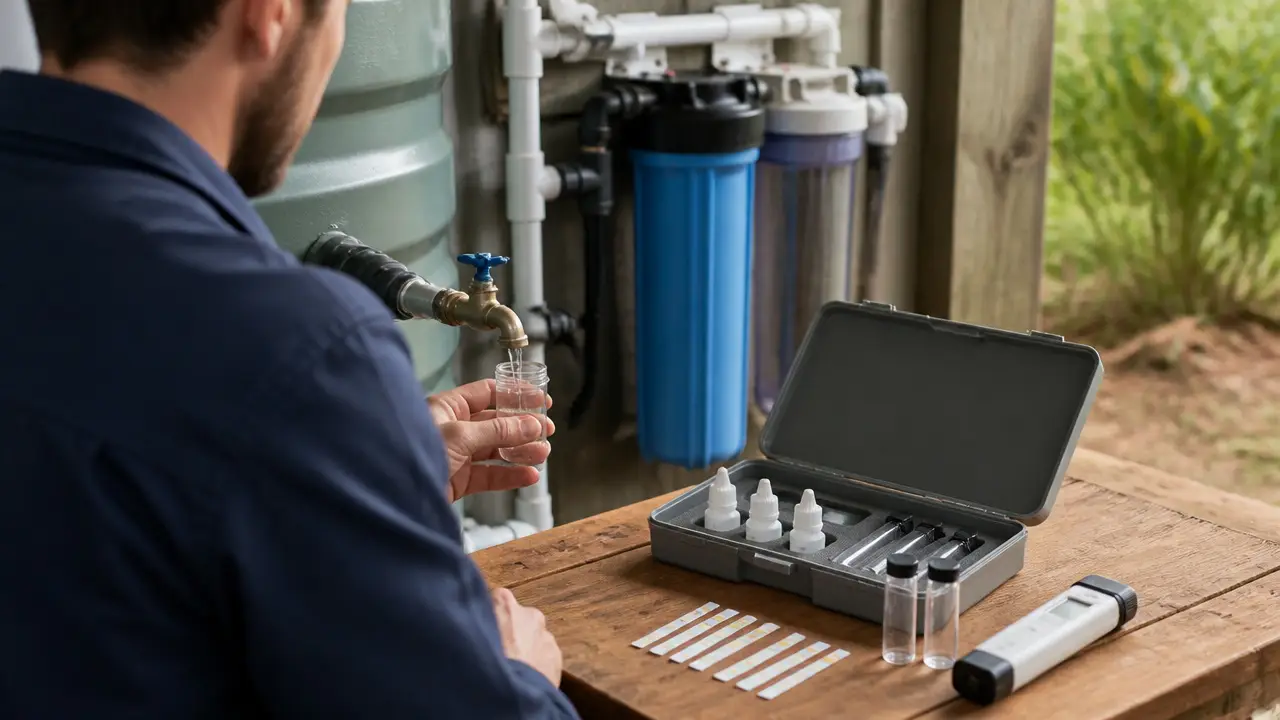
- Current laboratory water testing
- Applicable local drinking-water and plumbing requirements
Home treatment equipment should be selected around the contaminants actually present rather than assuming one technology addresses every risk. The CDC recommends testing the water and choosing treatment designed for the contaminants of concern.
For drinking-water systems using collected rainwater, a qualified water-treatment professional can also help determine what pretreatment and monitoring the UV system requires.
Class A vs. Class B UV Systems
If you are evaluating UV equipment for drinking-water treatment, certification and intended use matter.
NSF/ANSI 55 covers ultraviolet microbiological water-treatment systems.
Under NSF's description:
- Class A systems are intended to inactivate or remove microorganisms from contaminated water.
- Class B systems are intended to provide supplemental treatment of disinfected drinking water by reducing normally occurring, non-disease-causing bacteria.
That distinction is important.
A Class B unit should not be treated as interchangeable with equipment designed for microbiologically unsafe water.
NSF published the 2026 revision of NSF/ANSI 55 in August 2026.
When a UV Purifier Makes Sense
UV is worth considering when:
- Microbial contamination is a concern.
- The incoming water can be properly prefiltered.
- You have reliable electrical power.
- The required flow is within the system's treatment capacity.
- You are willing to replace lamps and maintain the chamber.
- UV is being used as part of an appropriate treatment system rather than as the only answer to water quality.
It may be unnecessary when the intended water use does not require that level of microbial treatment.
For example, a simple rain barrel supplying ornamental plants may have very different treatment needs from a rainwater system supplying household drinking water.
Start with the intended use. Then build treatment around that use.
When UV May Be the Wrong Tool
A UV purifier alone is not the right solution when the main problem is:
- Sediment
- Dissolved minerals
- Hardness
- Chemical contamination
- Salinity
- Heavy metals
- Bad taste or odor unrelated to microorganisms
Those problems call for other treatment methods.
UV may still be useful as an additional disinfection stage, but it cannot replace treatment designed for those contaminants.
Frequently Asked Questions
What is the biggest disadvantage of UV water purification?
The biggest limitation is that UV disinfects water but does not remove most chemical contaminants, dissolved substances, or sediment. Water usually needs suitable pretreatment before reaching the UV chamber.
Does a UV water purifier remove bacteria?
A properly designed and operating UV treatment system can inactivate bacteria. UV performance depends on factors including water clarity, flow rate, UV intensity, equipment condition, and maintenance.
Does UV remove viruses from water?
Proper UV treatment can inactivate viruses. The CDC lists viruses among the microorganisms UV systems can address when used with suitable prefiltration.
Do I need a filter before a UV purifier?
Usually, yes. UV works best with clear water because suspended particles can shield microorganisms from the UV light. The CDC recommends filtration before UV disinfection.
Does a UV purifier remove lead or other heavy metals?
No. Standard UV disinfection should not be relied on to remove lead or other dissolved chemical contaminants. A treatment method specifically suited to the contaminant is needed.
Can I use a UV purifier with a rainwater tank?
Yes, UV can be used in a rainwater treatment system. It is normally installed after suitable filtration and close to the point where treated water enters the plumbing. The complete treatment arrangement should match the intended use and tested quality of the rainwater.
Can water become contaminated again after UV treatment?
Yes. UV does not provide lasting disinfectant protection. Treated water can be contaminated again by dirty storage, plumbing, fittings, or other downstream sources.
Is UV-treated rainwater safe to drink?
UV treatment alone cannot establish that collected rainwater is safe to drink. Drinking-water use requires suitable collection and storage, appropriate treatment for identified contaminants, reliable disinfection, proper maintenance, current laboratory testing, and compliance with applicable local requirements.