5 Best UV Water Purifiers for Rainwater Systems
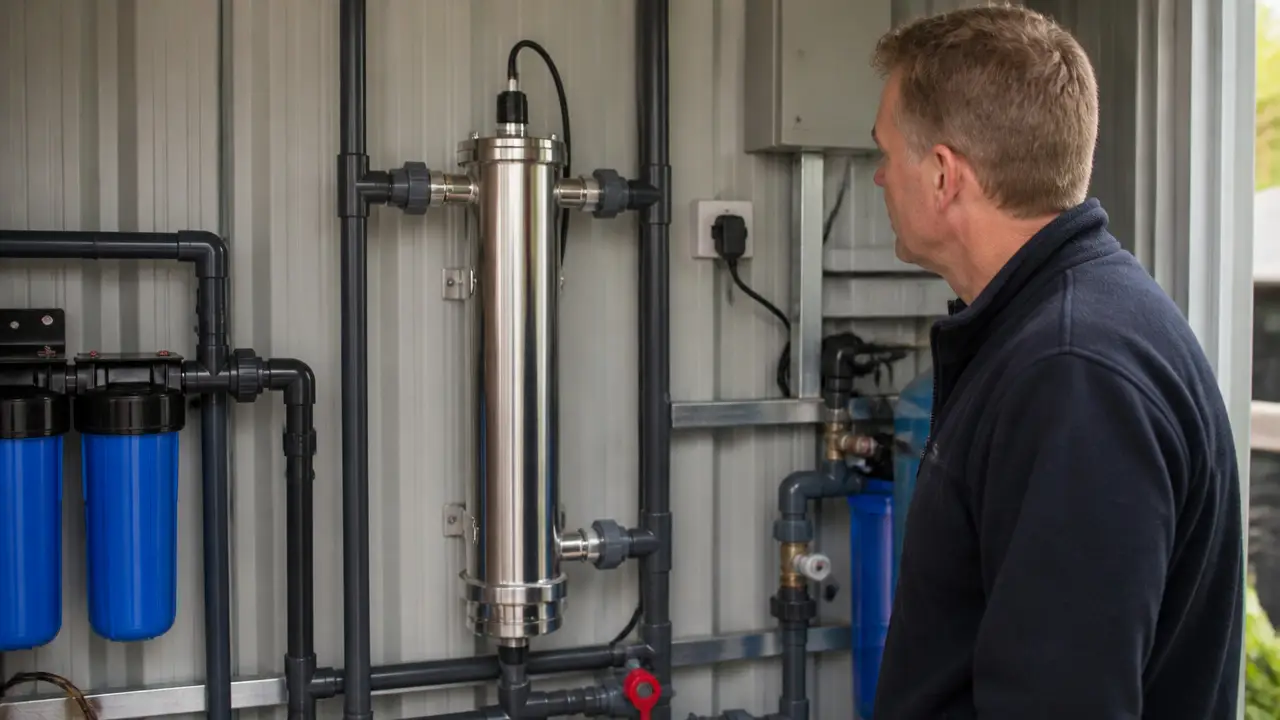
Compare UV water purifiers by flow, plumbing size, controls, lamp maintenance, and installation needs so you can match UV treatment to a rainwater system.

UV, reverse-osmosis, and advanced purification guidance.
Compare UV water purifiers by flow, plumbing size, controls, lamp maintenance, and installation needs so you can match UV treatment to a rainwater system.
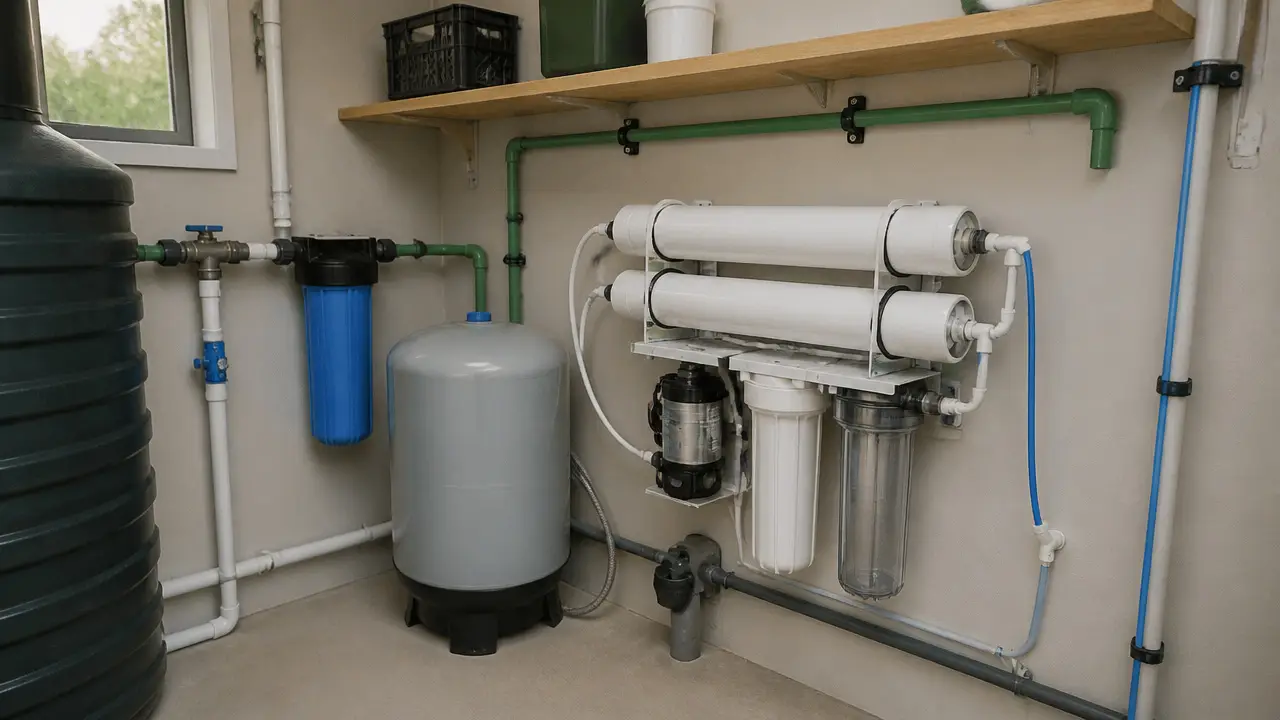
Compare reverse osmosis systems by output, tank design, certifications, feed pressure, reject-water ratio, and maintenance for treated rainwater.
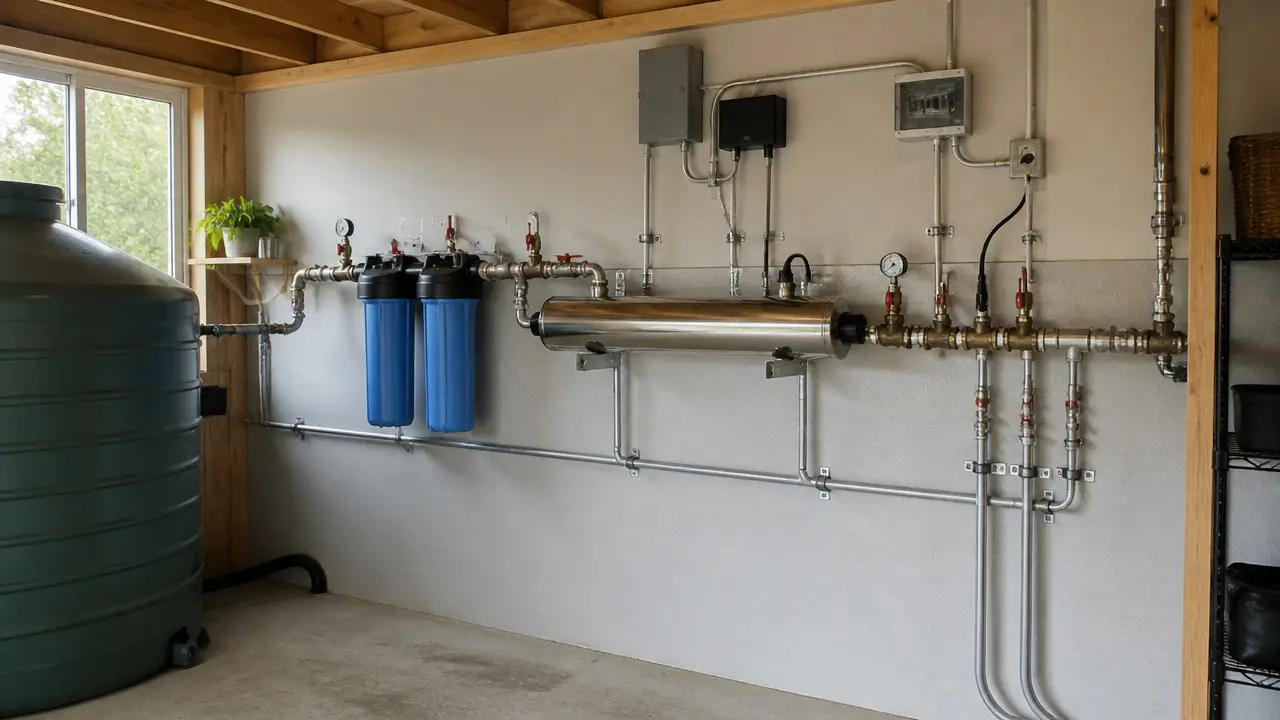
Compare whole-house UV systems by service flow, plumbing size, chamber footprint, controls, and lamp maintenance for a residential rainwater treatment train.
Rainwater is not automatically safe to drink because collection and storage can add microbes, chemicals, and debris. Learn how testing and treatment reduce risk.
UV purification can inactivate microbes in clear, prefiltered rainwater without chemicals. Learn sizing, pretreatment, monitoring, maintenance, and key limits.
Make rainwater potable with clean catchment, debris control, first-flush diversion, protected storage, staged filtration, disinfection, testing, and upkeep.
A water-treatment UV lamp follows a replacement schedule even if it glows. Learn how output decline, sleeve fouling, and operating hours affect service.
UV purifiers can inactivate microbes when dose, flow, clarity, and upkeep are correct. Learn what UV treats, what it cannot remove, and how to verify it.
Reverse osmosis sends concentrate to drain, but waste ratios vary by design, pressure, recovery, and upkeep. Learn how to compare efficiency and reduce loss.
A UV system can be worthwhile for microbial control in clear, pretreated water. Weigh testing, flow, power reliability, maintenance, monitoring, and cost.