As an affiliate, we may earn a commission from qualifying purchases. We get commissions for purchases made through links on this website from Amazon and other third parties.
Yes. Reverse osmosis (RO) systems can use a lot of water, especially older or inefficient systems. But the amount varies widely by system design.
A typical point-of-use RO system may send 5 gallons or more of reject water down the drain for every 1 gallon of treated water it produces. Some inefficient systems can reach about 10 gallons of reject water per gallon of treated water. More efficient systems use much less. In the United States, EPA WaterSense-labeled point-of-use RO systems must use 2.3 gallons of reject water or less for each gallon of treated water.
That difference matters even more when the RO system is treating stored rainwater. Every gallon sent to the drain comes out of a limited tank supply.
Why Reverse Osmosis Produces Wastewater
RO works by pushing water against a very fine membrane. Some water passes through the membrane and becomes treated water. This treated stream is sometimes called permeate.
The rest flows past the membrane. It carries away salts and other substances that the membrane did not allow through. This stream is called reject water, concentrate, or sometimes brine.
Without this flow, dissolved material would build up around the membrane and interfere with treatment.
So some reject water is a normal part of RO operation. The main question is how much.
What Does a 5:1 RO Waste Ratio Mean?
An RO system's waste-to-treated water ratio tells you how much reject water it produces.
For example:
| RO ratio | Treated water | Reject water | Total feed water |
|---|---|---|---|
| 2.3:1 | 1 gallon | 2.3 gallons | 3.3 gallons |
| 5:1 | 1 gallon | 5 gallons | 6 gallons |
| 10:1 | 1 gallon | 10 gallons | 11 gallons |
A lower number is better if you are trying to conserve water.
The same idea can be expressed as an efficiency percentage. A system with 30% efficiency turns about 30 gallons out of every 100 gallons entering the RO unit into treated water. EPA uses this measure when evaluating WaterSense-labeled systems.
How Much Water Can an RO System Waste in a Day?
It depends on how much RO water you actually use.
Suppose your household uses 3 gallons of RO water each day for drinking and cooking.
A 5:1 system could produce about:
- 3 gallons of treated water
- 15 gallons of reject water
- 18 gallons of total feed water
A system operating at 2.3:1 would use about:
- 3 gallons of treated water
- 6.9 gallons of reject water
- 9.9 gallons of total feed water
That is a large difference over a year.
EPA estimates that choosing a WaterSense-labeled point-of-use RO system instead of a typical system can reduce water use by more than 3,100 gallons per year on average.
What Makes One RO System Waste More Water Than Another?
Several parts of the system can affect how efficiently it operates.
Feed water pressure
An RO membrane needs enough pressure to move water through it.
Low pressure can reduce treated-water production. Some systems use a booster pump to maintain better membrane pressure and improve efficiency. EPA notes that pumped systems can operate more efficiently because the pump helps overcome pressure from the RO storage tank.
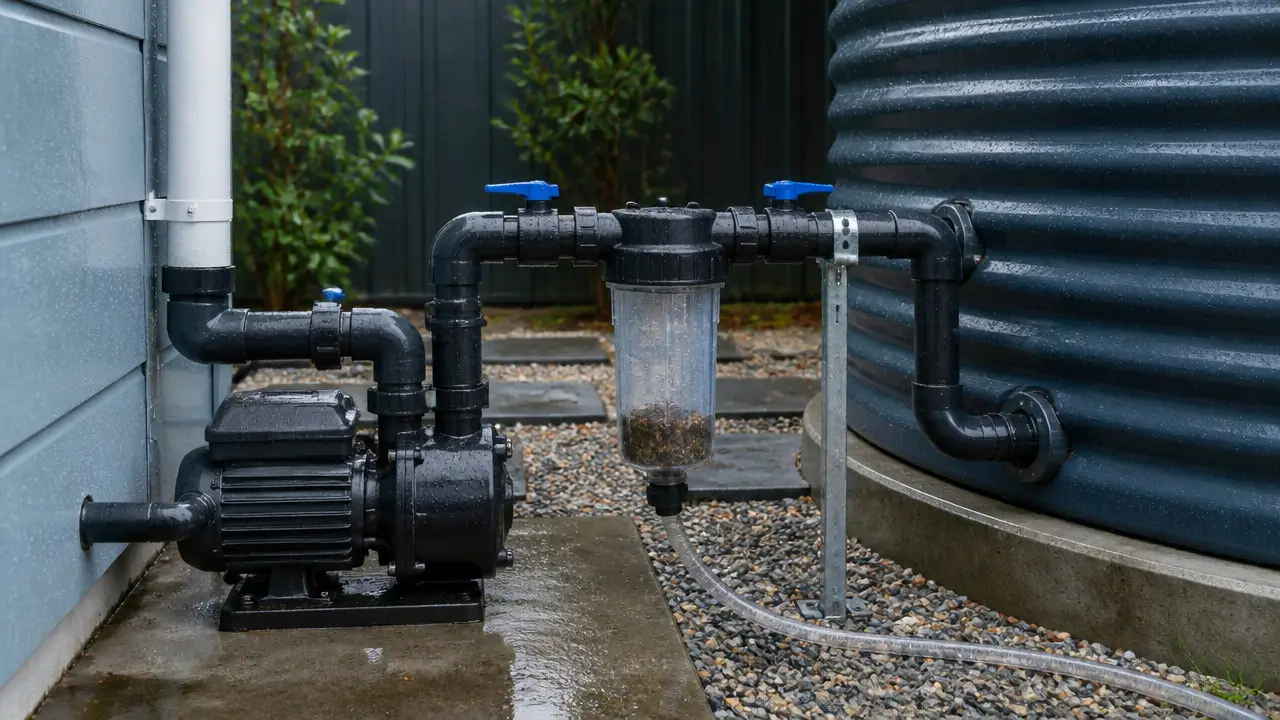
If you are feeding an RO system from a rainwater tank, this point is especially important. Gravity pressure from a tank may not provide what a household RO unit expects. A properly sized pump and pressure-control system may be needed.
Storage tank pressure
Many under-sink RO systems store treated water in a small pressurized tank.
As this tank fills, pressure pushing back against the membrane increases. Depending on the RO design, this can reduce efficiency.
Tank pressure therefore needs to match the system manufacturer's requirements.
Membrane condition
An old, damaged, or fouled membrane may not perform as intended.
Sediment and other material in untreated water can also shorten membrane life. This is one reason RO systems normally use prefilters before water reaches the membrane.
With collected rainwater, good pretreatment is particularly important because roof runoff can carry dust, organic material, microorganisms, and chemicals into storage.
Source water
The concentration of dissolved material in the incoming water affects how hard the RO membrane must work.
Total dissolved solids, usually shortened to TDS, means dissolved substances such as salts and minerals in water. TDS does not tell you whether water is safe to drink. It is simply one measurement of dissolved material.
Water temperature, pressure, and overall source-water quality can also affect RO performance.
Do You Need Reverse Osmosis for Rainwater?
Not necessarily.
Check a key limitation of reverse-osmosis treatment to evaluate installation details that support reliable daily use.
The right treatment depends on what you plan to do with the water.
For garden irrigation, washing equipment, or many other non-potable uses, meaning uses where the water is not intended for drinking, RO is usually more treatment than the job requires.
Using RO for irrigation water may remove useful tank capacity while creating a second stream of reject water that must go somewhere.
Drinking water is different.
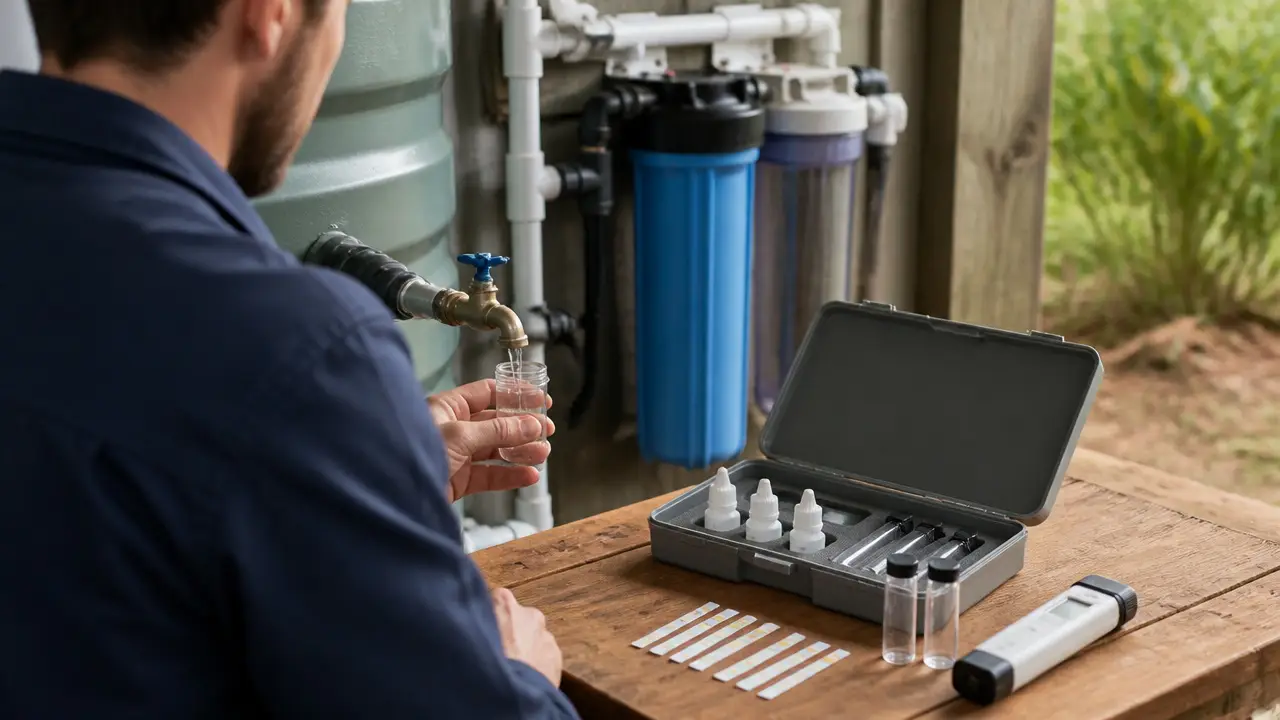
Roof-collected rainwater should not be assumed safe to drink simply because it passes through an RO membrane. CDC notes that collected rainwater can contain both germs and chemicals and recommends regular testing when rainwater is used for drinking, cooking, or bathing.
A drinking-water rainwater system should be planned as a complete treatment system. Depending on the source water and local requirements, that may involve suitable collection surfaces, a first-flush diverter, sediment removal, appropriate treatment for identified contaminants, microbial control, regular maintenance, and current laboratory testing.
A first-flush diverter sends the first portion of roof runoff away from the storage tank because that initial runoff can carry a higher load of material from the roof.
RO may be one treatment stage, but it should not be treated as proof that rainwater is potable. Potable means suitable for drinking.
Is RO Wastewater Really "Waste"?
The reject stream is not necessarily sewage. It is incoming water containing a higher concentration of substances rejected by the membrane.
In some systems, there may be ways to collect it for an appropriate non-potable use instead of sending it directly to a drain.
Possible uses depend on what was in the source water and what the RO system concentrated. You should not assume the reject stream is suitable for plants, animals, household reuse, or discharge somewhere else.
This is especially important if RO is being used because the source water contains a known contaminant. That contaminant may become more concentrated in the reject stream.
Also check local plumbing and wastewater requirements before changing the RO drain arrangement.
How to Reduce RO Water Waste
If RO is actually needed, focus on system efficiency rather than trying to eliminate reject flow completely.
For a point-of-use system, useful things to check include:
- The manufacturer's certified efficiency or recovery rating
- The waste-to-treated water ratio
- Required feed pressure
- Whether a booster pump is needed
- Storage tank pressure requirements
- Prefilter and membrane replacement schedules
- Certification for the specific contaminant you need to reduce
In the U.S., as of August 2026, an EPA WaterSense-labeled point-of-use RO system must send no more than 2.3 gallons of water to the drain for every gallon of treated water produced. The systems are independently certified to meet WaterSense efficiency and performance requirements.
Do not choose an RO system based only on a claim such as "low waste" or "high efficiency." Look for the tested efficiency information and the system's performance data.
When RO Water Waste Matters Most
RO efficiency deserves extra attention when water supply is limited.
For example, imagine a cabin with a 500-gallon rainwater tank. If an inefficient RO system uses 6 gallons of stored water to make 1 gallon of treated water, drinking-water treatment can reduce the tank much faster than expected.
This can become important during long periods without rain.
It may therefore make more sense to treat only the water that needs RO rather than sending the entire household supply through it. A small point-of-use system serving a drinking-water faucet is one common approach.
The exact treatment setup should still be based on water testing and the intended use.
Frequently Asked Questions
Does every reverse osmosis system waste water?
Yes. RO normally produces both treated water and a reject stream. However, the amount of reject water varies greatly between systems.
Is a 1:1 RO ratio good?
A lower waste-to-treated water ratio generally means better water efficiency. Compare any advertised ratio with independently verified efficiency information and the conditions under which it was tested.
How much water does a typical RO system waste?
EPA says a typical point-of-use RO system can send 5 gallons or more to the drain for every gallon of treated water. Some inefficient systems may reach about 10 gallons of reject water per gallon of treated water.
How efficient are WaterSense RO systems?
As of August 2026, EPA WaterSense-labeled point-of-use RO systems must send no more than 2.3 gallons of reject water to the drain for every gallon of treated water they produce.
Can I send RO wastewater back into my rainwater tank?
Usually, this should not be done without a specifically designed treatment plan. The reject stream contains substances concentrated by the RO membrane. Returning it to the feed tank could gradually increase those substances and make the RO system work harder.
Is reverse osmosis necessary for garden rainwater?
Usually not. RO is generally unnecessary for simple non-potable garden irrigation unless there is a specific water-quality problem that requires it. Treatment should match the intended use.
Does RO make collected rainwater safe to drink?
RO alone should not be treated as proof that rainwater is safe to drink. CDC recommends regularly testing rainwater used for drinking for harmful germs and chemicals and choosing treatment based on the contaminants present.
Can RO reject water be reused?
Sometimes, but suitability depends on the incoming water and what the membrane has concentrated. Check water quality and local plumbing or discharge requirements before reusing it.